PC reports and market data
Documents

Gorgeous terrain is SUPER EASY (Unity Tutorial)
The Unity terrain tool serves as a foundational asset for game developers seeking to build immersive, high-quality 3D environments efficiently.
- Unity’s built-in terrain tools allow developers to construct complex landscapes like mountains and water features without building individual assets from scratch.
- Maintaining scale accuracy requires using a reference object to calibrate the environment relative to the player character.
- Performance is managed by utilizing the tree tool’s Level of Detail (LOD) groups, which dynamically adjust object complexity based on distance from the player.
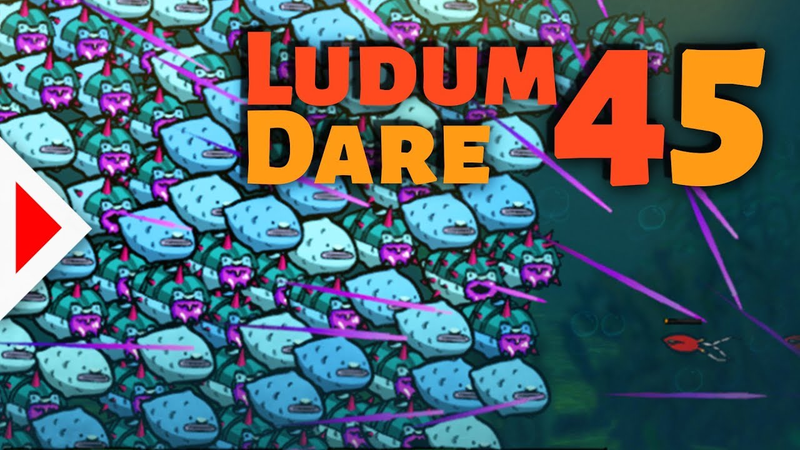
Ludum Dare 45 | FLUBBY FARM
Flubby Farm serves as a practical demonstration of rapid game development within the constraints of the Ludum Dare 45 game jam.
- Flubby Farm was developed by a four-person team within a 48-hour timeframe for the Ludum Dare 45 game jam.
- The core gameplay loop is a card-based defense system where players manage resources to deploy and upgrade fish units.
- Players evolve featureless creatures into specialized defenders by applying modular upgrades such as mouths, armor, and spikes.
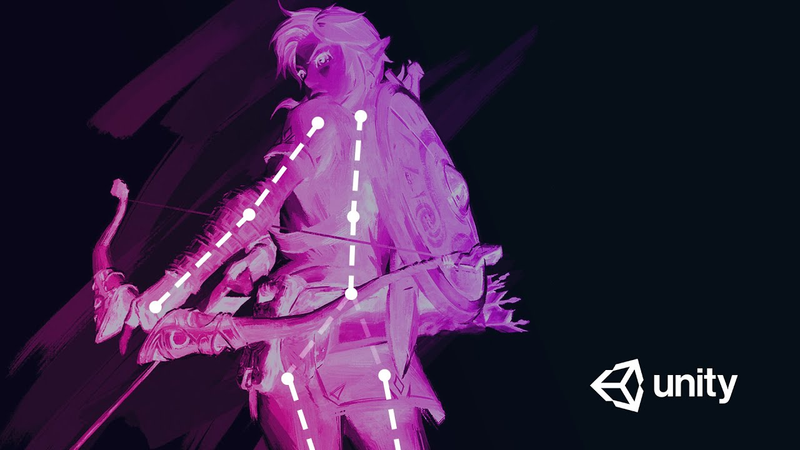
Animating a 2D Character in Unity (Rigging Basics Tutorial)
The process of rigging a 2D character within the Unity game engine has become significantly more accessible due to integrated tools that eliminate the need for external plugins.
- Unity’s 2D Animation and 2D PSD Importer packages allow developers to rig characters entirely within the engine, eliminating the need for external plugins.
- Layered artwork in PSB format can be imported to automatically generate a functional prefab, streamlining the transition from design to animation.
- The Skinning Editor enables the creation of bone hierarchies and character meshes directly within the development environment.
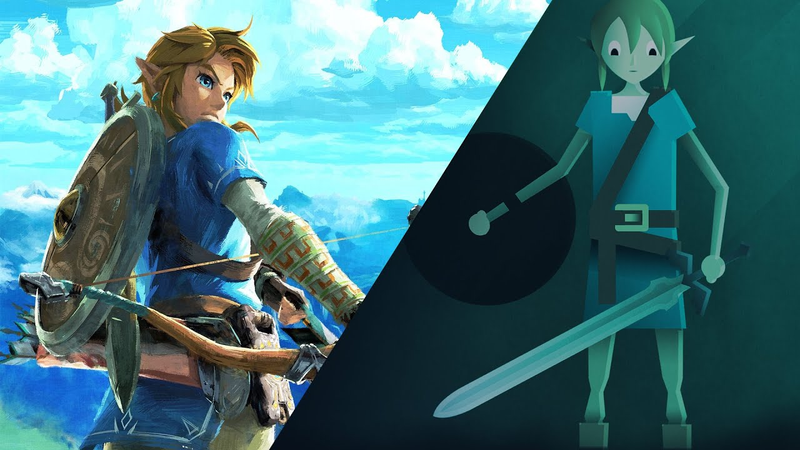
Redesigning Link for 2D (Unity Character Design Tutorial)
This tutorial outlines a systematic approach to translating complex 3D character designs into simplified 2D assets suitable for game development.
- Effective 2D character design prioritizes graphic design principles, specifically using basic geometric shapes and silhouettes to ensure visual clarity and readability at small screen scales.
- The 'caricature' design approach involves identifying and emphasizing a character's most iconic features while discarding unnecessary details that create visual noise.
- Designers should construct characters using primitive shapes like circles and rectangles while working in a T-pose to simplify the future rigging and animation process.

I Answer All Your Game Dev Questions | Q&A
This overview provides professional guidance on entering and succeeding in the independent game development industry, drawing on over a decade of experience from a professional developer.
- Prioritize project-based learning over passive study by focusing on core programming logic like loops and conditional statements rather than memorizing syntax.
- Maintain a manageable project scope to ensure completion, as the ability to finish projects is a critical factor in achieving a sustainable, full-time career.
- Build a portfolio of unique, appealing projects rather than relying on academic degrees, as employers prioritize demonstrable skills and interpersonal reliability.
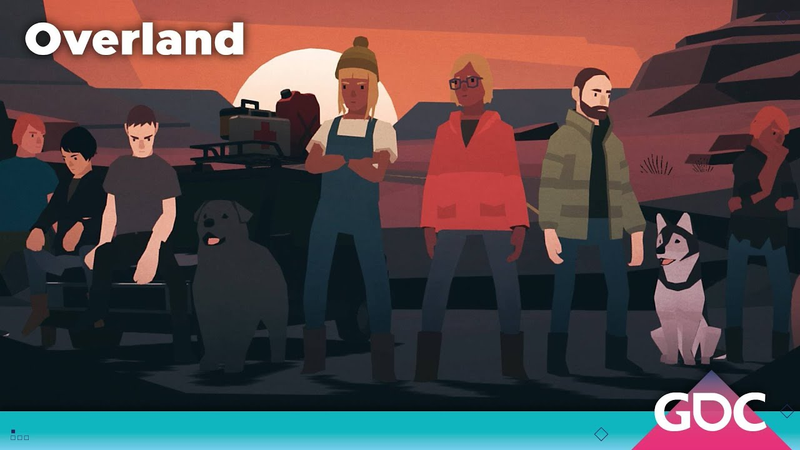
GDC Plays Overland with Finji co-founder Adam Saltsman
Overland serves as a case study in minimalist, turn-based strategy design, prioritizing emotional stakes and tactical vulnerability over the traditional power-fantasy tropes common in the post-apocalyptic genre.
- Overland was designed to evoke player vulnerability and fear rather than the traditional power-fantasy loop found in many post-apocalyptic strategy games.
- The development team prioritized 'proportional warning' for random events, ensuring that players receive a multi-turn heads-up before reinforcements or threats appear on the map.
- Procedural generation in the game utilizes a system of placement masks and 'wild card' modifiers, which act as cascading overrides to determine level layout and resource distribution.

Game Discoverability Day: Crowdfunding Your Video Game in 2019
Crowdfunding serves as a specialized but enduring financial mechanism for independent game development, maintaining a steady cadence of approximately one successful project per day on Kickstarter.
- Success on Kickstarter is driven by a pre-existing community rather than platform organic reach, with the platform maintaining a steady rate of approximately one successful project per day.
- Achieving 20% of a total funding goal within the first 48 hours is a critical milestone required to maintain the momentum necessary for a successful campaign.
- While total annual funding has declined from 2015 peaks to roughly $15 million, the platform remains viable for projects ranging from small indie titles to those seeking over $500,000.
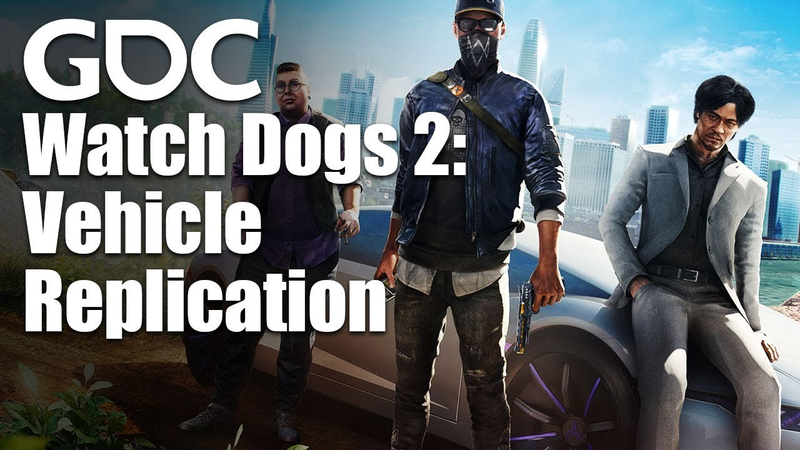
Replicating Chaos: Vehicle Replication in Watch Dogs 2
Achieving seamless vehicle replication in a peer-to-peer multiplayer environment requires a sophisticated balance between network latency management and physics fidelity.
- Watch Dogs 2 utilized a peer-to-peer architecture for its four-player bounty mode, which necessitated distributed authority over entities and created significant challenges for synchronizing high-speed vehicle collisions.
- Vehicle replication relies on projective velocity blending for dead reckoning, which interpolates between local velocity and predicted master snapshots to minimize the spatial gap caused by network latency.
- To mitigate collision discrepancies in a peer-to-peer environment, the team implemented a hybrid approach that allows local physics to simulate impacts for a short duration before blending back into the dead-reckoned trajectory.
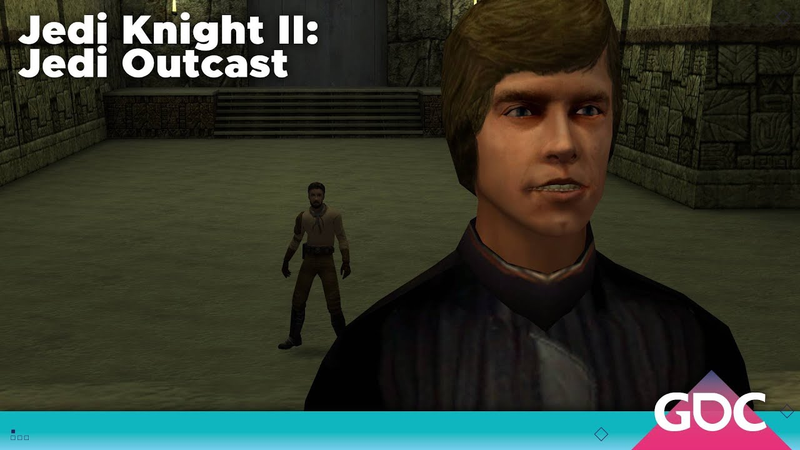
GDC Plays Jedi Knight II: Jedi Outcast with Raven Software
The development of Jedi Knight II: Jedi Outcast represents a pivotal moment in early 2000s action gaming, characterized by a transition from traditional first-person shooters to hybrid combat experiences.
- Raven Software developed Jedi Knight II: Jedi Outcast by hybridizing first-person shooter mechanics with third-person combat systems inspired by Heretic II and Bushido Blade.
- The development team utilized the technical foundation of Star Trek: Voyager – Elite Force to build the game, leveraging proprietary tools like GTK Radiant to manage hardware limitations.
- To ensure performance on early 2000s hardware, the team implemented rigorous asset optimization, level segmentation, and memory-efficient solutions like procedural facial animations driven by audio volume.
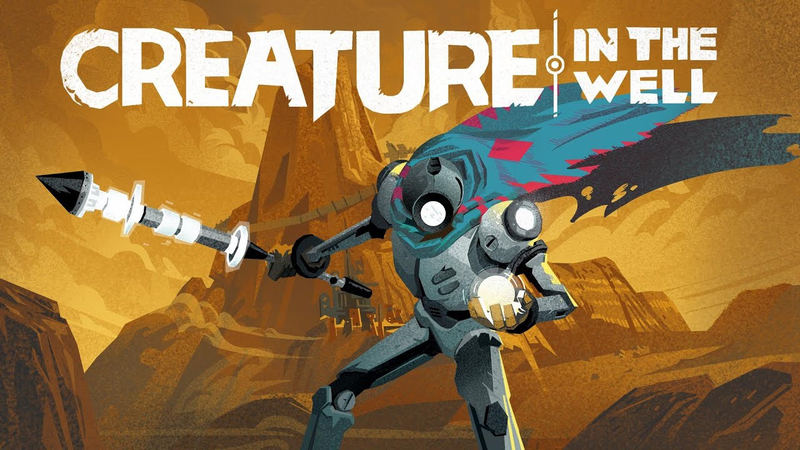
Creature in the Well with Bohdon Sayre | Game Dev Unchained Episode 205
The development of Creature in the Well demonstrates the efficacy of a lean, two-person core team operating within a disciplined 18-month production cycle.
- A lean, two-person core team successfully developed Creature in the Well by adhering to a disciplined 18-month production cycle.
- The developers utilized iterative prototyping and strict scoping to synthesize a unique pinball-inspired hack-and-slash mechanic.
- External partnerships for marketing and porting allowed the small team to maintain production focus while securing visibility on platforms like Nintendo’s Indie World.
I PLAYED YOUR GAMES! | Feedback on Game Design. (Part 3)
Successful indie game development hinges on the delicate balance between mechanical depth, intuitive user experience, and effective communication of core gameplay loops.
- Prioritize organic onboarding by teaching mechanics through progressive difficulty curves rather than relying on intrusive, text-heavy tutorials.
- Refine the core gameplay loop by simplifying user interfaces to hide non-essential information and deepening existing mechanics instead of rapidly introducing new ones.
- Ensure immediate feedback loops and clear objective communication, as obscuring core information like enemy health status can directly increase player frustration and refund rates.

Choice Design With Zachtronics' Matthew Burns - GDC Podcast Ep. 2
The evolution of game design increasingly favors narrative depth over traditional player agency, particularly when exploring complex societal issues.
- Limiting player agency in narrative-driven games like Eliza can increase emotional resonance by avoiding the reductive outcomes often found in procedural simulations.
- Transitioning from AAA environments to independent development allows creators the necessary latitude to integrate human-centric storytelling into systems-based frameworks.
- Modern game design is shifting toward sustainable work-life balance and the exploration of complex societal themes, including artificial intelligence, mental health, and corporate ethics.