Monetization reports and market data
Documents

🐎 Uma Musume Pretty Derby: Best Progression System in Mobile & Why should everybody play Umamusume
Uma Musume Pretty Derby represents a significant evolution in mobile game design, successfully transitioning from a niche Japanese title to a global phenomenon with consistent daily engagement.
- Uma Musume Pretty Derby maintains long-term player retention by prioritizing deep, emergent complexity over the industry-standard model of frequent content updates.
- The core progression loop utilizes a roguelite-inspired, multi-generational breeding system where veteran characters pass stats, affinities, and skills to new trainees.
- Character optimization is driven by a three-tiered elemental system covering surface, distance, and running style, which creates a near-infinite array of strategic paths.

Top Differences Between Mobile and AAA Live Service Games (Scott Hartsman Interview)
The gaming industry is effectively bifurcated into two distinct sectors: the core PC and console market and the mobile and casual live service market.
- The gaming industry is effectively split into two distinct sectors: core PC/console games and mobile/casual live service games, each requiring fundamentally different business models.
- Mobile and casual live service games operate as a math-driven business focused on minimizing user acquisition costs while maximizing the lifetime value of each player.
- Top-performing mobile titles often utilize 'gacha' or pulse mechanics, requiring players to spend currency for random chances at items or heroes, which must then be collected in multiples to reach full power.

‘Star Wars Hunters was no failure’ – The Big Zynga Interview
Zynga is currently executing a strategic pivot toward mobile-first development, emphasizing the creation of bespoke, high-engagement experiences over the adaptation of existing console intellectual property.
- Zynga is pivoting its strategy to prioritize wholly-owned mobile intellectual property over licensed console adaptations to reduce costs and improve marketing efficiency.
- The company has set a strategic growth target of reaching one billion monthly active users through scalable, social, and interactive mobile experiences.
- Zynga is actively shifting away from experimental technologies, specifically deprioritizing blockchain and console-specific development initiatives.

How to bring the player INTO the value chain - James Crabb from Almedia
The rewarded user acquisition (UA) model represents a shift in the mobile gaming value chain by directly integrating the player into the monetization ecosystem.
- Rewarded user acquisition (UA) platforms like Freecash.com allow advertisers to share a portion of their cost-per-install (CPI) revenue directly with players, incentivizing long-term engagement rather than just initial downloads.
- Modern rewarded UA focuses on high-quality, engaged users by tracking deep in-game events, contrasting with older, stigmatized models that used incentives primarily to manipulate app store chart rankings.
- The shift toward direct-to-consumer relationships is being accelerated by the European Markets Act, which encourages the growth of web-based stores that bypass traditional, centralized app store monopolies.

TWIG #339 Merge Games, Gen Z Spending Patterns, and the Shift inside Studio Cultures
The video game industry is currently navigating a period of structural instability characterized by skepticism toward subscription-based business models and shifting monetization strategies.
- The industry is shifting toward a 'hybrid-casual' model, exemplified by games like White Out Survival, which prioritize aggressive, deep monetization mechanics over traditional design principles.
- Analysts are questioning the long-term profitability of Microsoft’s Xbox Game Pass, suggesting that current financial reporting may be obscuring the true costs of the subscription service.
- Recent reports of declining Gen Z spending are likely driven by a lack of major software releases and seasonal anomalies rather than a fundamental change in consumer behavior.
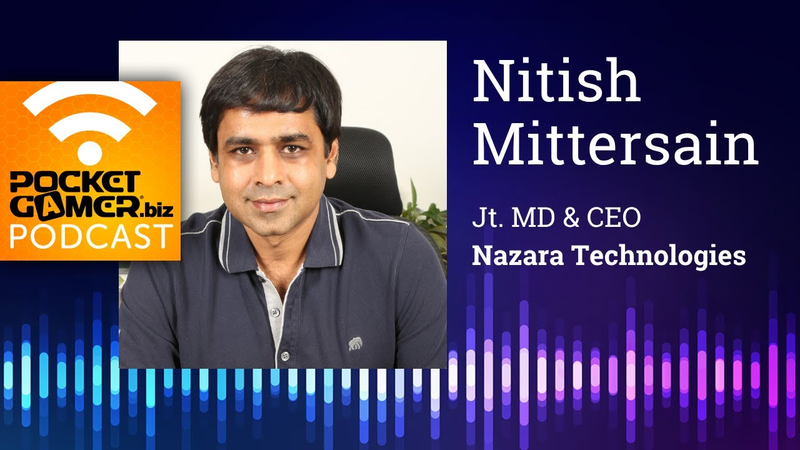
$200M raised. 90% year-on-year growth. 500 million gamers in-market.
Nazara Technologies has established itself as a diversified global gaming powerhouse, currently pursuing a strategic objective to reach a $10 billion valuation.
- Nazara Technologies, India's first listed gaming company, has achieved 90% year-on-year growth and successfully raised $200 million in capital.
- The company follows a decentralized M&A strategy that prioritizes acquiring profitable studios with established IP, such as Fusebox Games and Curve Games, rather than forcing immediate operational synergies.
- Nazara emphasizes a 'cash-flow-first' DNA, focusing on profitability and sustainable growth rather than the high-burn models common in many gaming startups.

Knit Out’s Turkish Blueprint: Rollic Games scaling puzzle games Like a PRO
Rollic Games has established a highly effective blueprint for scaling puzzle titles, exemplified by the success of Knit Out.
- Rollic Games' title 'Knit Out' generates $60,000 in daily revenue and secures 20,000 daily downloads, primarily from the U.S. market.
- The studio prioritizes rigorous internal benchmarks for retention and level difficulty before integrating meta-features or live-ops into their puzzle titles.
- Monetization is heavily weighted toward in-app purchases and rewarded videos, with ad revenue contributing only 23% to 30% of total income due to a strategic delay of interstitial ads.

I Was Wrong About Making Games...
The primary thesis of this analysis is that indie game developers often hinder their success by obsessively pursuing groundbreaking, unique mechanics rather than focusing on quality and execution.
- Success in the indie game market does not require creating a groundbreaking or entirely unique mechanic; focusing on executing a solid, high-quality game within an established genre is more effective.
- Attempting to force innovation often leads to bloated codebases, development paralysis, and wasted resources, as evidenced by the speaker's failed attempts to iterate on complex, 'unique' mechanics like magnetiles or skydiving.
- Leveraging your specific strengths—your '20%' or forte—is the most reliable way to ensure quality, as seen in the speaker's shift from struggling with new mechanics to focusing on storytelling and atmosphere in his title, Twisted Tower.
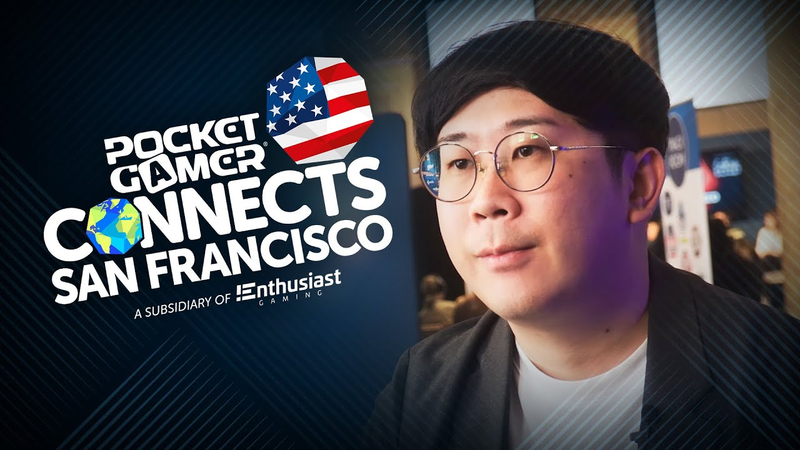
How to serve SSP and DSP in advertising - Keisuke Terada from Geniee International
Geniee International, a Japanese ad tech firm, operates a dual-sided business model providing both Supply-Side Platform (SSP) and Demand-Side Platform (DSP) services.
- Geniee International operates a dual-sided ad tech model, providing both SSP and DSP services to create a streamlined ecosystem that lowers CPC and CPM rates for advertisers while increasing revenue for publishers.
- The company is aggressively expanding into US and European markets following its acquisition of AdPushup, building upon its existing strong presence in Japan and Southeast Asia.
- Internal operations and client services are being enhanced through Japan AI, a subsidiary that deploys generative AI to automate labor-intensive tasks like floor price control and creative banner generation.
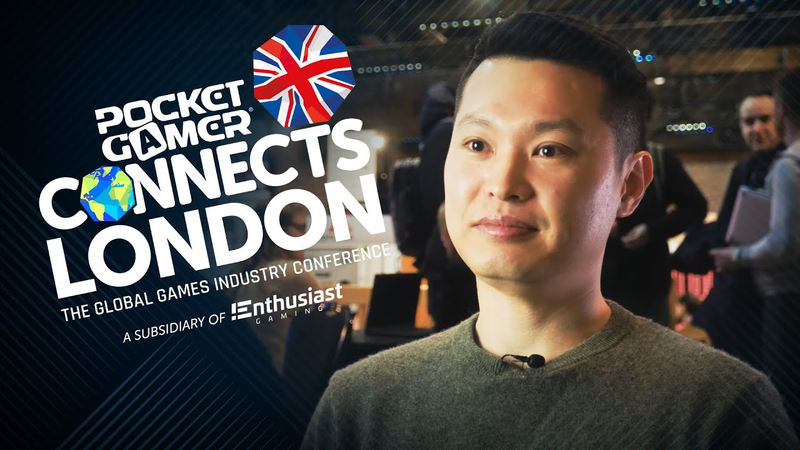
We're seeing a recovery in terms of monetisation - Tom Cui from Sensor Tower
The mobile gaming industry is currently experiencing a notable shift in performance metrics, characterized by a decline in total downloads alongside a robust recovery in monetization.
- The mobile gaming industry is experiencing a recovery in monetization characterized by higher per-user value, despite a decline in total downloads following the post-pandemic cooling of user acquisition.
- In 2024, eleven games achieved a one-billion-dollar in-app purchase run rate, highlighting the continued effectiveness of evergreen live-service models.
- Established titles are maintaining market dominance by utilizing sophisticated monetization mechanics and hybrid models that combine in-app purchases with advertising.

Stop Ignoring these 6 ad placements in 2025 by Felix Braberg
Effective ad monetization in mobile gaming relies on strategic placement and sequencing to maximize average revenue per daily active user (ARPDAU) and drive engagement from both non-payers and high-volume ad viewers.
- Implement a 'convert-or-die' sequence at natural gameplay breaks by offering a rewarded ad first, defaulting to an interstitial only if the user declines, to train users toward higher-value rewarded engagement.
- Utilize step-offer chains that sequence free items, a rewarded ad, and a paid offer to create a mental ladder that nudges users toward monetization.
- Capture lost revenue from non-payers by triggering a rewarded ad pop-up specifically when a user exits the in-game store without completing a purchase.

Scaling your monetisation efforts - Paul Childs from BidMachine
BidMachine operates as a global ad exchange platform designed to assist mobile application developers in scaling their monetization efforts.
- BidMachine functions as a global ad exchange that connects mobile publishers with direct demand to diversify revenue streams and balance performance-based ads with branding.
- Advanced machine learning is considered a fundamental operational requirement for competitive monetization rather than a novel trend.
- The Chinese market requires a specialized strategy based on physical presence and relationship-building via regional platforms like WeChat, contrasting with the standardized practices of Western and EMEA markets.