Monetization reports and market data
Documents

💀 Pokémon Champions is already DEAD: here's what went wrong
Pokémon Champions, a mobile battler based on the Pokémon franchise, has experienced a rapid decline in performance following its launch.
- Pokémon Champions experienced a 'shark fin' revenue collapse, dropping from $300,000–$400,000 in daily earnings to $80,000 within just two days of launch.
- The integration of Pokémon Home allows players to import existing collections, which bypasses progression and destroys the game's monetization economy.
- The game lacks core franchise pillars such as exploration, breeding, and wild-catching, resulting in a simplified battler experience that fails to compete with successful titles like Pokémon TCG Pocket, which generates $15 million monthly.

EA wants console game makers to consider in-game ads during development
Electronic Arts is actively pursuing the integration of in-game advertising within console and PC titles to establish a sustainable revenue stream capable of offsetting the escalating costs of modern game development.
- Electronic Arts is integrating in-game advertising into console and PC titles to offset the rising costs of modern game development.
- The company is deploying a proprietary ad platform directly into the Frostbite engine to enable dynamic, standardized, and targetable ad placements.
- EA aims to shift away from intrusive ads in favor of organic, design-led placements, such as stadium signage in sports games or branded cosmetic items.

What Game Studios Still Get Wrong About DTC
The mobile gaming industry is undergoing a fundamental shift toward direct-to-consumer (DTC) monetization, a sector that has already reached a $17 billion valuation.
- Direct-to-consumer (DTC) monetization in mobile gaming has grown into a $17 billion market, yet 52% of studios have not made significant changes to their existing monetization strategies.
- Successful DTC implementation requires studios to build dedicated, cross-functional teams that blend marketing, product, and user acquisition expertise rather than relying on traditional app store-focused workflows.
- Moving players to web stores allows developers to capture higher net revenue by bypassing platform fees while simultaneously gaining direct access to player data for better segmentation and personalized offers.

Panel: The 2026 D2C Playbook: Unlocking One Of The Biggest Revenue Drivers In Games.
Direct-to-consumer (D2C) strategies have emerged as a critical imperative for game publishers aiming to reclaim revenue and cultivate deeper, more resilient relationships with their player bases.
- Direct-to-consumer (D2C) strategies are essential for publishers to reduce reliance on platform-controlled ecosystems, thereby mitigating risks from sudden policy shifts and high platform fees.
- The gold standard for monetization is a hybrid approach that combines immediate direct-payment links for quick conversion with robust, dedicated web shops for long-term player habituation.
- Studios should avoid the resource-intensive process of building D2C infrastructure in-house, opting instead for specialized third-party providers to facilitate rapid iteration and optimization.
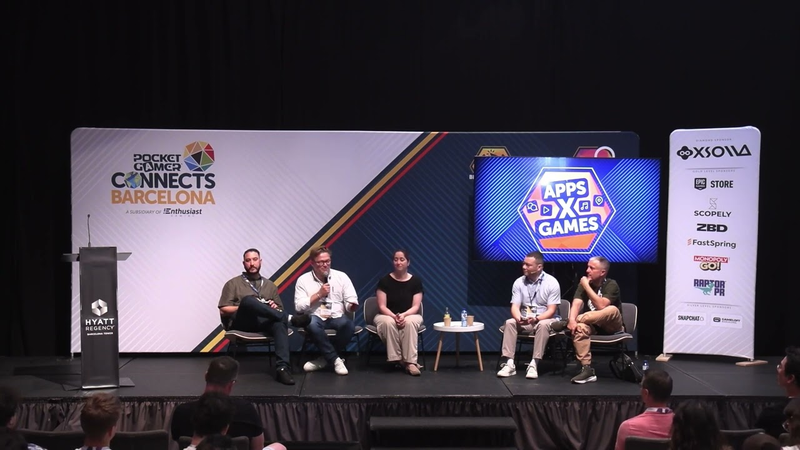
Panel: Beyond Play: What Can Games & Apps Learn From Each Other?
The gaming and application sectors are increasingly converging, driven by a mutual need to optimize user retention and monetization within a highly competitive attention economy.
- Game studios should adopt non-gaming app strategies for lifecycle management, as many top publishers have only recently begun implementing win-back campaigns for lapsed players despite possessing vast amounts of real-time behavioral data.
- Non-gaming apps can improve user retention by integrating intrinsic motivators from positive psychology and gamification, moving beyond simple rewards to foster emotional connections and community-driven engagement.
- Hybrid monetization models are becoming standard, with apps like Duolingo generating 10% of revenue from in-app purchases while using ads to drive growth, and platforms like Tinder allowing users to watch ads to bypass paywalls.
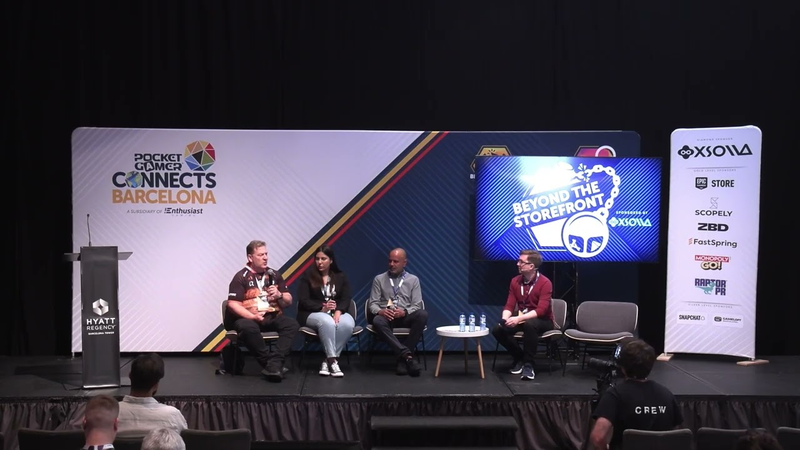
Panel: Direct-To-Consumer In Games: Promise vs. Reality.
Direct-to-consumer strategies in the gaming industry represent a fundamental shift toward owning player relationships rather than relying exclusively on traditional platform ecosystems.
- Direct-to-consumer (D2C) strategies are not a simple alternative to platform fees, as bypassing Apple and Google stores involves processing costs of 3% to 7%, plus additional expenses for tax compliance, cross-border regulation, and user acquisition.
- Successful D2C implementation requires partnering with a Merchant of Record or payment service provider to manage the high complexity of global tax laws and regional payment regulations, rather than attempting to build these capabilities in-house.
- Large-scale publishers are seeing significant financial returns from D2C, with Playtika reaching an annual run rate of $1.2 billion and Modern Times Group reporting that D2C accounted for 39% of group revenue in Q1 2026.

King dodges Xbox cuts, Destiny Rising, Google's store fees, Ustwo slams platforms, more
The mobile games industry is currently navigating a period of significant structural adjustment, characterized by platform-level policy shifts, studio restructuring, and evolving monetization strategies.
- King has largely avoided the recent Xbox layoffs, with the studio now reporting directly to Xbox leadership due to its high monthly active player counts, though internal uncertainty remains regarding future financial performance.
- Destiny Rising appears to be in a 'death spiral' with declining revenue, dropping from $6 million in its launch month to approximately $300,000 in monthly in-app purchase revenue over the last three to four months.
- Ustwo Games has shifted its focus away from mobile platforms like Apple Arcade and Netflix, citing the inability to make their single-player titles profitable on mobile and criticizing platform holders for failing to solve game discoverability issues.
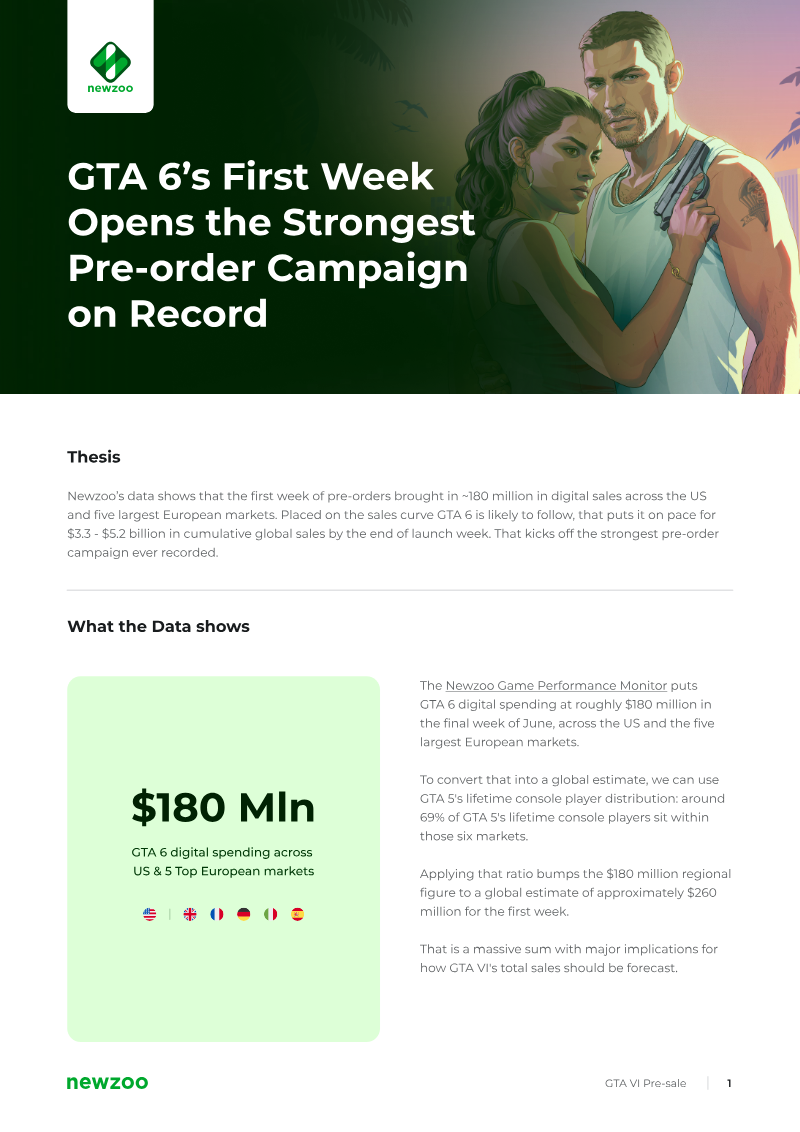
GTA 6's First Week: The Strongest Pre-order Campaign on Record
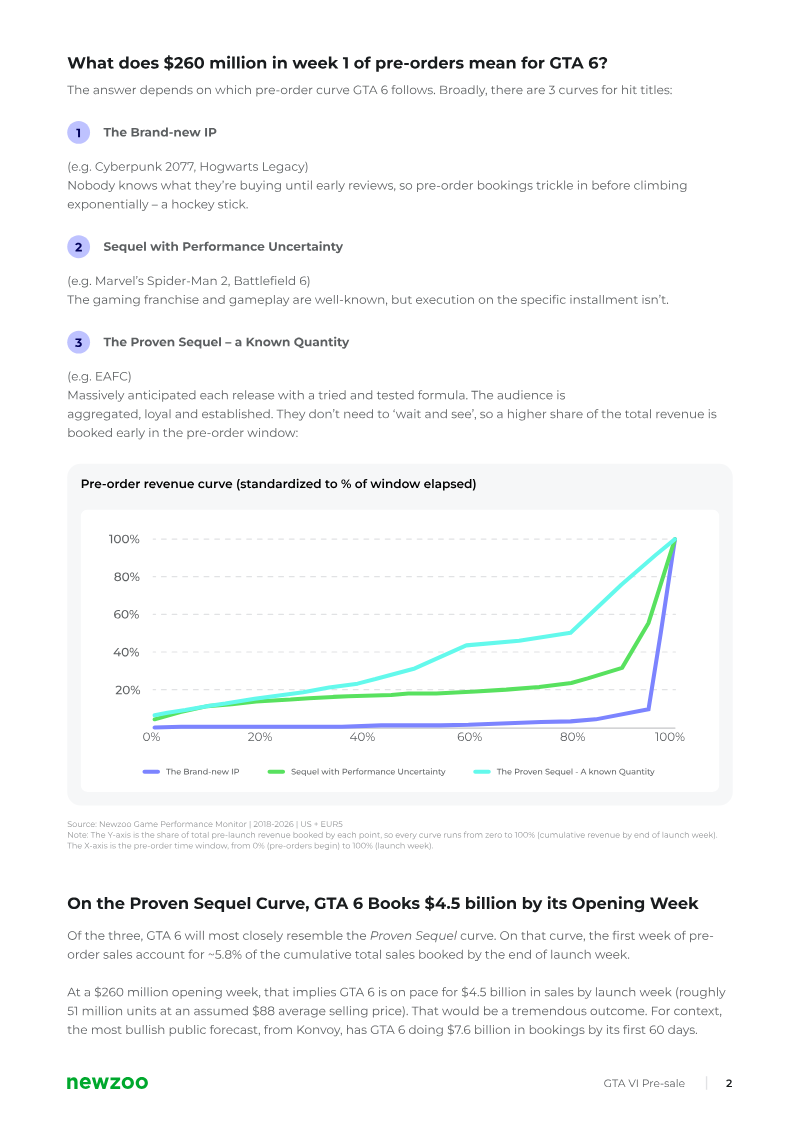
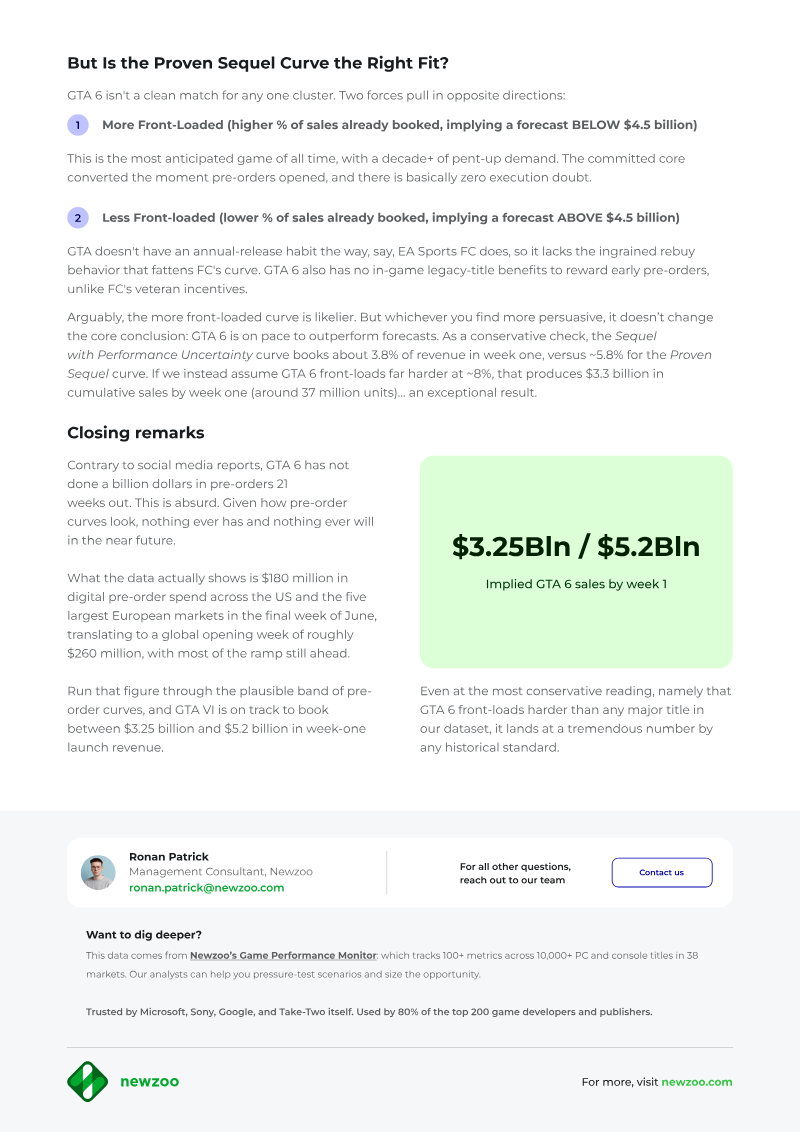
Grand Theft Auto 6 is currently positioned to achieve the most successful pre-order campaign in industry history, with projected cumulative global sales ranging between 3.3 billion and 5.2 billion dollars by the end of its launch week.
- Grand Theft Auto 6 is projected to achieve the strongest pre-order campaign in industry history, with estimated global sales between $3.3 billion and $5.2 billion by the end of its launch week.
- Digital pre-order spending for GTA 6 reached approximately $180 million in the final week of June across the US and the five largest European markets.
- This regional pre-order data translates to an estimated $260 million in global pre-order revenue for the opening week, based on historical console player distribution.
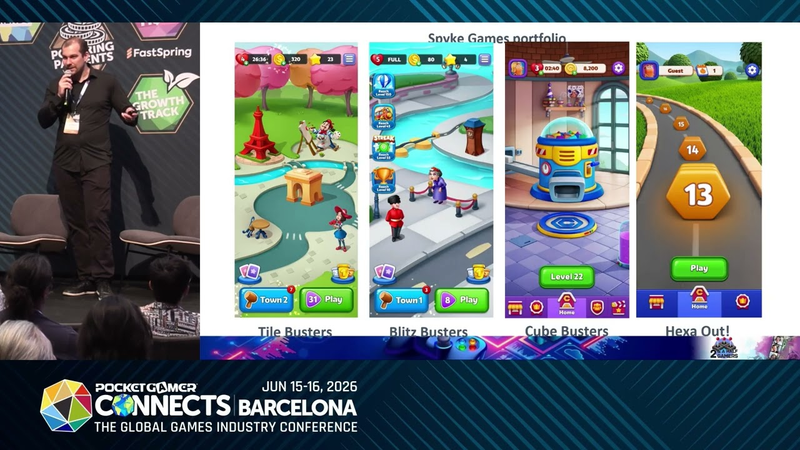
Session: Winning Portfolio Strategies Of 2026 - Jakub Remiar, two & half gamers.
The current mobile gaming landscape is defined by a shift toward systematic, data-driven portfolio management rather than reliance on individual hit titles.
- Successful mobile game portfolios rely on 'template-ization,' where developers build a reusable engine for a specific genre, allowing them to salvage work from failed projects to accelerate the development of future titles.
- Companies like Gram Games operate like the 'Warren Buffett of puzzle games' by identifying high-traffic, ad-monetized genres and converting them into high-revenue IAP (in-app purchase) models through superior execution and polish.
- Radical innovation, such as the mechanics seen in 'Pixel Flow' or 'Screw Jam,' offers the highest potential for success but requires deep, long-term genre expertise to identify and implement meaningful improvements to existing core loops.

GTA VI Priced at $80. Did Rockstar Leave Money on the Table?
The announcement of Grand Theft Auto VI’s pricing—set at $80 for the standard edition and $100 for the deluxe edition—has sparked significant industry debate regarding whether Rockstar Games missed an opportunity to maximize revenue.
- Grand Theft Auto VI will launch on November 19th for PlayStation 5 and Xbox Series X/S with a standard edition price of $80 and a deluxe edition price of $100.
- The game will exclude a PC version and a multiplayer component at launch, signaling a strategic focus on a digital-first ecosystem that utilizes download codes rather than physical discs.
- Analysts project the eventual online component will achieve an annual run rate between $1.1 billion and $1.5 billion once the ecosystem matures.

S07, E24: Understanding rewarded user acquisition (with Tricia Han and Sampsa Jaatinen)
Rewarded user acquisition has transitioned from a niche Android-centric tactic into a sophisticated, primary growth engine for the global mobile gaming industry.
- Rewarded user acquisition has evolved from a niche strategy representing 1-2% of mobile gaming ad spend five years ago into a primary growth engine for the industry.
- The shift toward rewarded UA is driven by the ability to leverage rich, post-install behavioral data to optimize engagement and long-term retention, which is superior to the limited signals available in traditional ad networks.
- Machine learning and AI engines are now essential to manage rewarded ecosystems, specifically by determining the optimal timing and nature of rewards to ensure users are incentivized to discover new games without disrupting their current engagement.

Designing Live Service Games | Design Club
Live service games represent a fundamental shift in industry strategy, moving away from static, one-time experiences toward models defined by long-term engagement and recurring content updates.
- Live service games shift the industry model from static, one-time experiences to long-term engagement loops driven by persistent progression and recurring content updates.
- The core operational requirement for success is maintaining a consistent cadence of new features and events that evolve the game’s identity while utilizing telemetry to drive daily retention.
- Developers must manage the tension between rigid production pipelines and the need for innovation by establishing specialized teams dedicated to post-launch product management.