VideoThe Game Business
EA wants console game makers to consider in-game ads during development
16 Jul 202638 min video
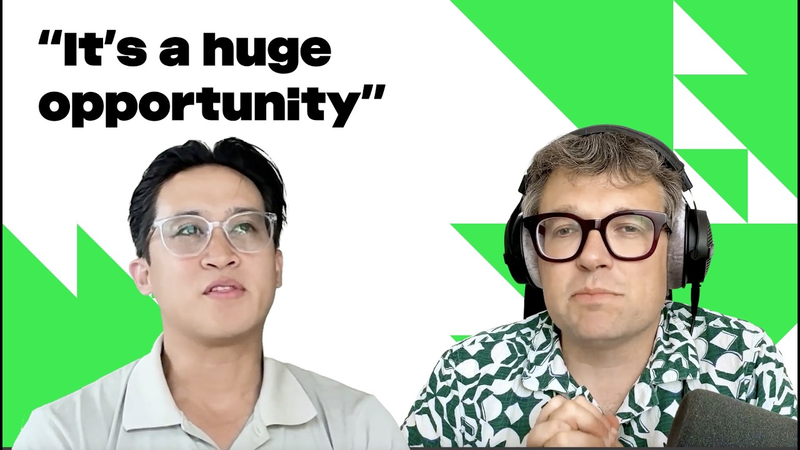
This week we dive into topic of in-game advertising for PC and console games and we're joined by EA's VP of advertising and sponsorship, Alex Dao. [music] Hello and welcome to the Game Business Show. This week's edition is sponsored by Gamescom. The Cologne trading consumer event returns next month, of course. Now they do all sorts of things at Gamescom. It is a massive event, but one thing you might not know about is they do a standalone digital showcase to support indie games. It's called the Gamescom Awesome Indie Show and exhibitors to Gamescom can submit their games to enter the showcase from today. It will feature new announcements, world premieres, exclusive trailers, and new gameplay footage from upcoming indie titles made by studios all around the world. What's more, this year's event is produced by my old friends at IGN, which means it'll be a good selection and reach a big audience. Anyway, indie exhibitors at Gamescom can submit their game up until the deadline on August 2nd. There's a link on where to do that in the latest Game Business newsletter and there's also sponsorship
opportunities for those that want to support it and promote their brand across the showcase. Anyway, onto our show and this week it's been a bit quieter. After 2 weeks of Xbox, Bungie, and Ubisoft job cuts and the surprise news that PlayStation were killing the disc in 2028, we have thankfully had a calmer few days. Normally, the summer is a quiet time, not a lot of game releases, a lot of folk on holiday. It tends to be a bit of a barren period between what used to be E3 and is now Summer Game Fest and Gamescom. But we've just come off, you know, this period of industry-shaking stories, not good stories I must say. And now we've had some Well, we've got we're in a period of nice interviews on the Game Business Show. Today we have EA and we'll come onto that in a moment. We have had Netflix on Tuesday. Next week we've got Jagex and Amazon. Lots of things to look forward to even as the kids break up for the summer. Now today's episode, as I said at the top, is about in-game advertising and specifically the untapped potential in-game advertising in the HD gaming market. It's been a topic for us this year. Analyst Matthew Ball wrote about it in
his report The State of Gaming 2026. He pointed to a statistic that said mobile in-game ad revenue grew from $45 billion to $55 billion in 2025. Mobile ads have been 37 to 145% of annual industry growth since 2021. If we discount ads, the video game industry excluding China only grew 4.8% or $6.8 billion since 2021. But with them, it's up 20%, say 35 billion. This is, of course, mobile ads remain rare on PC and console, and Ball believes that there is a real opportunity. Here's a quote from the interview we did with him in February. There are a few different truisms, right? Eventually, advertising does reach all addressable surface areas. It does. We see it in an Uber app. We see it in Tinder. It's now in ChatGPT. It's going to be in Gemini. We see it at gas station kiosks. Every place that can have an ad does ultimately have an ad. Well, because the user economics suggest that it should be there. Yes, it's clumsy. When you take a look at Hulu or Peacock, and now it's coming to Disney
Plus and Netflix, they make pretty ample use of pause screen ads. There's no reason why you can't see a shampoo bottle when you've paused Bridgerton, and the same thing will likely come in some shape or form to PC and console. The more important thing is the economic reality. If we say that audiences in the eight major markets, that's US, UK, Germany, Japan, Korea, Canada, Italy, and France, which are 60% of all PC console sales globally, are not spending more, the costs are going up, and we don't want layouts, we don't want fewer games, we don't just want the same games. We don't want price increases. The money needs to come in one way or another. He particularly highlighted sports games, and he used 2K as an example. He said 2K said last year about 2 and 1/2 billion games of NBA 2K are played a year. I don't know what 2K is thinking, but EA has teams working on ad deployments. If we think very basically, that's 2 and 1/2 billion games that were matchmade and have some loading screen. That's such an extraordinary the of inventory. Would Ford Mustang or The Avengers or Old Spice pay some pretty material sum for that inventory with a targeted valuable audience? Of course. Now, I put that last comment
to Take-Two CEO Strauss Zelnick, who of course oversees 2K and then NBA. And he was a little dismissive. He did ultimately say that he believed this is fine for free-to-play games, but not so much premium titles. He told me, "For titles for which you've paid $70 or $80, no. We have some limited advertising inside games like NBA 2K because it fits with the vernacular. You want to see advertising in a stadium because you would if you were there in real life, but that's not a big economic contributor. It's difficult for me to believe that we would want to have interstitial advertising in a game that someone paid $70 or $80 for. It would seem unfair." Um they're not necessarily disagreeing with each other here. There's some similarities in what they're saying. I spoke to Ball again in June. This time, he's not an analyst anymore. He's the chief strategy officer at Xbox. Although he didn't know Xbox's position on in-game advertising, he doubled down on his belief it could be significant. And this time he said it might be a way to give users access, you know, an alternative to the rising costs we're seeing across hardware, games, and microtransactions. He said, "Everyone feels terrible with prices going up. That is a challenge. It's not good if it
is the only option. I think the best evidence comes from the TV streaming space. In excess of 100% of net ads in the United States for years and years have been on the ad-supported tier. This has not excluded anyone from ad-free experiences. Those products are still there. They're still popular. The question is not can we cram ads in everything? The question is are there opportunities that allow people who can't afford or wouldn't try have an onboard to our properties and franchises?" I mean, it all sounds interesting. It's potentially what the industry could be looking for. It does feel slightly untapped. And last month, EA announced its new EA advertising platform. That will allow brands to advertise directly to players via EA's games. It is built into Frostbite. The new approach covers branded content ads and digital billboards and overlays, plus more involved partnerships. For example, Mountain Dew has its own playable team in EA Sports College Football 25 with a custom stadium mascot and rewarding ecosystem. Now the new platform features some of the things that advertisers need to be able to submit and measure app performance and EA's working with quite a few major brands Visa, Coach, Red Bull, Lowe's, Peacock, lots of different
folks. As soon as I saw that announcement, I thought I had to get EA on the show and they said yes. Today I've spoken to Alexander Dayo, he's the VP of advertising and sponsorship at EA. He comes from the advertising world, he worked at Snapchat before this, he's not a native video game industry person which makes it anything more interesting. And here is my chat with him. Enjoy. Hello Alex, welcome to the show.
Thanks for having me. I'm excited to get the conversation started.
Now you've come from is it you come from Snap? Have you been with video games before?
First time working in video games, but I've always worked at consumer platforms. So previously at Snapchat for the last 7 years, was at Amazon for a number of years before that. And then worked at companies like Criteo and Yahoo before that. Always in the advertising side, always with consumer facing platforms and excited to to be at EA for the last year now.
So what has surprised you about video
games? I always think that we're probably a little bit behind when it comes to advertising, but you tell me what surprised you.
You know, I think the biggest thing that surprised me and what really drew me to the video game space and to EA in particular is just the level of engagement that it has. You know, obviously gaming is a massive part of the population, you know, half the world plays games. But when you really take a look at the time spent and engagement that you get in games, there's really no other medium like it. You know, people spend a lot of time on social media, people spend a lot of time shopping and in retail media, but gaming is just one where there's just so many eyeballs, people are um passionate about it. It is a way for them to spend time and connect with uh friends and family. It's a way for them to feel their passion and different interests like sports or other entertainment forms. It's a It's a really unique medium and um you know, we
believe just uh a massive opportunity for marketers to get in front of but they have to do it in the right way.
Yeah, well we'll come on to this. We feature quite a bit on the show, Matthew Ball, who's former analyst, now chief strategy officer at Xbox. And he came on our show back in February and we spent a lot of a bit of the time talking about um in-game advertising opportunity. Um he felt it could be a way to solve the problem of the fact that consumers certainly western markets aren't necessarily spending more, but the costs are going up and and so he sees this as a potential big opportunity. This isn't the views of Xbox to be clear, it's just it's just his own in views. How big do you think the opportunity is?
Yeah, listen, I think when you take a look at what's happened with advertising over the years, it always follows where the audience is and where the attention is, right? You You saw that happen um with social media. You saw that happen with retail media. You see that happen happening now with connected TV, where there's a lot of time spent and um if done properly,
just a really big advertising opportunity. Gaming represent that same opportunity. You know, you you've already seen it on the mobile side, but specifically with console and HD gaming, um there's massive audiences there, a ton of engagement there. It's a just a big opportunity broadly uh for marketers to start to go in. Now, the reason why it hasn't taken off in the way that maybe some people predicted or some people uh think is because quite frankly, it's just been tough for marketers to figure out how to get in front of that audience, how to do it right. Um there it's very easy to show up and maybe do it wrong, or you push the limit too far. And so, there's uh a big opportunity in that space, but it has to be done properly, and it's it's part of what we're starting to solve for.
So, what is that limit? Where is the uh uh where is the line over what is uh
acceptable?
Yeah, so what we've done is really focused on value for the player. And as we think about different advertising experiences, it has to lead back to some type of value for the player. So, what does that value look like? Uh if we think about some of our sports properties like FC or Madden or college football, what that means is showing up in a way that feels authentic to the game. You know, when you're used to going to a real live match uh or game, you're used to seeing brand brand across the ad boards in the broadcast placements. And so, what we're doing is really replicating those experiences, so that you're playing the the actual game, and it feels like you're at a live match. Uh it it makes the experience feel much more authentic than if, you know, random brands were showing up, or, you know, just the EA Sports logo was showing up. And that that's what we've seen from the community, too, is, you
know, as we've started to introduce and as we've started to bring real-world brands in, um it actually makes the gameplay feel much more authentic uh and um exciting because it just mirrors what they're seeing in the real world. And so, that's one example of value's driven. Uh the other is we've just taken a a step further in thinking through, well, what do players actually care about? You know, what are the behaviors and progressions that they want in the game? And can we bring brands in to be a part of that experience? And And we've done things with um various client with various brands that just really understood the player. They understood the behavior and they started to feed into that and build a an experience for them.
Obviously, sports games it fits, right? It's part of the sports game ecosystem. We had to style Sonic from take two on and he he was a bit relatively dismissive of in-game advertising actually, but he did say that with sports games it it fits with what that is. But can any of what you're doing apply to other titles? Could it work for
Battlefield or Mass Effect? I know it's not one of your games. Death Stranding featured an advert for Norman Reedus's ride show cuz of course he was the star of that game. Do you think it fits with those other titles or can it fit?
So, it has to make sense for the game to your point. You know, sports is a bit easier to imagine what that looks like because what you're really trying to do is just mirror the real world experience. But if we pull on the thread that I talked about on where how do we actually understand what the players want, progressions, and can brands be a part of that experience? And so, I think about the activation we did in The Sims with Coach. Where The Sims it's not a sports game, but we understood what the Sims community wanted. You know, we we we did some research, we did some surveys, to understand what type of brands would they actually want to see in the game itself. Where is there good overlap in audience? And if a brand were to come in, what's the right way for them to do it?
And so, what we did with Coach and then what Coach wanted to ultimately do was democratize access to their products to the Sims community. They didn't want it to be a paid a paid product where somebody had to to purchase it. They actually just wanted to drop their entire product line, put it in front of the community, surprise and delight them. And when we did that and knowing that the Sims community loved Coach, um the socials blew up. I mean, everybody was talking about it, the whole community, a bunch of our gaming creators were talking about it. They were all really surprised and happy that it was made free for everybody. Uh and then, you know, the media and the press and everything picked it up, too. And so, I think if done appropriately, with the right brands, with the right title, understanding what the players ultimately want, um it it can drive that type of experience. But, it is a bit nuanced title by title to make sure that you're getting it right, and it doesn't feel random in the moment.
And maybe you haven't come across anything yet, but have you encountered anything that you thought actually maybe
didn't work spectacularly, or maybe it wasn't quite the right fit? Have you encountered any of those uh moments?
Yeah, you know, like we Yeah, you know, I think the gaming industry broadly has done things in the past where it didn't land like we thought it would. You know, as much as you kind of assume, um you know, what the players would like or what they would want or not want, um the real result is when it actually goes live, and seeing the receptivity and the engagement around it. And so, as we introduce new experiences, we're we're constantly learning and iterating. Um if something isn't working, it isn't landing the way that we thought it would, quite frankly, we we just pull it. Um we'll say, "Hey, you know what? We tried it, didn't work, maybe we'll try something different." Uh and so, we've had some of those learnings in the past, um but we're continuing to iterate to make sure that we learn from those, it gets better, and ultimately, it's just driving value back to the players.
You're not going to name and shame them, though.
No, I'm not going to name and shame
them.
I'm on the name and shame before my time as well, so.
Yeah, uh okay. Um what what are the friction points in this? What you've come in from from other worlds, where where are you seeing um what is I mean, apart from what what users will accept, um where where are you seeing the friction points when it comes to this, particularly in the console and PC and HD side?
When I think about the friction points, um I'm going to think about it in terms of the marketer and the brand themselves. And I I've heard this from the brands. I've heard this also from other publishers, from other platforms. And it's really when they think about the gaming audience, when they think about the engagement, usually the interest is there. They've heard about it. Um usually where the friction comes in is how hard it is to actually get into gaming. Maybe because of the development cycles, how long it takes, how custom each game is, how nuanced each title is. And there's really no way for them to standardize it and run across games in a in an easy way.
But that is where I think the opportunity is for the industry. It's what we're starting to build with the launch of EA's advertising platform, um to just make it easier for marketers uh to to get in game. Um instead of long dev cycles uh and waiting for a new patch to update creative or to create a new experience, we've launched our own ad platform that connects into our Frostbite engine that allows brands to go in a bit more dynamically. So that they could show up in the ad boards, the broadcast placements, they have different targeting. Um and then they can use some of their existing assets and we can convert it into 3D assets. Mhm. And so that's where, you know, the friction is, but also where I think the opportunity is for the the gaming industry is it can some of this become more standardized. Uh can we work with third-party industry bodies to help kind of uh verify uh the way that ads show up and the type of units that can show up in game.
And so it's part of the reason why we've also partnered with um the IAB to help standardize in-game ad units. We partnered with the IAS for viewability standards to help marketers feel more comfortable in the way that the ads are showing up. And so there there's a big opportunity for different publishers, platforms to come in and just ultimately make it easier for the brand to be able to create these experiences.
I don't suppose you're better to answer this question, but how much does in-game advertising contribute to EA currently is and is there like a goal on on how big you want to grow that?
So, I'm not able to share specific numbers around how big it is.
I didn't think you would.
But, look, it it is a important venture for the company and we we we see a a big opportunity there and we see an opportunity to do it the right way where it is driven in player value and it does drive that excitement and engagement. Um And so, it's uh you know, it's growing. We're you know, we're we're building a lot of demand and
interest around it in the way that we're creating these experiences and the way that we're starting to measure it for our partners. Um and so, we're excited for the future of what this looks like.
So, not not even a percent the double, triple in that none of that.
Yeah, for sure. You're right.
Yeah, okay. Is there going to be a need for developers to start making games with advertising in mind? Is that something that is there going to Do you think there'll ever be a situation where that might be something that needs to be coming in from the from the process of creating the games from start rather than I guess what you're having to do now is in place it into the titles after they've been made.
Definitely. I I think that's a huge opportunity not just for EA, but I think broadly because most most of the games that have been around for a while, um building the advertising experiences really kind of retrofitting it back in.
Mhm.
But, as you think about new games that are coming out, as you think about, you know, free-to-play experiences that are happening on the console side, you know, we we launched our our skate game. Um
those are opportunities where if you actually uh design them with the right advertising and brand experience in there from the get-go, it It makes it easier. Uh it makes it feel more native. It creates more flexibility in the types of brands I can come in and out. And so I I do see a big opportunity to do that. It's part of the reason why we launched our ad platform is because as we create new experiences in addition to the existing titles, um it allows us to bring brands in in a much more flexible, creative, and dynamic way.
Hm. How do you measure How do you measure success of in-game advertising? Is it the number of eyeballs? They important ROI? How do you judge that?
Yeah, so it it it ultimately does actually just go back to, you know, what the players are saying. Like, were they excited about it? Um are we seeing engagement on it? You know, when we think about bringing in um custom jerseys into our FC game or we're giving players uh uh you know, different modes and
challenges, are they play are they actually playing it? Are they wearing the jersey? Uh and what is the engagement we're seeing? Are are they talking about it on socials? Um if we're running surveys, are they giving positive feedback on the experience that they saw? And so what you know, we're measuring across all of those things to see if the players are actually engaging and talking about it in a way where it's exciting for them. Um I think about the activations that we did with Visa where we built um you know, squad building challenges with them and if they completed that, they then got access to compete in a tournament versus other players in a Visa brand stadium. And so we talked we saw a ton of engagement around that. Um we did something with Lowe's where they sponsored the stadium pulse in the stadium pulse in college football ended up having over a billion impressions. And so we as we do these
things, um it's ultimately around like you know, are the players engaging with it? Um are they talking about it? Is it ultimately leading to the brand being um, talked about in engaging a in a positive way? And so, those are all things we're measuring um, and iterating on as we do more and more activations.
Can you target people? Is it easy for you to do that in the same way, you know, like other digital advertising able to target, you know, if if a partner wants to reach a certain EA Sports FC audience, are you able to do that?
So, that's what the the launch of our ad platform is unlocking the ability for us to to to do.
Oh, wow.
You know, the first targeting of course is just title by title, depending on the the title that uh, the brand is interested in. Um, but what we've done beyond that now with the launch of our platform is just have some other basic targeting top capabilities like the ability to geo target. Uh, if a brand is only focused on a few regions, uh, we're able to give them the ability to do
that. Uh, we can go down to different geographies or state levels within the US. Uh, and so, now those capabilities are uh, coming into place in gaming just like they're seeing in other mediums.
Oh, cool.
And so, as we start to build this out, um, you know, there will be additional targeting capabilities that we start to introduce. We recently partnered uh, with LiveRamp to figure out different audience targeting capabilities that we can do in partnership with LiveRamp customers. And so, the things that marketers uh, are used to seeing in other mediums, we're going to start to be able to bring some of that into the the in-game console space.
It seems quite ambitious. I mean, do you have like a big team? How are you scaling all this up? You had to expand the team much?
Yeah, we had we had to expand the team quite a bit and um, the first part of expanding the team was really investment in our engineering and product.
Mhm.
Make sure that we are actually designing the platform and experience as best as
possible and then integrating it into the different studio. And so that was really the first area of investment. Um as we started to build that out, as we started to build out the tech and capabilities, we then started to build some of the go-to-market functions. And so we staffed up some of our sales and account management functions, we staffed up staffed up some of our operations and strategy functions. And so you know, with the announcement of EA advertising and building that awareness and building that kind of interest externally, and we now have the different internal teams that be able to support that from a product engineering all the way down to our go-to-market function perspective.
Um talk us through some of the campaigns some of the campaigns that you mentioned the one with Visa and loads and you also mentioned ones with Red Bull and Mountain Dew. They're all sort of doing interesting things, quite different things in some case, like entire teams I would say. Like what is proving most effective?
You know, one of the things that I think is proving the most effective and and and this is where we see
just the value of advertising in general is that it helps democratize access to some of the games or helps democratize access to some of the content in the games. And so whether that access be packs that we give to players, whether that access be vanity kits or jerseys or custom challenges or tournaments or surprise and delight moments where you know, we brought in Jake from State Farm to be cheering in the crowd in FC. Um those are things that is bringing real excitement and value back. And so when we center it on those elements where it just democratizes the access, it gives value to the player, it gives them some optionality, it feeds into gameplay and progression, those are the things that we're seeing work really well. And so you're you're hearing these different uh experiments and activations that we're doing because we're constantly just testing. You know, we're ideating with brands to figure out, you know, how do we drive that excitement? How do we speak to the
brands value in a unique way and have that come to life in game and and and make it make sense. Uh and so expect more of that to come and as we start to to do those, um you know, then we'll start to hone in on uh the types of things that uh we know players really want uh and just do more of those.
One of the things Matthew Booty was talking about was this idea of he used to talk about Netflix-type funding models, and how uh how in theory you could be watching Bridgerton and you see a shampoo ad if you press pause and there's all these video game menus and he was talking about all this inventory and all this space. He's obviously looking at it very much from an analyst perspective than necessarily a user perspective, but do you foresee an opportunity in this space? Could it be so huge that we could see games funded by this? Was this always going to be an additive thing?
It's really going to be like a spectrum of experiences, right? And you you can almost take a look at mobile as an example of that.
Okay.
lot of the mobile games, they're free. Um and you know, because they're free,
um then the monetization comes through a couple forms, either through uh you know, in-game purchases or through advertising. Um when you take a look at the console space, traditionally, um most of the revenue was coming in through full game sales and your start and you know, it started to shift more towards um live service revenue, um but now we're starting to see advertising come in and become uh another revenue stream. Um but by doing that, um it does again, democratize access either to the game or to content in the game. Uh and so we we've we've launched titles like Skate that are free to play um and we're bringing advertising experiences into there. Uh we're unlocking content uh because of some of the brands and advertisers we're are into their It's ultimately um you're starting to see just more opportunity in that space. But it is going to It is going to depend
on the game. It depends on the price point of the game and the type of experience and quality that the players are going to expect from that.
This is a nuts and bolts question this one. Do you have to share any ad revenue with like the platform holders? So whether it's Steam or PlayStation or Xbox or whatever. Or is that 100% EA revenue?
So I'm going to talk on the sports side for a moment.
Mhm.
With the sports side what we've done is as we've brought brands in, we really focus on the areas that are EA owned IP. So like within FC as an example, where we're bringing brands in as a part of the experience is within our ultimate team mode. You know, these are in EA stadiums, it's EA IP, and menus. And so that's where we've really focused. Um In terms of the platforms, I can't really speak to the specifics around the partnerships or engagement models that we have with the platforms, but um there is very close
partnership with each of the platforms to make sure that as we're designing and building the advertising experience, type of brands, that it adheres to their policy and guidelines in the way that it shows up in game itself.
I see. I'm not Maybe it's a question for them. Um yeah, but what that Who was that with that? And you also talk about one of the things you talk about in your press release. I'm conscious of the time, but you talk about um partner program, which you've described as co-created fan experiences.
Yes.
What does that mean?
Yeah, that that that's an exciting thing that I do think is really unique to EA given our EA Sports portfolio. With the EA Sports portfolio, because we have the largest sports titles in the world, it gives us an opportunity to work with a brand to figure out how do they get in front of the community in a unique and engaging way. Um not just in game, but also around game. And so as we think about these co-created experiences, um it is how do we start to
integrate and bring those brands in game in a unique way that feels immersive, that feels exciting, and then find ways to amplify that out again. And so I'll I'll give an example of what that looks like. You know, I I mentioned some of the activations we did with with Visa and NFC. Um we've then extended Visa to activate with us in the real world um at our largest sports events like Madden Bowl. And so at Madden Bowl, Visa created their own lounge for Visa card holders. Uh they were branded all over our event. And the Madden Bowl event, which is one that we do every year around the Super Bowl, was one of the most talked about events of Super Bowl weekend. And Visa showed up everywhere. We worked with their talent, we worked with their athletes. And so we started to engage with them both in game and around game um that created these like co you know, co-created experiences and activations. And there there's going to be more of those available um
you know, as we think about different categories that we could start to work with and building experiences for those categories in game uh and around game.
I also want to ask a question. I'm worried about time. It's quite a general one, but where do you see in game advertising on console on HD gaming basically in 5 years? Where do you think it can get to?
The biggest opportunity is solving that friction point where today or historically a brand has to work custom for every single title, every single publisher, uh every single platform. In 5 years from now, I believe the opportunity is just more standardization. Um and that standardization means a brand has some um, some assets that they can start to run uh, across publishers, across platforms, and do it in a much more scalable way. They can be measured uh, easier, and it can be activated. Again, still adding value to the player and
centered on that, but just making it easier to to to go live, making it easier to to manage, making it easier to to measure and prove the outcomes that they're looking for. Um, and so I I I see that as a huge opportunity over the next five years as uh, more players start to get into the space.
It's Google Ads of video games. Is that what this platform is? Could this be something that other publishers use and other things get involved with? Is that something you'd like to see?
So, for our platform, it is very specific to to EA.
Yeah.
You know, it's built on the Frostbite engine, but you know, we are working with the third parties to try to standardize some of this. So, when we think about uh, in-game 3D assets, how do we start to standardize what that looks like for a brand? When we think about in-game measurement and viewability standards, how do we make sure that's consistent so that when other publishers and platforms also do this, um, and we share back reports back to the brand or the marketer, they're seeing consistency. You know, they're
knowing they they know that it's showing up the way that um, you know, it should be showing up, and it's being measured the way that it should be be be measured. And so, um, some of the things that we're doing here, I believe will translate into other areas um, to drive a bit more consistency and standardization.
Okay, Alex. Well, Sega, uh, going back to the '90s, they launched an age rating system for the video games industry that ended up being changed and adopted into the one that became the standard age rating system for the US video games industry. Alex, I've taken up too much of your time, but this is quite I mean, I you know, I'm I'm a business journalist, I write about this industry, and I know it's going through a bit of a challenging time. Growth is slow and costs are going up and I think this is potentially maybe a solution or at least one solution to some of those challenges. It'll be interesting to see if it it plays out. I know that um Yeah, we don't want to see any more cuts and fewer games. We want to see more games. We want to see more people making them and maybe advertising can become a viable business model. I mean, I guess it already is a
little bit, but if it becomes even more so, then that'll be good for the whole business.
Yeah, look, it's a exciting time for for us and hopefully an exciting time for the industry as we watch this grow. And um, you know, from what we've seen and the way that we've done this, you know, players have been really accept uh receptive and excited on how we've introduced and how we've done this. It's uh more to come and um appreciate the time and just diving a bit deeper with us.
Brilliant. Thank you, Alex.
Awesome. Thank you, Christopher.
Thank you to Alexander for joining us. He could not solve my questions, but I think what they're doing Well, I'll certainly be watching. Who knows? Maybe they can bring some standardization and reliable revenue into the video game space when frankly the industry desperately needs it. Although I'm not entirely convinced we'll be seeing many ads in the next Mass Effect. Um, all that's left for me to do now is run through the big stories of the week and there were lots of career moves and changes this week and let's begin with Glen Schofield. He's retiring after 35 years. Glen was the director and producer across three major Call of Duty games. He was also the creator of Dead
Space and The Callisto Protocol. And we had him on the show last timeliness last year, if you remember. He struggled to find funding for his AAA projects and has now decided to back away from making video games. It's a shame. He pitched an idea to us on the on the show around an Egyptian horror game and I I was all over that, but anyway, uh good luck to Glen with whatever he does next outside of video games. Um, another move in the games industry, Steve Allison, the former Epic Games VP who was in charge of the Epic Store and Epic's third-party publishing business, he's joined Saber Interactive as Chief Business Officer. Allison also held senior publishing stints at Midway, Telltale, Impact Wrestling, and Atari. I actually met Steve earlier this year. I I didn't even realize he'd left Epic. It's quite a big quite a big win there for Saber. So, congratulations to the Saber team. And in fact, well done to the Team 17 folks as well. They've just hired PR veteran Johnny Bryant as their communications director. Bryant, you know, he just most recently spent 9 years at Bethesda, including his his most recent role being global PR director. He's held senior PR
roles at the Pokémon Company and Jagex and Blizzard and Take-Two and Vivendi. I've known him for a long time, and he's another great signing there for Team 17. So, um some big moves there in the games industry. Moving away from new hires, uh Compulsion Games, the former Xbox studio that is responsible for the BAFTA-winning South of Midnight, they're one of the companies that went independent from Xbox last week. They're looking for work. The firm says it wants to collaborate with studios across games and entertainment, the company said in the LinkedIn post. With deep experience in creating acclaimed original IP, we bring our artistry, technical expertise, and collaborative approach to every project. We're excited to support the development of memorable experiences that engage and entertain players around the world. So, they're looking for work there, the folks at Compulsion. If you played South of Midnight, I'm sure you'd be interested in giving them some. Another studio story, uh former employees of Build a Rocket Boy protested outside the office of The Minds Eye Studio on Saturday. This was due to a large playtest event that held with fans. The Independent Workers Union Great Britain suggests that these are
duties that were usually carried out by professional staff. Build a Rocket Boy has recently laid off 400 employees after the failure of its Minds Eye game. Another somewhat negative story, the Entertainment Retailers Association, we reported this on Monday. Um this is the group that represents major video game retailers in the UK, including Amazon Games, Sainsbury's, and HMV. They've criticized PlayStation's plan to stop manufacturing game discs from January 2028. The trade body said consumers deserve the freedom to choose how they build their entertainment. Removing discs doesn't represent progress, it simply removes choice. That's bad for gamers, bad for retailers, and ultimately bad for the long-term health and preservation of our games industry. There are few people that seem to like this move from PlayStation. Um elsewhere, investment bank Areaman Co says that $2.3 billion was spent on mergers and acquisitions in Q2 2026. There were 54 deals in total. This is the highest number since 2022. This is mainly due to deals above $100 million such as acquisitions of publisher Playstack and EVE Online CCP. The big deal, however, was Scopely's $1 billion
acquisition of Loom. Uh a few sales stories here for you. The remake of Assassin's Creed Black Flag We Sinked has sold 2 million copies in 24 hours, and stylized animated first-person noir shooter Mouse PI for Hire has now surpassed 1 million players. Well done to those games. And finally, Summer Games Done Quick 2026 has raised $2.4 million for the international humanitarian group Doctors Without Borders. Um that's it from us today at the Game Business Show. I hope you enjoyed today's episode. Next week, I mentioned it earlier, we've got two big interviews. We've got Jagex on Tuesday, and then we have Amazon joining us on Thursday. They've got some news to share. But until then, that's it from us. If you want to make sure you don't miss this episode, head to the gamebusiness.com, stick in your email address, and every time we have a new episode out, we'll give you an alert and you won't miss a thing. But until next time, thank you for tuning in.
Auto-generated captions from YouTube — names and numbers may be misheard.
Electronic Arts is actively pursuing the integration of in-game advertising within console and PC titles to establish a sustainable revenue stream capable of offsetting the escalating costs of modern game development. The core thesis posits that by shifting from intrusive, disruptive ad models toward organic, design-led placements—such as authentic stadium signage in sports simulations or branded cosmetic items in lifestyle titles—publishers can enhance the player experience while providing brands with measurable, high-engagement opportunities. This strategy relies on careful iteration and player-focused research to ensure that partnerships feel additive rather than extractive.
To facilitate this transition, the company is deploying a proprietary platform integrated directly into the Frostbite engine. This infrastructure enables dynamic, standardized, and targetable ad placements that move beyond manual, retrofitted implementations. By collaborating with industry organizations like the IAB and IAS, the initiative seeks to professionalize the medium through the establishment of rigorous viewability standards and unified 3D asset requirements. These technical advancements are intended to provide brands with reliable engagement metrics that bridge the gap between virtual environments and real-world consumer behavior.
The broader industry objective is to transform in-game advertising into a scalable, consistent, and long-term business model. By standardizing these practices across different publishers and platforms, stakeholders aim to overcome current growth challenges and democratize content access for players. This shift represents a strategic move toward treating virtual spaces as premium media channels, where native brand experiences are treated as essential components of the development lifecycle rather than secondary additions. Through these efforts, the industry seeks to create a more stable financial foundation that supports the increasing complexity and production demands of contemporary gaming.

The Game Business · 2026

The Game Business · 2026

The Game Business · 2026

The Game Business · 2026

The Game Business · 2026

The Game Business · 2026

The Game Business · 2026

The Game Business · 2026

The Game Business · 2026

The Game Business · 2026

The Game Business · 2026

The Game Business · 2026

Deconstructor of Fun · 2026

Deconstructor of Fun · 2026
The Game Business · 2026

Deconstructor of Fun · 2025
Sensor Tower · 2025
Deconstructor of Fun · 2022

AudioMob · 2021
InvestGame
The Game Business · 2026

Deconstructor of Fun · 2026

Deconstructor of Fun · 2026

Deconstructor of Fun · 2026
Comments