MOBA reports and market data
Documents
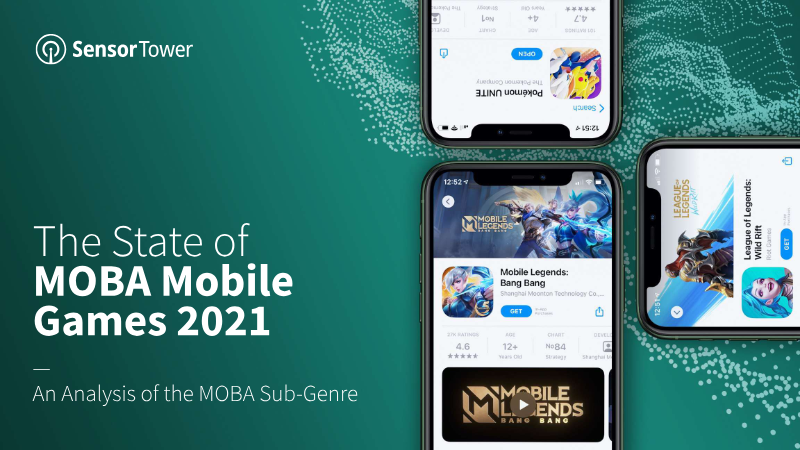
The State of MOBA Mobile Games 2021
This analysis explores the Multiplayer Online Battle Arena (MOBA) sub-genre within the mobile gaming market, focusing on its rapid financial growth and competitive landscape.
- The mobile MOBA market is a 'winner-takes-all' environment dominated by Tencent, Supercell, and ByteDance, making it difficult for new entrants to succeed without established brand recognition.
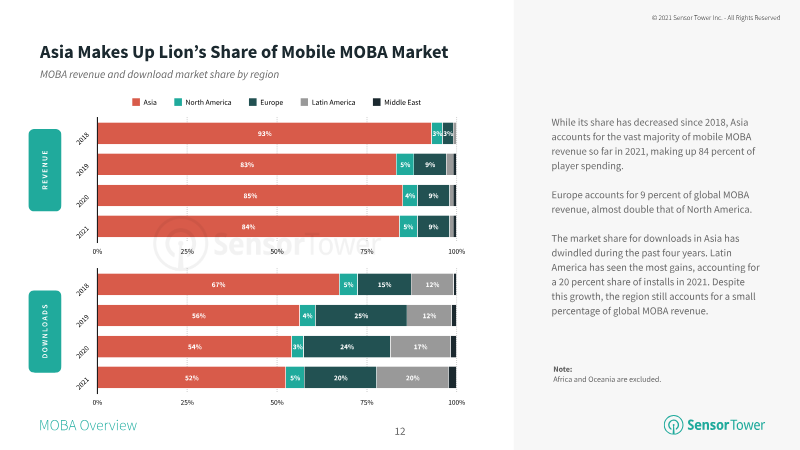
- Global MOBA player spending reached approximately $2 billion in the first half of 2021, with Asia accounting for 84 percent of total revenue.
- Honor of Kings is the industry leader with over $10 billion in lifetime revenue, while Pokémon Unite set a sub-genre record with 15 million downloads in its first two days following its September 2021 launch.
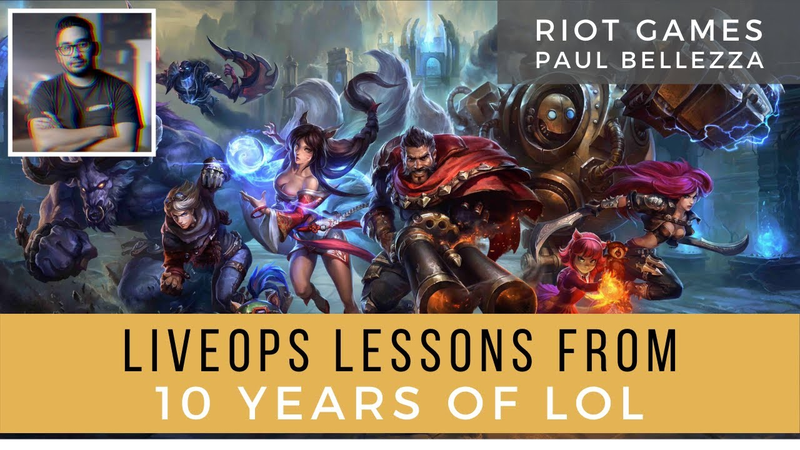
League of Legends | Product Lessons from 10 Years of Operations (Paul Bellezza Riot Games)
Operating a global title like League of Legends requires a fundamental shift away from Western-centric development toward a model that respects diverse international cultural standards.
- Long-term product sustainability requires the discipline to prioritize high-impact initiatives while strategically declining lower-value requests to protect the development roadmap.
- Developers must balance community feedback with core gameplay integrity, as evidenced by the failure of the Dynamic Queue system, which eroded competitive foundations by prioritizing convenience over skill.
- Global scaling requires moving away from Western-centric development in favor of rigorous research into regional aesthetics, heroism, and color palettes to ensure content maintains perceived value across diverse markets.
Creating League of Legends Champions: Our Production Framework Revealed
The production of champions for League of Legends relies on a rigorous, multi-phase framework designed to balance creative innovation with operational scalability.
- Riot Games manages the creative chaos of champion development by implementing a structured production framework that prioritizes clarity, scalability, and flexibility to prevent creative energy from being wasted on process-related confusion.
- The development process is divided into distinct phases—Ideation, Pre-production, Production, and Sustain—each with clearly defined deliverables to ensure the team knows exactly when a project is ready to advance.
- During the Ideation phase, the team utilizes a 'pattern lock' deliverable, which requires identifying the champion's strategic identity and finalizing three of their five core abilities to prove the character's viability.
League of Legends Client Update: Art Directing a Consistent and Scalable Interactive Brand Identity
The League of Legends client update represents a strategic shift from fragmented, unstable architecture toward a unified, scalable design system.
- The League of Legends client update transitioned from a fragmented, unstable architecture to a unified, scalable design system to improve both developer efficiency and brand cohesion.
- The design team replaced generic aesthetics with a narrative-driven 'Hextech' theme, positioning the interface as a lore-integrated, magical partner within the game.
- To support decentralized feature teams, the studio deconstructed complex mechanical elements into a modular visual language based on geometric precision and metaphorical material rendering.
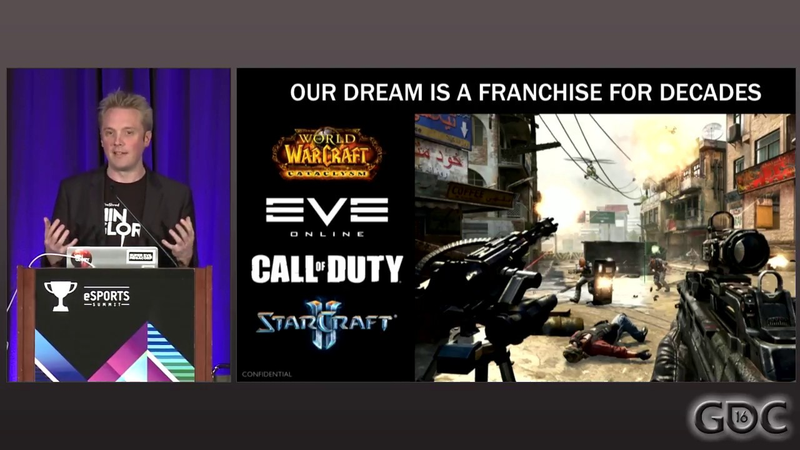
The Vainglory Story - 5 Lessons From Building a Touch Screen eSport
The mobile gaming industry is undergoing a fundamental shift as developers increasingly prioritize deep, core-gaming experiences over casual, short-form content.
- Competitive integrity is non-negotiable for mobile eSports; business models must be strictly orthogonal to player power to avoid the 'pay-to-win' stigma prevalent in the mobile industry.
- Successful mobile eSports require high-quality, low-latency networking optimizations to mitigate the inherent instability of Wi-Fi and LTE connections, as players will not use fixed-line networks.
- Contrary to industry assumptions that mobile sessions must be under three minutes, Vainglory successfully established a 20-minute average session length by prioritizing deep, competitive gameplay.
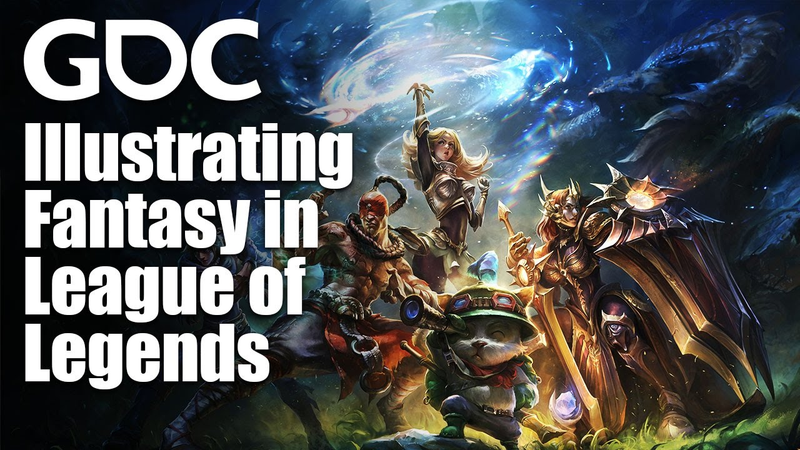
Illustrating Fantasy in League of Legends
The visual identity of League of Legends champions has evolved from rigid, action-oriented box art toward a narrative-driven philosophy that prioritizes emotional resonance and thematic storytelling.
- Riot Games shifted its illustration philosophy from creating 'aspirational' hero shots to focusing on the 'true fantasy' of a character, which exists in the player's imagination rather than the game's low-poly models.
- The illustration team discovered that breaking arbitrary rules—such as forcing a character to stand or showing their primary gameplay hook—often leads to higher player resonance, as seen in the successful redesign of Elise.
- Splash art is treated as a narrative tool to convey a champion's core personality and story, prioritizing the 'feeling' of a character over a literal representation of their in-game abilities or appearance.
Balancing League of Legends for Every Player, from Bronze to Bengi
Balancing a competitive title like League of Legends necessitates navigating a massive skill gap that often exceeds 1,000% between casual participants and professional competitors.
- Riot Games balances League of Legends by targeting the 'sweet spot' of High Platinum to Low Diamond skill tiers, as this range provides the best intersection between the high volume of players and the sensitivity to balance changes.
- Designers must interpret raw data with nuance, such as accounting for 'experience bias' where a champion's high win rate may reflect the player's mastery of that specific character rather than the champion being objectively overpowered.
- Balance changes should be iterative and systemic; when simple tuning fails to resolve an outlier, developers should pivot to broader structural updates, such as the preseason overhaul of assassin items and stealth mechanics.
League of Legends: Scaling to Millions of Summoners
League of Legends maintains its position as a global gaming phenomenon by prioritizing a player-centric development philosophy that ensures feature accessibility across a massive, rapidly expanding user base.
- The platform scaled from 15 million to 32 million registered users by utilizing a Java-based stack integrated with NoSQL technologies including Oracle Coherence, Redis, and MongoDB.
- NoSQL layers are treated as primary data sources rather than secondary caches to achieve predictable, linear horizontal scaling and high-performance data management.
- Operational stability is maintained through a split-model architecture that ensures game server provisioning speed remains constant regardless of total concurrent player load.
FTUE: Clash Royale
Clash Royale serves as a primary case study for analyzing the first-time user experience (FTUE) in mobile collectible card games and MOBAs.
- Clash Royale’s FTUE is engineered to socialize players into monetization and progression loops, such as time-gated chest unlocking and resource management, immediately following the introductory combat phase.
- The tutorial intentionally introduces meta-game elements early to identify and segment users who are willing to spend premium currency to bypass wait times.
- The game leverages the established Clash of Clans aesthetic to lower the barrier to entry while transitioning players into a distinct, card-based combat system.
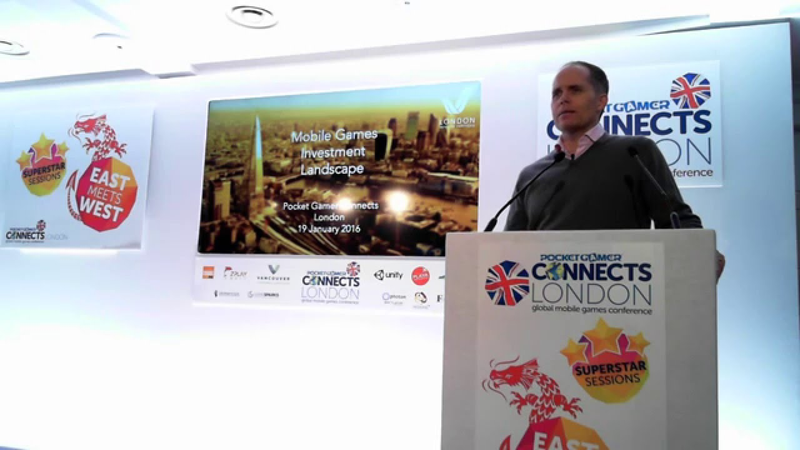
LVP's Paul Heydon on investment, eSports, mobile MOBAs, and Europe's advantage
The mobile gaming investment landscape in 2016 is characterized by rapid growth, with mobile emerging as the fastest-expanding sector within the broader gaming industry.
- Europe is a net exporter of mobile gaming revenue, leveraging lower overhead costs and competitive salary structures compared to Silicon Valley to achieve superior capital efficiency and higher returns on investment.
- The mobile gaming sector is the fastest-expanding segment of the industry, driven by the successful monetization of mobile MOBAs like Clash Royale and the emergence of professional mobile eSports leagues for titles such as Vainglory.
- High-profile acquisitions, including the deals for Supercell and Activision-King, have validated the sector's profitability and are expected to fuel further reinvestment into game development.

Can Supercell make mobile MOBAs successful with Clash Royale?
Supercell’s entry into the mobile multiplayer online battle arena (MOBA) space with the soft launch of Clash Royale represents a strategic effort to adapt complex, hardcore genres for a broader, casual mobile audience.
- Supercell is attempting to adapt the complex MOBA genre for casual mobile audiences by blending it with tower defense and card-based deck-building mechanics.
- The game leverages the established Clash of Clans intellectual property to lower the barrier to entry and increase player familiarity.
- The soft launch phase is being used to rigorously test player retention and monetization metrics, consistent with Supercell’s practice of canceling projects that fail to meet internal quality standards.

Biz Daily: Why Vainglory dev Super Evil raised $26 million
Super Evil Megacorp has secured $26 million in new funding to pivot its mobile MOBA, Vainglory, toward an eSports-centric business model.
- Super Evil Megacorp raised $26 million to pivot its mobile MOBA, Vainglory, toward an eSports-centric business model.
- The company is prioritizing long-term ecosystem growth and user acquisition over immediate monetization to establish a spectator-driven experience similar to League of Legends.
- The strategy focuses on the Asian market, specifically South Korea and China, to leverage established eSports cultures.