Marketing reports and market data
Documents

The #1 AI Skill You NEED to Succeed in Marketing (Hint: It’s Not Data Crunching)
Artificial intelligence is fundamentally reshaping the landscape of user acquisition by functioning as a critical force multiplier that enhances creative production and strategic decision-making.
- Prompt engineering is the critical skill for 2025, as marketers must learn to write effective creative briefs, storyboards, and narratives to direct AI tools rather than relying on full automation.
- AI acts as a force multiplier for User Acquisition (UA) teams, enabling individuals to perform the work of five people by leveraging AI for data analysis, decision-making, and creative generation.
- Strategic implementation of AI in creative production can significantly improve performance metrics, with one expert reporting an increase in creative win ratios from 10% to 50%.

Supercell's Record Year: Crushing It, But At What Cost?
Supercell experienced a record-breaking fiscal year in 2024, reporting €2.8 billion in revenue, a 77% year-over-year increase. EBITDA also saw significant growth, rising 78% to €876 million.
- Supercell achieved a record-breaking 2024 fiscal year with €2.8 billion in revenue and €876 million in EBITDA, representing year-over-year growth of 77% and 78% respectively.
- The company’s financial resurgence was driven by a strategic pivot from organic user acquisition toward increased marketing expenditures and expanded live operations.
- Brawl Stars served as a primary revenue engine through aggressive updates, though the title is now showing signs of revenue deceleration that may create difficult year-over-year comparisons.

TWIG #318 Supercell’s Records, Unity’s Chaos & AppLovin’s Fire Sale
The global gaming industry is currently navigating a period of profound structural adjustment, characterized by market saturation, declining revenue per user, and a strategic pivot away from high-risk, mega-budget projects.
- AppLovin has exited game development by divesting its studio portfolio for $900 million, a sharp decline from its previous $2.4 billion valuation, to focus exclusively on high-margin, AI-driven ad-tech.
- Supercell generated a record €2.8 billion in revenue, driven by aggressive live-ops and marketing for titles like Brawl Stars, though the strategy faces concerns regarding rising user acquisition costs and long-term sustainability.
- The gaming industry is shifting away from high-risk, mega-budget projects toward sustainable, cash-flow-focused models as founders increasingly prioritize long-term ownership over acquisition-led growth.

Here's How My Demo Launch Went On Steam!
The launch of the Twisted Tower demo on Steam serves as a case study for the challenges and strategic importance of releasing early-access content.
- The 'Twisted Tower' demo achieved a 92% positive review rating from 180 Steam reviews, successfully reaching the number four spot on Steam's 'Free Trending' tab.
- Launching a standalone demo page on Steam exposes the developer to immediate public reviews, which can significantly impact the game's overall reception and perceived credibility during the launch window.
- Technical issues, such as frame-rate dependent mouse smoothing and lack of ultrawide monitor support, triggered immediate negative feedback that required rapid post-launch patching.

Key aspects for Mobile Game Growth in 2025: UA, speed, monetization & globalization with Airbridge
The mobile gaming industry is undergoing a significant transformation as it moves toward 2025, characterized by the rise of hybrid-casual mechanics and a shift in innovation hubs toward emerging markets like Vietnam, Turkey, and South Korea.
- Mobile game growth in 2025 is driven by three core pillars: speed, monetization, and globalization, with industry development shifting away from Europe toward regions like Vietnam, Turkey, and South Korea.
- The number of apps on the Apple App Store doubled between 2022 and 2023, indicating that despite increased competition and user acquisition headwinds, developer interest remains high.
- Hybrid-casual games are defined by a revenue profile where 40–60% of income is generated via ads and 0–40% via in-app purchases, necessitating a focus on deep game economies to support long-term monetization.
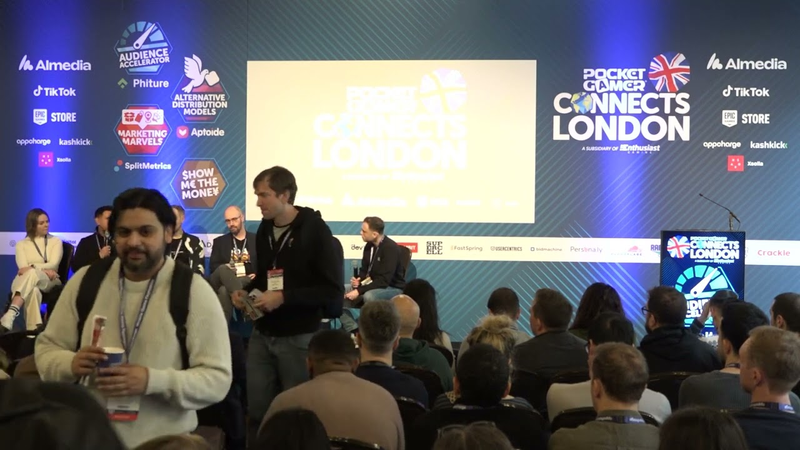
Panel: How User Acquisition Is Evolving In 2025.
User acquisition in 2025 is undergoing a fundamental transformation, moving away from simple ad arbitrage toward a sophisticated, data-driven model centered on long-term retention and high-quality user engagement.
- User acquisition budgets are projected to rise in 2025, driven by a decrease in game development costs which is leading to a higher volume of new titles entering the market.
- Advertisers are increasingly diversifying beyond traditional Google and Apple channels, with platforms like Shopify—which presents ads immediately before checkout—and Meta's Threads emerging as high-intent alternatives.
- Creative production volume has surged significantly, with games spending over $100,000 per month now producing an average of 839 ad variations per month.

Panel: Championing Community – Building Player Connections Outside the App Stores
Mobile game developers are increasingly prioritizing direct-to-consumer strategies to mitigate the impact of rising user acquisition costs and the limitations imposed by platform-specific fee structures.
- Transitioning players to web shops can increase net revenue by approximately 31%, as developers retain 90% of revenue compared to the 70% typically realized through app store ecosystems.
- Leading developers are currently achieving 14% of their revenue off-platform on launch day, with expectations to reach 50% to 60% off-platform within three to six months.
- Web shops are viable across all game genres, including casual titles; one provider has processed over $1.5 billion in transactions across various genres over the past two years.
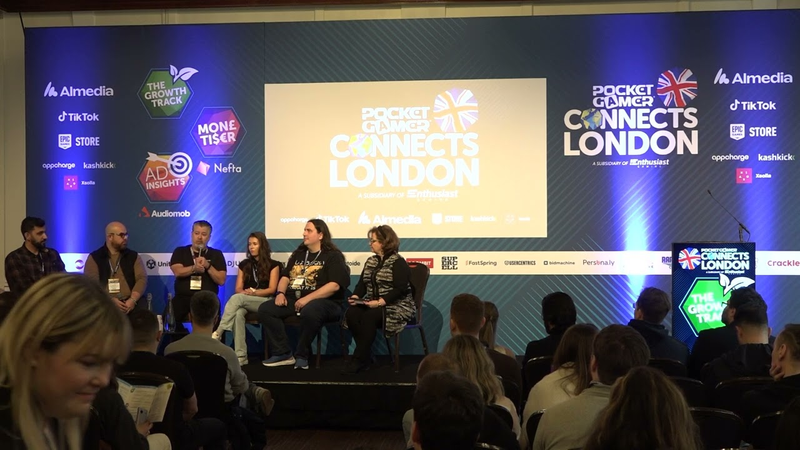
Panel: The Rise Of Rewarded UA – How To Take Advantage Of The Marketing Revolution.
Rewarded user acquisition has transitioned from a marginalized marketing tactic into a foundational growth strategy for the mobile gaming industry.
- Data indicates that 51% of users spend more money within mobile games when they are incentivized or rewarded for their purchases.
- Rewarded UA platforms require a distinct approach from traditional networks, as users are highly motivated to play through specific milestones to earn rewards, necessitating deep-funnel optimization.
- Successful rewarded UA strategies rely on integrating live ops with loyalty programs, allowing publishers to use user data to trigger personalized messaging and promotions during specific in-game events.
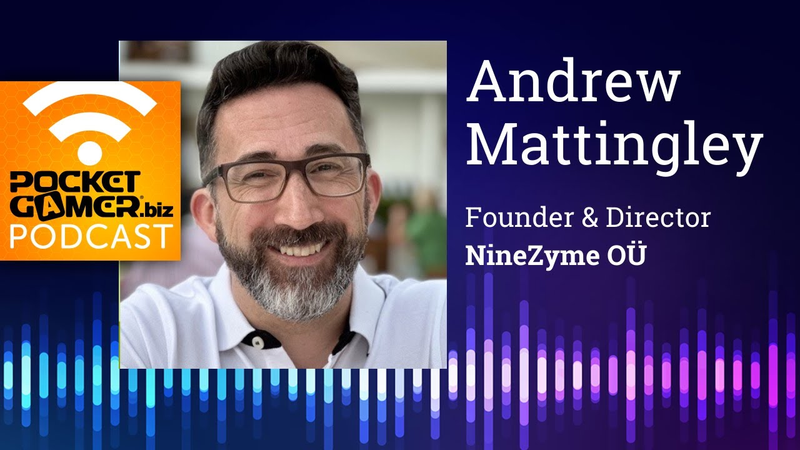
How to Score Treasure as An Indie Game Studio
The mobile gaming industry presents significant challenges for small independent studios, particularly regarding user acquisition and monetization strategy.
- NineZyme OÜ, a four-person indie studio, successfully modernized the classic tile-sliding puzzle genre by integrating character-driven narratives and vibrant animations in their debut title, Tiles Tales: Pirates.
- Indie studios must remain agile by prioritizing direct experimentation and data-driven testing of monetization models over following generic industry-standard advice.
- Transitioning from a premium to a freemium model proved necessary for NineZyme OÜ to broaden audience reach and better align with player behavior.
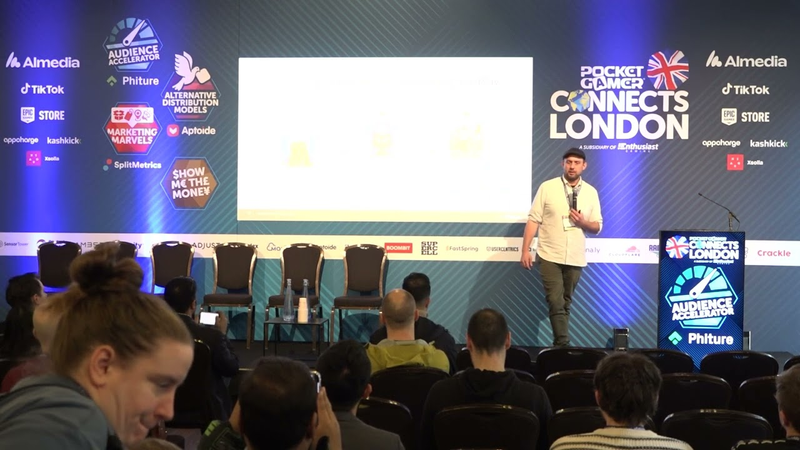
Session: App Store Optimization For Games With PressPlay's Autonomous Agents. Moritz Daan, Phiture.
App Store Optimization (ASO) for mobile games is undergoing a paradigm shift through the integration of autonomous AI agents.
- Autonomous AI agents are replacing manual ASO testing by continuously iterating on store assets like icons, screenshots, and descriptions to maximize conversion rates.
- Pilot programs using this automated framework have successfully launched hundreds of experiments within weeks, resulting in measurable increases in projected installs and conversion rates.
- To ensure statistically significant results, the current industry standard for implementing these autonomous systems is a minimum of 100,000 monthly installs per game title.
Session: Podcast Marketing – Insights & Strategies For Success - Sara Guerola, Media Bodies.
Podcast marketing has emerged as a vital, high-growth channel for user acquisition within the gaming industry, serving as a strategic bridge between traditional performance marketing and long-form engagement platforms.
- Podcast ad spend in the gaming industry is growing rapidly, with investment increasing 3.6 times quarter-over-quarter and overall market spend rising at an average annual rate of 22%.
- Gen Z listeners show high conversion potential, with 61% expressing interest in products after hearing an ad and 44% actively using promotional codes.
- Attribution for podcast campaigns is primarily probabilistic, requiring the integration of promo codes, unique URLs, and 30-day attribution windows to account for the medium's extended shelf life.
Session: Reaching The US Young Millennial & Gen Z Gamer – Insights From CoolmathGames.com.
CoolmathGames.com serves as a prominent platform for web-based gaming, specifically targeting Gen Z and young Millennial audiences in the United States.
- CoolmathGames.com attracts 30 million monthly active users, 85% of whom are based in the United States, by providing PG-rated, non-violent web games that bypass school-based content filters.
- The platform serves as a high-engagement entry point for Gen Z and young Millennials who prefer accessible, browser-based gaming that requires no downloads or app store dependencies.
- Web gaming offers developers a more efficient alternative to mobile markets, featuring minimal review times, no exclusivity requirements, and immunity to recent mobile-specific privacy and user acquisition shifts.