Global reports and market data
Documents

Gaming's Cheating Crisis: The Impact on Players and Profit
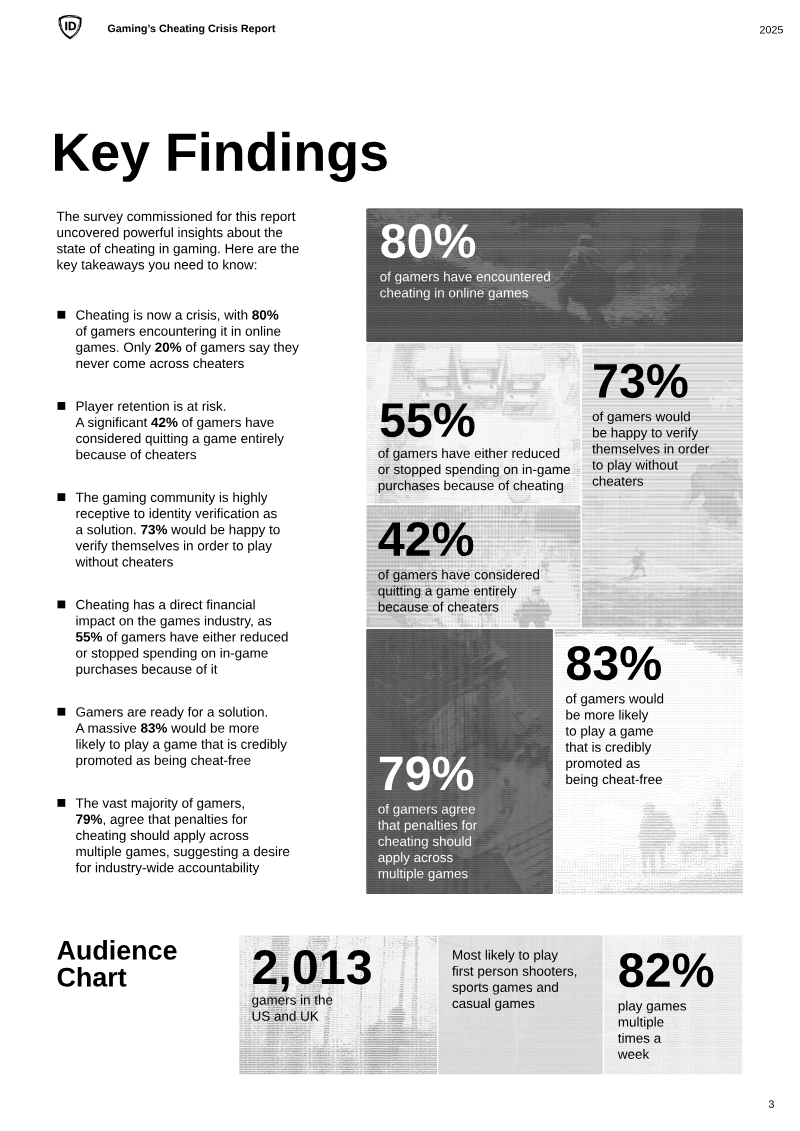
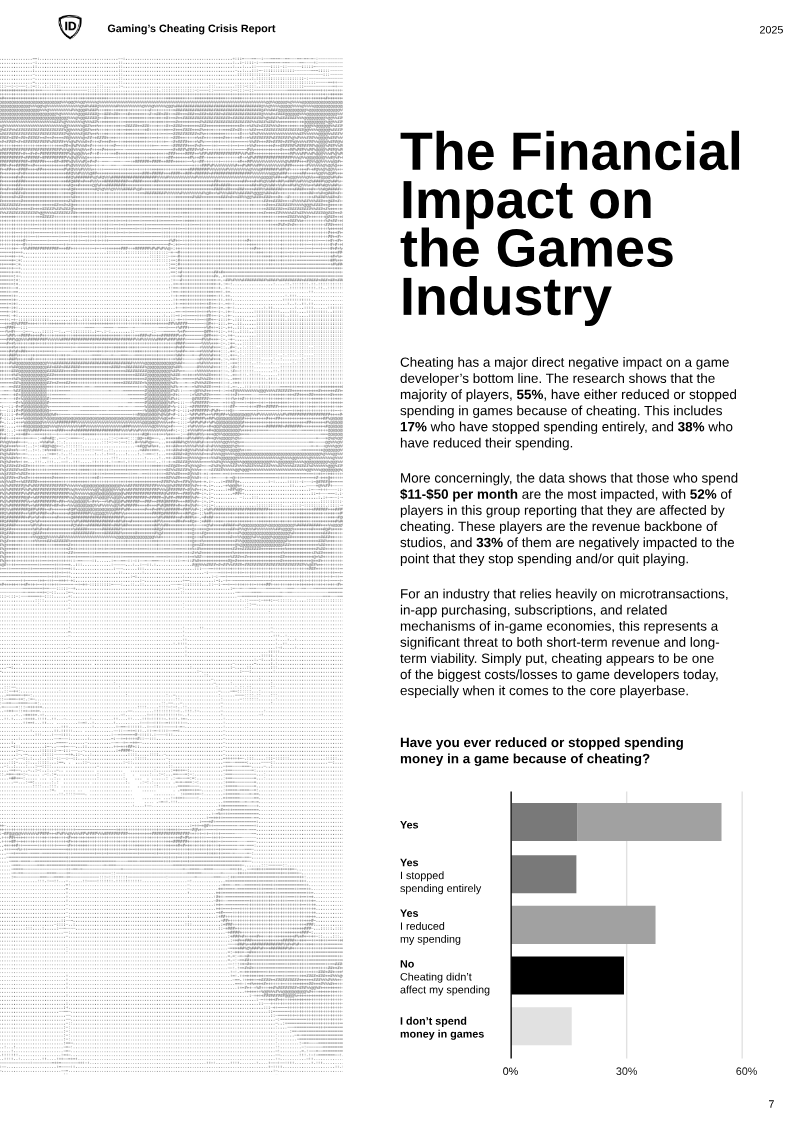
The gaming industry is currently facing a widespread crisis regarding cheating in online titles, which significantly undermines player retention and threatens long-term revenue.
- Cheating directly impacts revenue, with 55% of gamers reducing or stopping in-game spending due to unfair play.
- 80% of gamers have encountered cheating, and over 50% experience it at least monthly, driving players away from titles.
- There is strong consumer demand for systemic solutions, as 83% of players are more likely to engage with games marketed as cheat-free.

Konami Group Report: Fiscal 2022
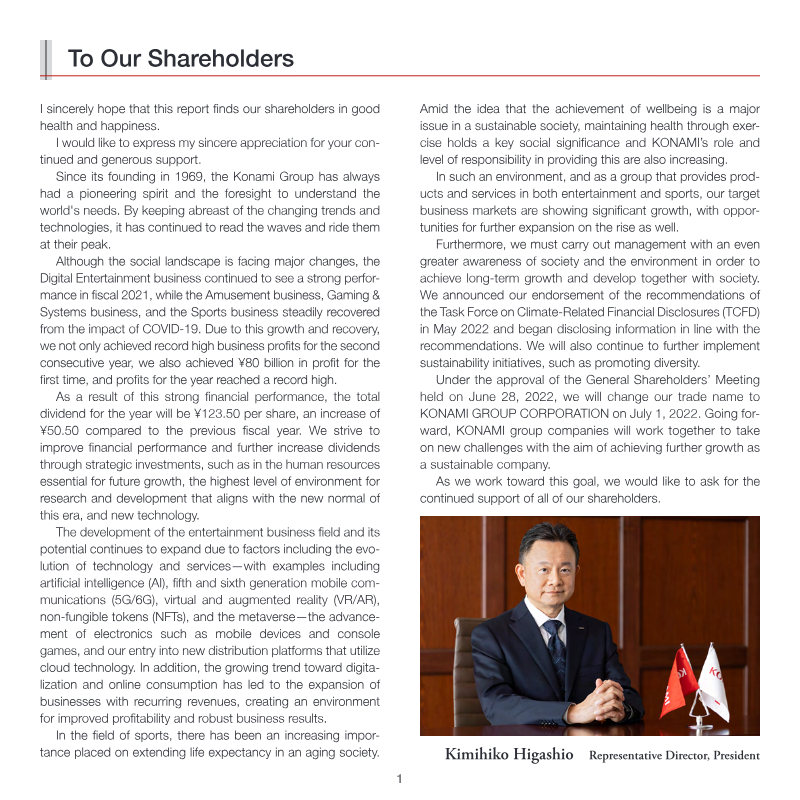
The Konami Group Fiscal 2022 report outlines a period of record-breaking financial performance and strategic organizational evolution.
- Konami achieved record-high financial results for fiscal 2022, with total revenue reaching ¥299.5 billion (a 9.9% increase) and profit attributable to owners of the parent rising 69.9% to ¥54.8 billion.
- Operating profit saw a significant 103.6% year-on-year increase to ¥74.4 billion, while business profit grew 25.2% to ¥80.3 billion.
- The Digital Entertainment segment saw strong performance driven by mobile and console titles, including the launch of 'Yu-Gi-Oh! MASTER DUEL,' which surpassed 30 million downloads within three months of its January 2022 release.
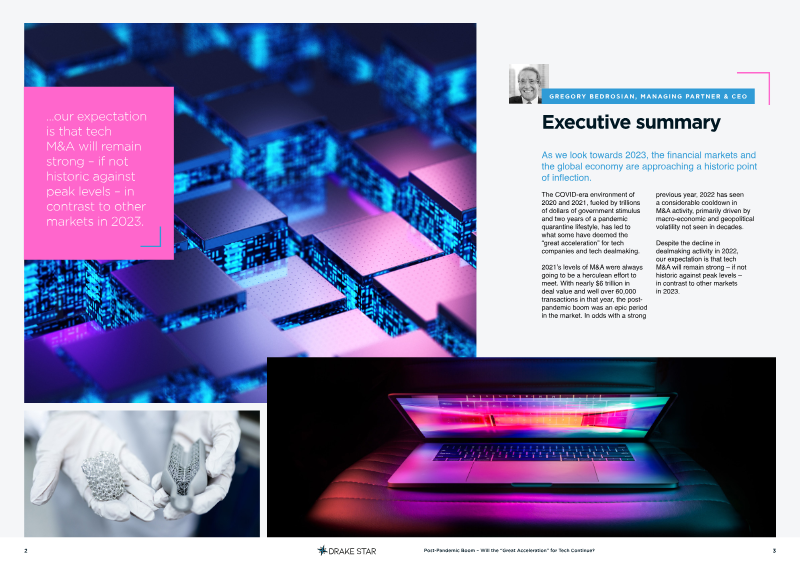
2023 M&A Outlook: Post-Pandemic Boom
The 2023 M&A Outlook provides a strategic assessment of the technology mergers and acquisitions landscape following the record-breaking activity of 2021 and the subsequent market cooling in 2022.
- Strategic necessity is driving a shift toward consolidation in 2023, as mature corporations prioritize acquiring disruptive, value-add companies to maintain innovation despite macroeconomic volatility.
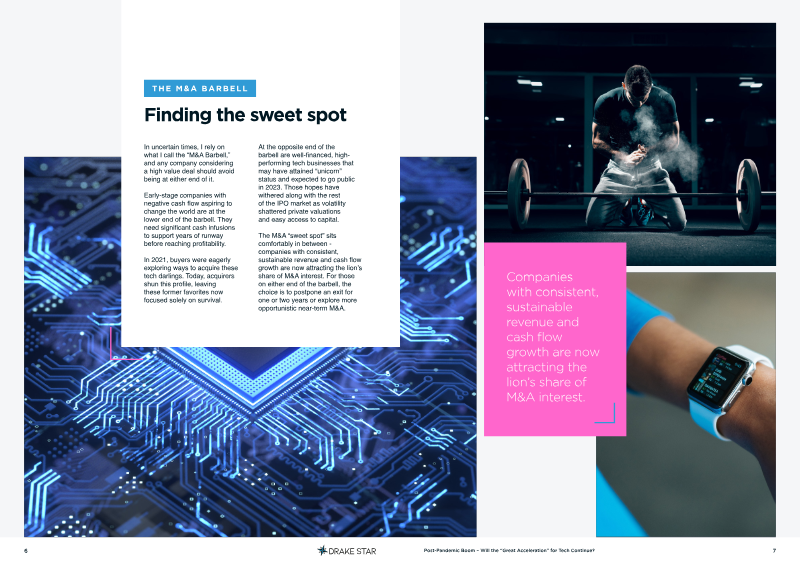
- The market has shifted toward an 'M&A barbell effect,' where investors avoid early-stage, cash-burning startups and high-valuation unicorns in favor of companies with sustainable revenue and cash flow growth.
- While 2023 deal volume will not reach the record-breaking levels seen in 2021, robust deal flow is expected to persist due to significant dry powder held by private equity firms and large-cap corporations.
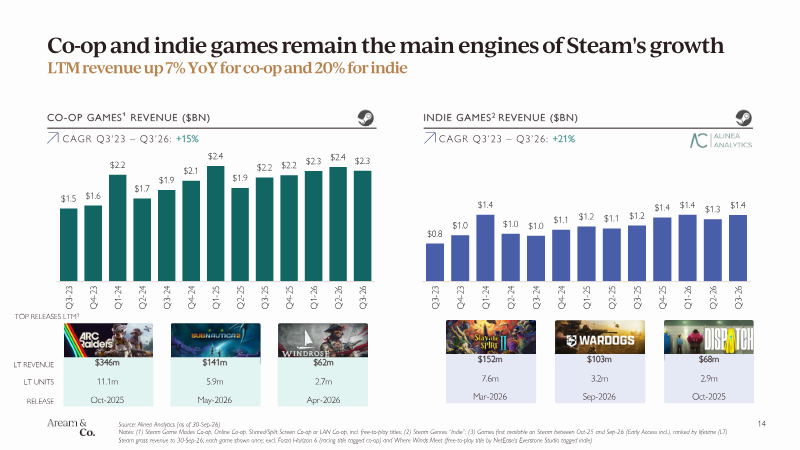
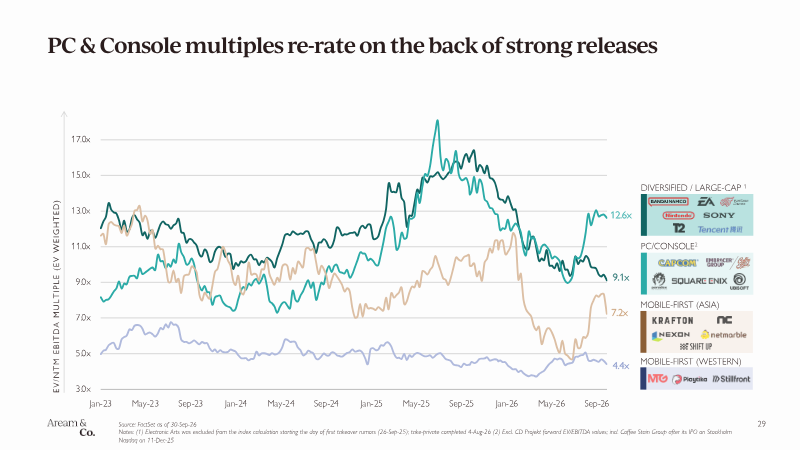

Video Game Market Update: Q3 2026
The global video game industry experienced a period of significant structural divergence during the third quarter of 2026.
- The global video game industry saw a $57.8 billion surge in M&A activity in Q3 2026, driven primarily by the $55 billion take-private acquisition of Electronic Arts.
- Market performance was structurally divergent, with double-digit revenue growth on Steam contrasting against year-over-year declines of 12% in the console segment and 7% in mobile.
- Investment capital is shifting toward late-stage rounds and AI-driven firms, while seed-stage funding has dropped to a five-year low.
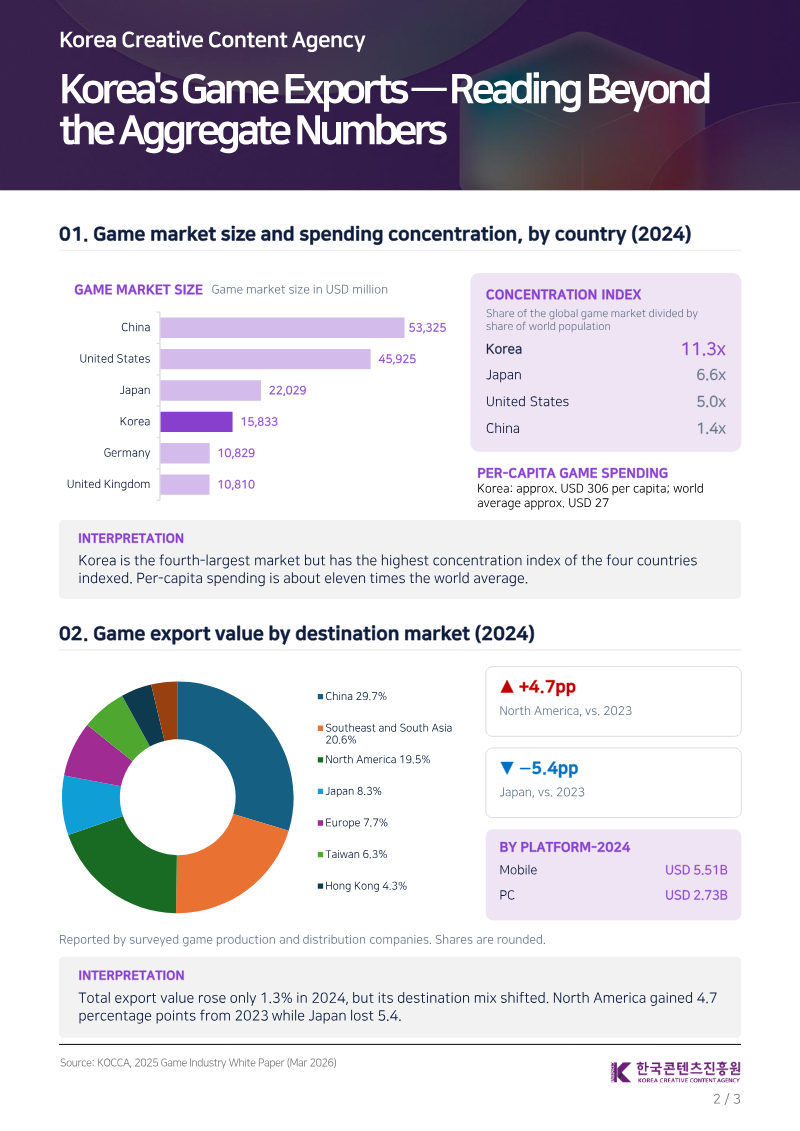
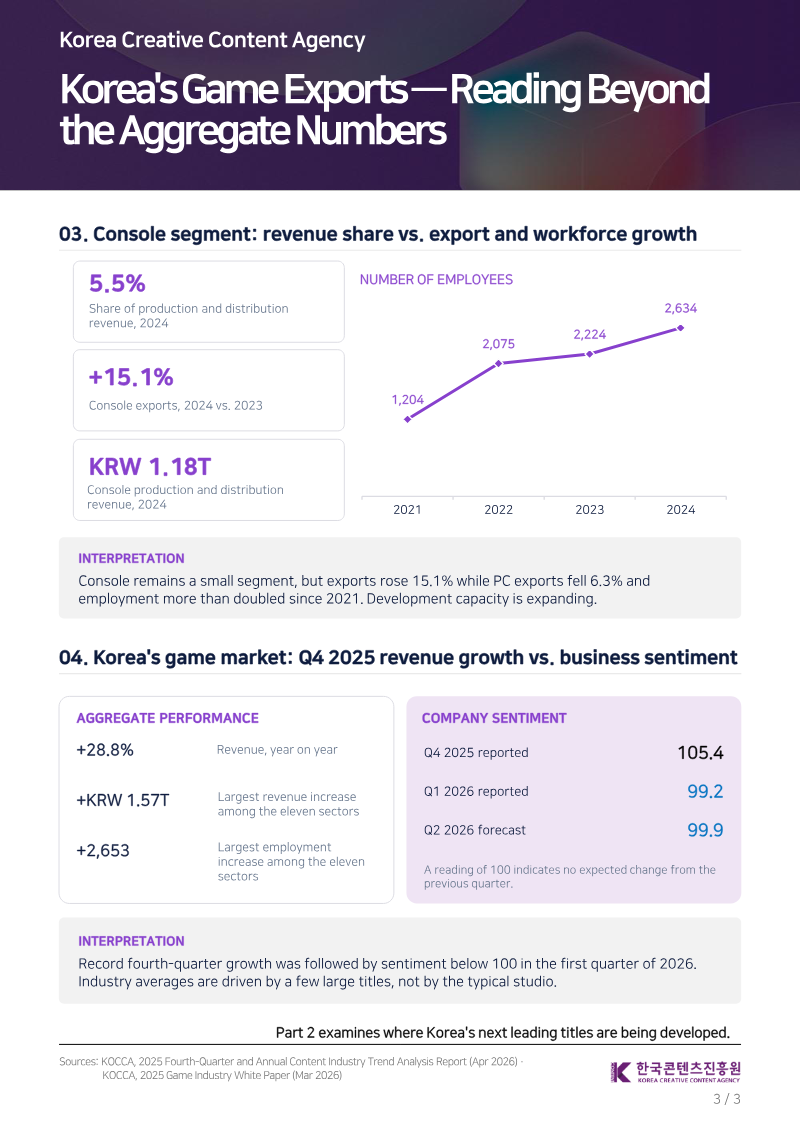

Korea's Game Exports: Reading Beyond the Aggregate Numbers
Korea's game industry posted strong aggregate results in 2025, but those figures mask a concentration in a small number of large titles, so overseas buyers should evaluate developers at the title and studio level rather than relying on industry averages.
- The South Korean game industry generated USD 8.60 billion in exports in 2025, representing 57.7% of the nation's total content export value.
- Console game exports grew by 15.1% in 2024, supported by a workforce that has more than doubled since 2021 as studios pivot development capacity.
- Mobile gaming remains the primary revenue driver, accounting for USD 5.51 billion of the industry's export total.
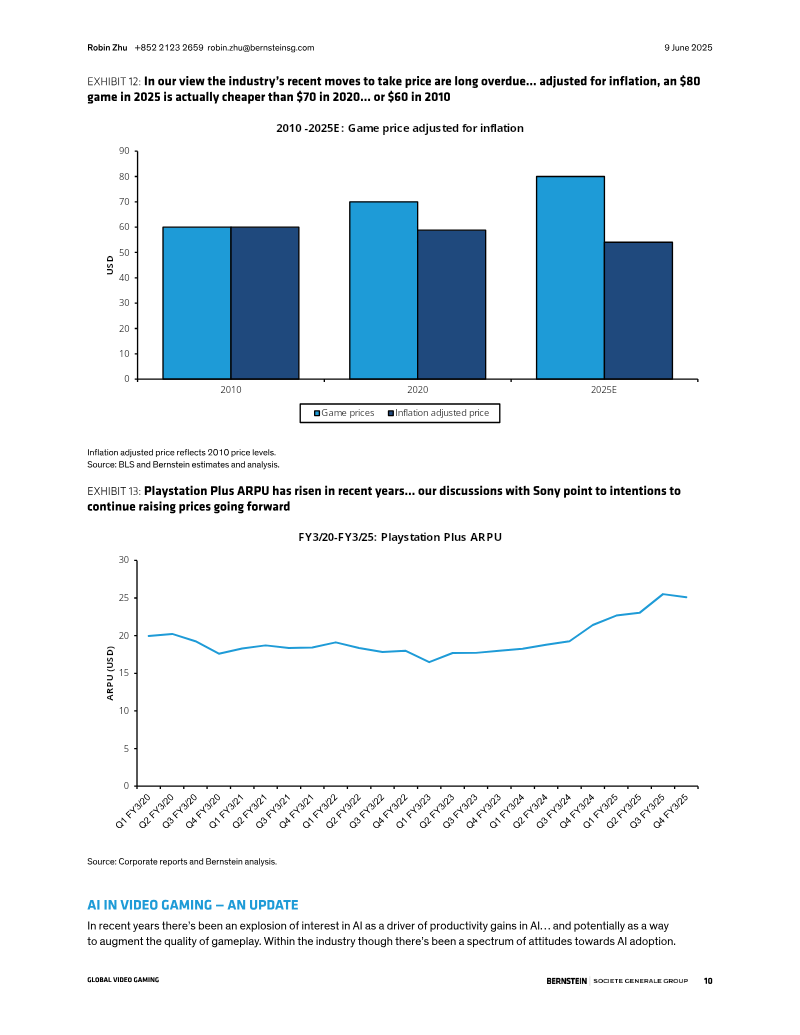
Global Video Gaming: The State of Play, 2025
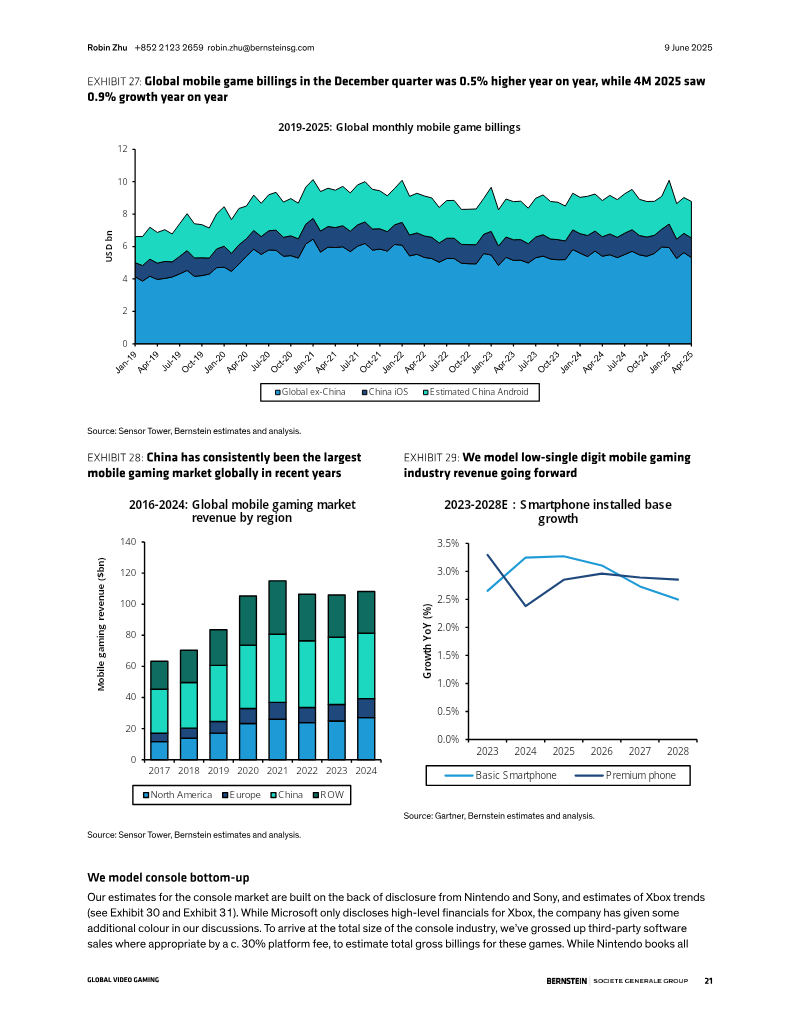
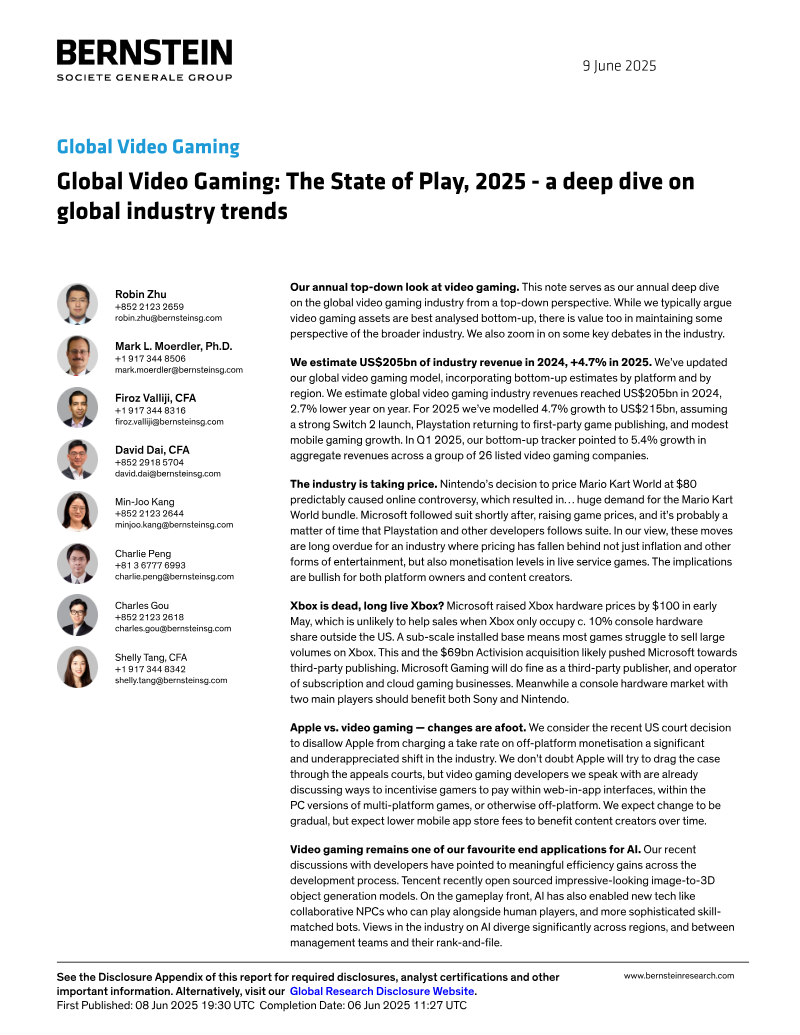
The global video gaming industry is entering a phase of stabilization and renewed growth, with total revenue projected to reach US$215 billion in 2025, representing a 4.7% increase following a 2.7% decline in 2024.
- The global video gaming industry is projected to reach $215 billion in revenue in 2025, marking a 4.7% recovery following a 2.7% decline in 2024.
- Major industry players are shifting from hardware-centric models to software-led growth, exemplified by Microsoft’s pivot toward third-party publishing and the expansion of Game Pass and cloud services.
- The PC gaming ecosystem, led by Steam, has emerged as a primary driver of industry expansion, offsetting the recalibration occurring within the console market.

Global Gaming Report 2025
The 2025 Global Gaming Report characterizes the gaming industry as a capital-intensive, scale-driven sector where competitive advantage is increasingly defined by platform ownership, intellectual property (IP) aggregation, and long-term strategic positioning rather than individual title performance.
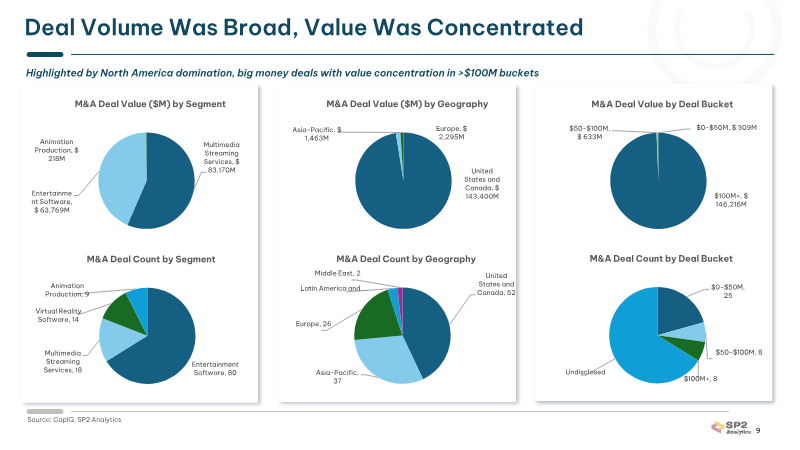
- The gaming industry saw $147 billion in M&A activity in 2025, headlined by the $83 billion Netflix-Warner Bros. merger and the $55 billion take-private acquisition of Electronic Arts.
- Market valuation is increasingly driven by platform ownership and IP aggregation, with top-tier strategic players now commanding EV/EBITDA multiples exceeding 25x.
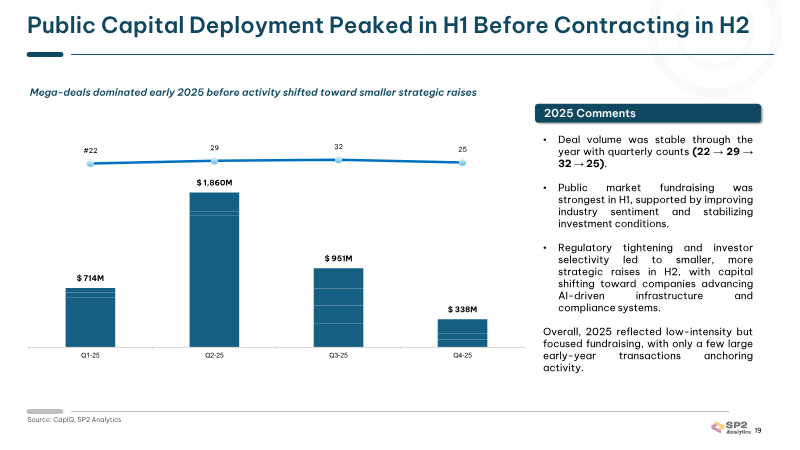
- Capital deployment has become highly concentrated, with private placement rounds for AI-driven simulation and development tools consistently exceeding $100 million per transaction.
Global Gaming Report Q1 2026
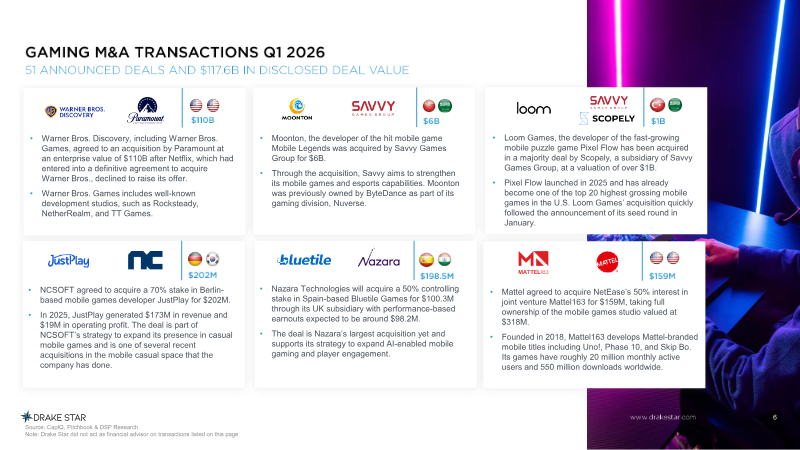
The global gaming industry experienced a complex start to 2026, characterized by a sharp divergence between high-level strategic consolidation and broader market volatility.
- M&A activity reached a 15-month peak in Q1 2026 with 51 transactions totaling over $100 billion, headlined by the Paramount acquisition of Warner Bros. Discovery and Savvy Games Group's purchase of Moonton.
- Private financing remained steady with $785 million raised across 106 deals, showing a clear investor preference for AR/XR hardware and infrastructure over traditional software.
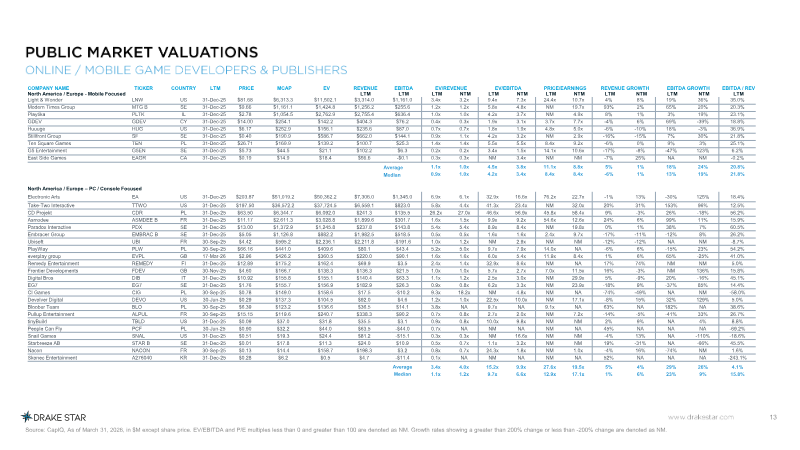
- The Drake Star Gaming Index declined by 1.8 percent, driven by market weakness in Western regions and the mobile gaming sector.

State of the Industry 2019: Mental Health in the Game Industry
The 2019 assessment of the global game industry identifies systemic organizational failures as the primary drivers of a pervasive mental health crisis among developers.
- Systemic organizational failures, specifically the normalization of chronic overwork known as crunch, are the primary drivers of a pervasive mental health crisis and burnout among game developers.
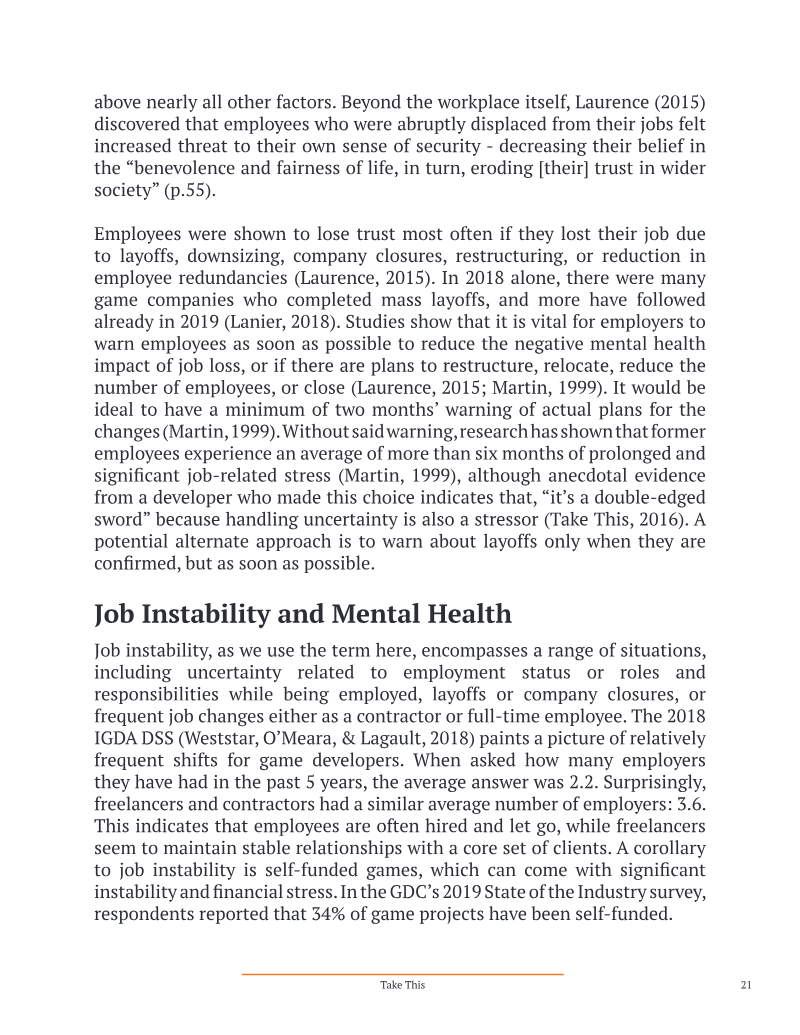
- Job instability caused by frequent layoffs and a lack of professional security creates a high-stress environment that threatens the long-term sustainability of the industry workforce.
- Exclusionary workplace cultures—characterized by harassment and microaggressions toward women, LGBTQ+ individuals, people of color, and neurodivergent employees—stifle team creativity and degrade the quality of game content.

Gaming Trendz to Watch in 2025 and Beyond: Comprehensive Player Support Strategies
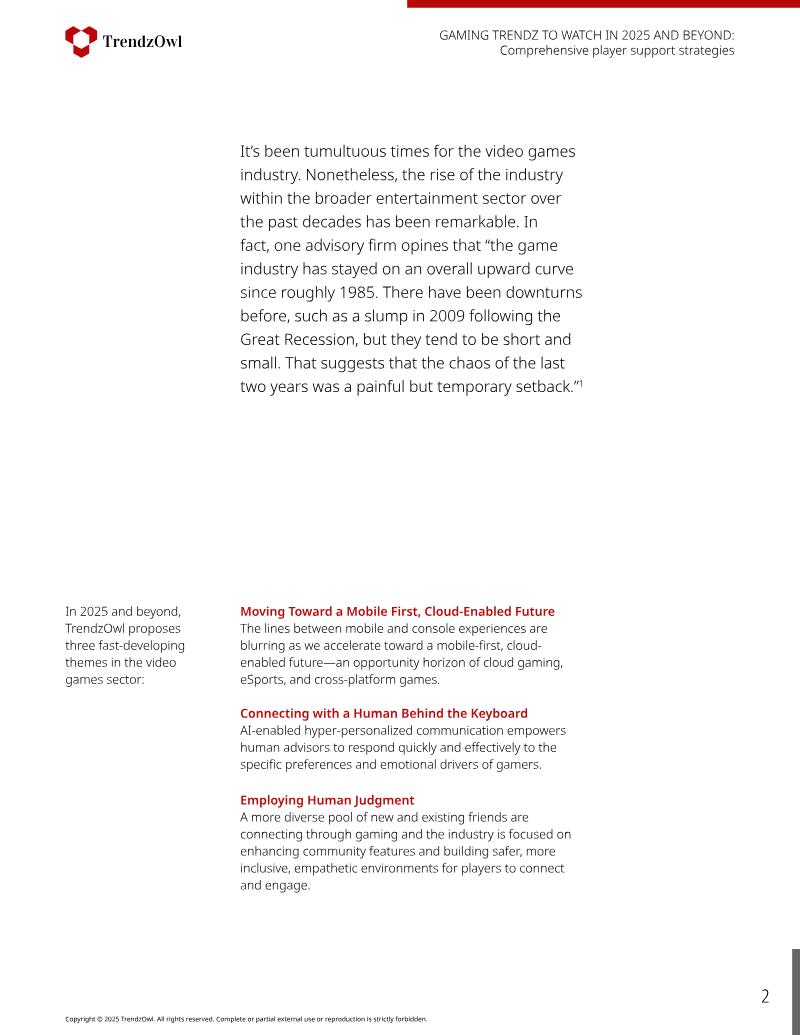
The video game industry is poised for a significant rebound in 2025 following a period of contraction characterized by layoffs and project cancellations.
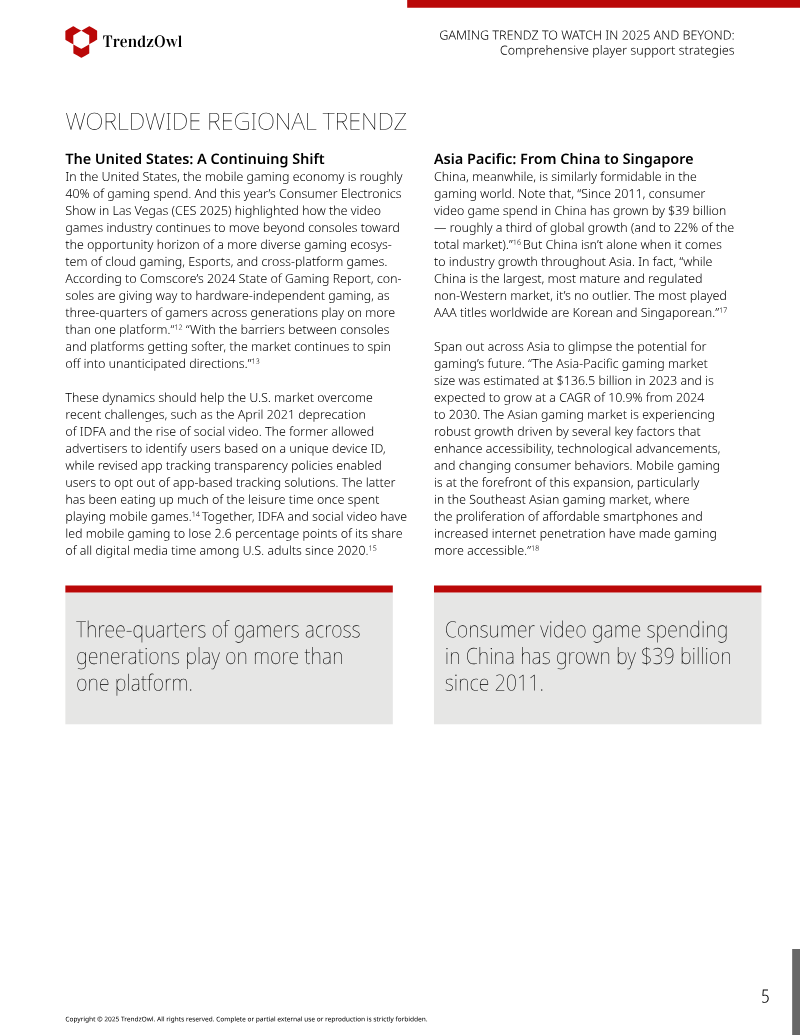
- The gaming industry is shifting toward a mobile-first, hardware-independent model, with mobile gaming now capturing 55% of the total market share.
- Providing a diverse range of contact options for player support increases customer loyalty by 41%.
- The Asia-Pacific region is projected to maintain a 10.9% compound annual growth rate through 2030, while Africa’s market is expanding six times faster than the global average.

State of the Industry Report 1999
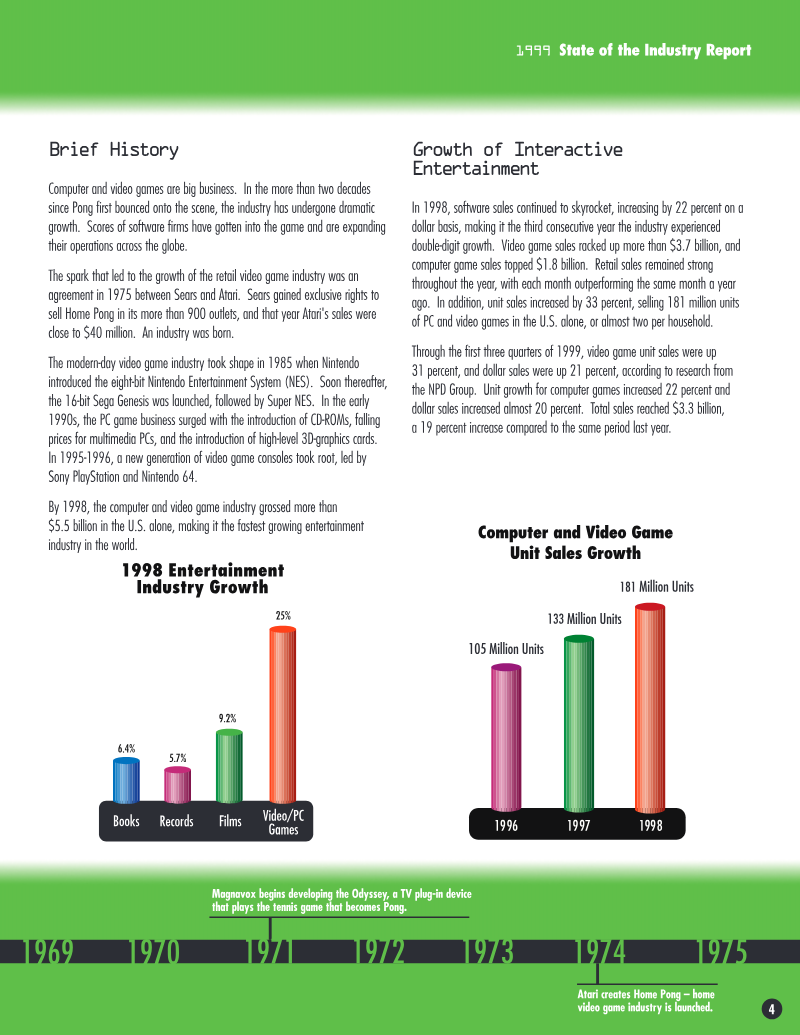
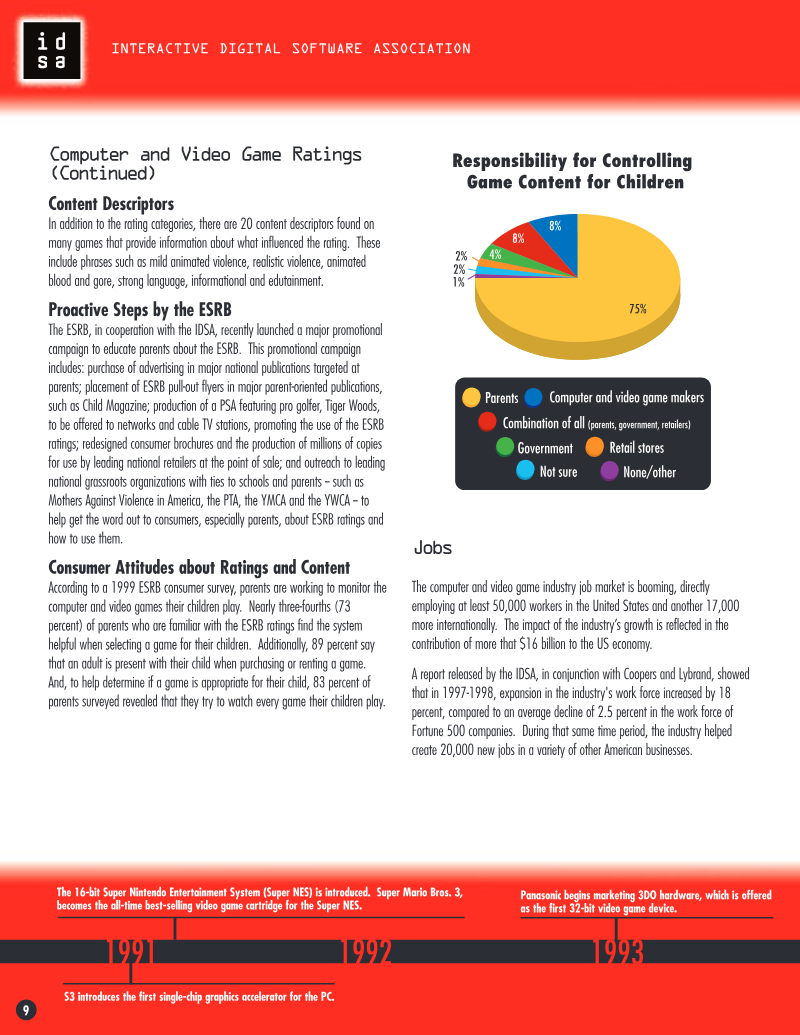
The 1999 State of the Industry Report provides a comprehensive overview of the interactive entertainment sector, documenting its rapid evolution into a dominant force in the global home entertainment market.
- The U.S. interactive entertainment industry reached $5.5 billion in sales by 1998, marking three consecutive years of double-digit growth and positioning software revenue to rival motion picture box office receipts by the end of 1999.
- The industry is a significant economic driver, directly employing 50,000 workers in the U.S. and contributing over $16 billion to the national economy.
- Gaming has shifted to a mainstream adult demographic, with individuals aged 18 or older now comprising 69 percent of PC players and 54 percent of console players.


Q3 2015 Data Digest
The Q3 2015 Data Digest provides a comprehensive analysis of the iOS mobile application market, focusing on global and U.S. trends in downloads, revenue, and advertising strategies.
- Gaming remains the dominant App Store category, generating over 20 times the revenue of the next leading category.
- Clash of Clans maintained its lead in Q3 2015, though Game of War significantly narrowed the revenue gap in the U.S. market.
- Aggressive advertising on the Facebook network, particularly using high-production image and video assets, shows a strong correlation with increased revenue for gaming and lifestyle apps like those from ContextLogic.