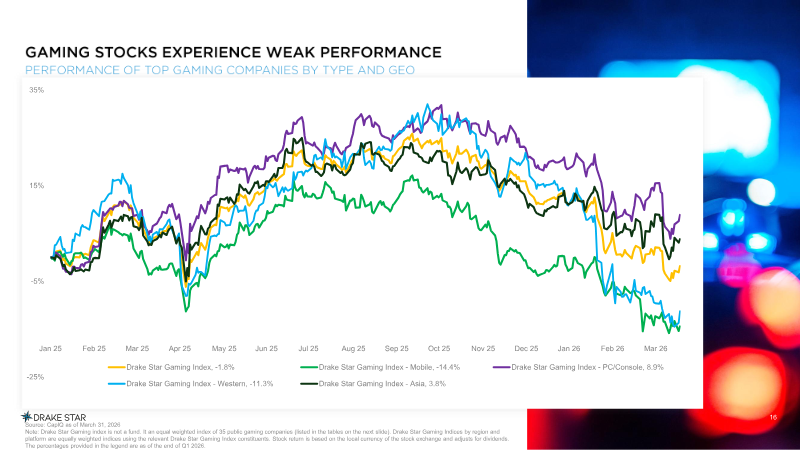
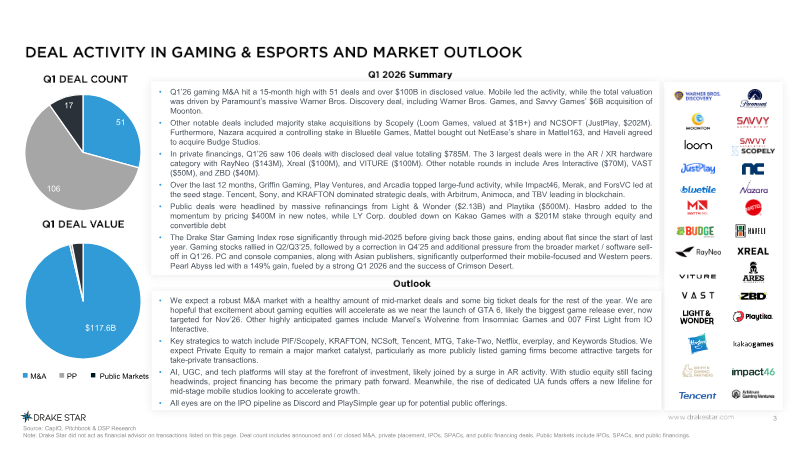
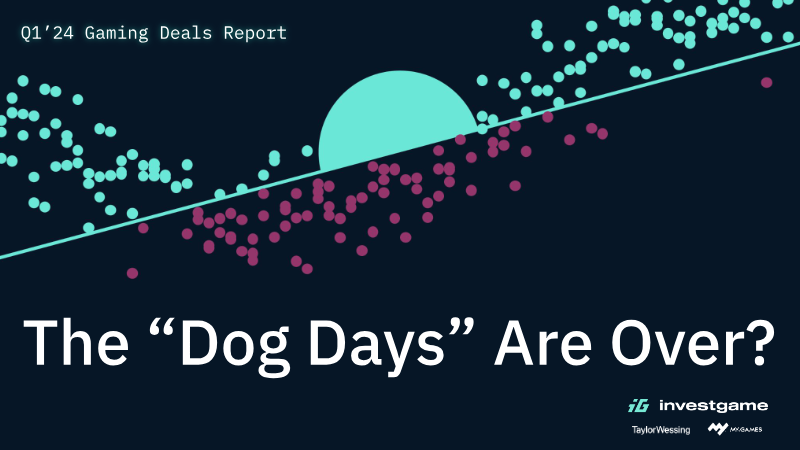
The global gaming industry experienced a complex start to 2026, characterized by a sharp divergence between high-level strategic consolidation and broader market volatility. While the Drake Star Gaming Index recorded a 1.8 percent decline, reflecting underlying weakness in Western markets and the mobile gaming sector, the landscape for large-scale capital deployment remained exceptionally aggressive. Total merger and acquisition activity reached a 15-month peak, with 51 transactions valued at over $100 billion. This surge was anchored by transformative industry shifts, most notably the acquisition of Warner Bros. Discovery by Paramount and the purchase of Moonton by Savvy Games Group.
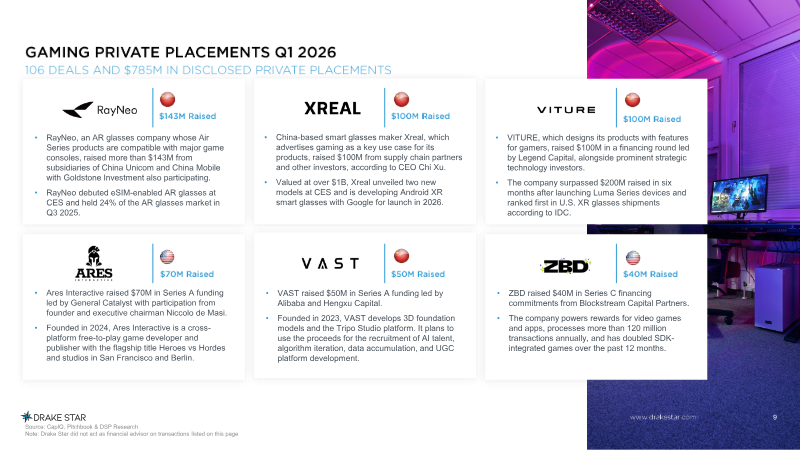
Private financing maintained steady momentum throughout the first quarter, totaling $785 million across 106 deals. Investor interest shifted decisively toward infrastructure and immersive technology, as evidenced by the three largest funding rounds being secured by companies specializing in AR/XR hardware. Furthermore, significant Series A and C rounds for firms such as Ares Interactive, VAST, and ZBD underscore a continued appetite for innovation within the development and platform ecosystems. Despite these pockets of growth, public market performance remained inconsistent, with hardware and platform providers like NVIDIA and AppLovin significantly outperforming traditional game publishers.
Geographically, the industry faced a fragmented recovery, as modest growth in Asian markets and the PC/Console segment failed to offset the downturns observed in Western mobile gaming. Looking forward, the sector is positioned for continued M&A activity, with market momentum expected to rely heavily on the success of upcoming high-profile game releases and the potential for new public offerings. The variance in EBITDA multiples and stock returns across regions suggests that while capital remains available, investors are increasingly selective, favoring hardware-centric platforms over legacy publishing models.