1 free read left. Create a free account for unlimited reading + AI research.
Create free accountWhitepaperLancaster University
This research explores the viability of visual abstraction as a deliberate design choice for modern video games, challenging the industry’s long-standing trend toward increasing graphical realism. By developing a two-player, side-scrolling game displayed on a low-resolution LED matrix, the study investigates whether highly abstracted graphics negatively impact player engagement or learnability. The project aims to determine if abstraction can serve as a functional design strategy for large-scale, public-facing interactive displays.
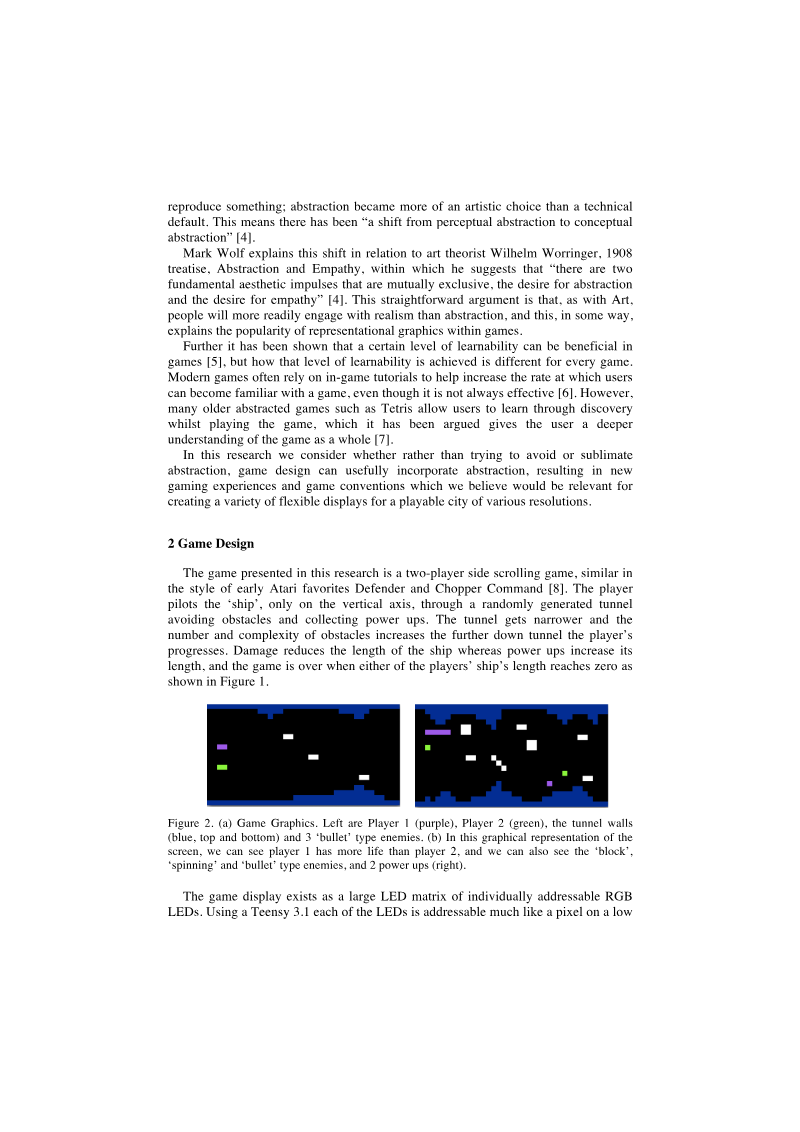
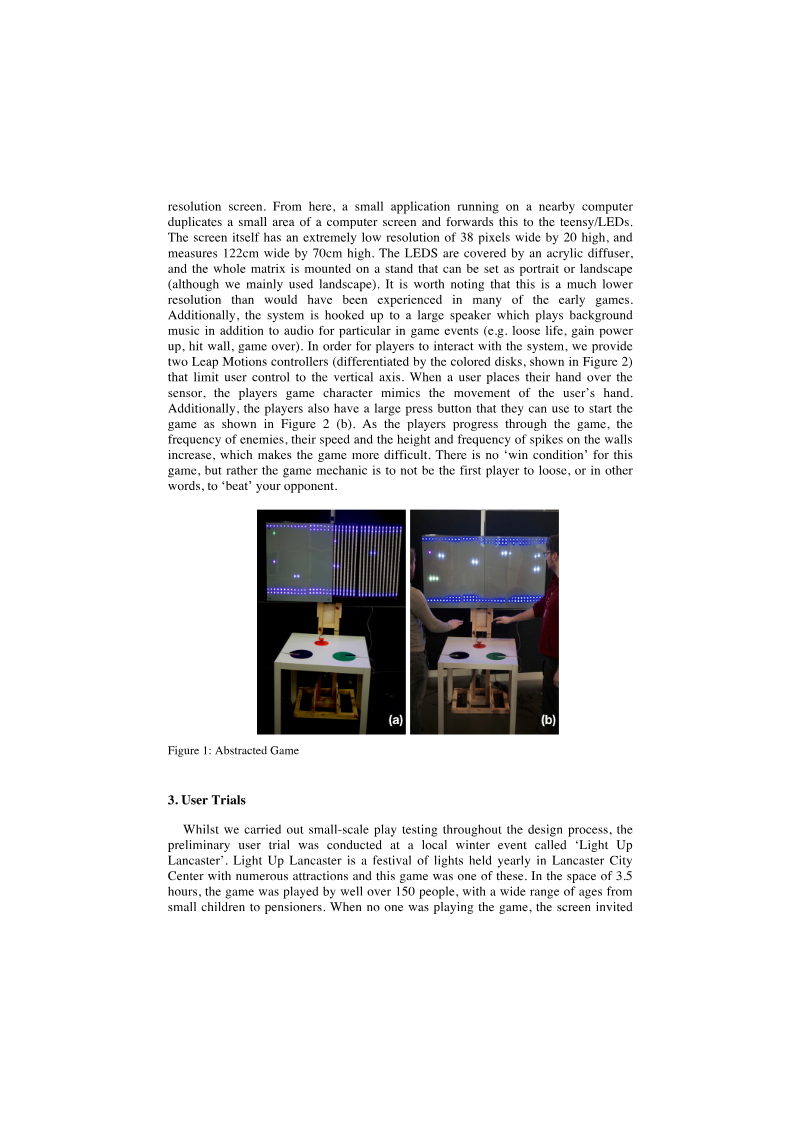
The methodology involved deploying the game at the "Light Up Lancaster" festival, where over 150 participants across a broad demographic range engaged with the system over a 3.5-hour period. The game utilized a 38-by-20 pixel LED display and Leap Motion controllers, requiring players to navigate obstacles and collect power-ups. Because the low-resolution interface lacked traditional text-based tutorials, the design relied on discovery-based learning and physical interaction.
Findings indicate that extreme visual abstraction does not diminish player engagement. While the abstract nature of the game made initial mechanics less intuitive, this difficulty fostered increased social interaction, as players frequently collaborated to decipher game rules and shared their findings with spectators. The study concludes that abstraction is a highly effective and viable design option for public city displays. By moving away from the industry's focus on representational fidelity, developers can create unique, accessible gaming experiences that encourage social communication and discovery, suggesting that the role of abstraction in contemporary game design remains an underexplored and promising area for future development.
European Conference on Games Based Learning (ECGBL) · 2026




























Comments