Game Studies reports and market data
Documents


Linguistic Landscape in Film Works and Video Games
This paper examines how linguistic landscape, the visible language on signs and public displays, functions within fictional works, specifically films and video games.
- The paper argues that linguistic landscape, the visible language on signs and public displays, can be used by filmmakers and game designers to convey politics, economies, and identities in invented worlds, drawing on the established view that it reveals social structure and language hierarchy in real societies.
- The analysis is qualitative and case-based, based on close readings of two films (Blade Runner, 1982) and two video games (Deus Ex, 2000; Fallout 3, 2008) rather than on survey data or statistical sampling.
- In Blade Runner, dense neon advertising and a mix of English, Chinese, Japanese, Russian, and Spanish signage express concerns about corporate capitalism and globalization, tied to Reagan-era economic policy.
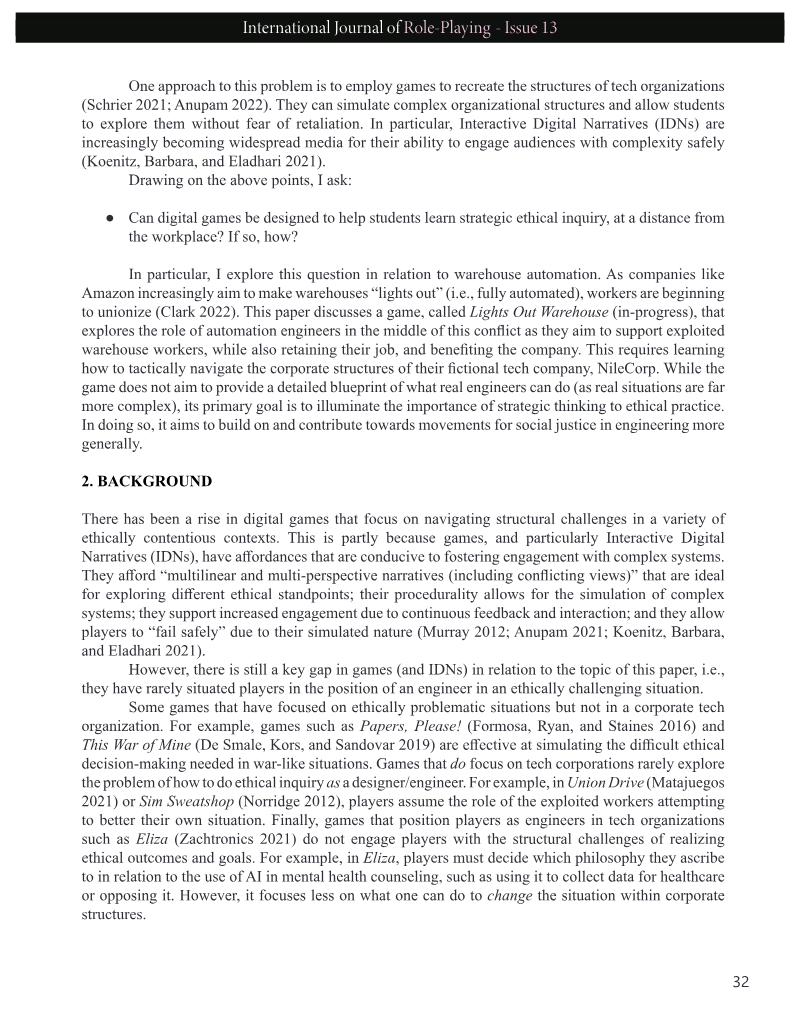
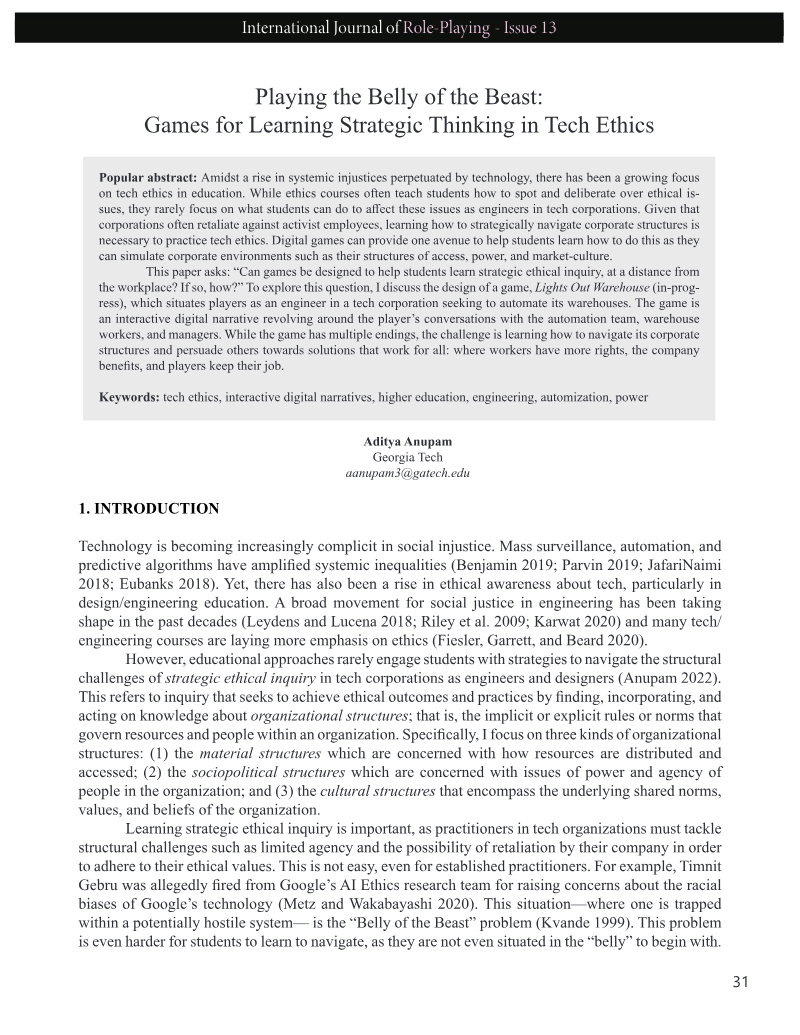
Playing the Belly of the Beast: Games for Learning Strategic Thinking in Tech Ethics
This paper, presented as an in-progress design study by Aditya Anupam of Georgia Tech, argues that tech ethics education has focused heavily on identifying ethical problems while neglecting the strategic skills engineers need to act on them within corporate environments, where dissent can bring retaliation.
- Tech ethics education has concentrated on spotting ethical problems while neglecting the strategic skills engineers need to act on them inside corporations, where dissent can invite retaliation.
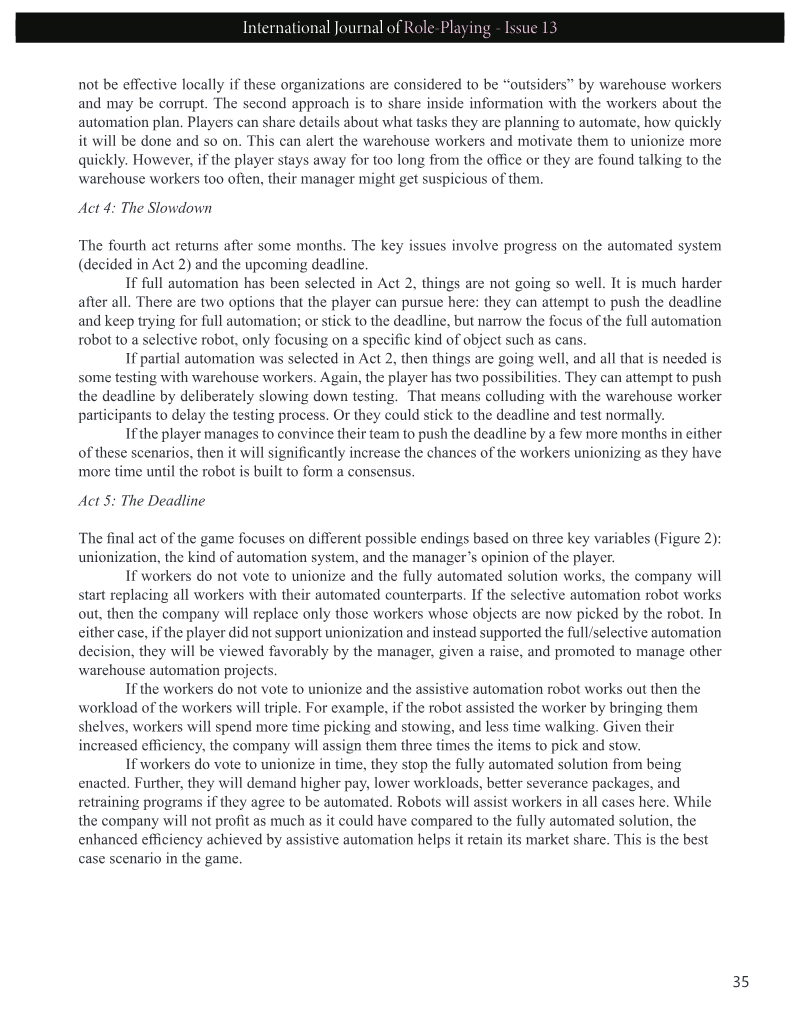
- The paper proposes interactive digital narratives as a way to teach strategic ethical inquiry at a safe distance from the workplace, illustrated by the prototype game Lights Out Warehouse.
- In Lights Out Warehouse, players are automation engineers at the fictional e-commerce firm NileCorp, balancing outcomes that support workers, the company, and their own jobs.

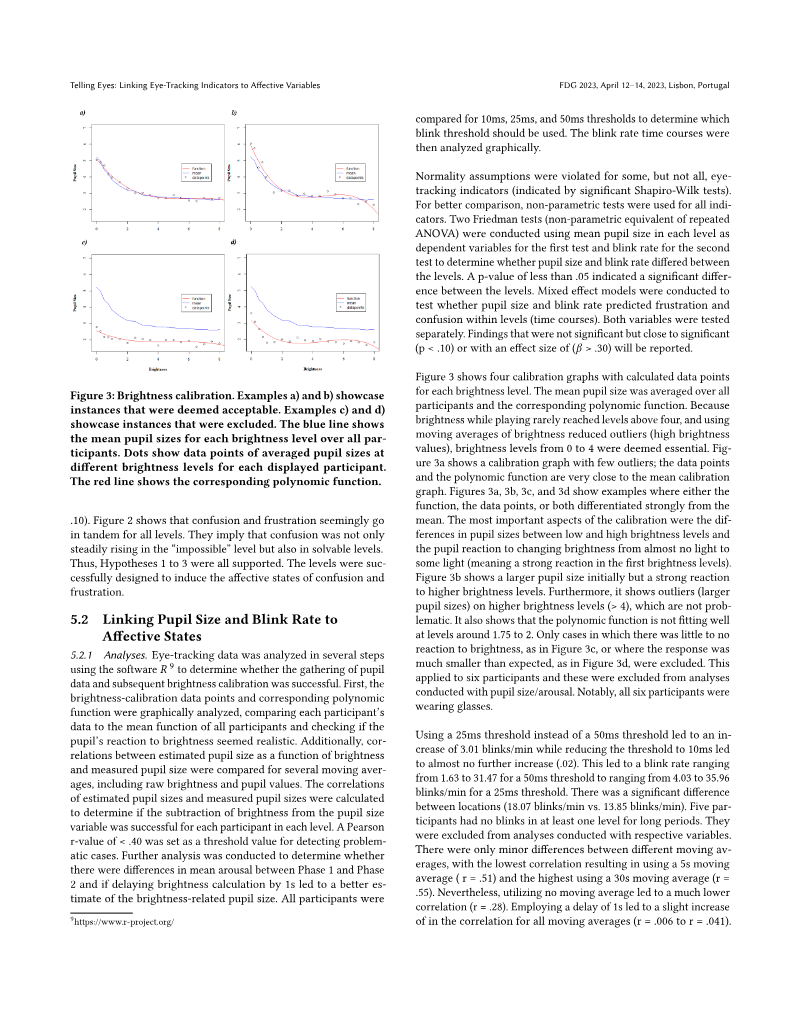
Telling Eyes: Linking Eye-Tracking Indicators to Affective Variables
Virtual reality gaming environments offer a unique opportunity to implement adaptive gameplay systems that respond to a player’s emotional state in real time.
- Blink rate and the ratio of fixations to saccades are more reliable indicators of player confusion and frustration than pupil size.
- Pupil dilation is currently an unreliable metric for affective assessment in VR due to frequent luminance fluctuations that obscure physiological signals.
- Research using the game Pertubatio with 39 participants confirms that game design can effectively induce measurable states of confusion, which act as a significant predictor of subsequent frustration.



Wrapped in Story: The Affordances of Narrative for Citizen Science Games
Integrating narrative elements into citizen science games serves as a potent strategy for increasing player engagement, particularly during the critical onboarding phase.
- Integrating narrative elements into citizen science platforms like Foldit significantly increases player engagement and time-on-task during the critical onboarding phase.
- Narrative frameworks function as a bridge that transforms abstract data analysis into an immersive experience, effectively increasing the time users spend interacting with complex scientific puzzles.
- Storytelling does not inherently guarantee accelerated progression through advanced levels or increased long-term participation in scientific research.

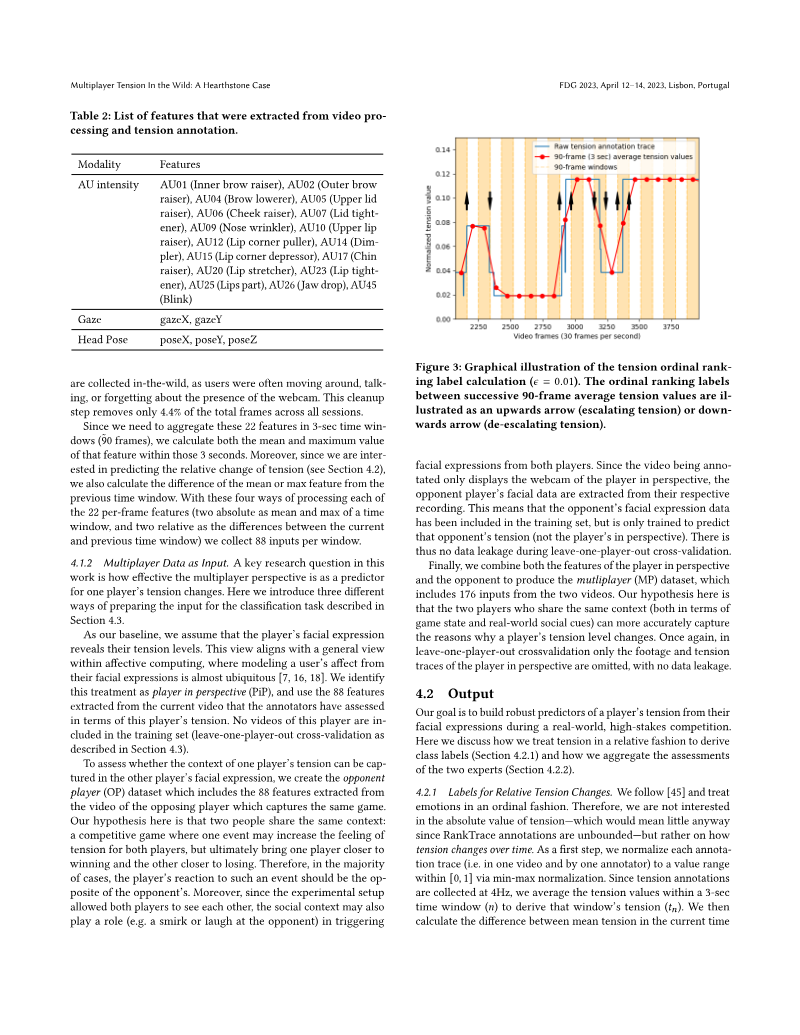
Multiplayer Tension in the Wild: A Hearthstone Case
Competitive gaming environments generate complex affective states that are difficult to quantify outside of controlled laboratory settings.
- Unobtrusive webcam data analyzed via Random Forest classifiers can predict internal player tension with up to 79.2% accuracy in high-stakes competitive settings.
- Incorporating facial expression data from both participants improves mean prediction accuracy to 66.3%, demonstrating that emotional states in gaming are inherently relational.
- Models that focus exclusively on a single player overlook critical behavioral cues, as multiplayer context is essential for accurately interpreting affective responses.

Tutorial Level Design Guidelines for 2D Fighting Games
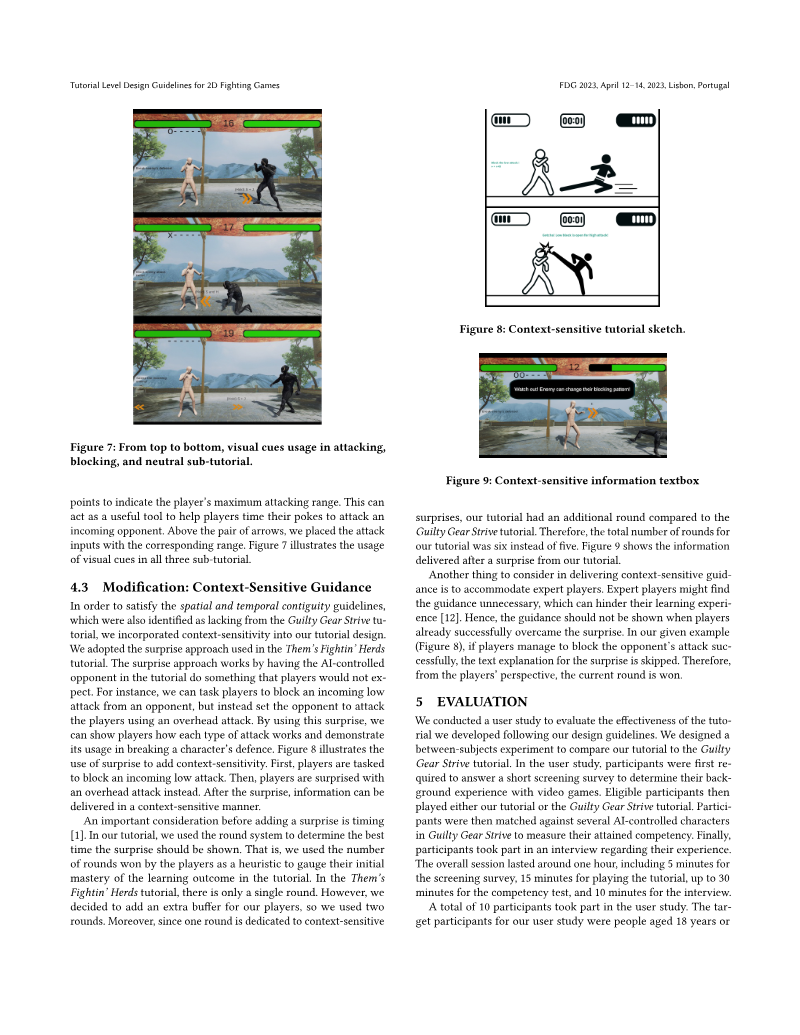
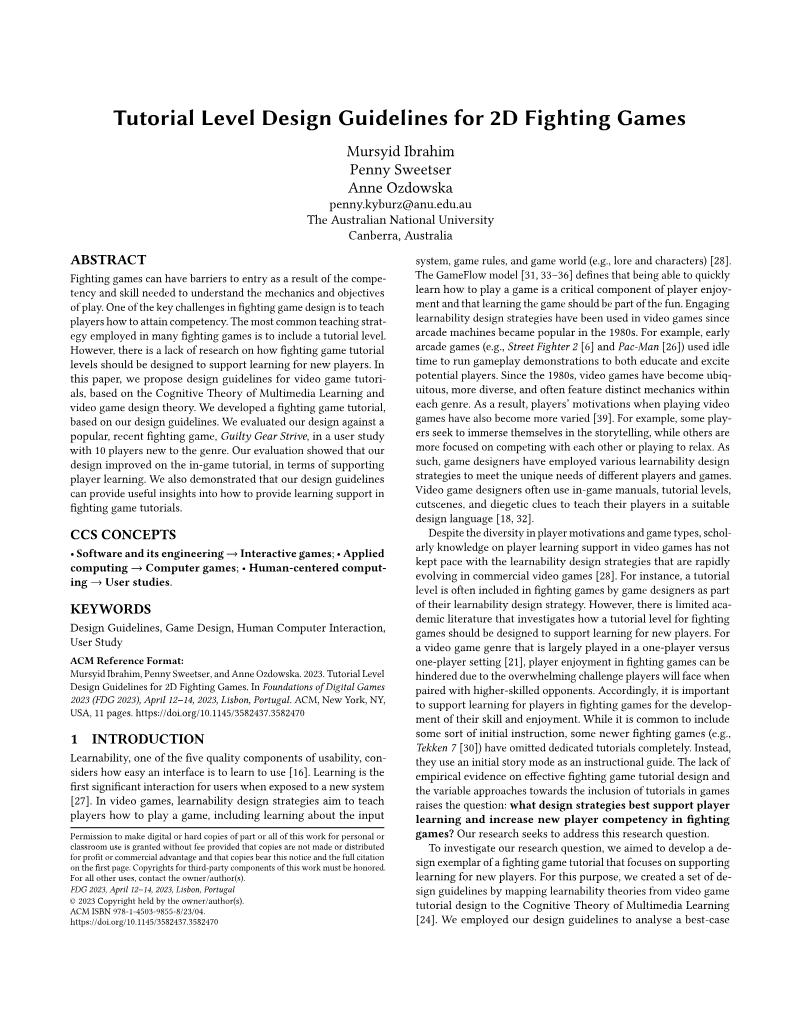
Standardizing tutorial design in 2D fighting games remains a critical challenge for developers seeking to lower the high barrier to entry inherent in the genre.
- Tutorials designed using the Cognitive Theory of Game Learning achieved a 100% completion rate, compared to a 75% completion rate in the baseline Guilty Gear Strive tutorial.
- Managing cognitive load through information segmentation, visual signaling, and context-sensitive guidance is essential for lowering the high barrier to entry in 2D fighting games.
- While the proposed framework significantly improved player engagement and tutorial completion, it did not yet result in statistically significant improvements in measurable player competency.
Designing for Playfulness in Human-AI Authoring Tools
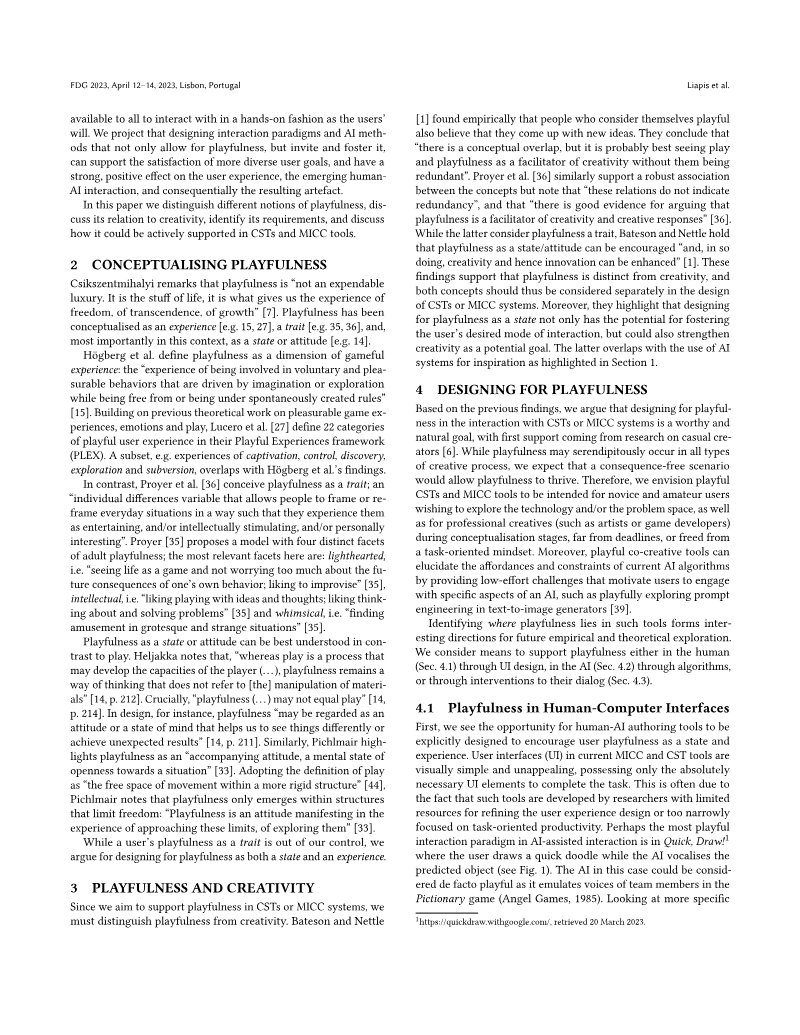
The primary purpose of this analysis is to advocate for the integration of playfulness into the design of human-AI authoring tools, including Creativity Support Tools (CSTs) and Mixed-Initiative Co-Creativity (MICC) systems.
- Human-AI authoring tools should shift from a purely productivity-focused design to one that intentionally incorporates playfulness to better support exploratory and task-agnostic user behaviors.
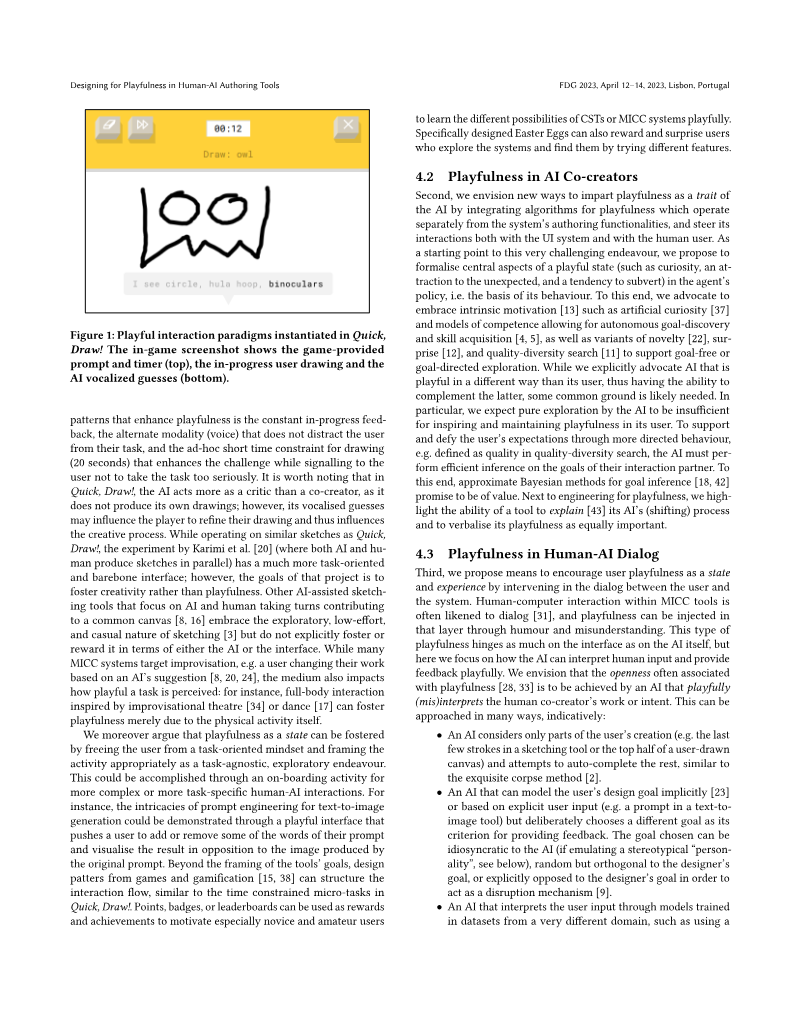
- Designers can foster playful states in interfaces through gamification, such as time-constrained micro-tasks, the inclusion of Easter eggs, and simplified, non-intimidating environments.
- AI algorithms can be engineered to act as collaborative partners rather than simple output tools by incorporating artificial curiosity, intrinsic motivation, and quality-diversity search.
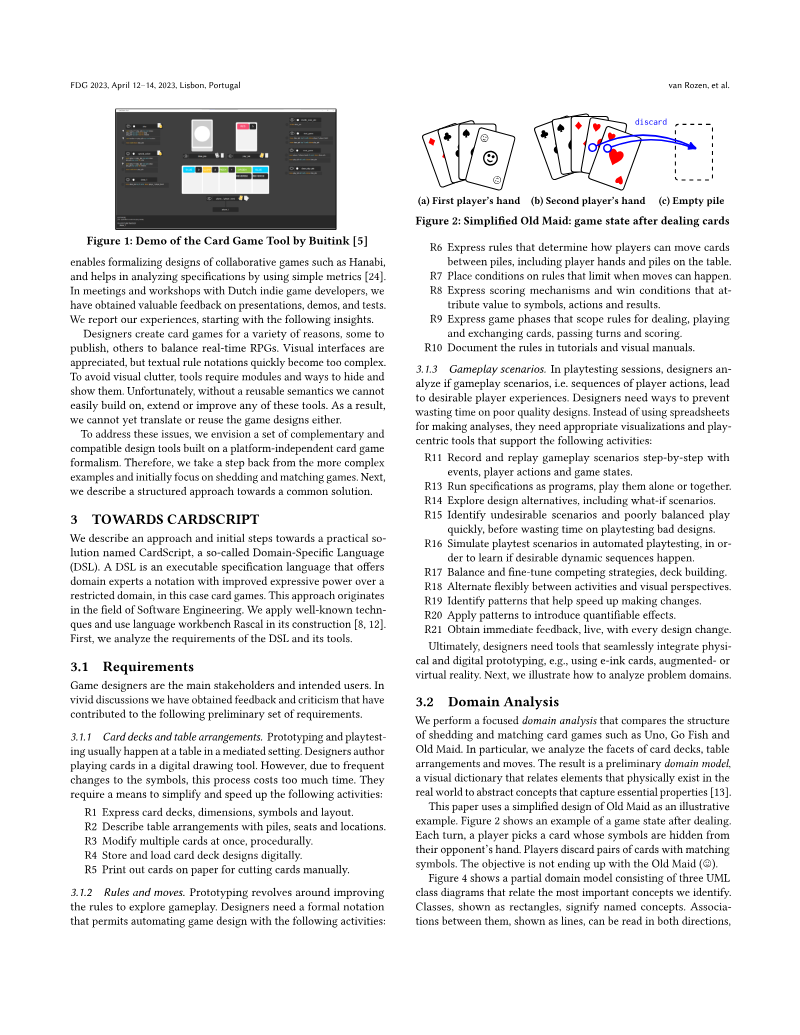
Towards a Unified Language for Card Game Design
The development of a unified language for card game design aims to bridge the gap between physical cardboard prototyping and digital game development.
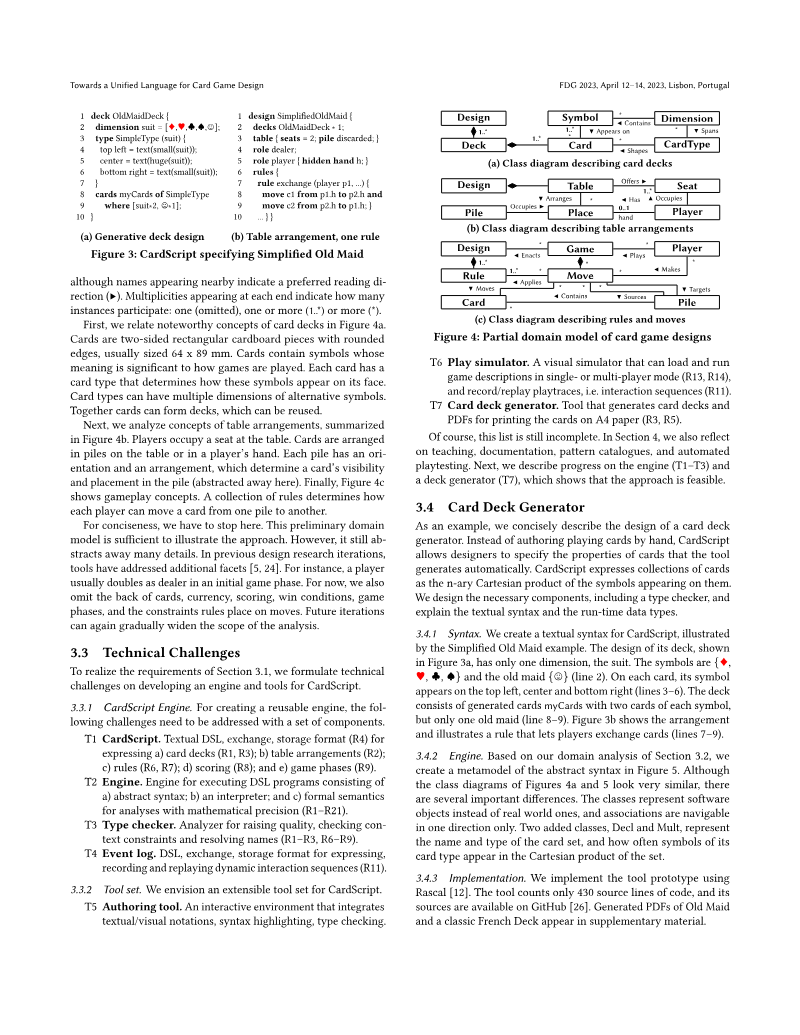
- The development of 'CardScript,' a domain-specific language built on the Rascal language workbench, provides a standardized framework to bridge the gap between physical prototyping and digital game development.
- CardScript enables automated deck generation and formal rule specification, as demonstrated by a successful functional prototype of the game Old Maid.
- The toolkit integrates textual and visual notations to support advanced design features, including event logging, step-by-step gameplay replays, and automated playtesting.



Modifying a Game to Study the Impact of Hostile Environments on Foraging Behavior
This pilot study evaluates the efficacy of a modified 3D video game, Shinobi Valley, as a research tool for examining the impact of hostile environments on human foraging behavior.
- A pilot study using the 3D game 'Shinobi Valley' with 18 adult participants confirmed that introducing predatory NPCs significantly increases self-reported stress levels compared to non-hostile environments.
- Despite elevated stress levels, the hostile environment failed to produce measurable behavioral shifts, as item collection rates and timing remained consistent across both test conditions.
- The study utilized a within-subject design to track in-game metrics, including player location, distance traveled, and item collection frequency, alongside subjective stress and spatial presence surveys.

The Challenge of Evaluating Player Experience in Tabletop Role-Playing Games
Tabletop role-playing games have experienced significant growth, yet they currently lack a standardized, formal methodology for evaluating player experience.
- Tabletop role-playing games currently lack a standardized, formal methodology for evaluating player experience, unlike the established frameworks available in digital gaming.
- A new evaluation instrument must quantify six core components: cognitive challenge, immersion, agency, character attachment, group dynamics, and the role of the Game Master as a referee.
- The unique, unscripted nature of tabletop gaming requires an evaluation tool that accounts for fluid storytelling and the specific influence of Game Masters on group dynamics.


How Can a Foundation Be Outlined for a Successful Serious Game to Increase Reading Engagement
Integrating serious games into high school literature curricula serves as a powerful pedagogical strategy to enhance student engagement, particularly regarding focused attention and reward mechanisms.
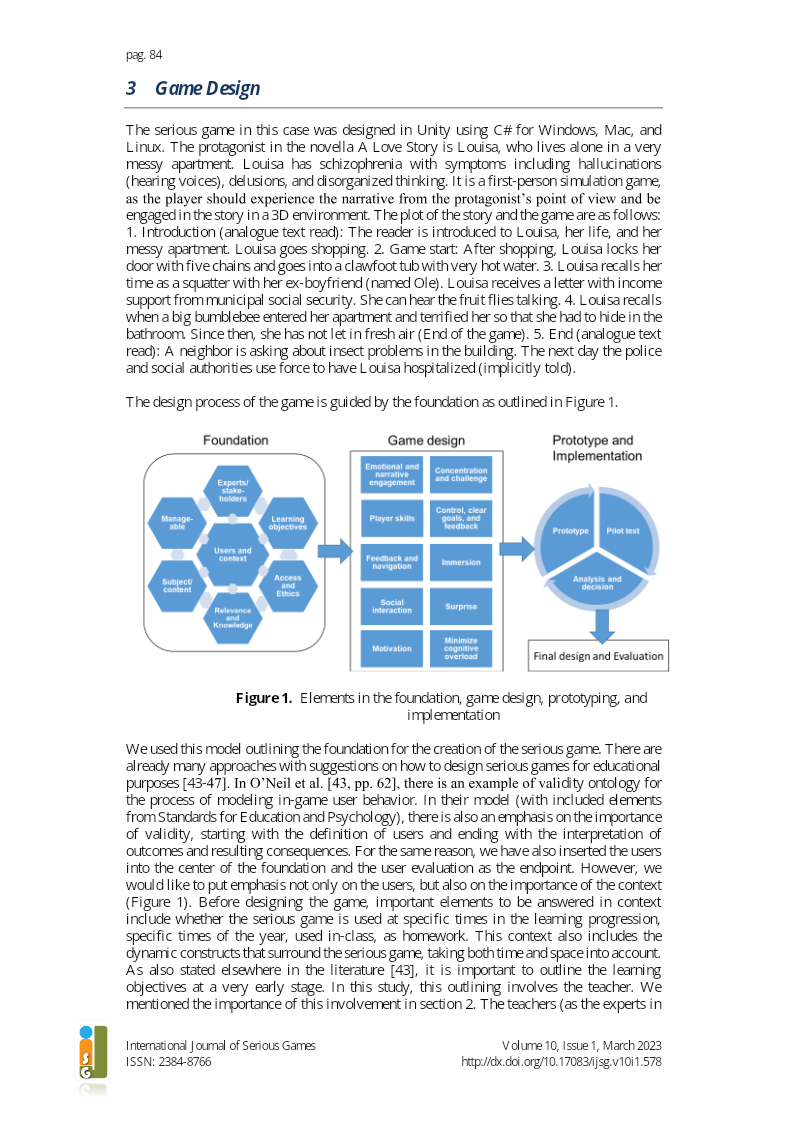
- Successful serious games for literature require a structured design framework that mandates close collaboration between educators and developers to ensure mechanics align with specific learning objectives.
- Serious games should function as a complementary pedagogical resource rather than a replacement for traditional reading to avoid novelty bias and support deeper literary analysis.
- Immersive 3D environments that simulate a protagonist’s perspective increase student absorption and improve the identification of narrative details compared to analog methods.


The Effects of Surprising Events on Promoting Social Change in Unwinnable Persuasive Games
Persuasive games designed to be unwinnable often struggle to balance player engagement with the delivery of a social message.
- Surprise acts as a viable substitute for long playtimes in persuasive games, as withholding context until a surprising event maintains consistent donation levels regardless of session duration.
- In games where persuasive intent is disclosed at the start, donation amounts are directly correlated with the length of gameplay sessions.
- Despite positive self-reported willingness to help, there is no statistically significant difference in actual donation behavior between players of these persuasive games and control groups.