Game Studies reports and market data
Documents

What We Talk About When We Talk About Game Aesthetics
Game aesthetics has long been undertheorized, often reduced to graphics or "eye candy" despite its capacity to illuminate games as embodied, sensory, and pleasurable experiences.
- Game aesthetics has been undertheorized and often reduced to graphics or 'eye candy', despite its capacity to illuminate games as embodied, sensory, and pleasurable experiences.
- The core thesis holds that aesthetics cannot be separated from play: sensory experience, bodily engagement, and the physical context of play all shape how games produce meaning and pleasure.
- Aesthetic terminology appeared in roughly 10 percent of DiGRA 2003 papers but fell to under 4 percent by 2005 and 2007, which the authors read as evidence that dominant design frameworks have marginalized the topic.

Evolution and Digital Game Studies
This paper argues that evolutionary psychology can make a valuable contribution to digital game studies, which have largely been shaped by cultural and humanities-based frameworks such as those of Johan Huizinga and cultural relativist approaches to play.
- The paper argues that digital game studies have been dominated by humanities and cultural frameworks (notably Huizinga's view of play as cultural), and that evolutionary psychology can make a valuable complementary contribution.
- It contrasts two lineages of play research: Karl Groos's functionalist view of play as evolutionary preparation for adult life, and Huizinga's cultural-phenomenon account.
- The authors use Tooby and Cosmides' Integrated Causal Model to critique the Standard Social Science Model, which treats the mind as a blank slate and separates culture from biology, and propose examining digital gaming through evolved cognitive modules.


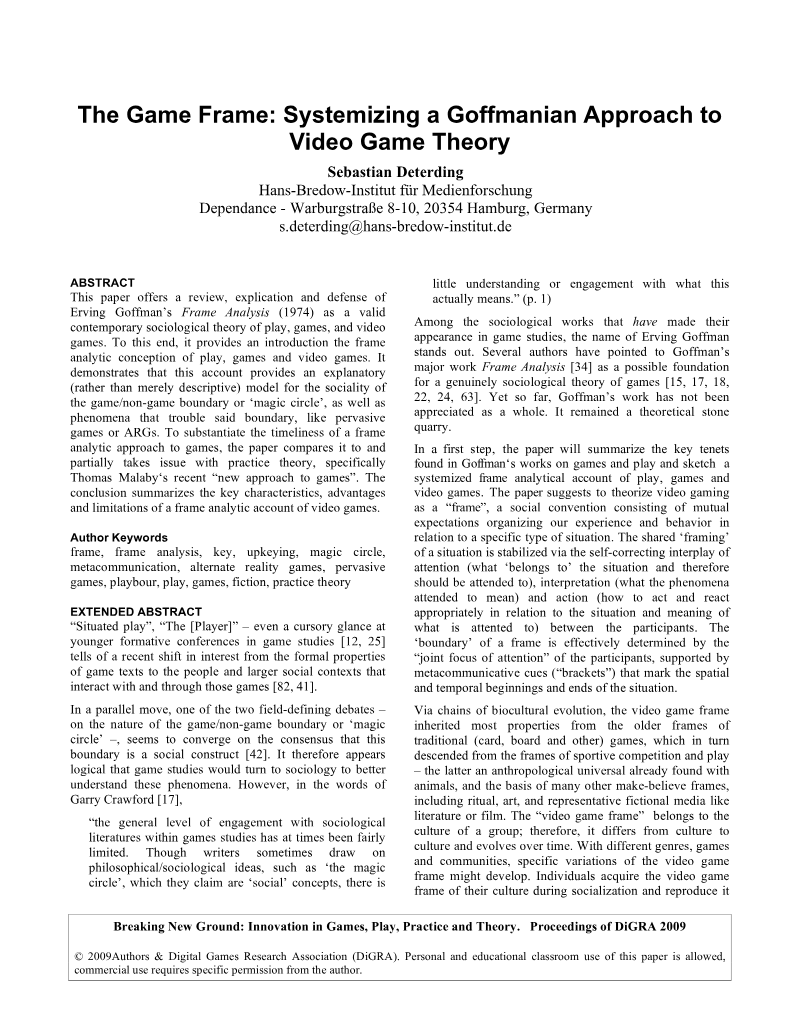
The Game Frame: Systemizing a Goffmanian Approach to Video Game Theory
Sebastian Deterding's paper argues that Erving Goffman's Frame Analysis (1974) offers a valid and underused sociological theory for understanding play, games, and video games.
- Deterding argues that Erving Goffman's Frame Analysis (1974) is a valid but underused sociological framework for understanding play, games, and video games, offered as an extended abstract for DiGRA 2009.
- The paper proposes treating the video game as a social frame: a convention of mutual expectations stabilized through metacommunication, joint attention, interpretation, and action among participants.
- Frame analysis is positioned as an alternative to the long-dominant 'magic circle' metaphor, which many scholars regard as socially constructed but have never explained mechanistically.



International Journal of Role-Playing: Issue 1
The inaugural issue of the International Journal of Role-Playing positions itself as a hybrid knowledge network linking academia, industry, the arts, and player communities, and its central aim is to establish a more rigorous scholarly foundation for the study of role-playing games.
- The inaugural International Journal of Role-Playing identifies the lack of a widely accepted definition of a role-playing game as a major obstacle to research, and proposes a provisional working definition built on participants, game world, player-controlled characters, character development, interaction, and emergent narrative.
- Markus Montola characterises role-playing as a social process governed by an imaginary game world, a distributed power structure, and personified characters, with objectives arising from diegetic and exogenous frames rather than endogenous rules.
- Erik Champion's case study of Bethesda's The Elder Scrolls IV: Oblivion finds the game strong in environmental presence but weaker in social and cultural presence, and suggests design remedies such as dynamic NPC responses and persistent player-influenced artefacts.

Play and the Private
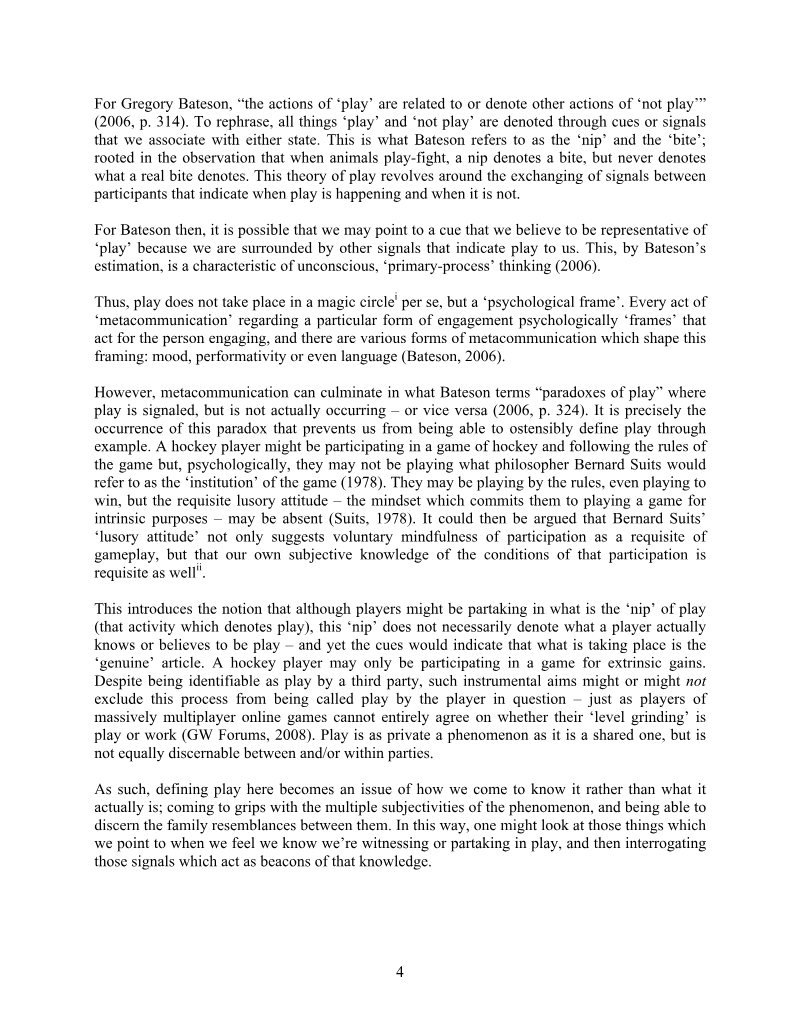
Traditional attempts to define play through rigid, ontological frameworks fail because they overlook the inherent subjectivity and fluidity of the experience.
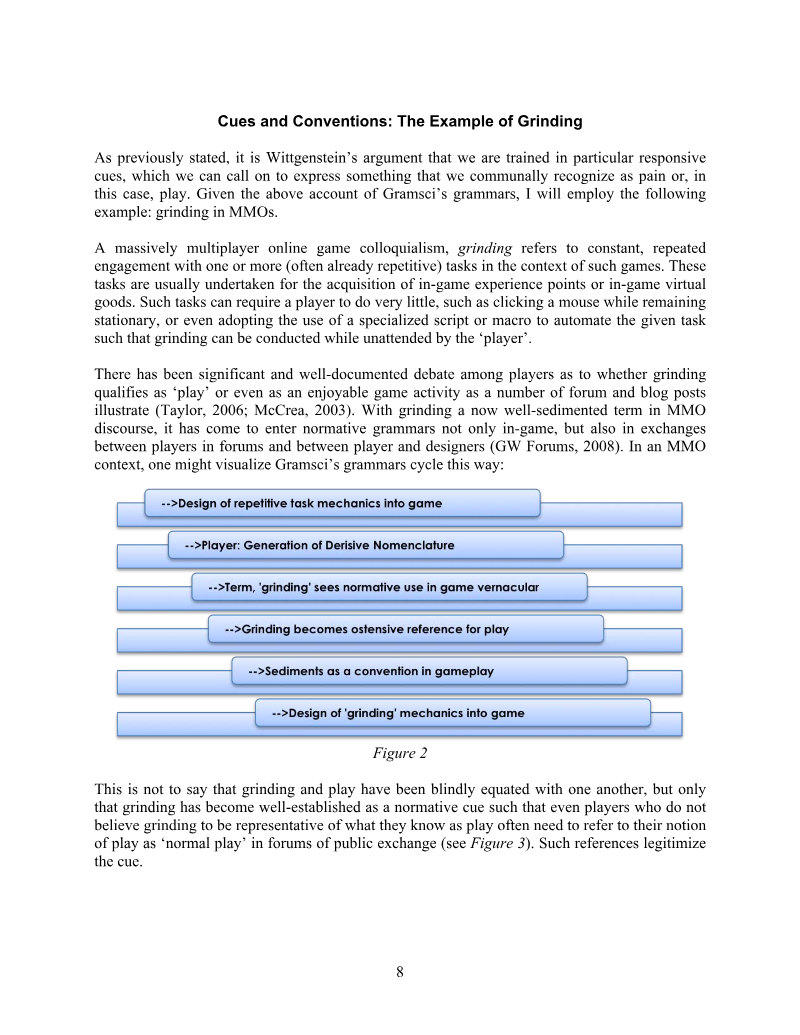
- Play should be analyzed as a series of learnable, communal cues rather than a universal, rigid ontological concept.
- Developers can better understand market dynamics and user engagement by analyzing player-generated linguistic grammars, such as the evolution of terms like 'grinding'.
- The industry must move away from binary frameworks like 'work versus play' in favor of studying how individuals subjectively label their experiences within social contexts.

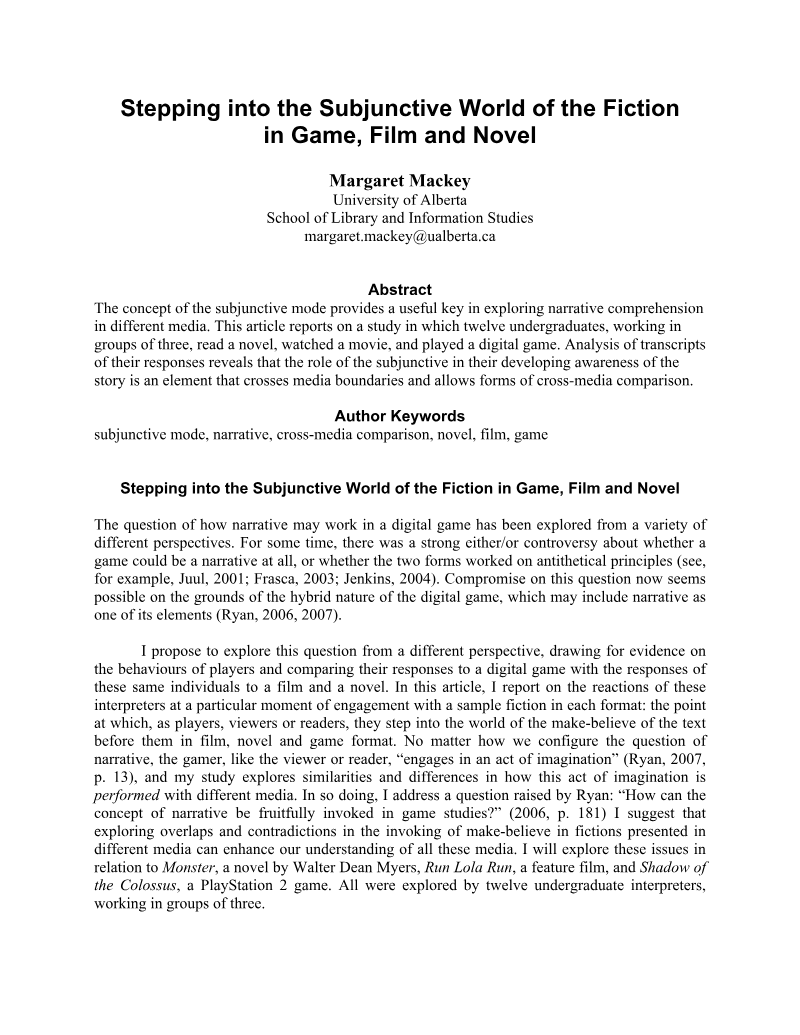
Stepping into the Subjunctive World of the Fiction in Game, Film and Novel
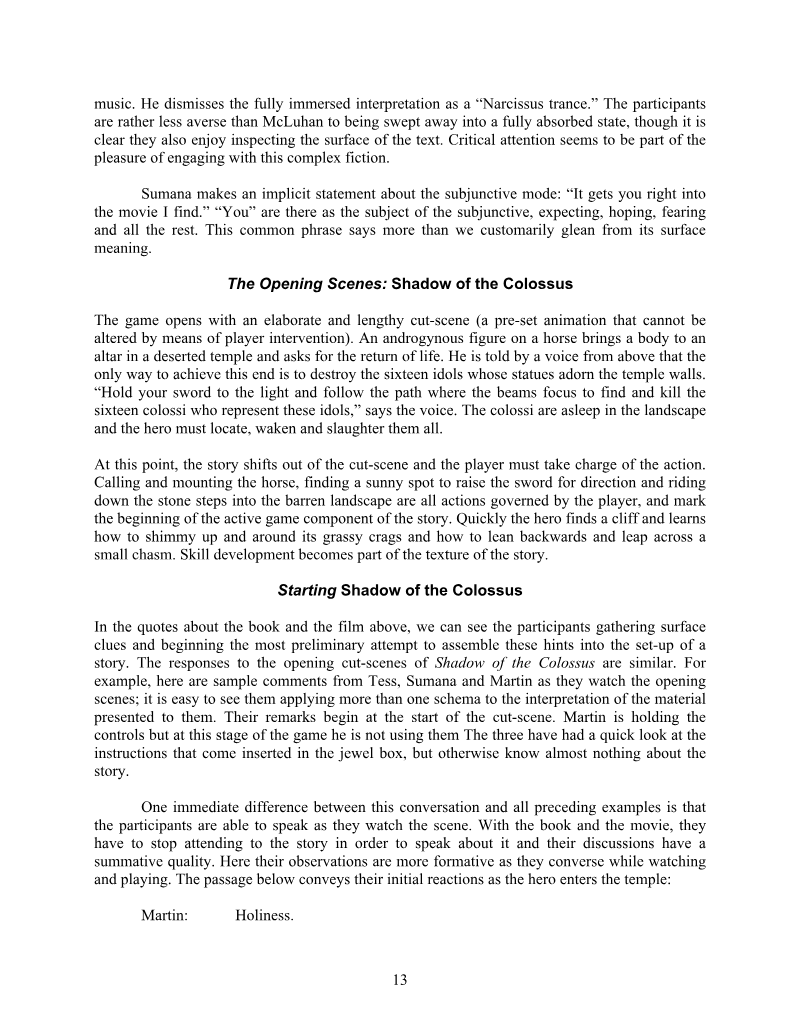
The subjunctive mode serves as a universal cognitive framework for engaging with fictional narratives, defining the psychological state where audiences navigate possibilities, hopes, and fears regarding a story’s trajectory.
- The 'subjunctive mode'—a cognitive framework defined by navigating narrative possibilities, hopes, and fears—is the primary engine for audience immersion across games, film, and novels.
- Audience engagement relies on a constant, dual tension between immersion in a story world and a critical awareness of its underlying construction.
- The fundamental cognitive process of narrative synthesis remains consistent across media, even when audiences encounter hybrid texts or disruptive storytelling conventions.
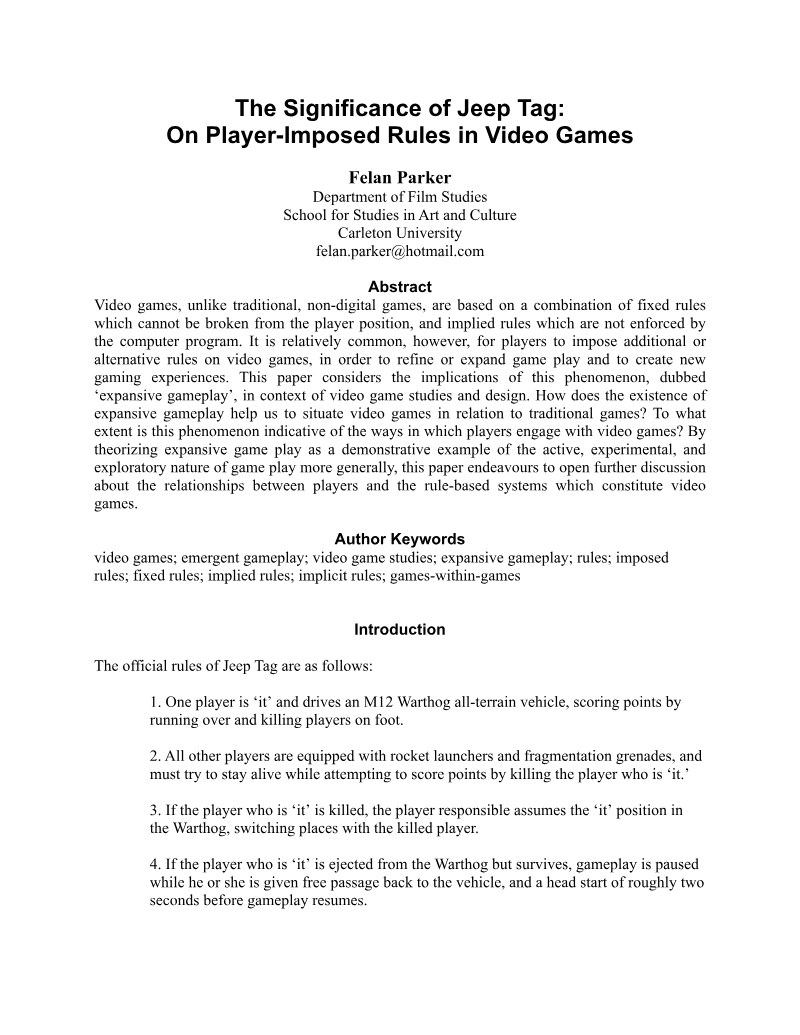
The Significance of Jeep Tag: On Player-Imposed Rules in Video Games
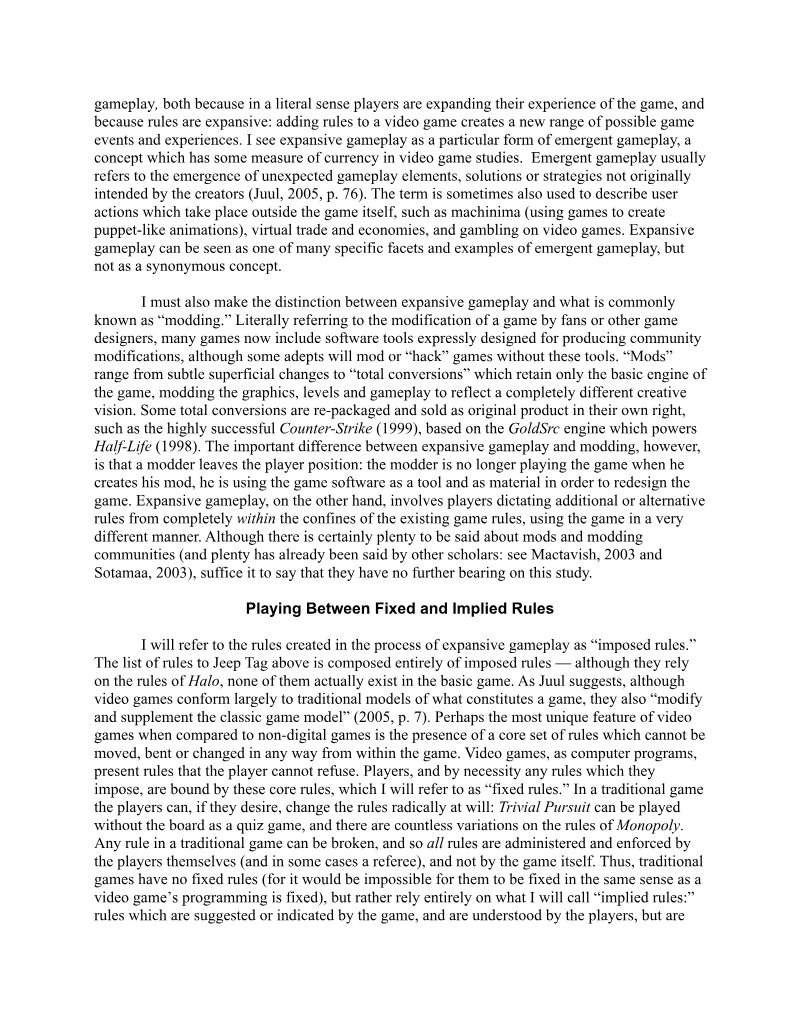
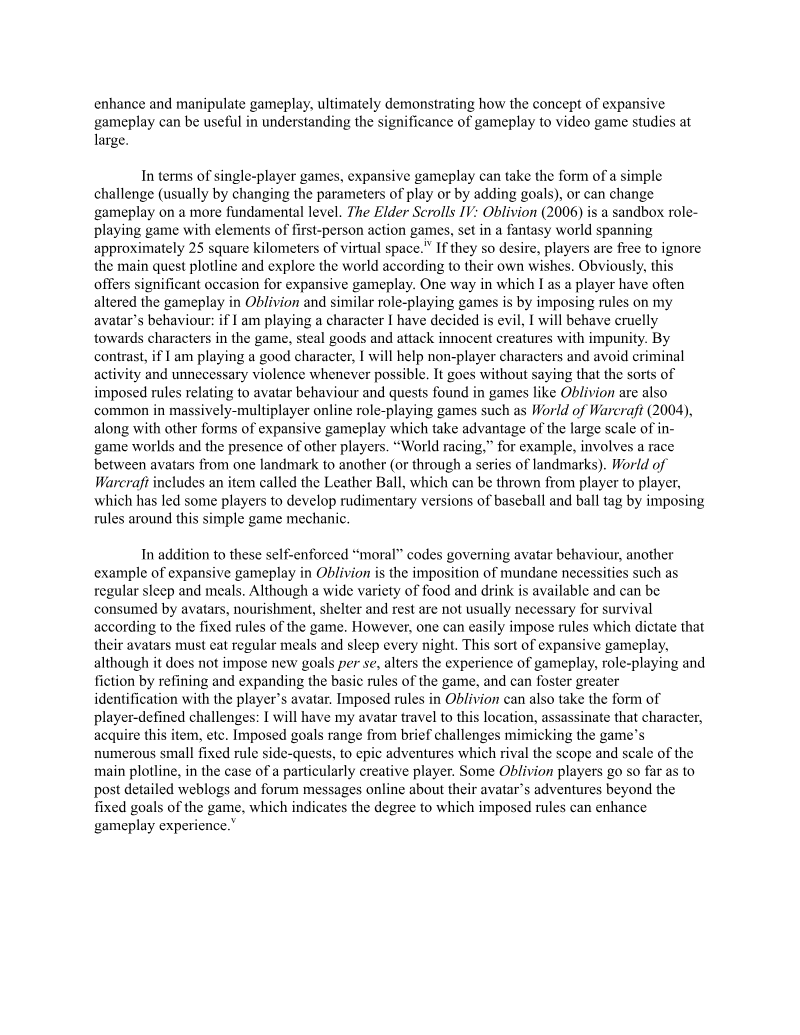
Expansive gameplay refers to the phenomenon where players impose self-defined rules upon existing video game systems to create new experiences.
- Expansive gameplay occurs when players create self-imposed rules within a game's existing, fixed architecture, distinct from modding which requires altering software code.
- Game rules are categorized into three types: fixed (hard-coded), implied (suggested by design), and imposed (created by players to refine or expand experiences).
- Players successfully transform standard game modes into new activities by manipulating implied rules, as seen in community-invented games like 'Jeep Tag' in Halo: Combat Evolved and 'Cat and Mouse' in Project Gotham Racing 2.
Periscopic Play: Re-positioning the Field in MMO Studies
Contemporary research into Massively Multiplayer Online games suffers from a persistent reliance on an unproductive dichotomy between the real and the virtual.
- Current MMO research is hindered by an unproductive dichotomy between the real and virtual, which obscures the material and social contexts of digital play.
- Existing studies frequently overlook broader power structures, labor conditions, and domestic realities by disproportionately focusing on the actions of hardcore players.
- Researchers often employ a 'periscopic' approach that falsely presents them as invisible, objective observers while failing to account for their own influence on social dynamics.
Language-GAME-Players: Articulating the Pleasures of 'Violent' Game Texts
The prevailing discourse surrounding violent video games frequently relies on a media effects framework that fails to account for the nuanced perspectives of the gaming community.
- A two-year qualitative study of 61 students indicates that players view violent game content as a functional component of rule-based systems rather than a catalyst for real-world aggression.
- Players consistently distinguish between virtual obstacles and real-world morality, prioritizing strategic agency and the mastery of complex game mechanics over the content's violent nature.
- First-person shooter engagement is primarily driven by performance challenges, aesthetic appreciation, and the desire to master structured, competitive frameworks.
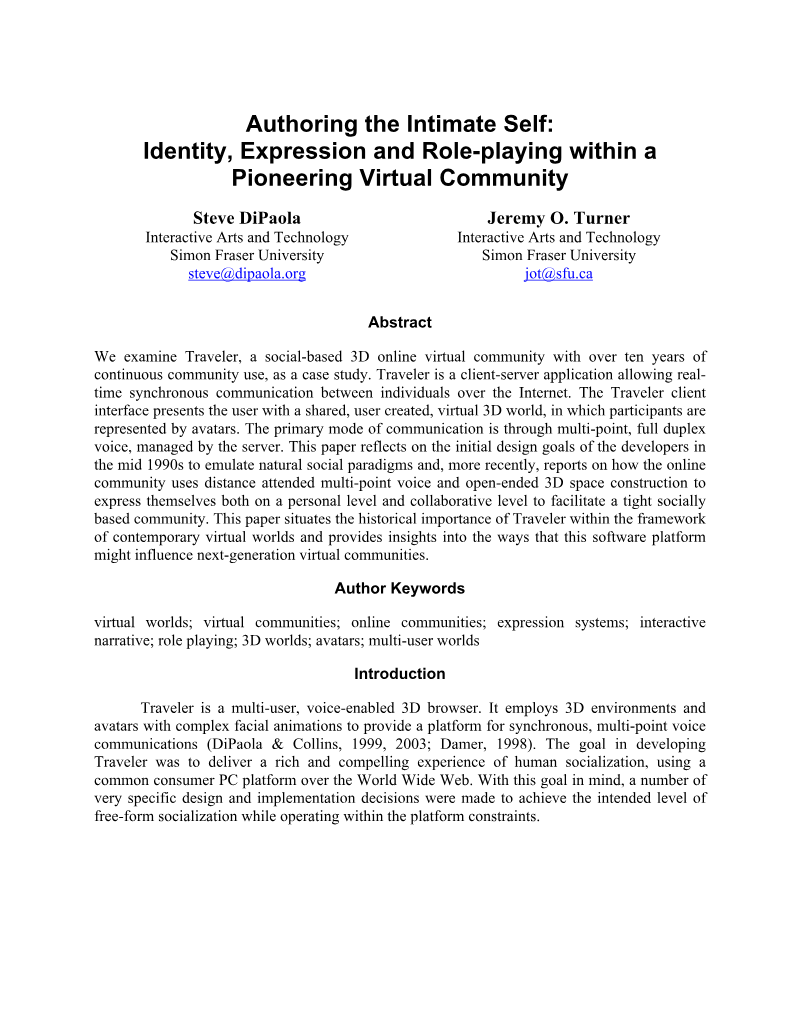
Authoring the Intimate Self: Identity, Expression and Role-playing within a Pioneering Virtual Community
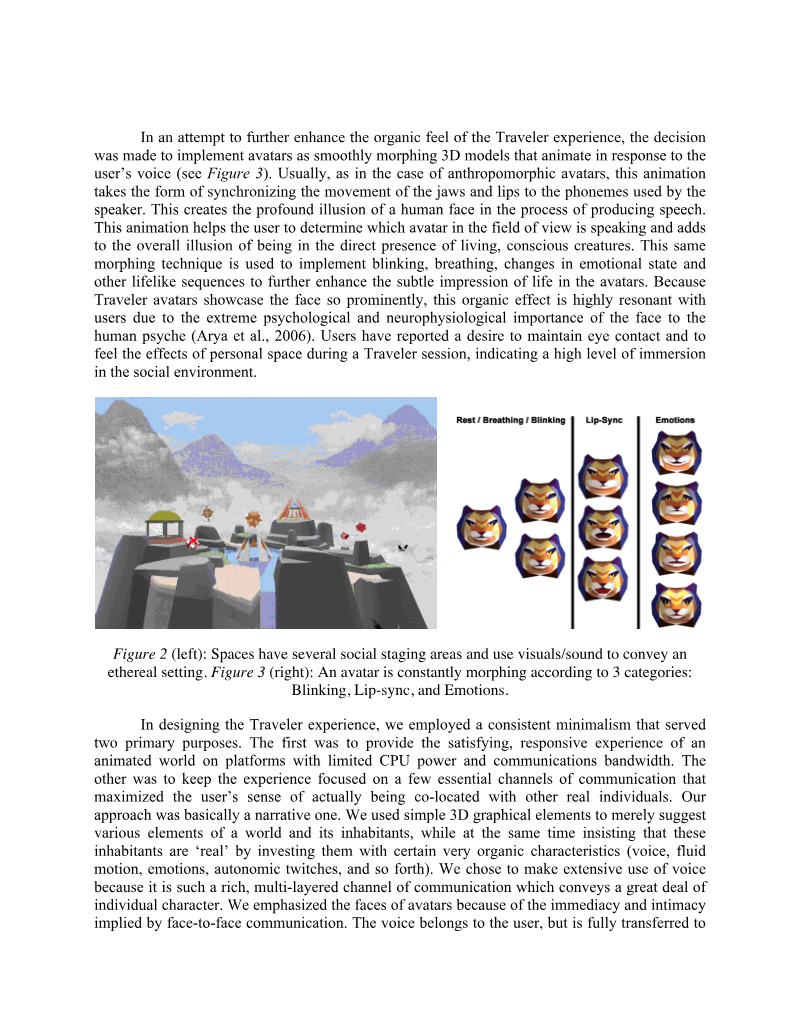
Traveler represents a foundational shift in digital interaction by prioritizing spatialized, multi-point voice communication and lip-synced avatars to foster genuine social presence.
- Long-term user engagement in virtual environments is primarily driven by the user's desire to project their intimate self and personal narrative into the platform's architecture.
- Spatialized, multi-point voice communication and lip-synced avatars are foundational technologies for fostering genuine social presence and intuitive, non-superficial interaction.
- Users naturally transform digital spaces and avatars into permanent, collaborative monuments to memorialize social experiences and build indigenous community mythologies.
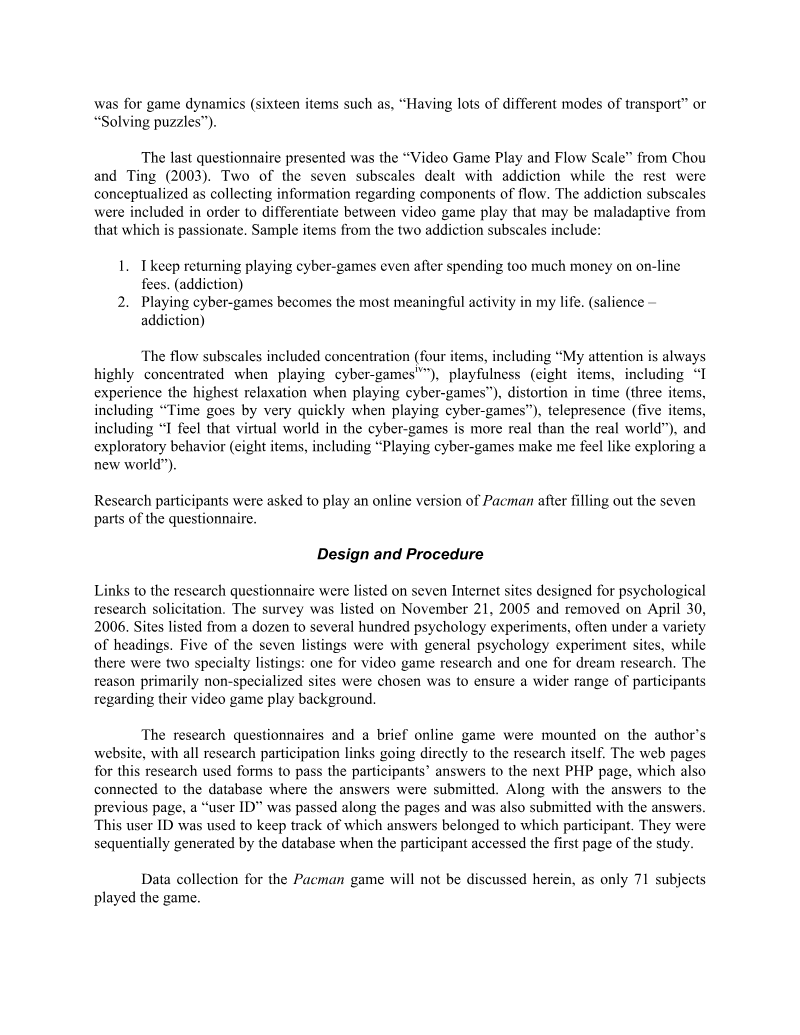
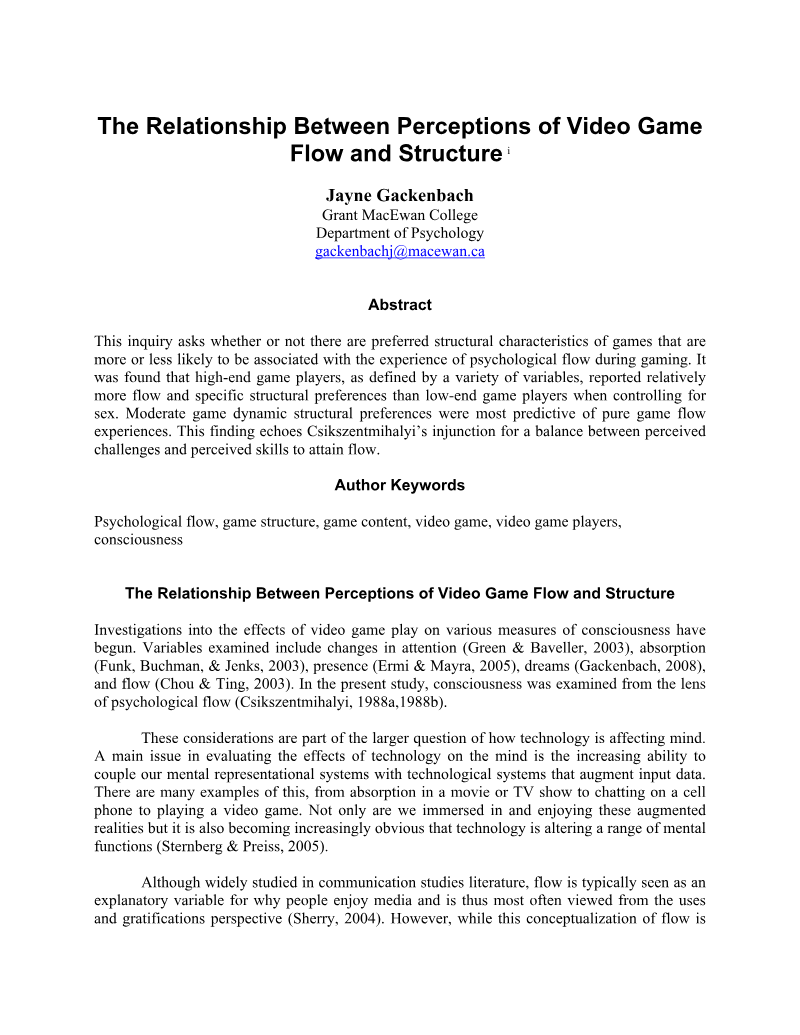
The Relationship Between Perceptions of Video Game Flow and Structure
The psychological state of flow in video games is fundamentally linked to the interplay between a player’s skill level and the structural design of the gaming experience.
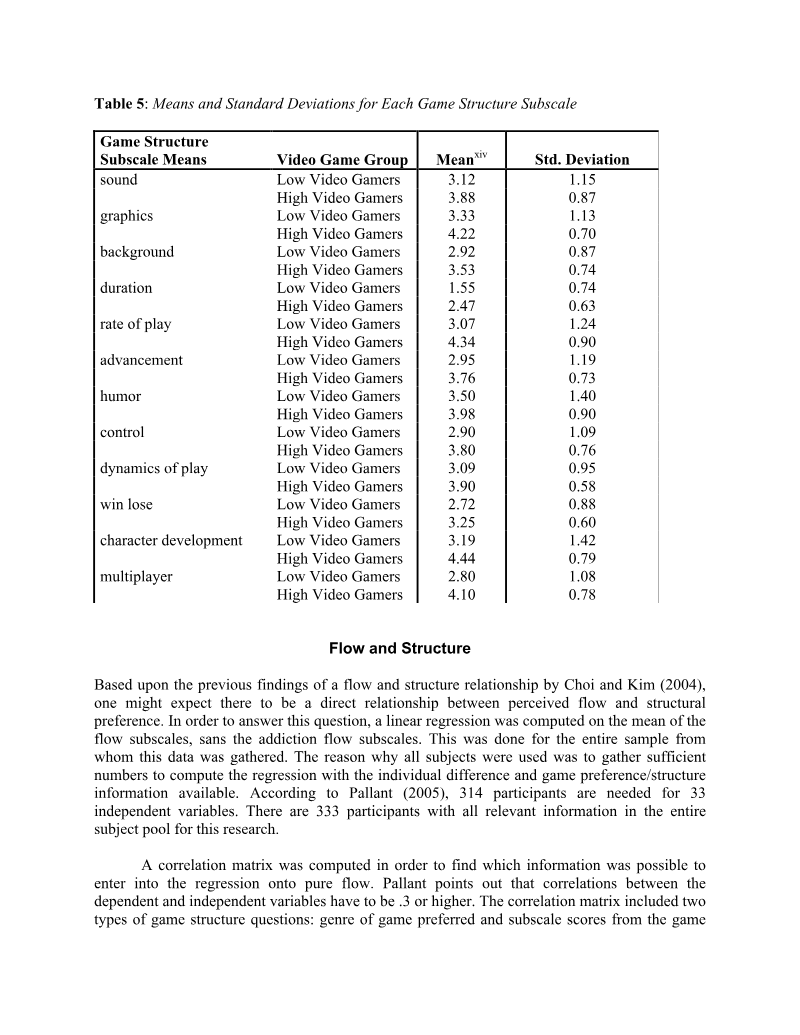
- Game structure is the primary driver of flow, with moderate game dynamics serving as the most reliable predictor for balancing player challenge and skill.
- Hardcore gamers consistently achieve higher levels of flow compared to casual players, indicating that experience and dedication correlate with deeper immersion.
- Effective game design must prioritize pacing and mechanical complexity to facilitate the equilibrium required for a state of flow.



Toward an Understanding of Flow in Video Games
Video games function as sophisticated information systems that facilitate optimal player engagement by balancing environmental complexity with individual cognitive capacity.