1 free read left. Create a free account for unlimited reading + AI research.
Create free accountWhitepaperCanadian Game Studies Association
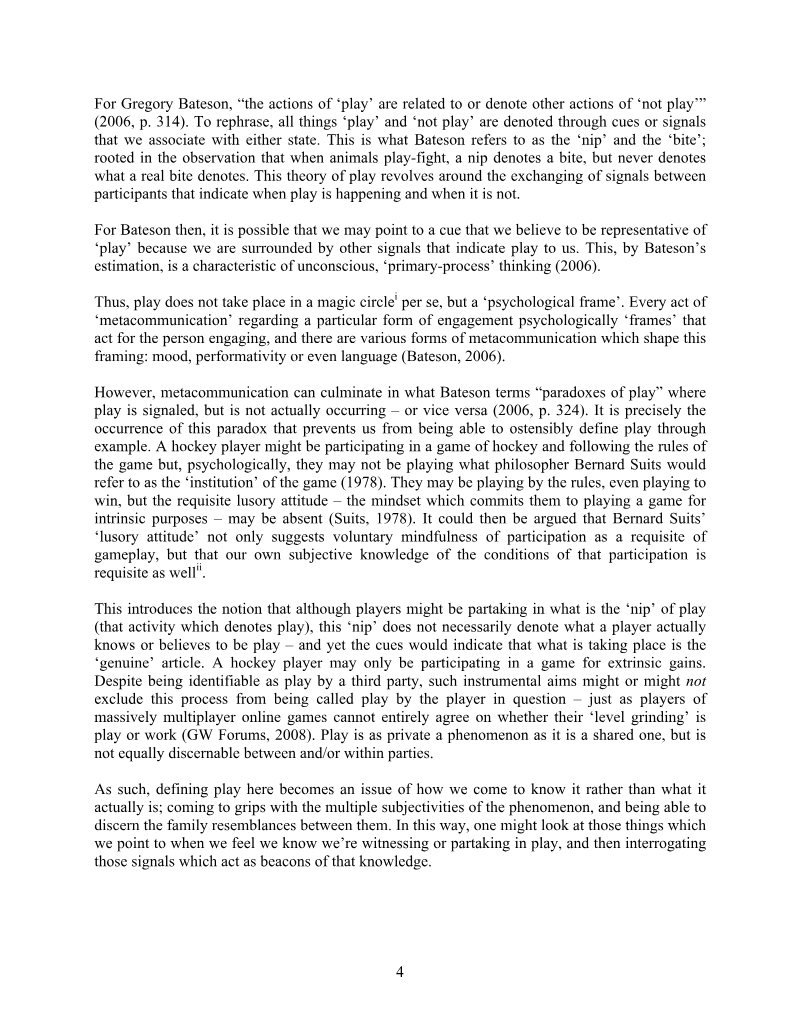
Traditional definitions of play often fail because they overlook the subjective and fluid nature of the experience.
Fluid definition. Play should be analyzed as a series of learnable, communal cues rather than a universal, rigid ontological concept.
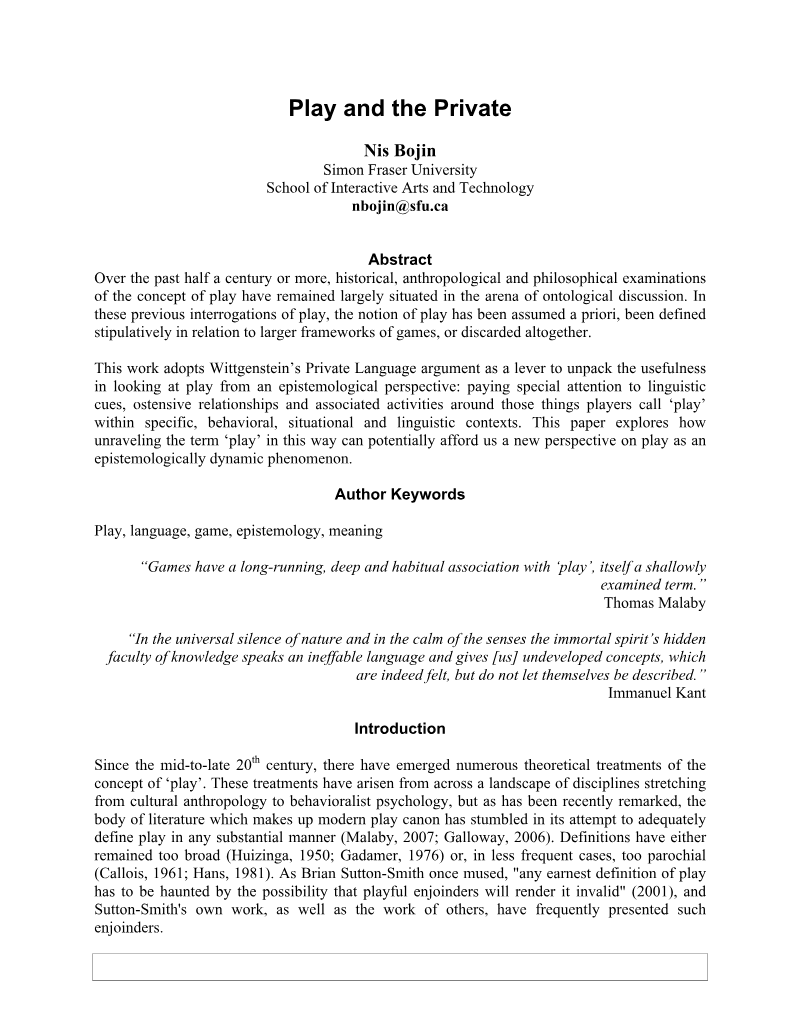
Traditional attempts to define play through rigid, ontological frameworks fail because they overlook the inherent subjectivity and fluidity of the experience. By shifting toward an epistemological perspective, play is better understood not as a universal concept, but as a series of learnable, communal cues. This approach moves beyond unproductive dichotomies, such as the binary of work versus play, by focusing on how individuals subjectively label and communicate their experiences within specific social contexts.
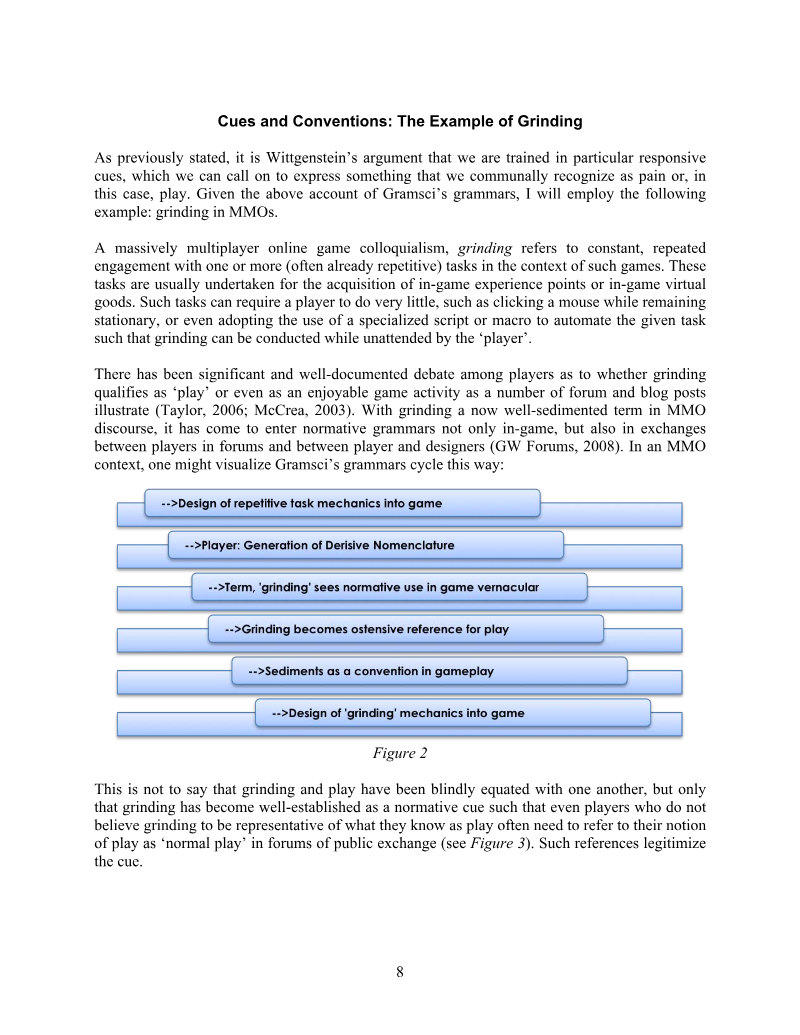
The evolution of gaming terminology, such as the transition of the term grinding from an emergent behavior to an established convention, illustrates how spontaneous linguistic grammars shape the discourse and design of virtual worlds. These player-generated terms function as normative grammars that dictate how communities interact with game structures. By analyzing these linguistic exchanges, developers can gain deeper insights into player behavior and market dynamics, moving away from reductive definitions that often misinterpret the complexities of user engagement.
This analysis is grounded in the concept of the lusory attitude, which defines play as an intentional cognitive engagement with a game’s structural rules. While the study focuses primarily on linguistic interactions, it acknowledges that physical and behavioral cues are equally vital to the communal construction of play. Ultimately, the research suggests that the industry should prioritize the study of social practices and communicative cues to understand how players navigate and define their own experiences within digital environments. By embracing this fluid, community-driven model, stakeholders can better align game design with the actual, subjective realities of the player base.
Canadian Game Studies Association · 2018
Canadian Game Studies Association · 2018
Canadian Game Studies Association · 2018
Canadian Game Studies Association · 2017
Canadian Game Studies Association · 2017
Canadian Game Studies Association · 2016
Canadian Game Studies Association · 2016
Canadian Game Studies Association · 2015
Canadian Game Studies Association · 2015
Canadian Game Studies Association · 2015
Canadian Game Studies Association · 2014
Canadian Game Studies Association · 2014
International Journal of Role-Playing · 2026


































Comments