Game Development reports and market data
Documents
Forget Protagonists: Writing NPCs with Agency for 80 Days and Beyond
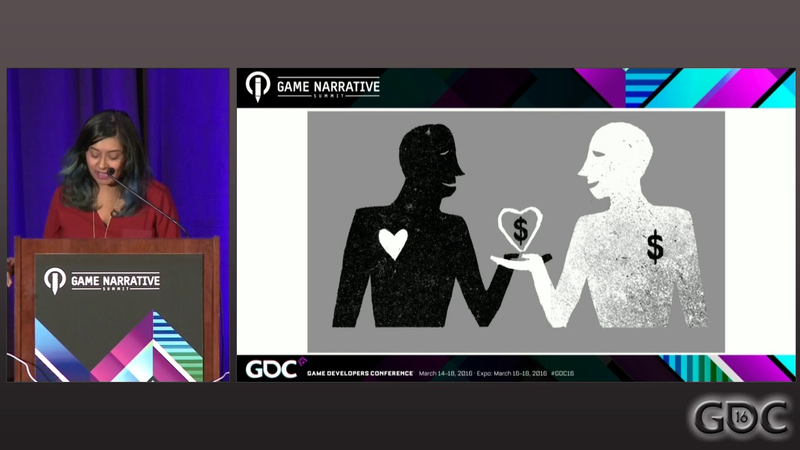
The primary objective of this analysis is to challenge the industry-standard reliance on protagonist-centric power fantasies, advocating instead for the integration of non-player characters (NPCs) with genuine agency.
- Developers should shift from protagonist-centric 'entitlement simulators' to complex social simulations by granting NPCs independent motivations, secrets, and political goals.
- True narrative immersion requires the inclusion of failure, loss, and frustration, which is achieved by limiting the player's ability to influence every outcome in the game world.
- Designers should treat player agency as a tool for meaningful interaction rather than a mandate for total control, as seen in the development of 80 Days.

How To Actually Finish Your Game
The primary challenge for independent game developers is maintaining the motivation required to complete a project, as the high likelihood of quitting remains a significant barrier to success.
- Publicly announce your project to friends, family, and peers to create social accountability that prevents abandonment when personal motivation wanes.
- Establish a deep emotional connection to your protagonist by defining specific personality traits and flaws to serve as a narrative anchor throughout development.
- Shift from internal promises to external expectations, as psychological preparation is more critical to project completion than technical skill.
Running a Post-Apocalyptic Indie Studio
The contemporary indie game market faces a structural crisis defined by a severe supply-demand imbalance.
- The indie game market is experiencing extreme saturation due to a structural imbalance where the volume of new releases is growing while the player base remains stagnant.
- Traditional storefront curation is no longer effective, as power-law distribution causes the vast majority of sales to favor established hits over new titles.
- Studios must transition from passive storefront participants to proactive entities by integrating marketing into the earliest stages of development to satisfy algorithm requirements.

Overcoming Community Negativity: An Exercise in Sanity
Managing community negativity is a critical, albeit emotionally taxing, responsibility for game studios, particularly for live-ops titles where development cycles have slowed.
- Empowering high-engagement players to act as 'community champions' can effectively dilute toxicity and drive growth, as evidenced by a player-run tournament initiative at Uken Games that resulted in a 200% revenue increase.
- Direct and honest engagement during periods of high friction, such as developers spending an afternoon addressing forum concerns, can lead to significant financial gains, including a 54% revenue spike following a controversial item nerf.
- Community negativity is typically driven by a vocal minority representing less than 1% of the total player base, requiring studios to avoid defensive reactions to harassment or boycotts.
Hitchhiker's Guide to Rapid Prototypes!
Rapid prototyping serves as a vital form of professional cross-training, enabling developers with limited resources, time, or technical skills to build testable game concepts.
- Prioritize the 'Minimum Viable Interaction' over a Minimum Viable Product to focus on behavioral testing and learning rather than polished final features.
- Use game jams as the primary vehicle for skill development, as these high-pressure, collaborative environments accelerate learning more effectively than theoretical study.
- Adopt structured, time-boxed methodologies like the Google Ventures Sprint model to facilitate rapid iteration and move from concept to user testing within a one-month timeframe.
Designing System Driven Dialogue in Mafia III
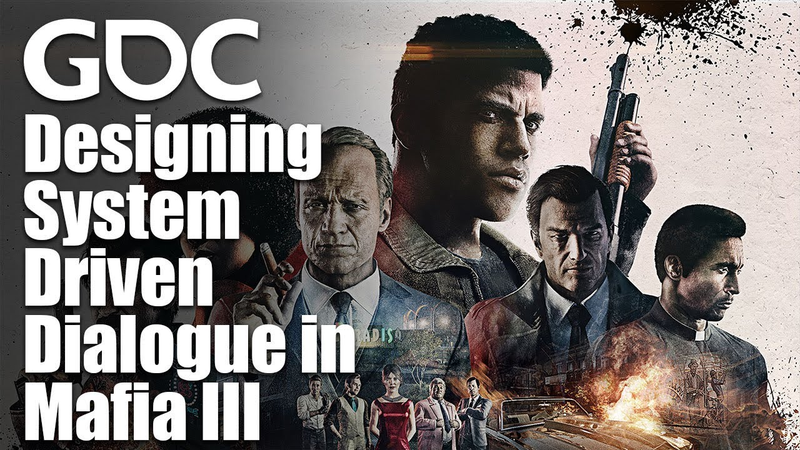
The design of Mafia III centers on a system-driven dialogue framework that replaces traditional, static branching narratives with a dynamic, state-based architecture.
- Mafia III replaces static branching narratives with a state-based architecture that triggers dialogue based on gameplay variables rather than linear scripts.
- The 'Sit Down' mechanic forces players to manage underboss loyalty by distributing conquered districts, directly linking economic strategy to narrative outcomes.
- Character behavior is governed by a database-driven system that tracks specific personality variables including greed, jealousy, and impatience.
Start Your Own Game Studio With These 5 Tools!
The primary objective of this guide is to provide independent developers with a foundational software toolkit for establishing a functional game studio.
- Unity serves as the foundational game engine for the studio due to its robust cross-platform porting capabilities and extensive C# documentation.
- Photoshop is essential for visual asset creation because it allows for real-time graphic updates within Unity during active play sessions.
- Spine 2D provides an accessible alternative to complex 3D software for character rigging and skeletal animation, featuring direct synchronization with Unity’s animation state machines.

Crisis and Opportunity: Communities in Good Times and Bad
Community crises in the gaming industry are fundamentally rooted in a loss of trust, typically triggered by technical failures or unmet player expectations.
- Community managers must prioritize building trust through transparency, as players are inherently skeptical of authority and will only cooperate if they respect the person behind the platform.
- To de-escalate conflicts, managers should avoid personalizing criticism and allow reasonable negative feedback rather than resorting to censorship, which often fuels power struggles and toxic behavior.
- When a crisis occurs, rebuild trust by clearly communicating a specific plan of action, executing that plan, and reporting back to the community to prove reliability.
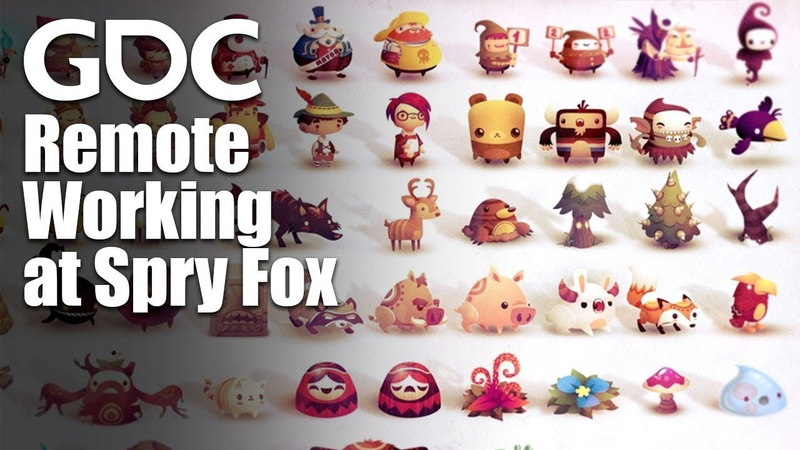
Remote Working at Spry Fox
Spry Fox operates as a fully distributed, remote-first organization, leveraging a global talent pool to cultivate a highly productive, distraction-free development environment.
- Spry Fox operates as a fully distributed, remote-first organization that relies on hiring senior-level professionals with high levels of autonomy and self-awareness to eliminate the need for bureaucratic oversight.
- The company structures its development around small, agile project groups of two to five people to maintain high individual accountability and creative cohesion.
- To ensure effective project management and collaboration, the organization utilizes a standardized toolset consisting of Google Docs, Trello, and Dropbox.
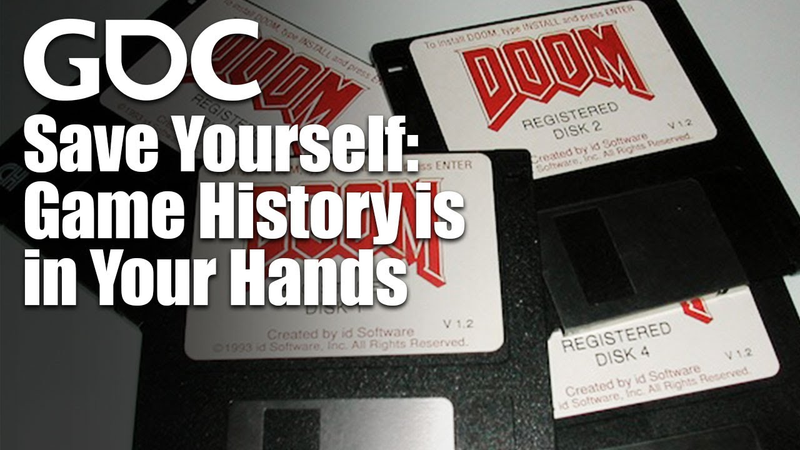
Save Yourself: Game History is in Your Hands
The video game industry currently faces a critical crisis regarding the preservation of its cultural and technical heritage.
- The game industry lacks a formal, systemic archival model, leaving the preservation of its cultural and technical heritage to unsustainable, ad-hoc crowdsourced efforts.
- Current preservation practices are overly focused on consumer-facing artifacts and nostalgia rather than the documentation of internal development, social, and economic processes.
- The industry must transition from individual, uncompensated enthusiast labor to institutionalized, funded frameworks to prevent the permanent loss of foundational digital assets and hardware.
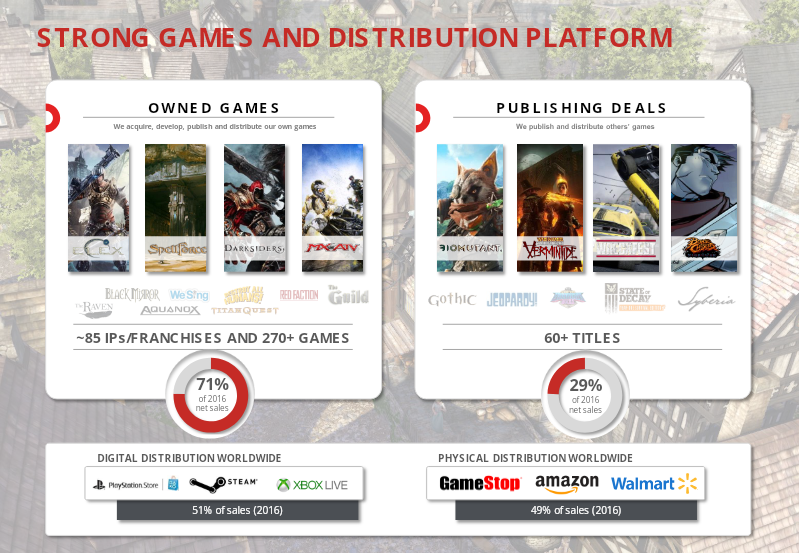

THQ Nordic Company Presentation: September 2017
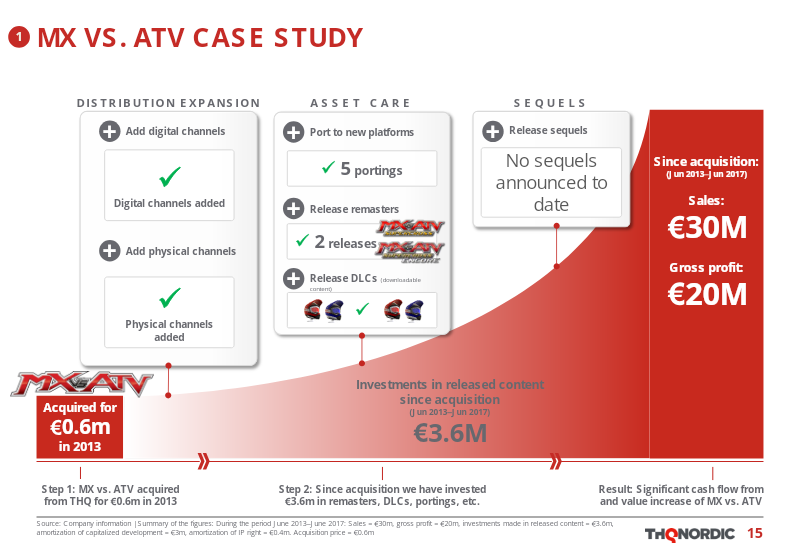
THQ Nordic operates as a global video game publisher and developer with a core business model centered on the acquisition of intellectual property (IP) and the subsequent enhancement of those assets.
- THQ Nordic’s business model centers on acquiring and revitalizing intellectual property, managing a portfolio of approximately 85 franchises and over 270 games as of September 2017.
- The company experienced rapid financial growth in the first half of 2017, with net sales and EBIT more than doubling compared to the same period in 2016.
- Digital distribution has become the primary revenue driver, accounting for 69% of net sales by the second quarter of 2017.
The Story of Transformice: An Indie Game with 70 Million Players
Transformice emerged from a brief three-week prototype to become a global phenomenon, ultimately attracting 70 million players through viral growth, extensive localization, and consistent seasonal engagement.
- Transformice grew from a three-week prototype to a global title with 70 million players, primarily through viral growth and extensive localization.
- A sudden Google AdSense ban forced a pivot to a free-to-play, cosmetic-focused monetization model, which generated over $1 million in microtransactions within six months.
- The studio remains a 'one-game studio' with 99% of its total revenue derived from Transformice, as subsequent releases have failed to replicate its initial success.