Game Development reports and market data
Documents

Finding the Best Artstyle for Your Indie Game!
Selecting an effective art style for an indie game requires a structured, priority-based framework to ensure the final aesthetic aligns with both marketing goals and gameplay mechanics.
- Prioritize visual clarity and 'watchability' by using strong silhouettes and intuitive color coding to ensure the game remains legible for players and streaming audiences.
- Establish a hierarchy of needs where gameplay functionality and intuitive communication take precedence over aesthetic beauty, which should serve only to enhance the core experience.
- Develop a unique visual identity that accurately reflects the game’s difficulty and complexity to align player expectations and minimize the risk of negative reviews.
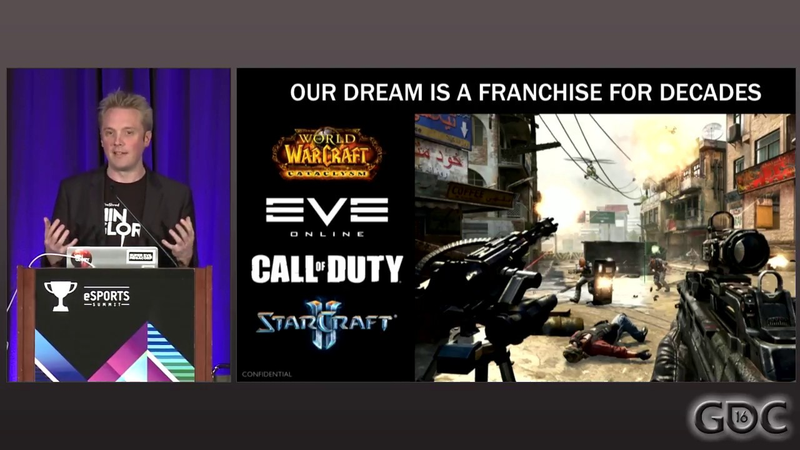
The Vainglory Story - 5 Lessons From Building a Touch Screen eSport
The mobile gaming industry is undergoing a fundamental shift as developers increasingly prioritize deep, core-gaming experiences over casual, short-form content.
- Competitive integrity is non-negotiable for mobile eSports; business models must be strictly orthogonal to player power to avoid the 'pay-to-win' stigma prevalent in the mobile industry.
- Successful mobile eSports require high-quality, low-latency networking optimizations to mitigate the inherent instability of Wi-Fi and LTE connections, as players will not use fixed-line networks.
- Contrary to industry assumptions that mobile sessions must be under three minutes, Vainglory successfully established a 20-minute average session length by prioritizing deep, competitive gameplay.

Gameplay Day - Let's Keep Improving!
The development process for this strategy game prototype focuses on refining core mechanics to balance player engagement, performance, and difficulty scaling.
- A proximity-based growth system for creature eggs was implemented to cap population size, forcing strategic spatial planning while preventing engine performance bottlenecks.
- Visual feedback mechanisms were introduced to slow egg hatching rates when placed in close proximity, effectively managing creature density and game difficulty.
- Initial enemy difficulty was reduced by introducing tiered enemy types with distinct health and speed profiles to create a smoother, more accessible difficulty curve.
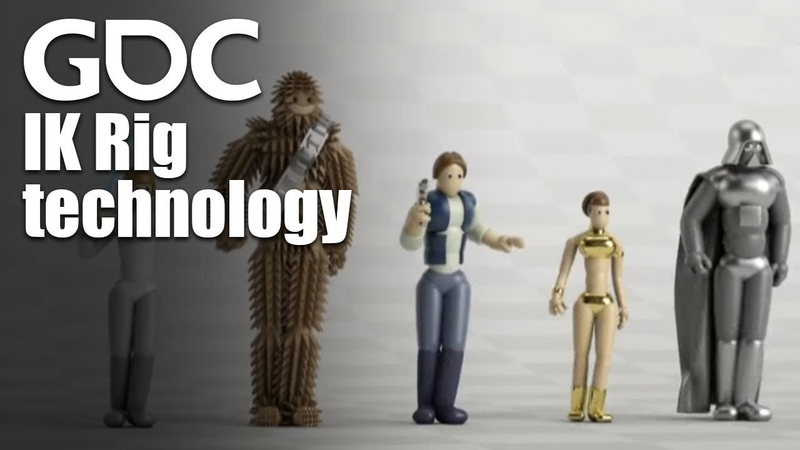
IK Rig: Procedural Pose Animation
The IK Rig represents a fundamental shift in animation pipelines by decoupling motion data from specific character skeletons.
- The IK Rig decouples animation data from specific bone hierarchies, enabling real-time retargeting of movement across diverse character scales, proportions, and species.
- This procedural system reduces production overhead by applying systemic behavioral rules—such as crouching or carrying weight—without requiring per-character keyframing or redundant motion capture.
- The rig utilizes real-time spatial anticipation, dynamic footstep tracing, and physical collision detection to mitigate common animation artifacts like foot sliding and environmental clipping.
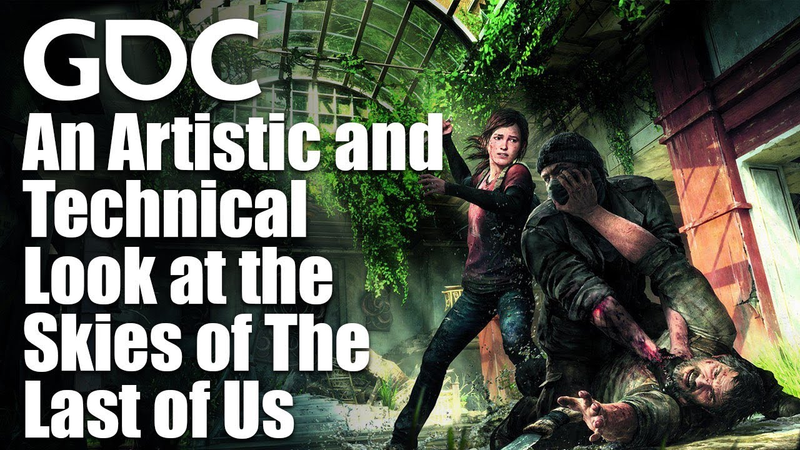
Moving the Heavens: An Artistic and Technical Look at the Skies of The Last of Us
The artistic and technical development of skyboxes in The Last of Us centers on the thesis that the sky is a critical, yet frequently overlooked, narrative tool capable of defining the emotional tone, lighting, and color palette of an entire game environment.
- The Last of Us utilized high-resolution matte paintings projected onto a dome to maintain artistic control over the game's skyboxes.
- To simulate cloud movement without the performance overhead of volumetric systems, the team implemented a UV distortion technique known as flow using vector-based motion maps.
- The development team achieved perspective-correct cloud movement by calculating the dot product of wind direction against the sky dome’s normals.
So You Want To Be in QA - The Test Chamber - Extra Credits
Quality assurance (QA) in the video game industry is frequently misunderstood as a process of aimless play, when in reality, it functions as a rigorous, scientific discipline.
- Quality assurance is a rigorous scientific discipline that requires testers to use the scientific method to isolate variables and document precise reproduction steps for software defects.
- Career sustainability in QA depends on prioritizing team culture and proximity to developers over the specific game title, as integration prevents the adversarial dynamics common in outsourced or isolated testing environments.
- The industry is shifting toward integrated testing models where developers take a more active role in bug identification, reducing the reliance on large, unskilled testing teams.
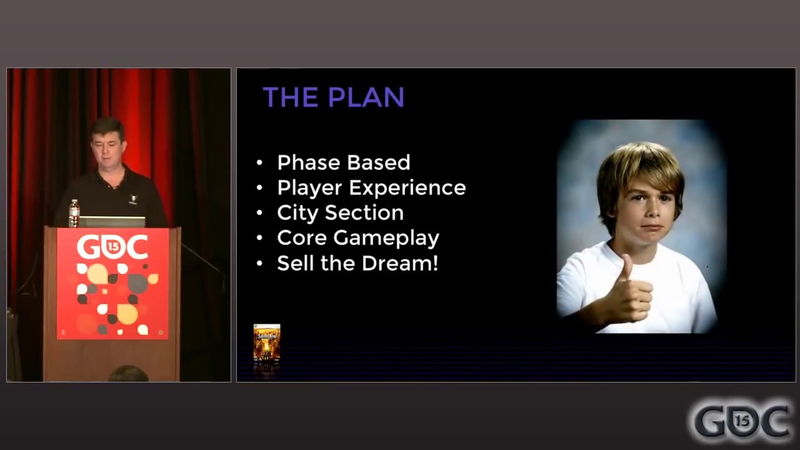
The Vertical Slice Challenge
The vertical slice serves as a vital pre-production milestone in game development, functioning as a litmus test for core gameplay loops, technical readiness, and team alignment.
- The vertical slice must function as a rigorous gate for validating core gameplay loops and technical readiness rather than serving as a marketing tool or aspirational visual demo.
- Treating vertical slices as visual targets rather than functional milestones frequently leads to unsustainable crunch and hidden optimization requirements during later production phases.
- Studios should prioritize establishing performance budgets and assessing the viability of core mechanics during a disciplined pre-production phase to identify systemic risks early.
The Evolving JRPG Audio Culture
Japanese role-playing games maintain a distinct identity by balancing historical consistency with technological innovation.
- JRPG audio design prioritizes emotional, character-driven storytelling and melodic consistency, contrasting with Western titles that focus on environmental freedom and player agency.
- The genre has evolved from simple background loops to sophisticated, database-driven workflows that utilize multi-layered transition systems for seamless, high-fidelity audio.
- Modern JRPG development integrates sound effects directly with the musical score to ensure a harmonized, cinematic atmosphere throughout the interactive narrative.

Setting Better Goals - Top 3 Tips!
Effective goal-setting requires a strategic approach that balances ambition with actionable metrics. The primary thesis suggests that individuals should establish goals that are slightly beyond their current reach.
- Prioritize output-based metrics over time-based ones to ensure productivity, as time-based goals often encourage passive participation and inefficiency.
- Set goals slightly beyond your current reach to act as a motivator, pushing your limits while avoiding the stagnation caused by overly simplistic objectives.
- Avoid publicizing goals prematurely, as receiving early positive reinforcement can trick the brain into feeling a sense of accomplishment and reduce the drive to execute.
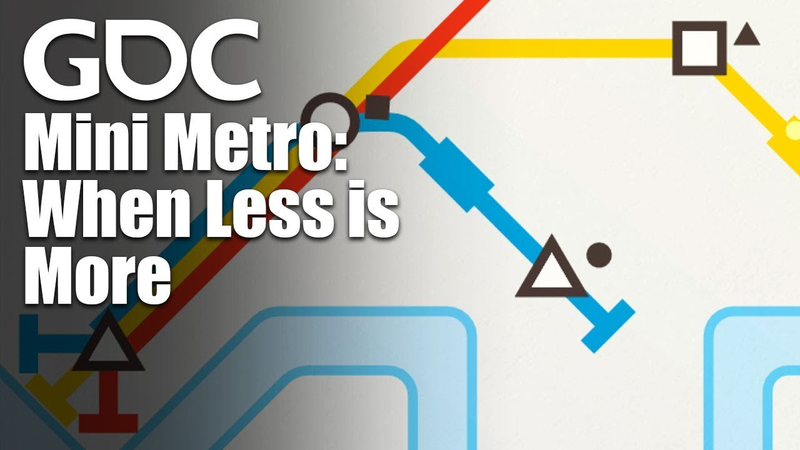
Mini Metro: When Less is More
The development of the user interface for the strategy game Mini Metro serves as a case study in how minimalist design choices can foster player discovery and engagement.
- Mini Metro achieved commercial success with 800,000 units sold and over three million dollars in gross revenue, maintaining a 96% positive rating on Steam.
- The design team prioritized minimalist UI by omitting complex HUDs, leaderboards, and meta-progression systems to focus entirely on the core gameplay loop of network optimization.
- Development spanned two years and involved extensive visual iteration, resulting in the creation of over 4,000 images and 112 preview videos.
Top 5 Game Design Channels You Should Know
Educational resources for game design and development are increasingly accessible through specialized YouTube channels that offer professional insights, technical analysis, and industry perspectives.
- The Game Developers Conference (GDC) channel serves as the primary industry resource, hosting an extensive repository of expert-led lectures on technology, animation, and design.
- Mark Brown’s 'Game Maker’s Toolkit' provides structured, high-production analysis focused on the evolution of game mechanics and design theory.
- Extra Credits offers a human-centric perspective on game development, emphasizing the broader social impact and societal implications of the medium.

My To-Do List: Organizing a Producer's Work
Game production functions as a multifaceted discipline centered on the strategic management of project backlogs, which serve as the primary mechanism for scheduling, prioritization, and conflict resolution.
- Producers must prioritize long-term project health, team morale, and sustainable working habits over short-term metrics that offer only a false sense of control.
- Effective production requires distinguishing between complicated problems that follow predictable patterns and complex problems that necessitate flexible, team-aligned solutions.
- Producers should adopt a servant leadership model that empowers specialists to solve problems, fostering team self-organization rather than relying on micromanagement.