Game Development reports and market data
Documents

Monument Rivals: Jonas Plays Your Game #002
Monument Rivals is a turn-based, multiplayer trading game developed in Unity by XscoGames.
- Monument Rivals, a Unity-based prototype by XscoGames, currently suffers from a lack of strategic depth due to an over-reliance on luck-based mechanics like dice rolls and random card draws.
- The game's pacing is hindered by long, unskippable animations for movement and dice rolls, which negatively impact the user experience.
- The current monument destruction mechanic creates a frustrating, repetitive cycle in two-player sessions rather than fostering constructive competition.
The Bane of All Development Postmortems: Communication is Hard So Give Up Now
Communication remains the most persistent and critical failure point in game development, frequently cited as the primary cause of project instability in industry postmortems.
- Project instability in game development is primarily driven by communication failures, necessitating a shift from infrequent status updates to proactive, continuous feedback loops.
- Leadership must foster a culture of psychological safety where team members are empowered to admit knowledge gaps, allowing for the early identification of risks before projects devolve into death marches.
- Structural information flow should be managed by establishing clear feature ownership and defining internal customer relationships between departments to prevent the formation of silos.
The Art of Reanimating Plants vs. Zombies 2
This presentation outlines the artistic development process for Plants vs. Zombies 2, focusing on the challenges of creating a sequel to a highly acclaimed, genre-defining title.
- Successful sequels must prioritize protecting the core identity and mechanics of the original title rather than attempting to replace them.
- The development team transitioned from hand-drawn art to a vector-based aesthetic using Flash to improve animation efficiency and visual readability on smaller mobile screens.
- The narrative shift to a time-travel theme allowed for the introduction of new environments and mechanics while maintaining the franchise's established visual language.
Riftwalker: Jonas Plays Your Game #001
Riftwalker functions as a fast-paced 2D rogue-like shooter developed in GameMaker Studio, characterized by a highly addictive core gameplay loop and satisfying mechanical feedback.
- The game must transition from its current 30 FPS frame rate to a 60 FPS standard to ensure the fluid movement and responsiveness required for a competitive 2D rogue-like shooter.
- User interface design requires immediate improvement, specifically by adding numerical values for stat upgrades and clearer visual indicators for ability cooldowns, weapon accuracy, and fuel status.
- Boss encounters currently suffer from unfair damage spikes during level transitions that require rebalancing to improve player experience.
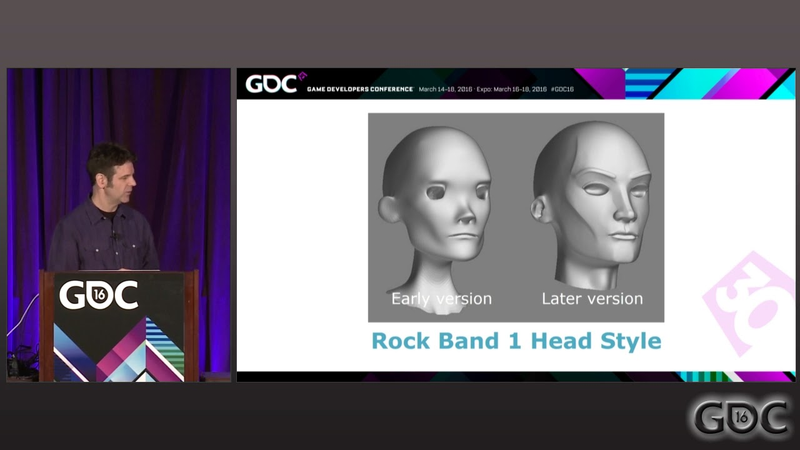
Maximizing Artistic Critique: Improving Communication for Everyone Involved in Critical Feedback
Effective artistic critique in game development functions as a collaborative, two-way dialogue designed to elevate product quality, team cohesion, and operational efficiency.
- Artistic critique should function as a collaborative, two-way dialogue focused on elevating product quality and team cohesion rather than serving as a subjective evaluation.
- Feedback must shift from personal opinion to an analytical process that identifies specific problems and describes the underlying user experience.
- Critique sessions are most effective when they focus on articulating the intent behind a reaction rather than prescribing specific creative solutions.

5 "Facts" I Believe In. (Do You?)
This analysis outlines five core philosophical beliefs regarding human behavior, the nature of play, and the structure of social systems.
- Systemic design flaws are the primary cause of exploitative behavior, meaning rule-makers—whether in game design, parenting, or social structures—are responsible for the outcomes their systems incentivize.
- Play is defined as an activity occurring within a 'safe zone' where outcomes lack real-world consequences while providing clear feedback and defined goals.
- Human selfishness is the fundamental driver of all behavior, as even altruistic actions are motivated by the pursuit of personal satisfaction or the avoidance of negative emotional states.
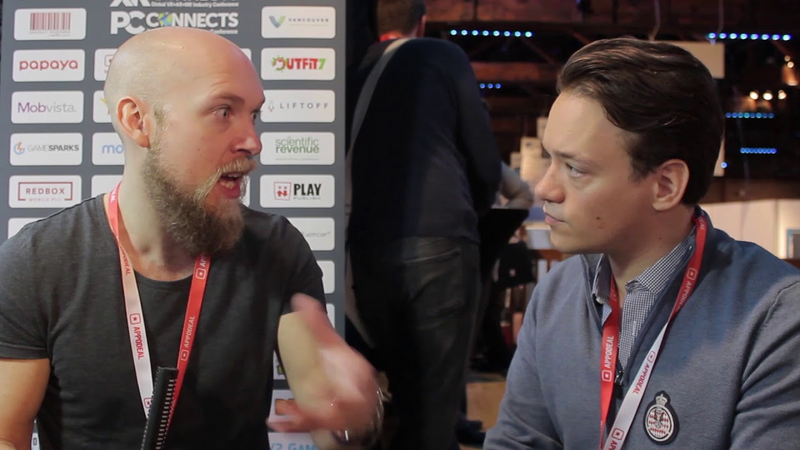
How Facebook supports developers in getting their games discovered
Facebook serves as a critical infrastructure for game developers seeking to scale their titles by leveraging a massive, data-rich ecosystem.
- Facebook leverages its massive user base, including 2 billion monthly active users on Facebook and 800 million on Instagram, to help developers target players based on specific interests and platform engagement data.
- The Facebook SDK allows developers to track in-app events such as tutorial completion, level progression, and purchase history to optimize user acquisition.
- The 'Value Optimization' method, introduced in August 2016, enables developers to create custom audiences from high-value players and use them as seed audiences to find similar users globally.

Game Art - Dev Log - (Background and Stuff)
This development log details the iterative design process for an indie game, focusing on refining visual feedback, background aesthetics, and user interface clarity.
- Improving gameplay readability and immersion requires iterative refinements to visual feedback, specifically addressing cursor visibility, particle transitions, and object interaction responsiveness.
- The developer achieved a consistent, handcrafted aesthetic by photographing physical play-doh models and processing them in Photoshop for digital implementation.
- Implementing custom shaders to create a subtle, animated 'wobble' effect in the background helped maintain visual cohesion without distracting the player.
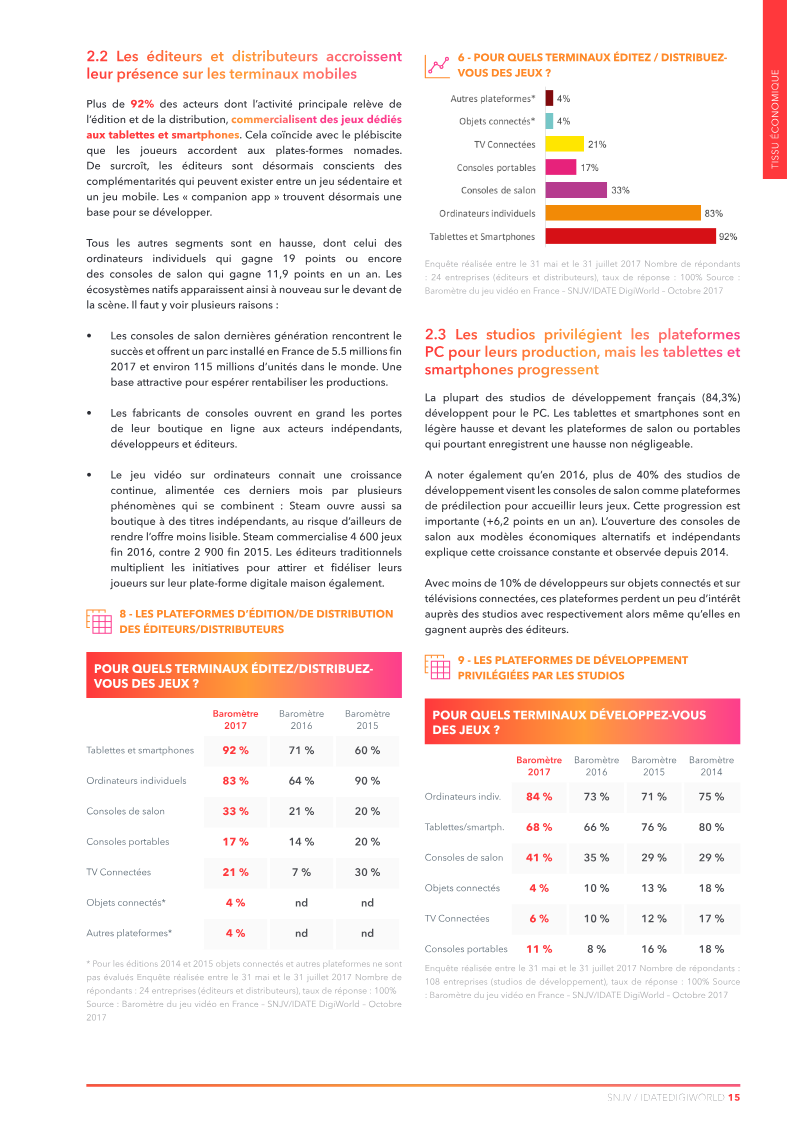
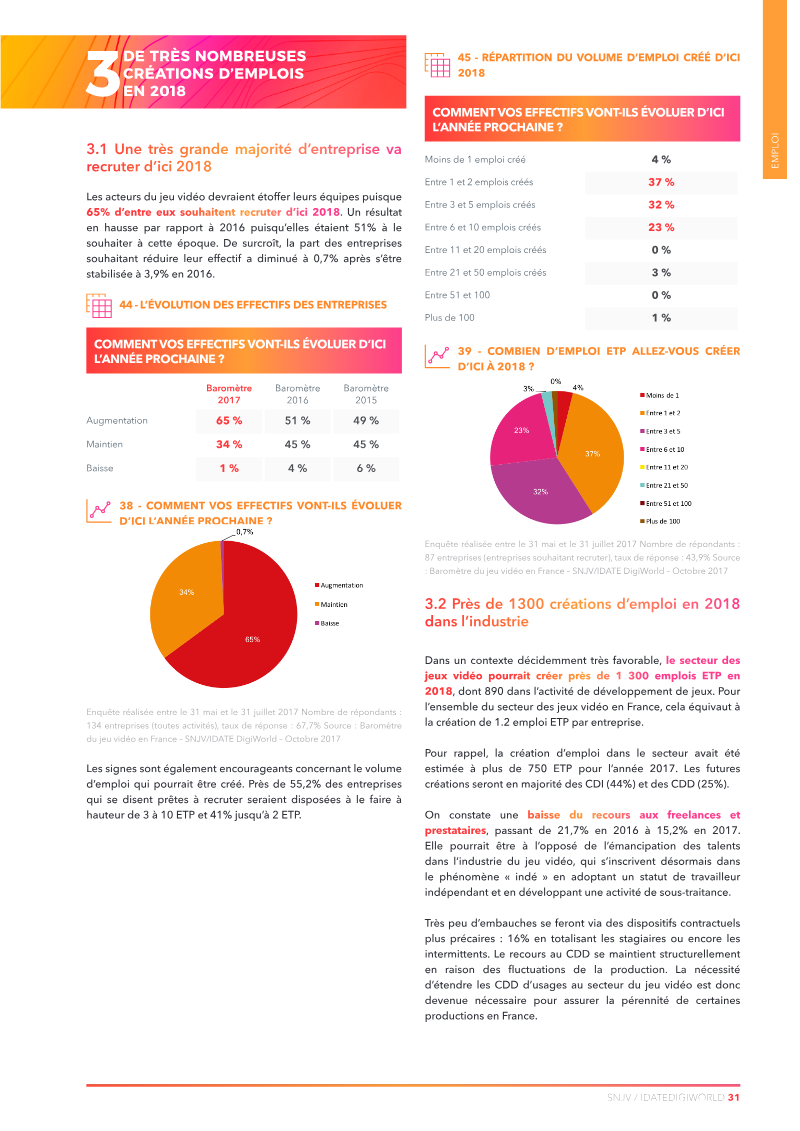

Baromètre Annuel du Jeu Vidéo en France 2017
The fourth annual French video game barometer, produced by SNJV and IDATE, portrays a young, small-scale and increasingly confident national industry set against a global market worth about €60bn in 2017 and forecast to reach roughly €78.7bn by 2021.
- The global video game market is projected to grow from €60 billion in 2017 to nearly €80 billion by the end of 2021, with mobile gaming being the largest segment at €22.5 billion in 2017.
- The 'premium' economic model (paid-at-purchase with no additional content) has become dominant in 2017, adopted by 63.9% of studios, surpassing the free-to-play model which saw a significant 26.8-point decline.
- French video game companies are predominantly small, with an average of 29.5 full-time equivalent (FTE) employees in 2017, an increase of 3.2 FTE since 2016, though half of companies have 6 FTE or fewer.
Why Do Games Cost So Much To Make? - AAA Game Budgets - Extra Credits
The high cost of AAA game development is driven by a complex interplay of operational overhead, technical requirements, and market pressures.
- Total investment for a single AAA title typically ranges from $75 million to $100 million, driven by the necessity of marketing budgets that often match or exceed development costs.
- Personnel costs are the primary expense, with an average monthly cost of $10,000 per employee; a 200-person team working for two years incurs $40 million in salary, benefits, and tax expenses alone.
- Operational overhead beyond salaries includes significant expenditures for office space, high-end software and engine licensing, middleware, equipment, and professional localization and voice acting services.
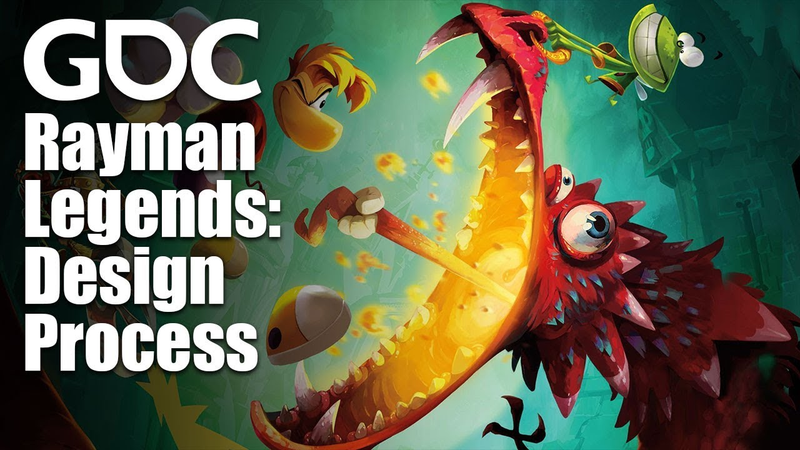
Rayman Legends: The Design Process Within the UbiArt Framework
The development of Rayman Legends centers on the implementation of the UbiArt Framework, an engine architecture designed to democratize the creative process by empowering level designers and artists to prototype independently.
- The UbiArt Framework enables rapid prototyping by allowing designers to combine 'white box' assets, movement tweens, and Lua scripting to prove gameplay concepts in as little as half a day.
- The development philosophy prioritizes frequent failure—up to 40 times a day—to quickly discard ineffective ideas and identify viable mechanics without becoming overly attached to early concepts.
- The engine utilizes a template-and-instance system that enforces core gameplay behaviors while allowing designers to tweak specific parameters, preventing the need for constant programmer intervention.
Lead the Way! A Practical Guide to Team Leadership
The transition from individual contributor to team lead in the game industry represents a fundamental shift in professional identity, requiring a move away from technical execution toward the cultivation of team morale and strategic direction.
- New team leads must treat management tasks like mentoring and conflict resolution as core responsibilities, dedicating 20% to 50% of their daily schedule to these duties.
- Effective leadership requires shifting from authoritative control to a supportive, mission-driven approach that utilizes active listening and Socratic questioning to foster team buy-in.
- One-on-one meetings should be prioritized for career development and long-term growth rather than being used for simple status updates.