Game Design reports and market data
Documents
AI Will Make Better Games Than Me One Day
The rapid evolution of artificial intelligence is fundamentally reshaping the video game industry, transitioning from simple productivity assistance to the development of autonomous agents capable of designing, coding, and refining entire software projects.
- AI development is shifting from a tool-based model to autonomous agents capable of planning, executing tasks, and self-correcting through recursive feedback loops to create full video games without human intervention.
- Current AI models are already capable of performing complex game development tasks, such as navigating game engines to rebake navigation meshes or providing functional playtesting feedback to improve game design.
- The integration of AI will fundamentally change professional roles in game development, transitioning 3D modelers and developers from creators of raw assets to editors and refiners of AI-generated content.
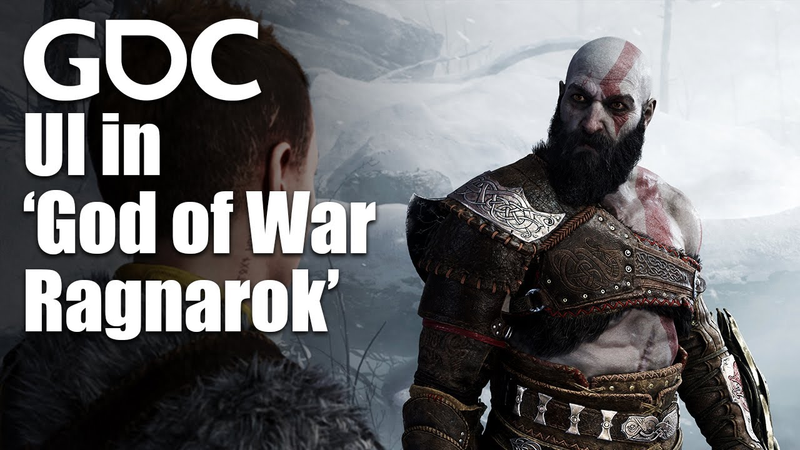
'God of War Ragnarök': Building the UI for a AAA Sequel
The development of the user interface for God of War Ragnarök centered on balancing high-fidelity aesthetic goals with the rigorous technical constraints of a AAA sequel.
- To ensure accessibility and readability, the UI team established a minimum body font size of 24 points and implemented comprehensive text scaling options, which were highly utilized by players.
- The UI team utilized a dynamic layout system from the start of production to prevent localization issues, ensuring that text elements could adapt to different languages without requiring manual fixes or overlapping.
- When faced with memory constraints regarding 4K video streaming, the team used a 720p video asset stretched to fill the screen, leveraging a 'campfire' visual aesthetic to mask the lower resolution.
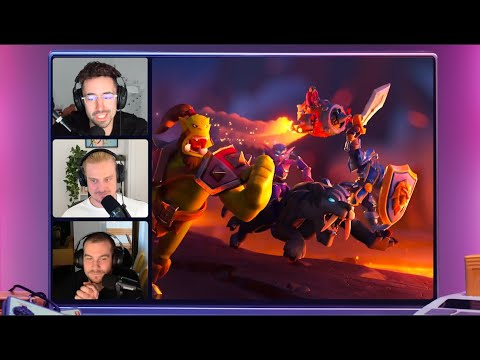
Warcraft Rumble: Deep dive into game's complexity, spend depth, systems, vectors, UA, creatives(#84)
Warcraft Rumble represents a strategic evolution of the mobile lane-battler genre, successfully adapting the Clash Royale formula by integrating expansive, scrolling maps and intricate gold-mining mechanics.
- Warcraft Rumble features an aggressive monetization model where fully maxing a single deck costs approximately €4,700, with a full collection completion estimated at €40,000.
- The game generates daily revenues between $250,000 and $600,000, positioning it as a high-engagement niche product for existing Blizzard fans rather than a mass-market mobile title.
- User acquisition is currently limited and conservative, relying on organic reach and repurposed trailer footage rather than performance-driven creatives or aggressive mobile-first strategies.
'The Looker': The Art of Parody Against the Menace of Goofiness
Successful game parody functions as a sophisticated form of creative engagement that transcends superficial humor by grounding itself in structural design and mechanical integrity.
- The core appeal of parody is not the endorsement or critique of source material, but providing players with validation that their own observations and criticisms of the original work are shared by others.
- Effective parody must maintain internal consistency and structural integrity; if a game relies solely on a sequence of jokes, it risks becoming predictable and losing its comedic impact, similar to the diminishing returns of relentless tickling.
- Successful parody requires a balance between high-fidelity elements and low-effort subversions; in 'The Looker', high-quality world design was used to ground the player, preventing the 'crude' puzzle design from making the experience feel stale.

Building a Roblox Studio
Tiny Comet operates as a specialized studio within the Roblox ecosystem, dedicated to modernizing humanities education through immersive, history-based role-playing games.
- Tiny Comet integrates history-based educational content into popular Roblox genres like Tycoon and Tower Defense to engage players aged 10 to 17.
- The studio prioritizes 'learning-by-doing' and entertainment over didactic instruction to avoid the negative perception of overt academic branding.
- Operational development relies on a high-velocity cycle and a workforce of platform-native creators recruited via Discord and the Roblox Talent Hub.
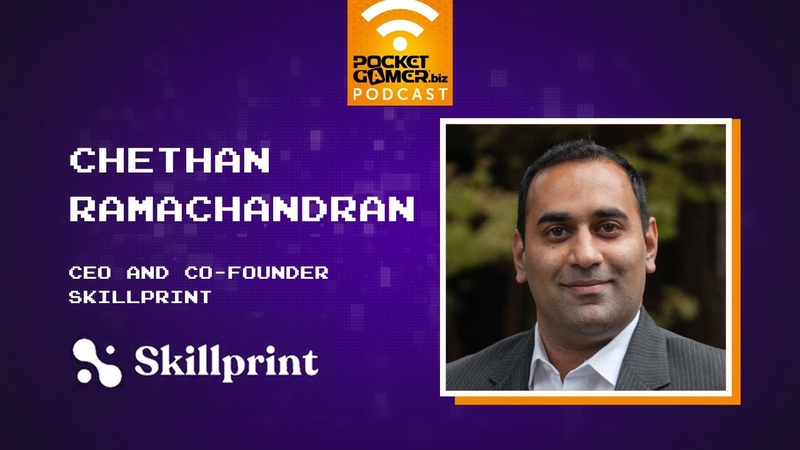
Skillprint’s Chethan Ramachandran On Combining Neuroscience And AI For An Adaptive Play Solution
The integration of neuroscience and artificial intelligence offers a transformative approach to game design, shifting the industry toward highly personalized, adaptive play experiences.
- Skillprint uses neuroscience and AI to create adaptive game experiences that maintain players in a 'flow state' by dynamically balancing difficulty to prevent boredom or frustration.
- The platform functions as an automated LiveOps tool, providing developers with actionable data on player personality, behavior, and cognitive traits to improve engagement, retention, and monetization.
- Skillprint developed its data model by cross-referencing player performance in games with established neuroscience and cognitive science exam batteries to create a high-fidelity mapping of human behavior.
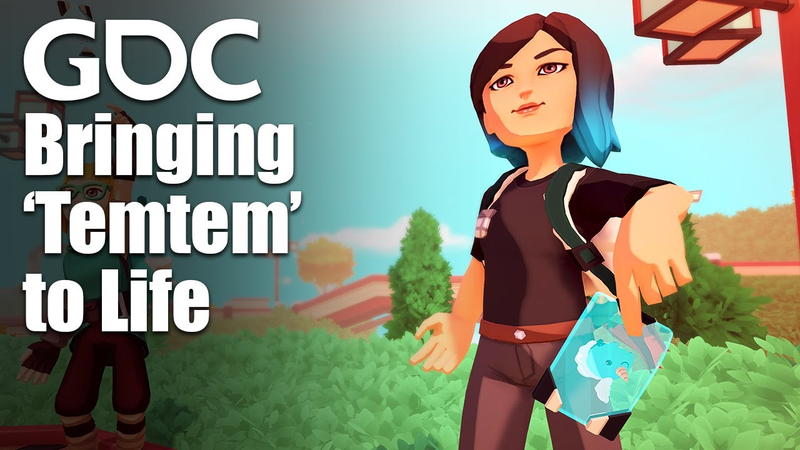
Creating Narrative VFX in 'Temtem'
The development of visual effects for the creature-collection game Temtem centers on a narrative-driven philosophy that treats every combat technique as a miniature cinematic experience.
- The VFX team at Crema treats Temtem techniques as mini-cinematics, with animation lengths strictly tied to gameplay mechanics: zero-hold techniques last 2–3 seconds, while high-hold techniques extend up to 8–9 seconds.
- Narrative impact is achieved by integrating custom battle zone changes, where developers hand-place assets in Unity to create unique environments that reinforce a specific Temtem's signature move.
- Visual storytelling relies on cinematic principles like camera angles—using low angles to convey power and high angles to signify weakness—to guide the player's eye and establish the scale of an attack.

The Genius Game Design of Genshin Impact’s Login Screen - Extra Credits
Effective game design often operates on a subconscious level, utilizing the initial moments of a player’s experience—such as login screens, loading sequences, and opening music—to prime them for the intended gameplay loop.
- Effective game design utilizes the login screen and loading sequences to subconsciously prime players for the intended gameplay experience, ensuring their expectations align with the game's core loop.
- Genshin Impact’s login screen uses calm music and imagery of ruins and infinite paths to establish an atmosphere of exploration and wonder, steering players away from high-intensity action expectations.
- Designers must identify the core 'hook' of their game and reinforce that specific fantasy through every element of the opening, including music, visuals, and load-time transitions.
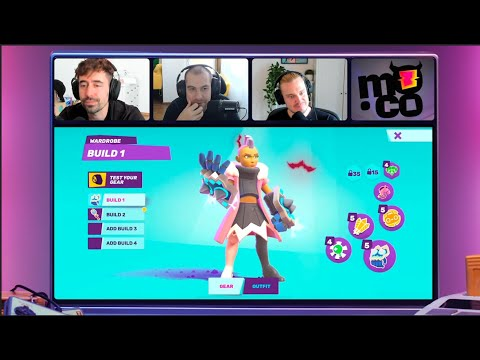
Supercell's Mo.co: First look! New game in closed beta - not even in soft launch yet
Supercell is currently testing Mo.co, an isometric, player-versus-environment action RPG that marks a strategic departure from the company’s traditional focus on competitive, player-versus-player titles.
- Supercell's Mo.co is a PvE-focused action RPG, marking a strategic departure from the company's historically PvP-dominant portfolio.
- The game utilizes a mission-based progression system where XP is gated exclusively by completing specific tasks, preventing players from grinding XP through general gameplay.
- Progression is heavily reliant on a gear-check mechanic where item upgrades are strictly tied to the player's character level, preventing the concentration of resources into a single piece of equipment.
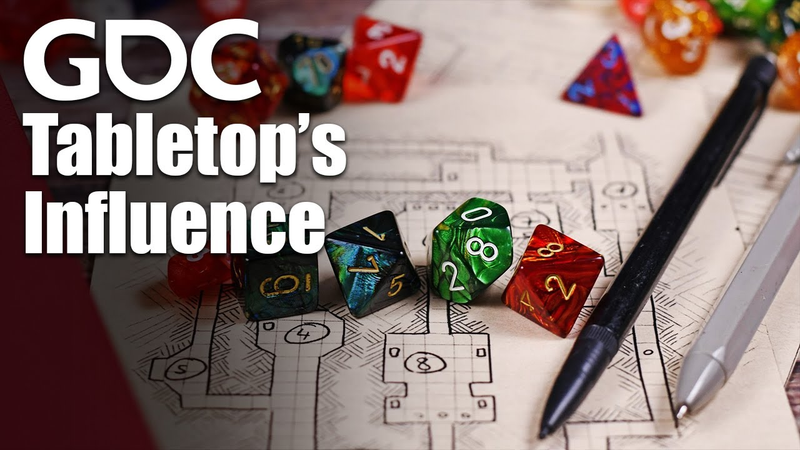
The Best and Most 'Stealable' Mechanics from Tabletop RPGs
Tabletop roleplaying games offer a wealth of innovative design frameworks that can significantly enhance digital game experiences by prioritizing player agency, emergent narrative, and meaningful resource management.
- Tabletop RPG mechanics like 'stress' in Blades in the Dark can be adapted into digital games as a tangible, finite resource that forces players to choose between character health and pushing beyond normal limits.
- Quest logs can be transformed from simple checklists into dynamic 'clocks' that track multiple, interconnected narrative threads, allowing designers to manage complex state-based events without writing exhaustive rule sets.
- Character beliefs and instincts—such as those in Mouse Guard—can be integrated into RPGs to reward players for roleplaying specific traits, creating meaningful character arcs where internal values impact gameplay bonuses.

Playing For The Planet’s Lisa Pak On Gaming For Good And Wielding The Power Of Play
The gaming industry possesses a unique capacity to influence global environmental consciousness by leveraging its massive, engaged player base.
- The Playing for the Planet alliance, supported by the United Nations, facilitates industry-wide collaboration by providing studios with shared carbon accounting tools and sustainability toolkits.
- The Green Game Jam serves as a primary mechanism for developers to integrate educational environmental narratives and activations directly into existing game titles.
- Studios are repurposing excess advertising traffic to support environmental campaigns, effectively converting commercial assets into tools for social impact.
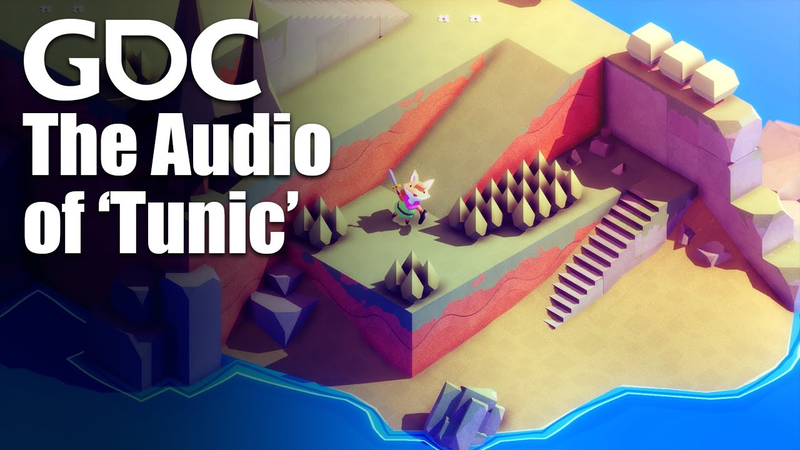
The 'TUNIC' Audio Talk
The audio design for TUNIC centers on creating a cohesive, warm, and responsive soundscape that reinforces the game’s isometric perspective and themes of discovery.
- To manage complex 3D audio requirements like altitude differences and camera panning, the TUNIC team opted for a screen-space audio model where all sounds are played in 2D and driven by parameters like offscreen distance and orthographic size.
- The team utilized FMOD effect chain presets to apply consistent panning and distance curves across multiple sound events, allowing for global adjustments that proliferate across all associated sound instances.
- To prevent audio retriggering issues during state transitions, the team implemented a 'transition hub' that uses conditional logic to route events to a specific endpoint, ensuring the audio sequence completes correctly regardless of parameter changes during playback.