Game Design reports and market data
Documents

The WORST Game Dev Advice On YouTube...
The prevailing wisdom in independent game development often relies on three common maxims: avoiding feature creep, strictly adhering to a game design document (GDD), and avoiding the sunk cost fallacy.
- Prioritize consistent, honest playtesting with external audiences over rigid adherence to internal design documents, as players are the only reliable judges of what makes a game fun.
- Treat Game Design Documents (GDDs) as flexible starting points rather than infallible constitutions, allowing the creative process to evolve through experimentation.
- Avoid labeling new additions as 'feature creep' prematurely, as elements perceived as distractions by developers often become the most engaging components for players.
How To Make Indie Games In 2025 (Thomas Mahler) — Full Time Game Dev Podcast Ep. 040
The modern indie game development landscape demands a shift away from trend-chasing and bureaucratic production models toward a focus on core gameplay mechanics and distinct creative vision.
- Prioritize core gameplay mechanics and responsive, polished controls through extensive prototyping before committing to final art assets.
- Achieve success through relentless iteration and a willingness to fail early rather than relying on innate talent or trend-chasing.
- Challenge established genre conventions by pursuing significant mechanical leaps, such as moving from point-and-click systems to direct, animation-based controls.
Finding the Fun in VR with AstroBeam and Schell Games
Successful virtual and mixed reality development relies on first-principles thinking that prioritizes intuitive, user-driven interactions over traditional controller-based logic.
- Successful VR design relies on first-principles thinking, such as the approach used in Job Simulator, which constrained players to stationary positions to solve the problem of movement-based motion sickness and controller complexity.
- Generative AI in gaming is currently overhyped as a 'magic' solution for instant development, but it is underhyped regarding its potential to evolve NPC behavior and voice-based interaction when paired with significant manual design effort.
- Designing for VR requires strict adherence to accessibility; for example, developers at Alchemy Labs found that avoiding complex button combinations like simultaneous trigger and grip usage significantly improved the mainstream user experience.

InZOI vs. The Sims – Can Krafton’s Life Sim Take on EA’s Giant?
The life simulation genre is currently facing a significant market disruption with the emergence of InZOI, a title developed by Krafton that aims to challenge the long-standing dominance of Electronic Arts’ The Sims franchise.
- Krafton’s InZOI is currently the most anticipated game in the life simulation genre, holding the top spot on Steam’s wishlist rankings with approximately 1.2 million entries.
- InZOI differentiates itself from the long-standing Sims franchise through high-fidelity, realistic graphics and advanced mechanics like vehicle operation and deep character customization.
- The game is experiencing high organic engagement on TikTok, driven by user-generated content rather than paid influencer campaigns, signaling strong viral potential among younger demographics.

Are Video Game Cons Still Worth It? | Design Club
The modern landscape of the video game industry is defined by a fundamental shift in how information is disseminated and how professional networks are maintained.
- The industry has shifted from legacy trade shows like E3 toward direct-to-consumer digital campaigns, which offer publishers more control and lower logistical overhead for product marketing.
- Physical conventions like the Game Developers Conference have transitioned from being primary venues for product reveals to specialized hubs for high-level networking, deal-making, and professional development.
- Studios must conduct rigorous ROI analysis for in-person events due to significant financial costs, the risk of talent poaching, and the potential for employee burnout.
Watch THIS If You Want To Make Indie Games (THE RIGHT WAY)
The primary thesis of this discussion is that rigid adherence to industry-standard technical workflows and conventional wisdom is often counterproductive for independent game developers.
- Prioritize the final gestalt of the game over rigid adherence to industry-standard technical workflows or conventional coding and modeling dogmas.
- Adopt an '150% effort' mindset to ensure that even if the project scope is reduced during development, the final output remains substantial and high-quality.
- Leverage the agility of small teams to outperform larger, structured AAA studios by utilizing non-traditional, unconventional development tactics.
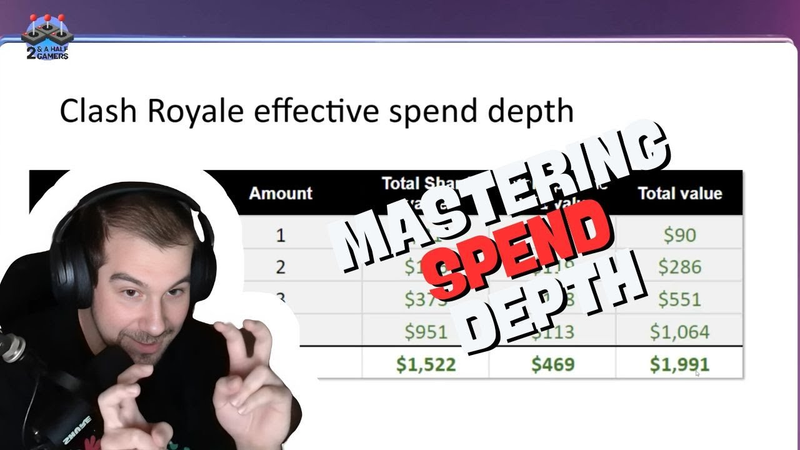
Mastering Effective Spend Depth in Gaming by Jakub Remiar
Effective spend depth is a critical metric for game designers and developers to understand, as it represents the specific resources required for a player to access and complete end-game content.
- Spend depth is the total monetary value required to acquire every upgradeable asset in a game, while effective spend depth represents the specific resources needed to access and complete end-game content.
- To calculate spend depth, anchor the game's economy to real-world currency by analyzing the cost of hard currency bundles and the total shard or resource requirements to max out all items.
- Effective spend depth is often lower than total spend depth because players typically focus on optimizing a specific loadout, such as the eight cards used in a Clash Royale deck, rather than maxing every available asset.
Why You Won't Finish Your Game (And How To QUIT Quitting!)
The primary obstacle preventing independent game developers from completing their projects is not a lack of technical skill or poor game design, but rather an intense, underlying fear of public scrutiny and potential failure.
- The primary barrier to project completion for independent developers is the psychological fear of public failure and scrutiny rather than a lack of technical or design proficiency.
- Developers often struggle to separate their personal identity from their work, causing them to perceive critical feedback or minor bugs as personal attacks.
- The high-stakes nature of long-term development cycles creates a cycle of anxiety where the public reception of a demo is incorrectly viewed as a definitive judgment on a developer's entire career.

Supercell's Mo.co: Exciting new global launch. Is this the next billion-dollar game?
Supercell’s latest action RPG, Mo.co, represents a strategic attempt to capture the mobile market through a streamlined, fast-paced experience that mirrors the core loops of titles like Diablo.
- Supercell has launched Mo.co as an invite-only title, prioritizing a long-term community-building approach over immediate mass-market scaling.
- The game features a grind-heavy, quest-based progression system reminiscent of early World of Warcraft, focusing on PVE mechanics rather than traditional gacha-based power progression.
- Monetization is currently limited to cosmetic items and an Elite pass, with a notable absence of aggressive pay-to-win mechanics or standard RPG power-progression monetization.
A Human-Centric Approach to Mobile gaming industry by Ömer Yakabagi
The mobile gaming industry is currently experiencing a crisis of identity, characterized by an aggressive, revenue-obsessed startup culture that prioritizes key performance indicators (KPIs) over the core values of creativity, joy, and human connection.
- The mobile gaming industry's current 'peak culture'—a startup-driven focus on rapid growth and aggressive revenue targets—is stifling creativity and creating unsustainable pressure on developers, artists, and marketers.
- To restore the industry's core value of providing joy and connection, companies must shift from a purely revenue-centric model to a human-centric approach that prioritizes employee well-being and mental health.
- Creative professionals, including designers and developers, are often forced to prioritize high-volume content production over innovation, which diminishes the quality of the player experience and the long-term health of the industry.
GOAT: GUY YOGEV aka Game Design Powerhouse
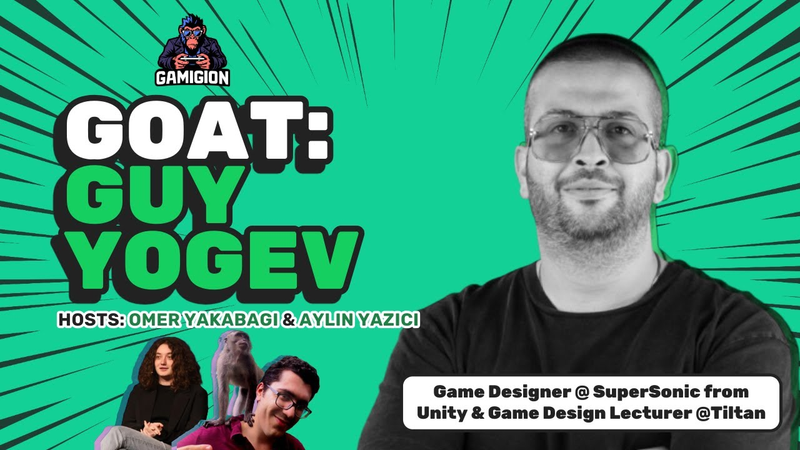
Guy Yogev, a game designer at SuperSonic and academic lecturer, emphasizes the integration of psychology and behavioral economics into game design to create successful, player-centric experiences.
- Modern mobile game design requires a multidisciplinary approach, blending psychology for user experience with product-oriented thinking to balance creative vision with business KPIs.
- Game design is not purely artistic; it involves rigorous research, wireframing, and behavior mapping, with approximately 70% of the role dedicated to thorough market research and trend analysis.
- In the current hybrid-casual market, success relies on creating games that are easy to pick up while implementing multiple monetization units, such as season passes and subscription models.
Exploring Match Villains: A New Contender for THE Casual Throne
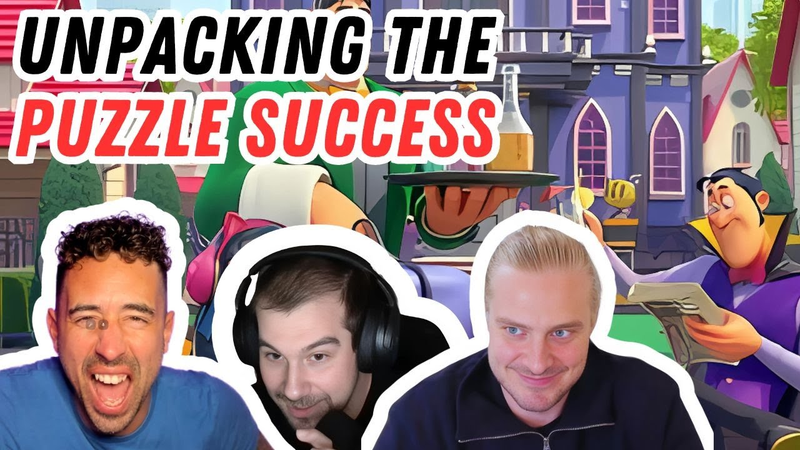
Match Villains, developed by the Turkish studio Good Job Games, represents a strategic attempt to capture market share within the highly competitive mobile match-three puzzle genre.
- Good Job Games' 'Match Villains' is attempting to disrupt the saturated U.S. match-three market by replicating the core mechanics and monetization models of industry leaders like Royal Match.
- Since its April launch, the title has scaled to approximately 50,000 daily installs but currently generates only $50,000 in daily revenue.
- Analysts project the game's long-term daily revenue potential is capped at $150,000 due to the difficulty of competing against entrenched market incumbents.