Game Design reports and market data
Documents

Knit Out’s Turkish Blueprint: Rollic Games scaling puzzle games Like a PRO
Rollic Games has established a highly effective blueprint for scaling puzzle titles, exemplified by the success of Knit Out.
- Rollic Games' title 'Knit Out' generates $60,000 in daily revenue and secures 20,000 daily downloads, primarily from the U.S. market.
- The studio prioritizes rigorous internal benchmarks for retention and level difficulty before integrating meta-features or live-ops into their puzzle titles.
- Monetization is heavily weighted toward in-app purchases and rewarded videos, with ad revenue contributing only 23% to 30% of total income due to a strategic delay of interstitial ads.

Let's Review Your Games — Ep. 017
Modern indie game development requires a rigorous focus on technical optimization, particularly for the Steam Deck, which has emerged as a critical platform for reaching contemporary audiences.
- Prioritize technical optimization for the Steam Deck, as it has become a critical platform for reaching modern indie gaming audiences.
- Implement the 'isekai principle' by dropping players into an unfamiliar environment with a clear, immediate motive within the first five minutes of gameplay.
- Improve visual clarity by using high-contrast, cinematic lighting instead of ambient light to ensure the protagonist is easily distinguishable from the environment.
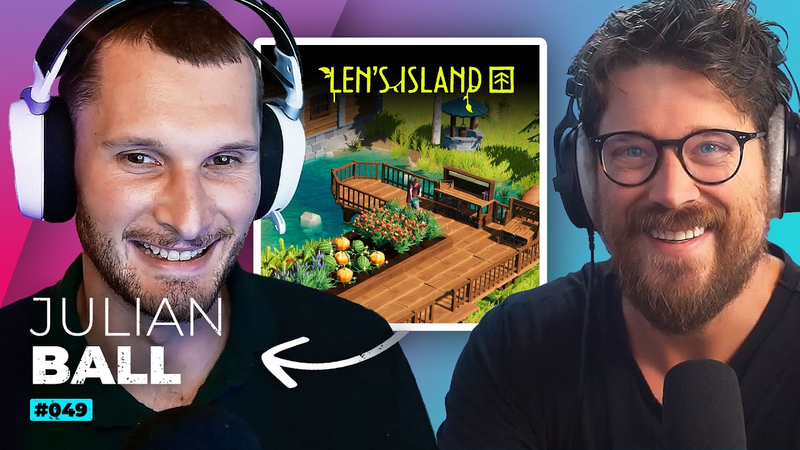
Julian Ball: Why His Game Took 8 Years To Make, How Launch Went, Staying Motivated | Ep. #049
The development of Lens Island serves as a case study in the endurance required for long-term independent game production, spanning an eight-year cycle that culminated in a successful commercial launch.
- Julian Ball spent eight years developing his open-world sandbox game, Lens Island, which combines elements of Diablo, Stardew Valley, and Minecraft into a single cohesive experience.
- The development of Lens Island required building a massive amount of content, effectively creating four games' worth of mechanics to support diverse playstyles like farming, building, and combat.
- To maintain project momentum over an eight-year cycle, Ball utilized a team-based workflow where he acted as a director, offloading specialized tasks like 3D art to experts while focusing on high-level design and artistic vision.

Is This New Marvel Game the Next Big Mobile Hit?
Marvel Mystic Mayhem, a recent action RPG release from NetEase, attempts to differentiate itself within the crowded mobile market by blending squad-based collection mechanics with real-time, card-driven combat on a hex grid.
- NetEase's Marvel Mystic Mayhem has experienced a rapid decline in download rankings shortly after launch, indicating poor market performance and a likely contraction in daily active users.
- The game's core design choices, specifically the limitation to a three-hero squad and the inclusion of an autoplay feature, undermine its tactical premise and fail to align with current industry trends toward deeper collection metas.
- The broader Marvel mobile gaming ecosystem is currently facing significant revenue and engagement attrition, impacting established titles like Marvel Snap and Marvel Strike Force.
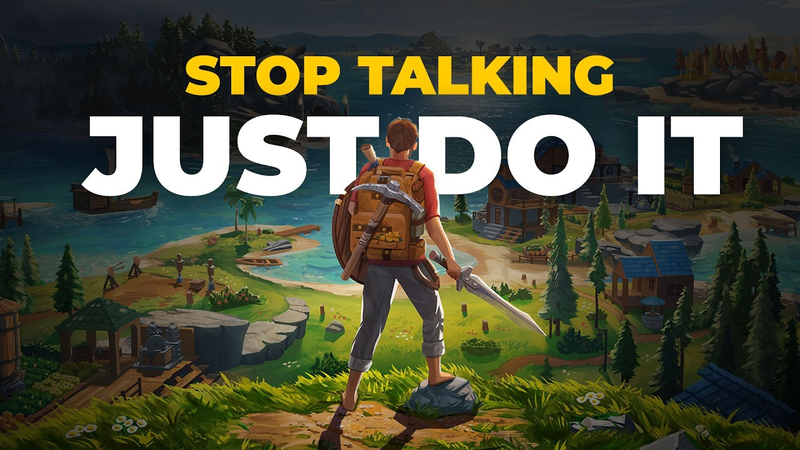
Want To Make Your First Game? Watch THIS
The primary thesis of this discussion is that sustained productivity in game development is not a product of inherent discipline, but rather the result of identifying and leveraging powerful underlying motivations.
- Long-term game development requires a core 'why' to sustain momentum through the inevitable 'desert' phases of production where motivation wanes.
- Negative motivation—such as fear, survival pressure, or the need to escape a constrained situation—is often a more powerful initial driver for productivity than positive goals.
- Discipline is not an innate trait but a byproduct of visualization; developers who have previously experienced the success of a launch or positive player feedback are better equipped to power through boring development cycles.
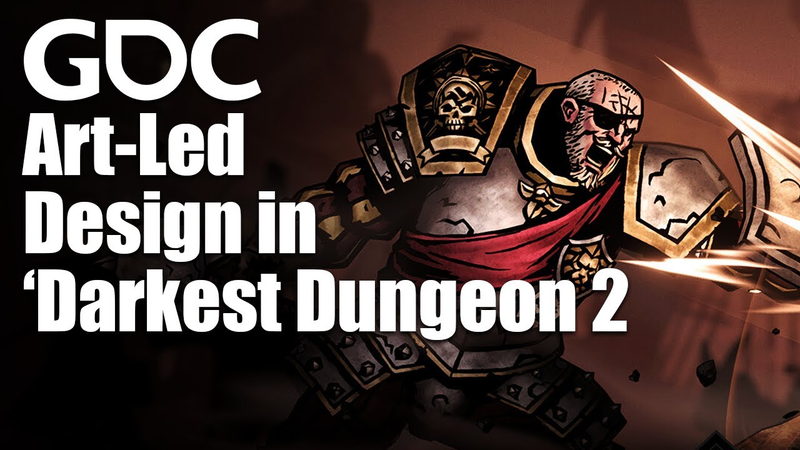
Evolving Worlds from Chaos: The Art-Led Approach of 'Darkest Dungeon 2's' Procedural Generation
The development of Darkest Dungeon 2 centers on a deliberate shift toward an art-led procedural generation system, prioritizing the game’s distinct, painterly aesthetic over traditional, programmer-centric automation.
- Red Hook Studios shifted from a programmer-led procedural generation system to an art-led approach for Darkest Dungeon 2 to ensure the game’s distinct, painterly 3D aesthetic remained consistent across generated environments.
- The team abandoned an initial 'sequential plate' system because it created an unsustainable workload for the art team and failed to support the desired game design direction.
- The final solution utilized a grid-based system where environment artists defined a minimal set of road tiles, allowing Unity to generate complex, seamless biomes without requiring constant developer intervention.

Let's Review Your Games — Ep. 016
Independent game development requires a precise balance between innovative core mechanics and cohesive aesthetic presentation.
- Long-term success depends on the rigorous application of technical stability, intuitive UI, and a unified artistic direction that clearly communicates the game's intent.
- Marketing assets, particularly cover art, must accurately reflect the tone of the gameplay to avoid alienating the target audience.
- Technical issues such as frame hitching and poor UI feedback can undermine innovative core mechanics, creating avoidable friction that disrupts player immersion.
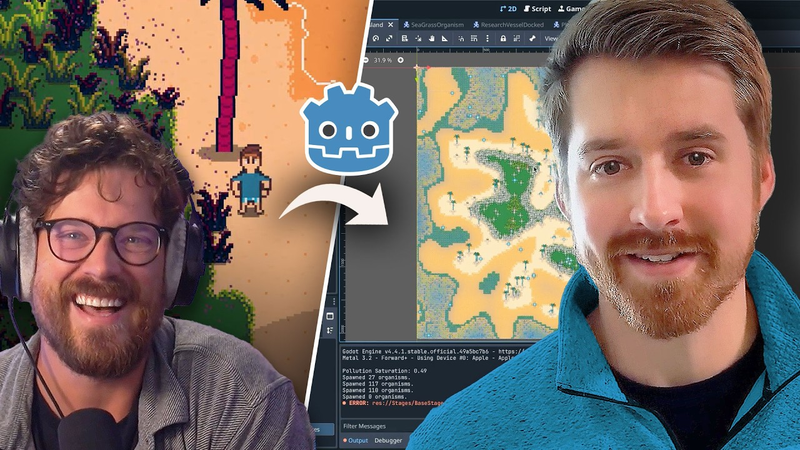
How To Make EVERYTHING For Your Games (COMPLETELY ALONE)
This discussion provides a technical overview of solo game development, focusing on the practical application of the Godot engine and the artistic discipline required for pixel-art projects.
- Successful solo game development relies on modular scene-based architecture and intentional design choices rather than reliance on complex external tools.
- Godot’s scene tree hierarchy enables efficient management of complex object interactions, such as dynamic player positioning relative to environmental sprites, through runtime node reparenting.
- Maintaining professional-grade pixel art requires strict adherence to a defined viewport and canvas scale to ensure consistent pixel sizing across all assets.
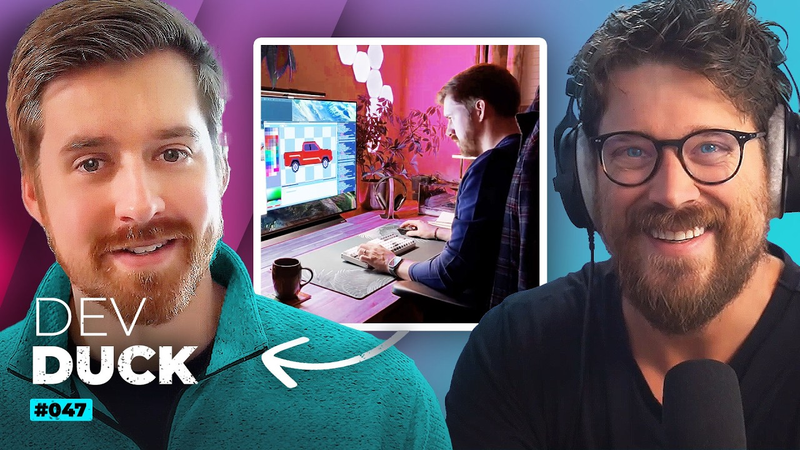
DevDuck: Switching To Godot, Making Games Alone, 5 Years On 1 Game, Staying Motivated | Ep. #047
Solo game development requires a delicate balance between creative ambition and the practical constraints of a professional career.
- Solo developers can mitigate scope creep and prolonged production cycles by adopting a disciplined, iterative workflow rather than pursuing total creative control.
- The transition from Unity to Godot reflects a strategic shift toward lightweight, node-based architectures that offer more intuitive management of 2D depth and procedural generation.
- Custom editor tools allow developers to combine procedural efficiency with manual curation, ensuring that generated game environments retain a handcrafted, intentional quality.
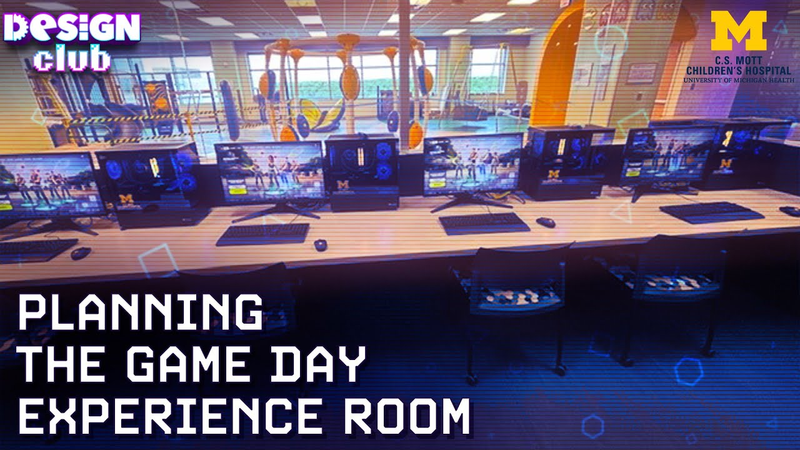
Planning the Game Day Experience Room for C.S. Mott Children's Hospital | Design Club
The Michigan Game Day Experience at C.S. Mott Children’s Hospital serves as a specialized therapeutic environment designed to integrate recreational technology into pediatric care.
- The Michigan Game Day Experience at C.S. Mott Children’s Hospital uses a symptom-based approach to integrate video games as therapeutic tools for mitigating pain, boredom, and anxiety in pediatric patients.
- The facility maintains a curated library of 'cozy' and low-barrier titles, such as Journey, Flower, and A Little to the Left, to ensure immediate satisfaction and broad accessibility for diverse cognitive and physical needs.
- Technical operations rely on daily hardware resets and shared, persistent accounts to protect patient privacy while allowing for gameplay progression.
Rules of the Game 2025: Uncommon Techniques from Insightful Designers
Effective game design relies on the strategic application of intentional friction, where mechanical limitations, scarcity, and unconventional controls are used to align gameplay systems with a project’s core emotional and thematic goals.
- Designers should use intentional friction—such as mechanical limitations and scarcity—to align gameplay systems with the project’s core emotional and thematic goals.
- Technical development should prioritize rapid, messy iteration over rigid scripting standards, allowing for temporary, one-off solutions during early production to protect the player experience.
- Innovation is best achieved by stripping mechanics to their simplest form and selectively reintroducing complexity to foster emergent, varied gameplay.
Autonomous Worlds | BITKRAFT Summit 2024
Autonomous worlds represent a paradigm shift in digital environments, functioning as fully on-chain gaming ecosystems where blockchain technology serves as an immutable, permissionless foundation.
- Autonomous worlds are defined as fully on-chain, permissionless environments where digital physics and rules are decentralized, allowing for unlimited, composable experiences beyond the original creator's intent.
- Cartridge is developing the open-source toolchain 'Dojo' and 'Slot,' a rollup-as-a-service platform, to provide the infrastructure necessary for developers to build fully on-chain games.
- Unlike centralized platforms like Roblox, autonomous worlds eliminate platform take-rates and permission requirements, enabling developers to commercialize and iterate on game assets and mechanics freely.