1 free read left. Create a free account for unlimited reading + AI research.
Create free account
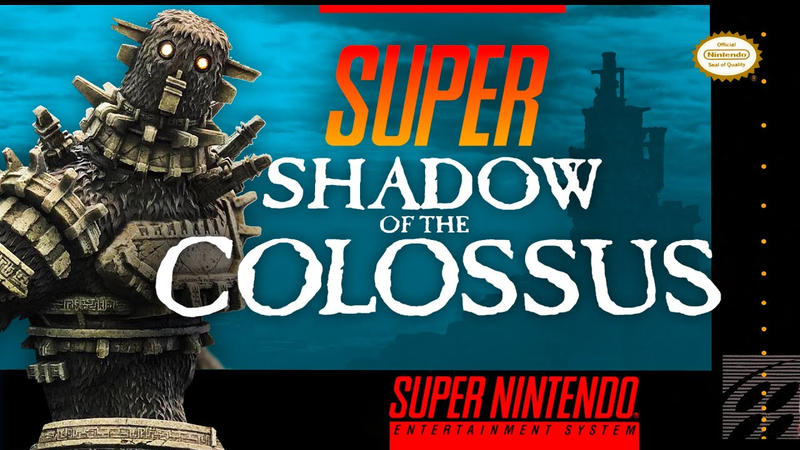
I made Shadow of the Colossus... BUT IT'S 2D
Key insights
6 takeaways- 01The project successfully distilled the core emotional experience of the 3D title Shadow of the Colossus into a 2D, 16-bit format through a compressed three-day development sprint.
- 02To achieve a retro aesthetic, the developer created 4K assets in Photoshop and used nearest-neighbor resampling to downscale them into crisp, pixelated visuals.
- 03A dynamic orthographic camera system was implemented in Unity to simulate the original game's sense of vast scale by adjusting zoom levels based on player proximity.
- 04Climbing mechanics were replicated using a 2D ragdoll physics asset in Unity, bypassing the need for the original game's complex 3D inverse kinematics.
- 05The developer utilized screen-shake effects and simplified rigging to convey the weight and physical impact of the boss character, Gas.
- 06Replicating the original game's atmosphere required maintaining a barren, foggy environment, which proved essential for preserving the intended sense of isolation in a 2D space.
Ask AI about this video
Transcript
Did you know Shadow of the Colossus was originally a Super Nintendo game released in 1993? Me neither. That's because it wasn't. What you're looking at now is my best attempt at recreating the haunting vastness of the Forbidden Land as a 2D adventure game in just 3 days. Just like my Skyrim remake, I really didn't want to do this project. Honestly, I was hoping another easier project might get upvoted, but I think you guys just want me to suffer. I don't know if it's possible, but Shadow of the Colossus is 2D. Holy crap. Yes, it's not worth programming something that complex just for a video. If he follows the idea, he'll probably make a fake boss. Even though the PS2 version of Shadow of the Colossus is now a 16-year-old game, the physics, the inverse kinematics, the animation, the beautiful, massive, haunting atmosphere, it still baffles me. How exactly am I going to take this beautiful, huge, massive world that the eco team took 3 and 1/2 years to make and 35 people on their team? How do I
turn that into something that you might see on an early9s Super Nintendo system? So, I started the project by designing Wander in 2D. Originally, I broke my own rule about 2D protagonists, and I got super duper detailed. This looked horrible in the old school minimalistic pixelated environment. So, I scrapped that and I actually jumped into just creating the massive pixel art environment first. So, I took inspiration from Super Brothers. They're the creators of Sword and Sorcery. Taking this inspiration and combining it with the grayish simplistic color palette of the environment artist Coogi, I don't know how to say this. Hagawa, I created this. Fun fact, pixel art is a pain in the butt. It really is. It is not easier than making a illustrative game, at least not using the way that most YouTubers teach it. They place every single pixel, which is totally fine. It's just not for me. I actually
just use the polygon lasso tool in Photoshop. I hold shift to limit my angles to 45°, and then I design everything in 4K. Then I scaled down that 4K to 15%, ensuring that resampling is set to nearest neighbor. And this is actually going to give the image a super pixelated, crisp look. Once I finished up the art in Photoshop, I slapped it onto my super simple game kit. And by the way, that's free below. You can download that, use it however you want. No gimmicks. Then I created a quick zoom in and out mechanic. And the breathtaking scale was created. All I had to do here was increase and decrease the orthographic scale of the camera with the scroll wheel. Looks pretty awesome. Be sure to stick around to the end of the video to see this in action during the massive boss sequence. All right, so this is where the fun begins. Creating the character design was actually a piece of cake. He's just a
silhouette with a bright blue cape created using a trail effect in Unity. I then downloaded a massive list of sound effects directly from the game source. I put those into Unity and then I was ready to move on to the climbing mechanic. Now, a little bit of background. Shadow of the Colossus and its predecessor, Eco, which by the way sold really poorly, honestly, because it's a great but artsy game. These games pioneered something called inverse kinematics. basically means the player's feet, hands, and monsters and horse hooves. They can legitimately connect and stick to things like the ground and walls, all while being animated, creating realistic, sometimes hilarious ragd doll physics. This, of course, is a massive undertaking. It's insanely resource inensive. It's impressive, yes, but it's too expensive for me to replicate in a
Super Nintendo game. So, what would a Super Nintendo game do instead? I proceeded to create a fun ragd doll climbing system where you jump from various grab points. Climbing pretty much wherever you want to as long as there's a grab point. I figured this wouldn't be too hard, but the truth is 2D ragd doll in Unity is a lot harder to create than 3D rag doll. Ouch. Ouch. Ouch. Charlie, I don't know why. There's not really a tool in Unity to do this, so I actually had to download one called 2D Ragd Doll Creator from the Unity Asset Store. After some abysmal coding, I was able to attach the ragd doll to a box collider and launch the rigid body by pressing space. It's actually pretty fun. Of course, the real question is whether this mechanic is even feasible where it matters, the colossi. Now, I picked the number two best boss to recreate. At least this is according to game rant.
And that boss is called Gas. I avoided the number one best boss, Avon, because, well, that should be obvious. First, I took a tea pose of, believe it or not, Donkey Kong, and I drew a simplistic shape of Guas over top in Photoshop, attempting to replicate this crunchy retro feel. This took about 30 minutes. The real challenge was rigging and animating. Anyone who has made a game knows that animating a walk cycle is pretty rough, but ultimately I was able to replicate this gigantic feeling of the boss, especially when he slams down his weapon. This feeling was achieved primarily with the help of Cinemachine's screen shake, but most importantly, emptiness. What the original PS2 game did so well, and I honestly think the remake did not do this well. Feel free to rip me apart in the comments. What it did so well was unintentionally, due to the platform limitations, it created a sense of barren, foggy emptiness. Making
the Colossi a flat tone amplified by a moody, foggy landscape helped achieve that massive feel. I then slapped on some grab point prefabs onto the boss and I placed some attack zones on his head. Of course, the boss sequence is pretty boring without some epic music written by Caloni. I hope I said that right. In searching for his music on YouTube, I actually stumbled across an epic 8-bit version of the boss sequence music created by Funlord Earl. Fun Lord Funlord Earl. Fun Lord Earl. I dug around for his contact information and actually started a conversation with him on Reddit. He actually let me put his music in the game in exchange for a link in the description. So, feel free to check out his other tracks. He's actually super talented. All right, let's play Super Shadow of the Colossus.
[Applause] Heck, heck.
Heat. Heat. [Music] Heck, heck, [Music] heck, heck, heck. [Music]
[Music] Hick. [Music] Heck. [Music] Thanks so much for watching, guys.
Summary
The challenge of translating the atmospheric scale and complex mechanics of Shadow of the Colossus into a 16-bit, 2D Super Nintendo-style experience serves as the primary focus of this development project. By condensing a massive, three-year production effort into a three-day development sprint, the project explores how to replicate the sense of vastness and haunting isolation inherent in the original PlayStation 2 title using limited hardware aesthetics and modern game engine tools.
The methodology centers on a minimalist design philosophy, utilizing Photoshop to create 4K assets that are downscaled using nearest-neighbor resampling to achieve a crisp, pixelated look. To simulate the original game’s sense of scale, the project employs a dynamic orthographic camera system that adjusts its zoom level based on the player's proximity to the environment. Rather than attempting to replicate the original game’s resource-intensive inverse kinematics, the project utilizes a 2D ragdoll physics asset within Unity to simulate climbing mechanics, allowing the player to interact with specific grab points on the environment and the boss.
The project concludes with the recreation of the boss character, Gas, using a simplified rigging process and screen-shake effects to convey weight and impact. A critical finding is that the original game’s sense of scale was significantly bolstered by its barren, foggy environment, a design choice that proved essential to replicate in 2D to maintain the intended atmosphere. By combining these visual techniques with 8-bit arrangements of the original score, the project demonstrates that the core emotional experience of a complex 3D title can be effectively distilled into a simplified, retro-inspired format.















Comments