Employment reports and market data
Documents
🚨📢BREAKING NEWS: Clash Royale Drama, Layoffs, Applovin Q4, Unity Reshuffle 🤯
The current state of the gaming industry is defined by a sharp divergence between companies undergoing painful structural restructuring and those achieving significant growth through product-market clarity.
- AppLovin reported a 70% year-over-year revenue increase to approximately $5.5 billion, highlighting a stark contrast to the 30% stock decline and leadership reshuffle currently impacting Unity.
- Nexon achieved a 6.5% revenue increase to $3.1 billion, driven by the strong performance of titles like ARK Raiders.
- Supercell’s recent Clash Royale revenue spike was temporary, with data indicating that performance has already regressed to previous baselines despite influencer-led marketing efforts.
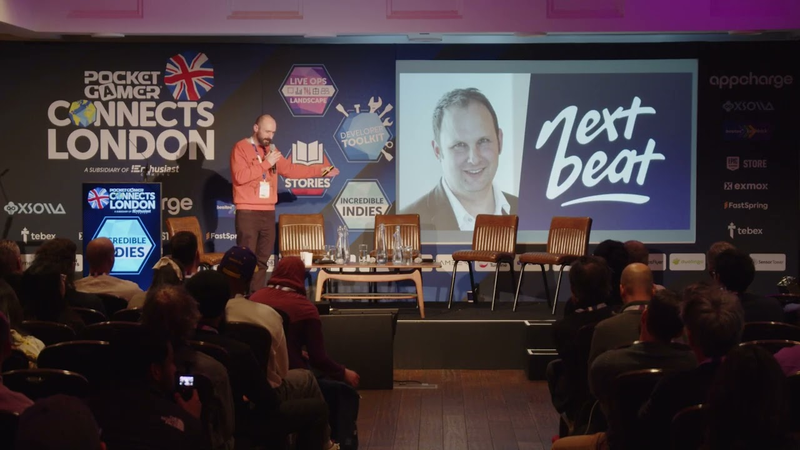
Session: Quit Your Job… Then Join Duolingo? The Unexpected Journey Of An Indie Icon - Nicoll Hunt.
The transition from independent game development to corporate software engineering is a complex, non-linear journey defined by the tension between creative autonomy and professional stability.
- Nicoll Hunt transitioned from an independent developer (founder of I Fight Bears) to a staff software engineer at Duolingo by way of Space Ape Games and the startup Next Beat.
- The acquisition of Next Beat by Duolingo was driven by the strategic alignment between the startup's music-game expertise and Duolingo's goal to develop a music-learning course.
- Transitioning from indie development to corporate environments provided Hunt with financial stability and the ability to work on large-scale projects while maintaining a creative, 'indie' mindset.

Is this make or break for GDC?
The global game development industry is currently navigating a period of significant instability, marked by widespread workforce reductions and shifting technological priorities.
- Over 25% of global game industry professionals have faced layoffs in the last two years, with that figure rising to 33% within the United States.
- Unreal Engine has surpassed Unity as the primary engine for developers, while the Steam Deck has become a higher priority for development focus than the Nintendo Switch 2.
- Despite rapid adoption for brainstorming and research, a majority of developers now view generative AI as a detrimental force within the industry.

GDC concerns, AppLovin allegations, why app makers want game talent, jobs, data, more
The mobile gaming industry is currently navigating a period of significant transition, characterized by shifting event attendance patterns, ongoing corporate legal challenges, and a growing cross-industry demand for specialized talent.
- Global in-app purchase revenue for mobile games reached $81.75 billion in 2025, though U.S. spending remains largely flat with only 1% growth.
- Non-gaming companies, including Duolingo and major dating platforms, are actively recruiting mobile game talent for their expertise in gamification, user retention, and monetization.
- AppLovin is facing aggressive scrutiny and allegations from short sellers regarding ties to sanctioned entities, which the company has formally denied and labeled as defamatory.
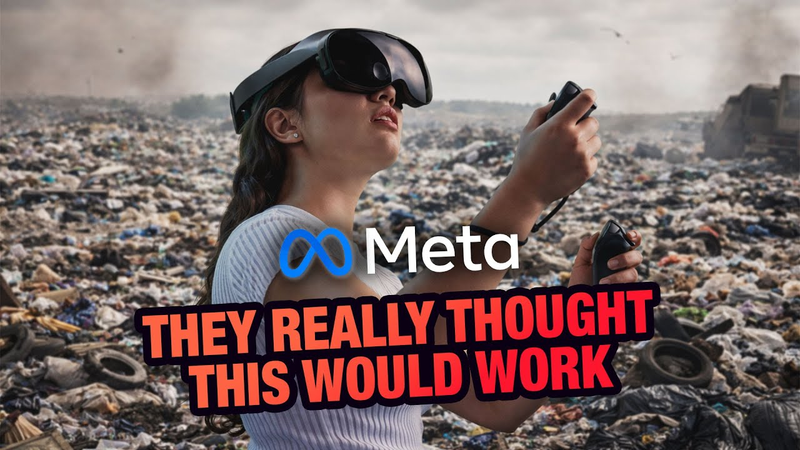
Meta’s VR Reality Check: $70B Later, Still Not a Platform
Meta’s recent decision to lay off staff within its Reality Labs division and shutter premier VR studios, including Twisted Pixel and Armature, signals a significant retreat from its long-term investment in virtual reality.
- Meta has effectively retreated from its VR strategy after spending approximately $70 billion since 2020 without establishing a scalable, viable platform.
- Meta is downsizing its Reality Labs division, including the closure of premier VR studios such as Twisted Pixel and Armature.
- VR engagement remains negligible compared to mobile gaming, with 2025 ESA data showing only 14% engagement among Gen Alpha compared to over 80% usage for mobile platforms across all demographics.
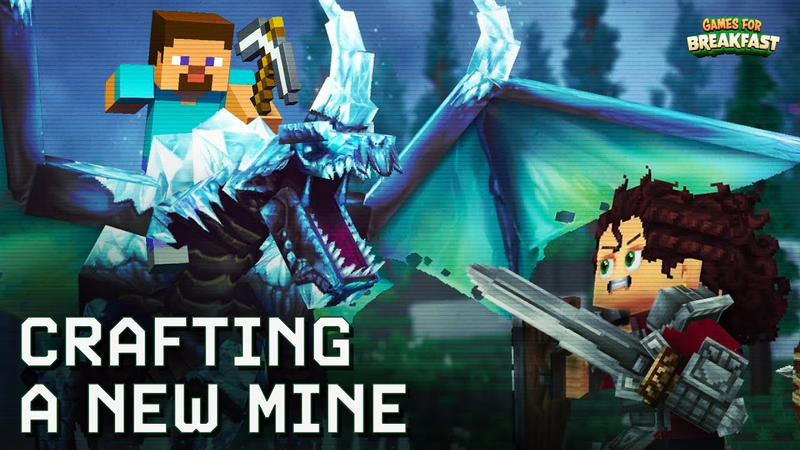
Minecraft’s Spin-off Hytale Makes Waves, Meta Layoffs, and Metacritic’s Best Game Ever
The sandbox title Hytale has emerged as a significant industry development, successfully transitioning into early access after the developers reclaimed the project from Riot Games.
- Hytale has transitioned to early access as an independent project after reclaiming development from Riot Games, securing two years of operational funding through independent sales.
- Meta is shifting its strategic focus away from metaverse and gaming initiatives to prioritize investments in artificial intelligence and wearable hardware.
- Amazon Games is sunsetting the MMO New World, underscoring the difficulty of community-led preservation due to proprietary server code and legal restrictions.
Pocket Gamer Connects London 2026 preview | Week in Mobile Games podcast
The global mobile gaming industry is currently navigating a period of intense structural transition, characterized by a shift toward artificial intelligence and a re-evaluation of long-term corporate strategies.
- Playtika is reducing its headcount by 15% as part of a strategic shift to streamline operations, specifically citing a transition toward AI and automation to replace headcount-heavy processes.
- Meta is cutting 10% of the staff at its Reality Labs division, which employs approximately 15,000 people, signaling a continued contraction in the company's investment in virtual reality.
- Paramount has initiated legal action against Warner Bros. to force financial disclosure and analysis of a competing acquisition offer from Netflix, which Warner Bros. previously favored over Paramount's bid.

Inside the Hiring Playbook of Top-Performing Startups
Early-stage startups frequently falter by underestimating the time commitment required for recruitment and mistakenly assuming that capital or brand prestige alone will secure top-tier talent.
- Startups must treat hiring with the same analytical rigor as product development, prioritizing speed and consistent standards to maintain a competitive advantage over larger corporations.
- Founders should prioritize candidates with proven hands-on execution skills over those relying on corporate pedigree or management titles, as tactical output is paramount in early-stage environments.
- To compete with tech giants, startups must leverage unique value propositions such as mission-driven work, accelerated career growth, and increased individual autonomy.
Flemish Games Sector: 2025 Industry Report
The Flemish games sector demonstrates consistent growth and structural maturation as of 2025.
- The Flemish games sector has more than doubled its corporate footprint since 2020, growing from 60 to 128 active entities by 2025.
- Annual industry turnover reached 76.5 million euros in 2025, reflecting a steady increase from 58.7 million euros in 2020.
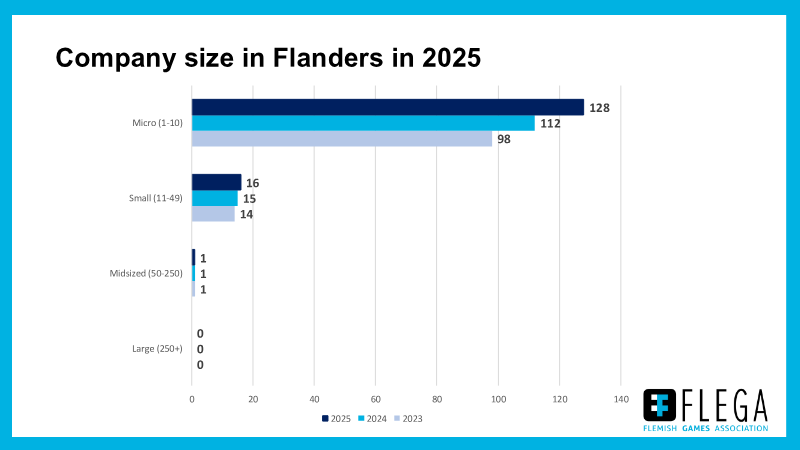
- The sector is composed almost entirely of micro-enterprises, with 112 of the 128 companies employing between one and ten staff members.

Unity shenanigans, Space Ape postmortem, your games of the year, 2025 wrapped, more
The mobile gaming industry is currently navigating significant shifts in corporate strategy, consolidation, and monetization models.
- Unity is reportedly introducing a new 'Enterprise minimum commitment' fee for studios with over $25 million in annual gross revenue, with costs scaling from $250,000 for $25M+ earners up to $2 million for those exceeding $250M in revenue.
- Supercell completed its acquisition of Space Ape Games in November 2024, rebranding the studio as Supercell London and tasking it with applying lean live-ops expertise to legacy titles like Hay Day and Boom Beach.
- Space Ape Games' history under Supercell involved testing approximately 25 different games and numerous prototypes, a process that highlighted the studio's struggle to focus on winners and kill underperforming projects quickly enough.

Who REALLY won The Game Awards? Plus, we review 2025
The 2025 gaming landscape reflects a period of robust recovery and structural evolution, marked by a 7.5% revenue increase to $190.9 billion, finally eclipsing the previous peak established during the 2021 pandemic era.
- The global gaming industry reached $190.9 billion in revenue in 2025, a 7.5% increase that finally surpassed the previous 2021 pandemic-era peak.
- The Game Awards achieved a 12.5% increase in peak viewership to 4.5 million, with winners like Clair Obscure: Expedition 33 seeing a 60% surge in sales following the event.
- Strategic consolidation is accelerating through potential high-profile deals, including a Netflix-Warner Bros. alignment and ongoing acquisition discussions involving EA.
UK Games Industry Census 2020: Understanding Diversity in the UK Games Industry Workforce
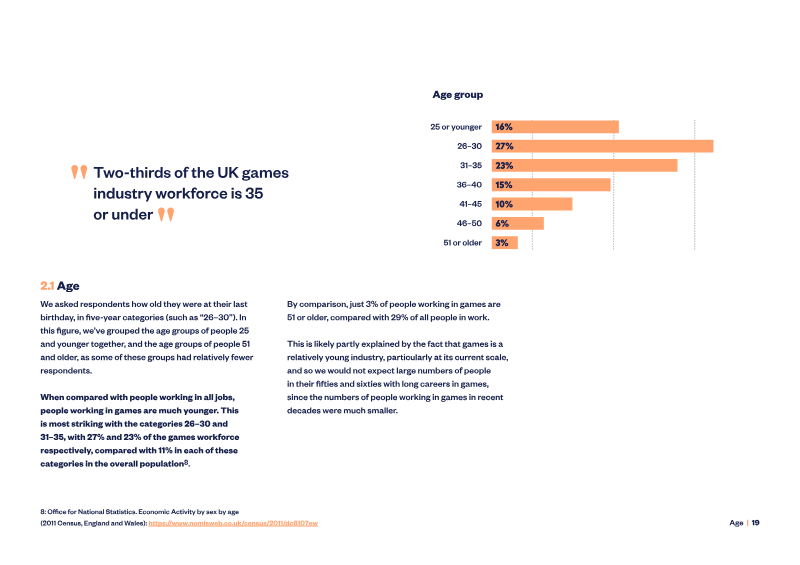
The UK games industry is characterized by a young, highly educated, and international workforce that serves as a critical hub for creative talent.
- The UK games industry workforce is predominantly white (90%) and male (72%), with women accounting for only 28% of total sector employment.
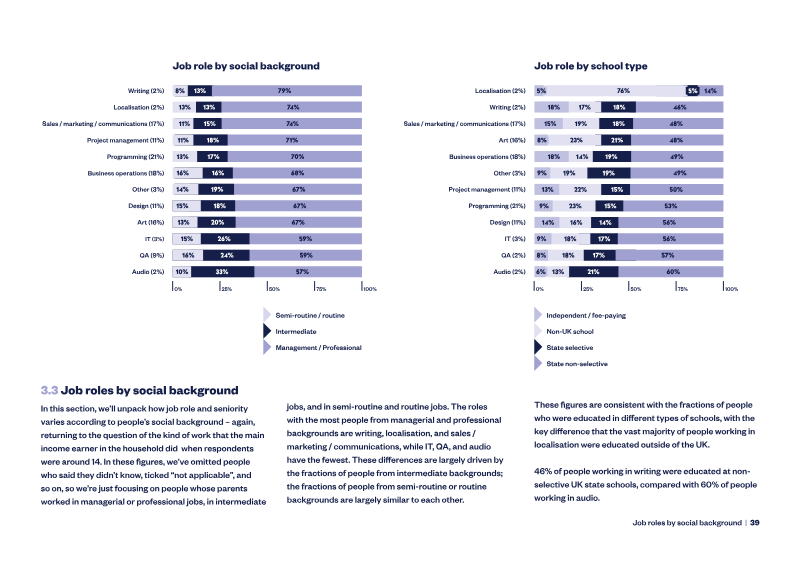
- A 'leaky pipeline' effect persists where White British men from professional or managerial backgrounds are significantly overrepresented in senior leadership compared to entry-level roles.
- Mental health challenges are widespread, with 31% of industry professionals reporting experiences of anxiety or depression.