PresentationSlovak Game Developers Association
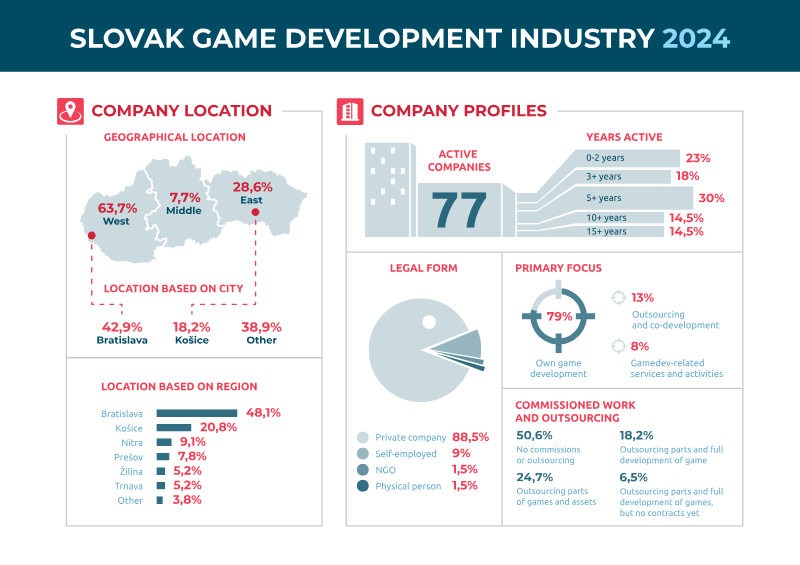
Slovak Game Industry Infographic 2024
20245 pages~6 min full read
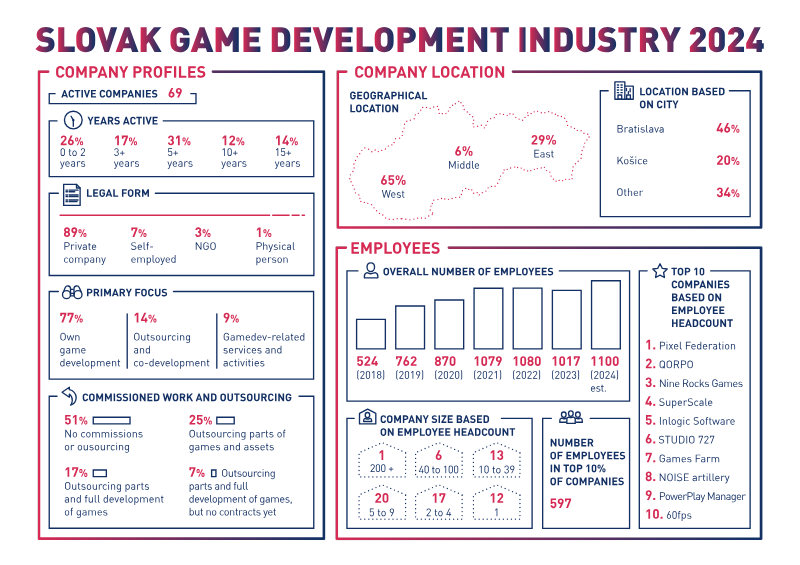
The 2024 Slovak Game Industry report provides a comprehensive overview of the nation’s game development sector, detailing its economic performance, workforce composition, and operational landscape as of December 31, 2024. The industry is characterized by a mix of established firms and newer entrants, with a primary focus on own-game development, which accounts for nearly 43% of activities, followed by outsourcing and co-development services. Geographically, the industry is concentrated in Bratislava and Košice, reflecting the urban centralization of technical talent and infrastructure.
Financially, the sector generated a total turnover of approximately 67.8 million euros in 2024, with a high degree of market concentration; the top 10% of companies account for over 83% of this revenue. The workforce consists of 982 employees with a median age of 30 to 35. While the industry remains male-dominated, women represent nearly 20% of the workforce, primarily in visual arts and marketing roles. Foreign talent is a significant component of the ecosystem, comprising 11.6% of the total headcount, with employees largely sourced from Poland, Ukraine, and Czechia. Remote work is highly prevalent, with 91% of companies offering some form of home office or fully remote arrangements.
Development trends show a strong preference for PC platforms, which serve as the primary target for both released and in-development titles. Self-funding remains the dominant financial model for projects, utilized by 80.5% of companies, while public funding and international publishers play secondary roles. Despite the industry's growth, stakeholders identify a need for improved state support, specifically requesting tax incentives, increased R&D funding, and more effective mechanisms for hiring foreign professionals. The report highlights a sector that is technically mature but actively seeking structural improvements to enhance its international competitiveness and sustainability.
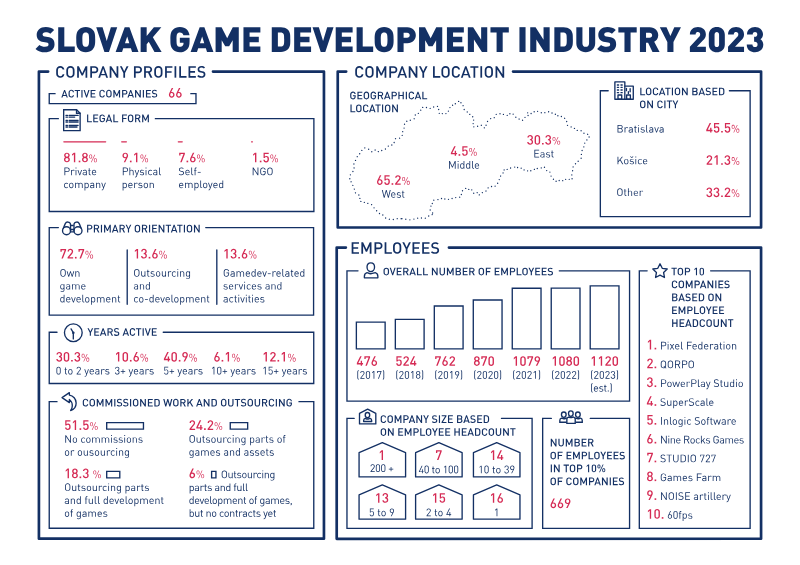
Slovak Game Developers Association · 2023
Slovak Game Developers Association · 2022
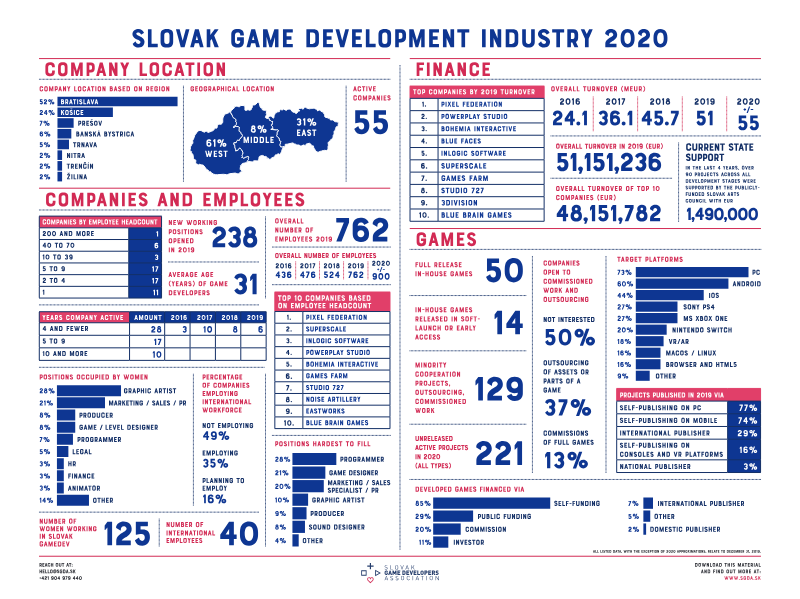
Slovak Game Developers Association · 2020
Slovak Game Developers Association · 2019
Swiss Game Developers Association · 2024
Slovak Arts Council · 2020
8Bit · 2026
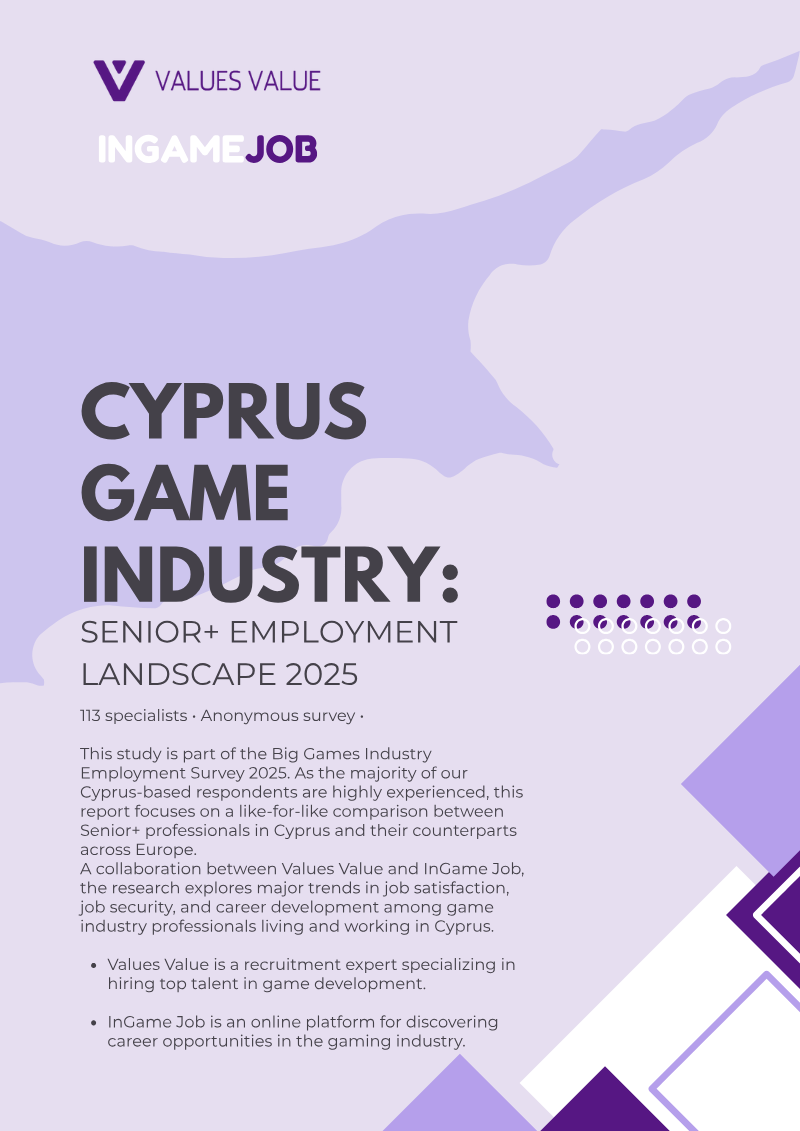
Values Value · 2026
FLEGA – Flemish Games Association · 2026

Ukie · 2025

British Esports · 2025

Ukie · 2025
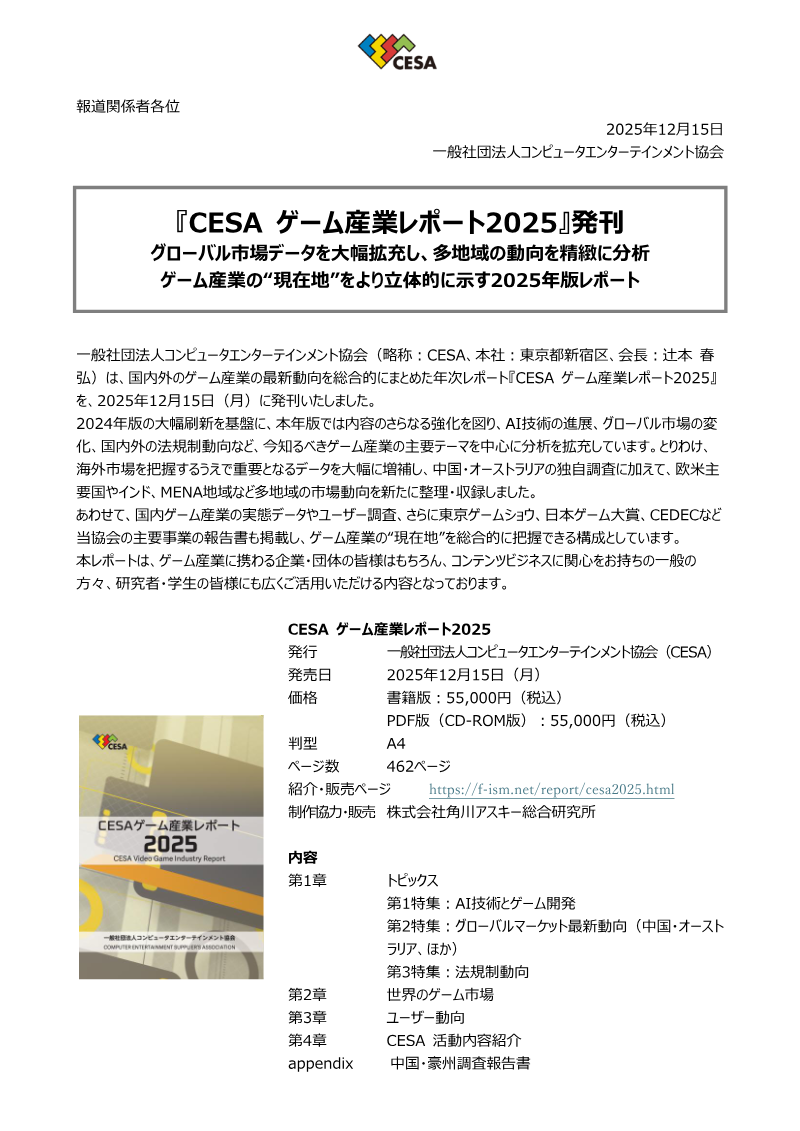
CESA – Computer Entertainment Supplier's Association · 2025
Flemish Games Association · 2025
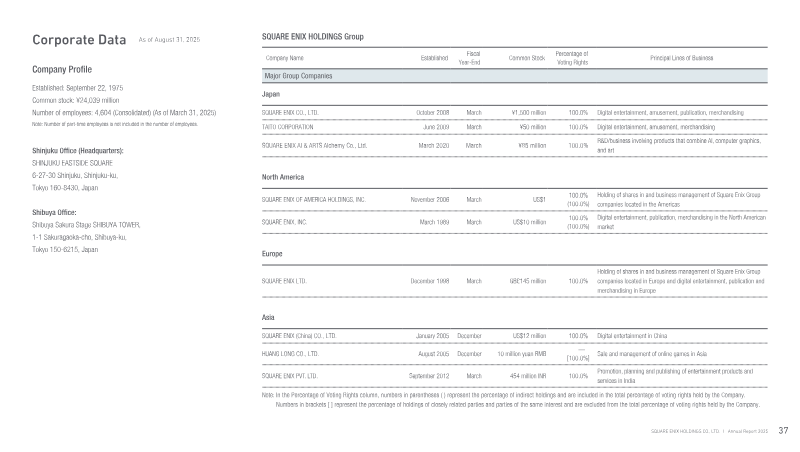
Square Enix · 2025
Direcció General d’Innovació i Cultura Digital · 2025