Employment Issues in Video Game Development: Spain
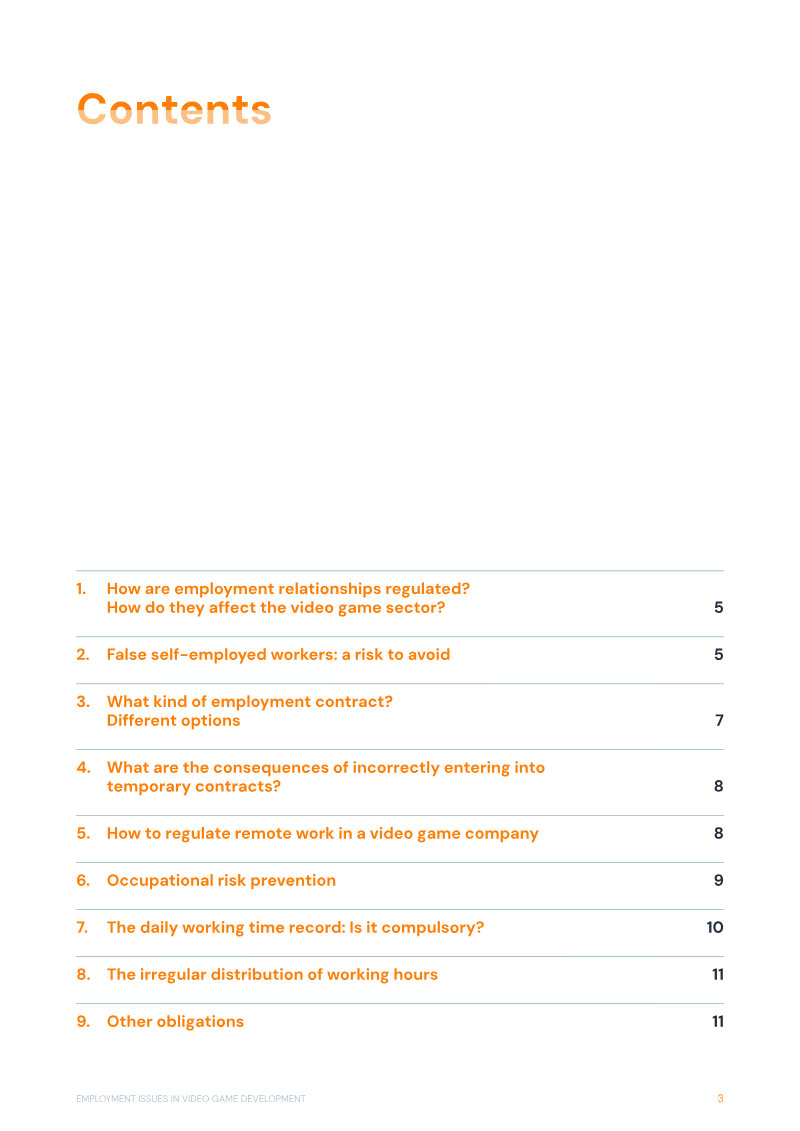
The guideaims to help video‑game publishers, developers and related staff in Spain navigate employment legislation while fostering safe, productive workplaces. It stresses that compliance with the Workers’ Statute, the 2022 labour reform and the Remote‑Working Law is essential to avoid costly legal sanctions and to protect staff from the health‑risk phenomenon known as “crunch.”
Key findings highlight the danger of false self‑employment, where workers appear independent but are actually subject to employer control. Spanish courts identify dependency, subordination and fixed remuneration as hallmarks; violations can trigger Social‑Security fines of €3,750‑€12,000 per worker, plus surcharges up to 150 % of unpaid contributions. The guide confirms that indefinite contracts are the default; fixed‑term contracts are permissible only for production‑related needs or to replace absent employees, with a maximum six‑month duration for the former and 90 days per calendar year for the latter. Misusing temporary contracts converts the relationship to permanent status and incurs fines of €751‑€7,500 per affected employee.
Remote work must be voluntarily agreed, cover at least 30 % of a worker’s time, and include employer‑funded equipment costing roughly €25‑€35 per month; non‑compliance also attracts fines of €751‑€7,500. Occupational‑risk prevention is mandated under Law 31/1995, with penalties ranging from €45 to €983,736 depending on severity, and requires systematic risk analyses to curb physical and psychosocial harms linked to crunch periods. Additionally, firms must maintain objective daily time‑recording systems, respect the irregular distribution of hours (up to a 10 % pool, notified five days in advance), and implement digital‑disconnection protocols, equality plans for organisations with over 50 employees, and whistle‑blowing channels.
Overall, the guide provides a practical checklist for Spanish video‑game companies: verify contract types, assess self‑employment arrangements, formalise remote‑work agreements, enforce occupational‑risk measures, and ensure accurate time‑keeping and compliance with broader digital‑and‑equality obligations, thereby reducing legal exposure and promoting healthier work environments.