Saints Row
Game
Documents about Saints Row
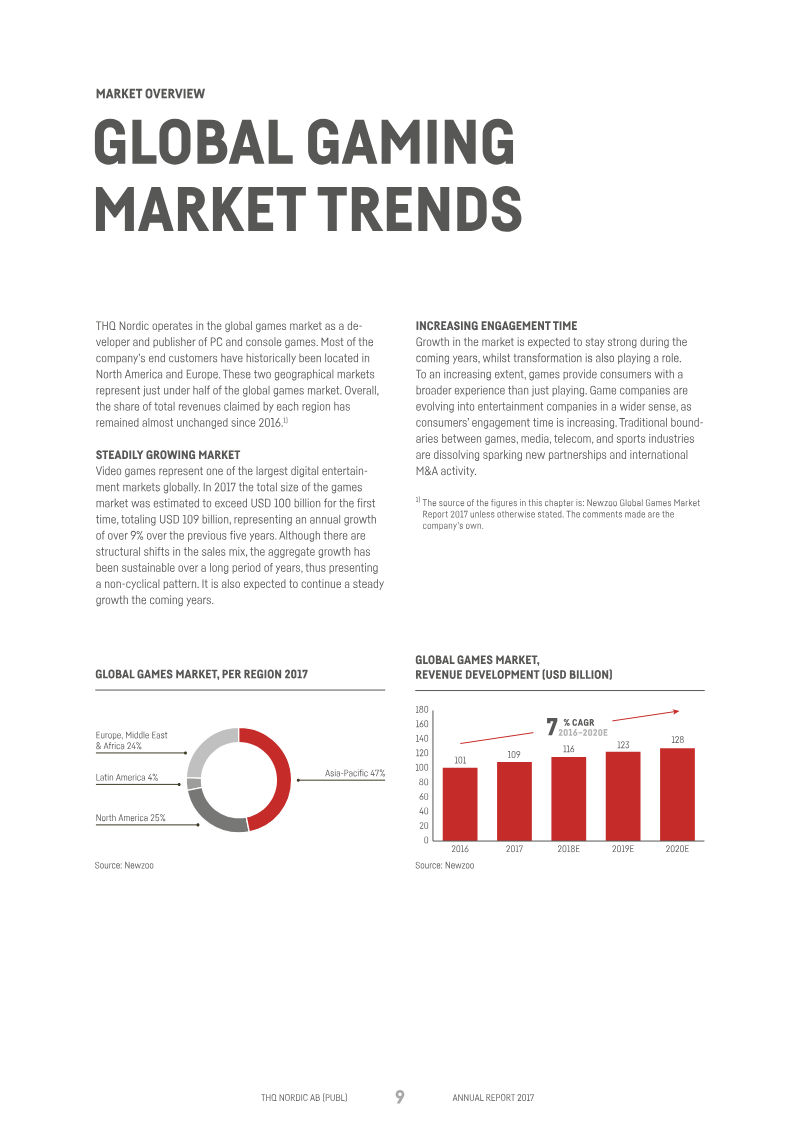
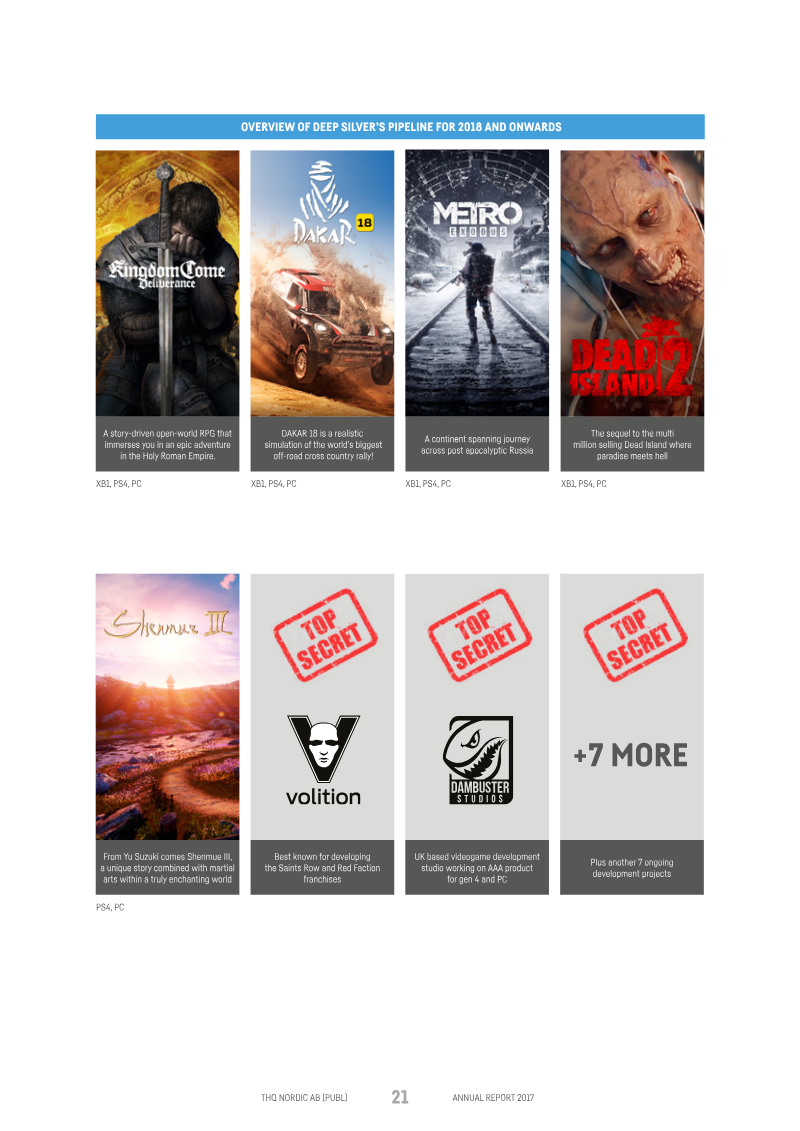
THQ Nordic Annual Report 2017
THQ Nordic experienced a transformative fiscal year in 2017, characterized by aggressive expansion and a refined focus on intellectual property acquisition.
- THQ Nordic acquired Koch Media in early 2018 for an enterprise value of EUR 121 million, significantly expanding its portfolio with major franchises including Saints Row, Dead Island, and Metro.
- The company achieved net sales of SEK 507.5 million and an operating profit of SEK 188.2 million in 2017, yielding a strong EBIT margin of 37 percent.
- By the end of 2017, the company managed a portfolio of 91 franchises and maintained a pipeline of 36 active development projects.
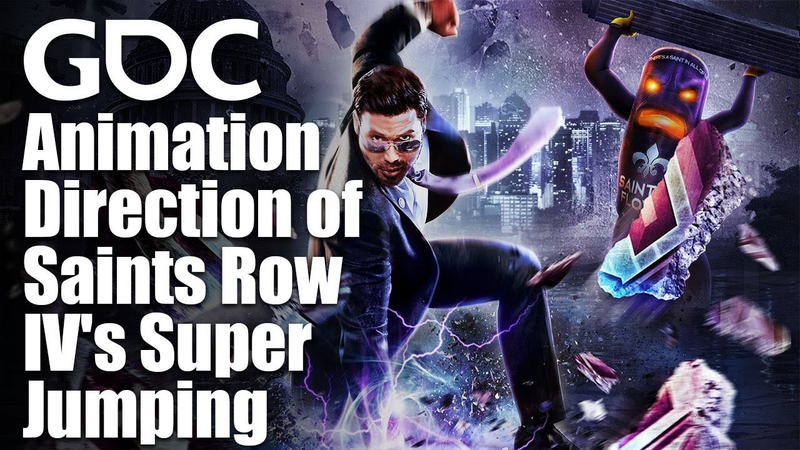
Super Powering the Saints: Animation Direction of Saints Row IV's Super Jumping
The development of the super jumping system for Saints Row IV presented a unique animation challenge: integrating supernatural movement into a franchise defined by a "comfortable and confident" blue-collar aesthetic rather than traditional superhero tropes.
- To maintain the specific 'Saints Row' identity, the animation team avoided traditional superhero tropes—which rely on character-specific posing—in favor of grounded, evolving motions that accommodate any player-customized character.
- The team abandoned initial attempts to capture superhero jump reference footage because the results were either unrealistic or failed to convey a sense of momentum, leading them to instead use Olympic long-jumping as the primary reference for realistic, evolving body mechanics.
- To prevent the animation from feeling repetitive during hours of gameplay, the team implemented a system that blends multiple jump states based on velocity and height, ensuring the character's movement evolves naturally from takeoff to apex and landing.

THQ Nordic AB (publ) Acquires Koch Media: Investor Presentation
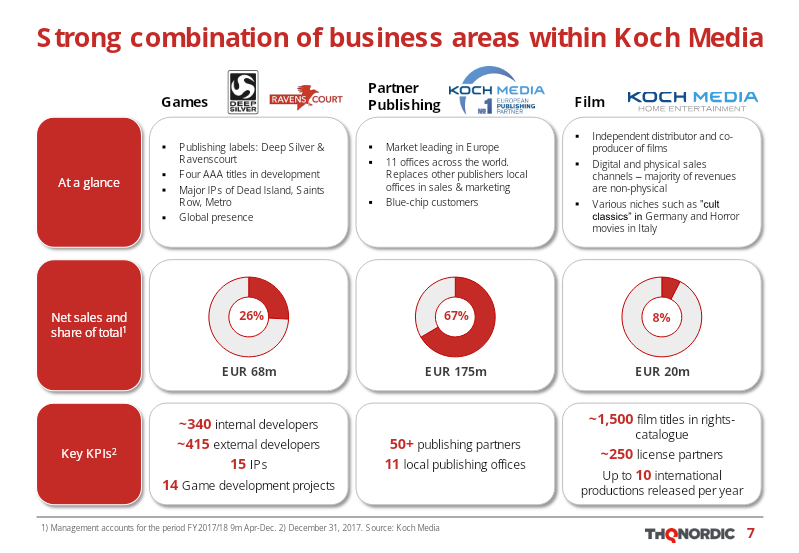
THQ Nordic AB’s acquisition of Koch Media, finalized in February 2018 for a total consideration of EUR 121 million, serves to significantly scale the company’s European presence and intellectual property portfolio.
- THQ Nordic acquired Koch Media in February 2018 for a total consideration of EUR 121 million, paid via EUR 82 million in cash, EUR 9.5 million in shares, and the assumption of debt-free liabilities.
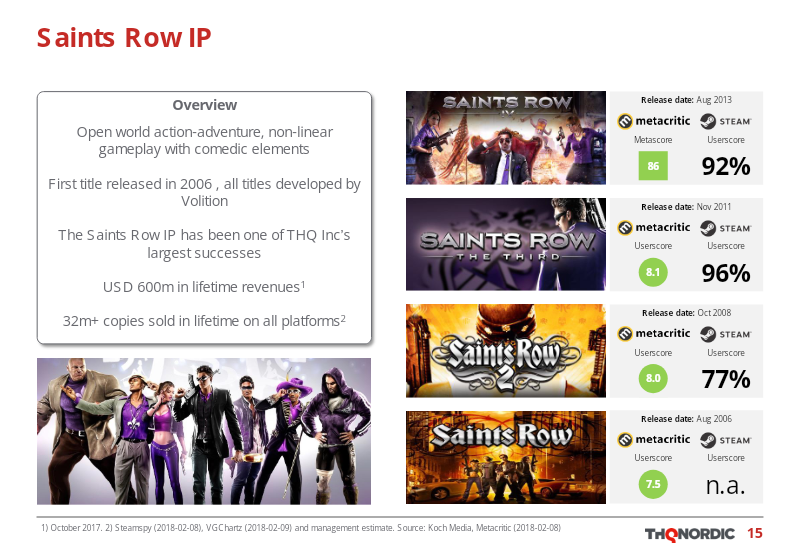
- The acquisition significantly expands THQ Nordic’s portfolio to 106 intellectual properties, including major franchises such as Saints Row, Dead Island, and a long-term exclusive license for the Metro series.
- The combined entity operates with 10 internal development studios, 26 external studios, and a total workforce of 1,643 employees.
The Vertical Slice Challenge
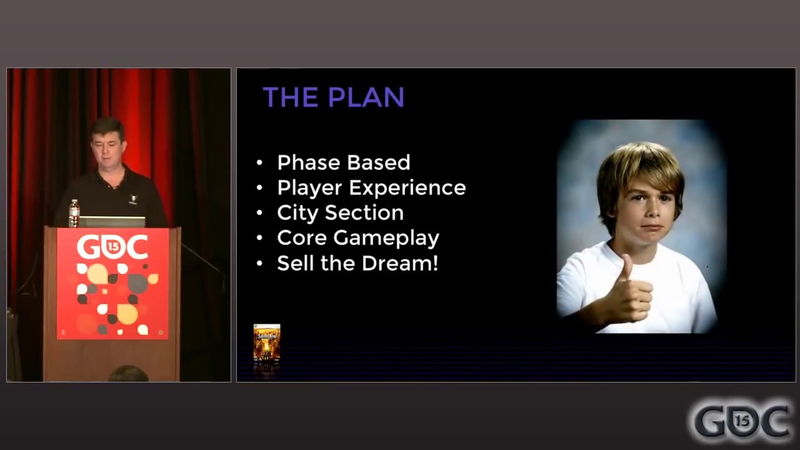
The vertical slice serves as a vital pre-production milestone in game development, functioning as a litmus test for core gameplay loops, technical readiness, and team alignment.
- The vertical slice must function as a rigorous gate for validating core gameplay loops and technical readiness rather than serving as a marketing tool or aspirational visual demo.
- Treating vertical slices as visual targets rather than functional milestones frequently leads to unsustainable crunch and hidden optimization requirements during later production phases.
- Studios should prioritize establishing performance budgets and assessing the viability of core mechanics during a disciplined pre-production phase to identify systemic risks early.
Portrayals and Pitfalls of Fatness in Games
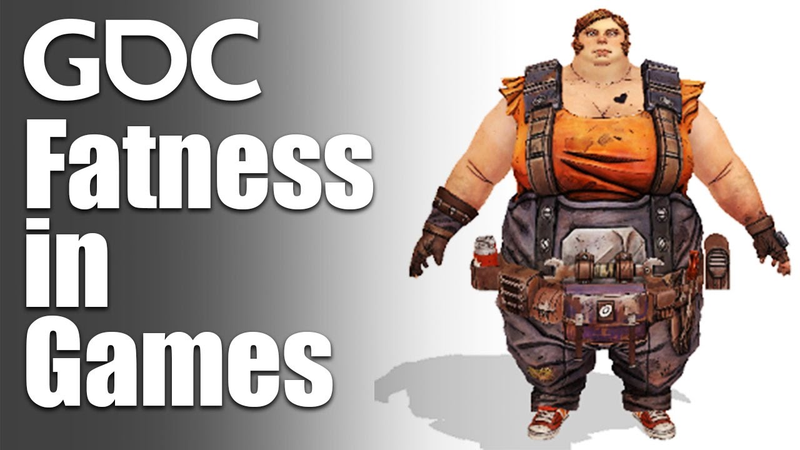
Video games frequently perpetuate systemic fatphobia by relying on reductive tropes that equate larger body types with moral failings, incompetence, or comedic relief.
- Video game character design frequently reinforces systemic fatphobia by using larger body types as shorthand for moral failings, incompetence, or comedic relief.
- Fat characters are often relegated to the 'sitcom effect,' where their physical appearance is treated as a punchline or an object of pity rather than a component of a well-rounded character.
- Nuanced representations of fat characters remain rare outliers, with titles like Borderlands 2, Pokémon X/Y, and Saints Row serving as exceptions to an industry-wide lack of body diversity.
Ethical Recognition of Marginalized Groups in Digital Games Culture
This paper argues that moral agents within digital games culture, including publishers, developers, critics, researchers, and players, bear an ethical obligation to promote equal treatment, opportunities, and justice for marginalized groups.
- The paper argues that everyone in games culture, including publishers, developers, critics, researchers, and players, has an ethical obligation to promote equal treatment and justice for marginalized groups, with recognition extending beyond representation to visibility, participation, platform access, and power redistribution.
- Industry data from the IGDA Diversity Report 2014 indicate the Western games workforce is roughly 79% White and 86% heterosexual, while character studies find White characters make up about 70–74% of those reviewed.
- Female characters account for only about 10–15% of characters across major studies, and non-heterosexual characters are rare.
Understanding Videogame Cities
"Understanding Videogame Cities" argues that fictional game cities can be analyzed with the same rigor applied to physical cities, using Saints Row: The Third's Steelport as its central case.
- The report argues that fictional videogame cities can be analyzed with the same rigor as physical cities, using a three-part framework of constitutional, representational, and experiential orders that blends Lefebvre's spatial triad with Douglas Allen's criteria.
- Its central thesis is that a city's character emerges from the interplay between its built structure, its visual and symbolic representation, and the embodied experience of moving through it.
- Using Saints Row: The Third's Steelport (2011) as the central case, the analysis finds that territory control and monuments, such as the Magarac Island statue destroyed late in the game, visibly express the city's power dynamics.
Companies behind it
As the documents state it.