Puzzle & Dragons
Game
Documents about Puzzle & Dragons

Gamescom 2026 insights and Sony Music's shock Puzzle & Dragons investment | Week in Mobile Games
The global gaming industry is currently navigating a period of strategic realignment, characterized by shifting developer allegiances, significant capital movements, and a renewed focus on core gameplay experiences.
- Sony Music has acquired a 23.29% stake in GungHo Online Entertainment, the developer behind the mobile hit Puzzle & Dragons.
- Godot is gaining significant market share as an open-source alternative to established engines, becoming the most-used engine in the GMTK Game Jam with 47% usage compared to 39% the previous year.
- W4 Games, a company supporting the Godot engine ecosystem, has secured $18 million in new investment.

Puzzle & Dragons: Five Billion $$$ Made, Zero Influence in the West
Puzzle & Dragons stands as a monumental achievement in mobile gaming history, having generated over $5 billion in lifetime revenue through its pioneering integration of elemental dungeon progression and gacha mechanics.
- Puzzle & Dragons has generated over $5 billion in lifetime revenue, establishing it as a foundational mobile RPG that pioneered the integration of elemental dungeon progression and gacha mechanics.
- Despite its massive financial success, the game remains a localized phenomenon in Japan, failing to achieve significant commercial or cultural traction in Western markets.
- The title currently generates approximately $13 million in monthly revenue, demonstrating the viability of prioritizing a deeply engaged, hardcore domestic audience over broad global expansion.

Japan Gaming Market with Serkan Toto
The Japanese gaming market, valued at approximately $13 to $15 billion, remains a distinct and highly lucrative ecosystem dominated by mobile platforms, which account for roughly 70% of total revenue.
- The Japanese gaming market is valued at $13–$15 billion, with mobile platforms accounting for approximately 70% of total revenue.
- High barriers to entry exist due to a top-heavy market structure dominated by legacy titles like Monster Strike and Puzzle & Dragons, alongside AAA mobile production costs that frequently exceed $10 million.
- International competitors from China and Korea, such as NetEase, are successfully capturing domestic market share by introducing innovative genres like Battle Royale that challenge the traditional dominance of gacha-based RPGs.
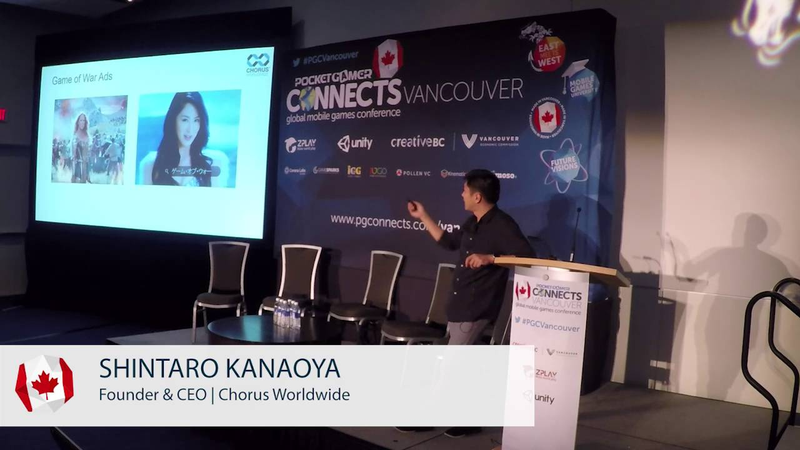
How to get your western game published in Japan
Entering the Japanese mobile gaming market presents significant challenges for Western developers, primarily due to the dominance of local titles and a distinct preference for specific gameplay mechanics.
- Success in the Japanese mobile market requires deep culturalization beyond simple translation, including adapting humor, font choices, and character art to overcome local consumer caution toward foreign products.
- Developers should adopt a shareware monetization model, offering a free initial experience with a single in-app purchase to unlock the full game, as premium titles face significant barriers to entry.
- App Store optimization must mirror traditional retail packaging by using detailed, informative graphics that explain game features rather than relying solely on standard screenshots.

Puzzle & Dragons did $1B in 2015, but is now in decline
GungHo Online Entertainment maintains a dominant position in the global mobile gaming market, anchored by the sustained performance of its flagship title, Puzzle & Dragons.
- Puzzle & Dragons generated $1.3 billion in 2015, yet it accounted for 89% of GungHo Online Entertainment's total revenue, highlighting a dangerous lack of product diversification.
- GungHo is experiencing a clear financial contraction, with 2015 year-over-year sales falling 11% and operating profit dropping 23%.
- The company's heavy reliance on the Japanese market has limited global growth, as evidenced by the failure of Puzzle & Dragons to replicate its domestic success in North America despite nine million downloads.

Biz Daily: The $10 billion mobile game franchise
The mobile gaming industry is currently evaluating the feasibility of a $10 billion franchise, a milestone that would represent a significant escalation from the current billion-dollar benchmarks established by titles such as Candy Crush Saga, Puzzle & Dragons, Clash of Clans, and Monster Strike.
- The mobile gaming industry is currently evaluating the feasibility of scaling franchises to $10 billion in lifetime revenue, a tenfold increase over current benchmarks like Candy Crush Saga, Puzzle & Dragons, Clash of Clans, and Monster Strike.
- Reaching the $10 billion threshold will likely require adopting high-efficiency monetization mechanics from the Japanese market, where revenue per paying user can reach hundreds of dollars compared to the lower-spending models common in Western markets.
- The convergence of major regional markets—North America, Europe, China, and Japan—into a more unified global landscape is a primary driver for the potential expansion of mobile game revenue.

N3TWORK's Neil Young on the first $10 billion mobile game
The mobile gaming industry in Western markets remains in its infancy, despite widespread smartphone adoption.
- The mobile gaming industry in Western markets is in its infancy and has the potential to expand to ten times its current size by evolving game design and monetization.
- The industry is expected to produce a single mobile game capable of generating $10 billion in annual revenue within a five-year horizon.
- Western developers are increasingly adopting sophisticated monetization systems pioneered by Asian companies like DeNA and Machine Zone to increase per-user revenue.

Top 50 Developers of 2015: #2 GungHo Online
GungHo Online Entertainment secured the number two position on the 2015 Top Developers list, primarily driven by the sustained dominance of its flagship title, Puzzle & Dragons.
- GungHo Online Entertainment’s 2015 market position was anchored by Puzzle & Dragons, which at its peak accounted for 50% of all consumer spending in the Japanese mobile gaming sector.
- The company is actively diversifying its revenue streams by using cash flow from Puzzle & Dragons to acquire console developers, including Grasshopper Manufacture, and investing in brand extensions like theme parks.
- GungHo is expanding its global footprint through strategic partnerships with Tencent and equity stakes in Chinese developers such as Chukong to penetrate the Chinese market.

Will Nintendo be successful making mobile games?
Nintendo’s March 2015 decision to enter the mobile gaming market through a partnership with DeNA marks a significant strategic shift for the company.
- In March 2015, Nintendo shifted its long-standing policy of exclusive hardware development to enter the mobile gaming market through a strategic partnership with DeNA.
- The move was prompted by the declining performance of the Wii U and 3DS consoles, which led to Nintendo’s first period of financial losses in decades.
- Nintendo aims to leverage its iconic intellectual property, such as Mario, Donkey Kong, and Pokémon, to reverse its financial trajectory on smart devices.

Finland's one bright spark, Kamcord's $15M and CCGs in China.
The mobile gaming industry experienced a period of strategic consolidation and investment toward the end of 2014, characterized by significant funding rounds and shifting market dynamics in key global regions.
- The Chinese mobile gaming market is projected to reach $6 billion in revenue by 2015, positioning it to become the world's largest mobile gaming sector.
- Kamcord secured $15 million in funding, led by GungHo Online Entertainment, to advance mobile gameplay recording and social sharing tools.
- Collectable card games (CCGs) currently dominate the Chinese market, accounting for approximately one-third of total mobile gaming revenue.
Games You Might Not Have Tried: Digital Collectable Games - Find New Games - Extra Credits
This overview explores the landscape of digital collectible games on mobile and tablet platforms, focusing on titles that demonstrate innovative ways to integrate collectibility into various gameplay genres.
- Digital collectible games are successfully evolving beyond traditional card-based mechanics by integrating collectibility into diverse genres including tower defense, match-three puzzles, trivia, and real-time strategy.
- Developers are leveraging digital-only platforms to create combat structures and mechanics, such as those seen in Tyrant Unleashed, that would be physically impractical or impossible to replicate in a traditional trading card game format.
- Hybrid gameplay models are becoming a standard design strategy, exemplified by titles like Puzzle & Dragons and Puzzle Trooper, which utilize collectible monster systems to drive engagement in match-three puzzle loops.

Mobile games industry news (w/e 2 August 2013)
The mobile games industry as of early August 2013 is characterized by a strategic shift toward platform-led distribution and the maturation of monetization models.
- Facebook’s mobile game distribution initiative generated 25 million downloads in the second quarter of 2013, signaling a move toward high-volume distribution alongside major partners like Gameloft and Gamevil.
- WeChat is leveraging its 330 million user base to enter the mobile gaming market, launching with four titles including international franchises like Fruit Ninja and Plants vs. Zombies 2.
- Puzzle & Dragons reached one million users in the United States, driving global daily revenues to approximately $5 million.
Companies behind it

As the documents state it.