
Monument Valley
GameBy Ustwo Games · Released Apr 3, 2014
Documents about Monument Valley

Game PR in the Age of AI: What Actually Works?
Generative Engine Optimization has emerged as the definitive strategy for game studios seeking to maintain discoverability in an era where AI models like ChatGPT and Gemini increasingly dictate consumer decision-making.
- Generative Engine Optimization (GEO) is the practice of ensuring a brand is cited in AI responses; AI platforms now pull 9.5 billion visits monthly, representing a 70% year-over-year increase while traditional Google search remains static.
- AI models prioritize games that have earned media coverage over those with high grossing chart rankings, as evidenced by AI recommending 2014's 'Monument Valley' for puzzle game queries despite it not being a top-grossing title.
- Data indicates that 88% of users accept the initial shortlist provided by an AI without performing a second prompt, and 74% of users select the AI's top-ranked recommendation.

Apple's undercooked games efforts, Google's big AI claims, Ilkka's BAFTA speech, data, jobs, more
The mobile games industry is currently navigating a period of significant transition, marked by shifting leadership at major platform holders, the pervasive yet often clandestine integration of artificial intelligence, and the ongoing evolution of indie development.
- Google Cloud's games division reports that approximately 90% of game studios are currently using AI tools in development, though many studios underreport this usage to avoid public backlash.
- Apple's leadership under Tim Cook has historically shown disinterest in the gaming sector, exemplified by the perfunctory nature of the Apple Games app and Cook's own admission of not being a gamer during the Epic trial.
- Leadership changes at Apple, including the promotion of John Ternus and new App Store management under Carson Oliver and Anne Thai, may signal a shift toward better developer relations and increased focus on gaming hardware.

Roblox brainrot explained, Ustwo’s strategy switch, Ubi closes mobile studio, 2026 predictions, more
This analysis examines the current state of the mobile gaming industry as of early 2026, focusing on shifting development strategies, platform trends, and market performance.
- Mobile gaming remains the industry's largest sector, accounting for 55% of total gaming revenue in 2025, according to Newzoo.
- Ustwo Games is pivoting to a 'PC-first' development strategy, signaling a decline in the viability of subscription-based mobile platforms like Apple Arcade and Netflix Games for premium indie developers.
- Ubisoft is closing its mobile-focused studio in Halifax, Canada, resulting in 71 layoffs and the cessation of live operations for Assassin's Creed Rebellion.

Stuck in the Middle With You: Translating Between Business and Creativity as a Producer
Game production functions as a critical bridge between the divergent priorities of business stakeholders and creative teams.
- Producers act as translators between the creative team, which prioritizes quality and exploration, and the business side, which prioritizes predictability, risk mitigation, and quantifiable outcomes.
- To resolve conflicts over project delays, producers should translate creative needs into business-relevant terms by framing requests as risk-management scenarios, such as comparing the impact of a six-month extension against potential revenue loss from poor reviews.
- Effective production requires maintaining an up-to-date, sized backlog that allows for immediate, data-driven answers when stakeholders ask about the impact of adding or changing features on the project's profitability and timeline.

Week in Mobile Games E58 - The UK games industry's £30m boost and Grow a Garden transforms Roblox
The UK games industry recently received a significant boost through a new £30 million government-backed Games Growth Package.
- The UK government launched a £30 million Games Growth Package, providing £10 million annually over three years to support early-stage developers and expand the UK Games Fund.
- Roblox title 'Grow a Garden' hit a record 21.3 million concurrent users in June, demonstrating the massive scale potential of user-generated content platforms compared to traditional AAA titles.
- Apple is facing significant regulatory pressure under the EU’s Digital Markets Act regarding anti-steering rules, which may force global changes to mobile monetization and user acquisition models.

ustwo games’ María Sayans On The Sustainable Strategy Behind The Monumental Game: Monument Valley
Ustwo games maintains long-term industry relevance by balancing human-led creative inspiration with a rigorous, data-informed focus on player accessibility.
- Ustwo games maintains studio sustainability by capping project team sizes at 20 people and limiting development cycles to a maximum of 2.5 years to avoid over-dependence on any single title.
- Monument Valley has achieved over 160 million downloads in its 10-year history, demonstrating the long-term viability of premium mobile gaming experiences.
- Expanding mobile titles to PC and console platforms is a core strategy for diversifying revenue streams, building community, and overcoming the discoverability challenges inherent in mobile app stores.
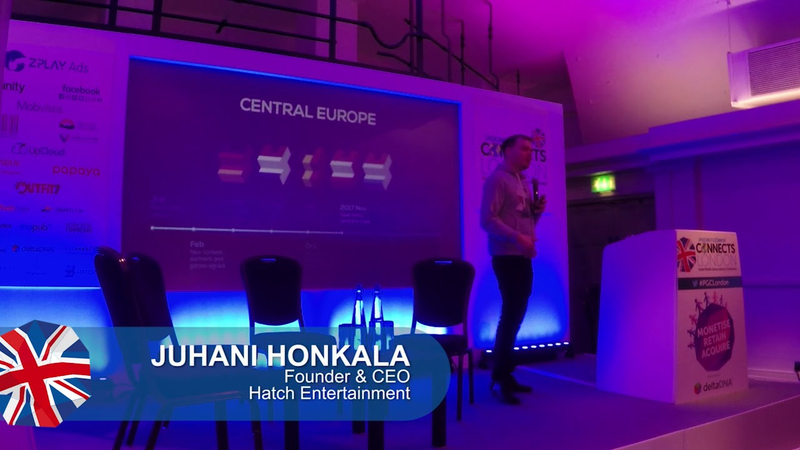
Hatch and the new opportunity of on-demand gaming
The emergence of on-demand, cloud-based gaming represents a significant shift in the mobile industry, mirroring the transition from ownership to subscription models seen in music and video streaming.
- The platform utilizes cloud architecture to stream native Android games, eliminating the need for HTML5 ports and reducing multiplayer prototype development time from months to days.
- The service operates on a dual-revenue model combining advertising and subscriptions, with a commitment to share 70% of generated revenue with content partners.
- The business model shifts mobile gaming from free-to-play monetization loops to a subscription-based, on-demand format that prioritizes premium content quality.

Monument Valley 2 – How premium games can succeed
The premium mobile game market remains a viable, albeit niche, space for developers who prioritize artistic innovation and high-quality, short-form experiences over the mass-market volume typical of free-to-play titles.
- Premium mobile games succeed by prioritizing artistic innovation and high-quality, short-form experiences rather than the mass-market volume and high-retention loops of free-to-play models.
- Developers should focus on crafting highly polished, memorable experiences with a typical duration of 90 minutes to two hours to justify a premium price point.
- Small, agile teams are essential for bypassing derivative, data-driven design patterns, allowing for the creation of unique, emotionally resonant, and narrative-focused content.

Biz Daily: Why Apple rebooted iPod Touch with A8 chip
Apple has unexpectedly revitalized the iPod touch line, positioning the device as a high-performance, cost-effective entry point into the iOS ecosystem.
- Apple upgraded the iPod touch with the A8 chip and M8 motion co-processor, delivering a reported ten-fold increase in graphical processing power compared to the previous A7 iteration.
- The hardware refresh is strategically designed to lower the barrier to entry for the iOS ecosystem, providing a cost-effective alternative to high-performance Android devices.
- By omitting cellular capabilities, Apple is targeting a niche market of younger, budget-conscious users who require gaming and media functionality without a smartphone data plan.

Big numbers from Monument Valley, Crossy Road and Minecraft
The mobile gaming industry began 2015 with a focus on monetization strategies, highlighted by performance data from three prominent titles: Minecraft, Crossy Road, and Monument Valley.
- Monument Valley generated $5.8 million in net earnings against $1.4 million in development costs, resulting in a $4.5 million profit from 2.4 million sales.
- Crossy Road’s two-person development team earned $1 million in revenue by utilizing Unity Ads, demonstrating the financial viability of non-intrusive, incentivized video advertising.
- Minecraft maintains its status as a premium mobile outlier, having reached a total of 30 million downloads.

What can we learn from Monument Valley's IAP?
The mobile gaming industry is currently navigating a significant shift in monetization expectations, highlighted by the controversy surrounding the expansion pack for the puzzle game Monument Valley.
- The developer of Monument Valley, ustwo, faced significant user backlash and one-star review bombing after releasing eight additional levels as a $2 in-app purchase for a game that originally cost $3.
- The controversy surrounding Monument Valley highlights a broader industry tension regarding whether post-launch content should be provided as free updates or paid downloadable content (DLC) in a market increasingly dominated by free-to-play models.
- Apple replaced the 'Free' button on App Store games with 'Get' in November 2014, a change prompted by ongoing pressure from European Union regulators regarding the transparency of free-to-play monetization.

GDC 2014: Dan Gray, producer, ustwo Games
The mobile gaming landscape is currently undergoing a significant shift toward the resurgence of premium, high-quality experiences.
- Ustwo Games is prioritizing craftsmanship and aesthetic value over traditional mobile monetization models to differentiate its titles in a crowded marketplace.
- The game Monument Valley serves as a case study for proving that mobile platforms can support high-fidelity, premium gaming experiences comparable to traditional hardware.
- The initial release strategy for Monument Valley is focused on the iOS platform, with potential expansion to Android contingent on consumer demand and community engagement.
Companies behind it

As the documents state it.