
Monster Train
GameBy Shiny Shoe · Released May 21, 2020
Documents about Monster Train
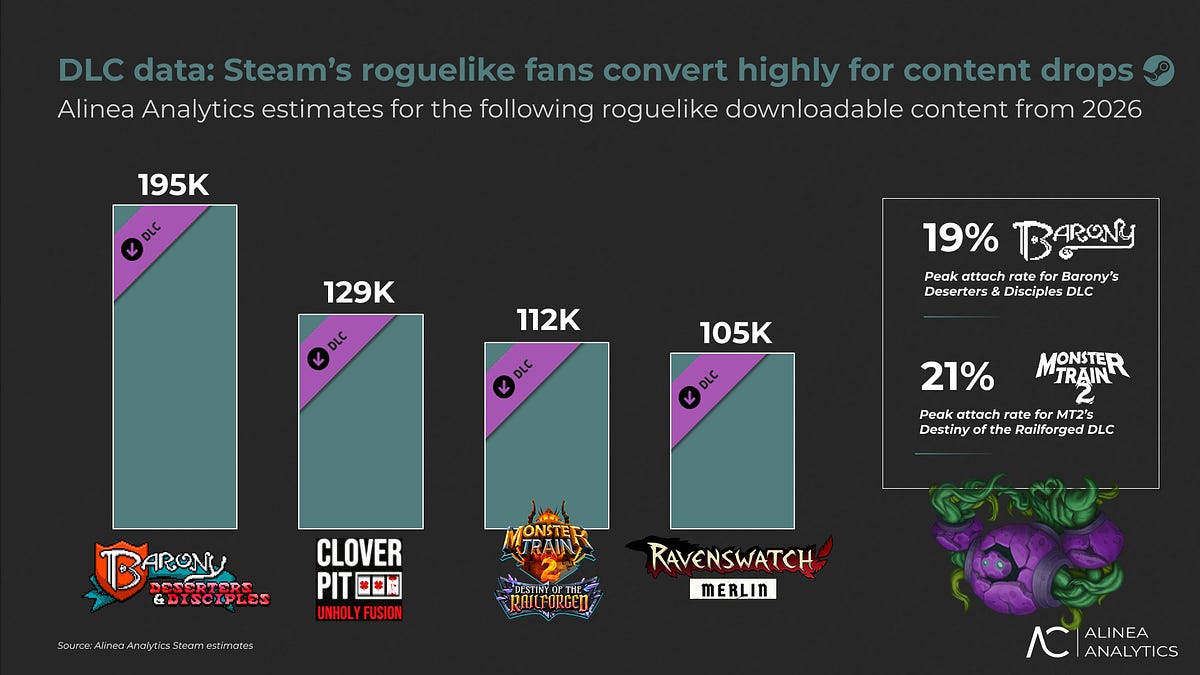
Steam DLC Data: High Attach Rates for 2026 Roguelike DLC
The roguelike genre on Steam demonstrates exceptionally high player engagement and monetization potential, characterized by DLC attach rates that significantly outperform the industry baseline.
- Roguelike DLC on Steam is achieving significantly higher attach rates than the genre-wide baseline, with four major 2026 releases each exceeding 100,000 units sold.
- The 'Barony: Deserters & Disciples' DLC achieved a 19% attach rate, selling nearly 200,000 units and generating $1.2M in gross revenue since its January 2026 launch.
- Pricing for successful roguelike DLC remains at or below $10, with the highest-performing title by attach rate, 'Monster Train 2', priced at the top of this range and achieving a 21% attach rate.
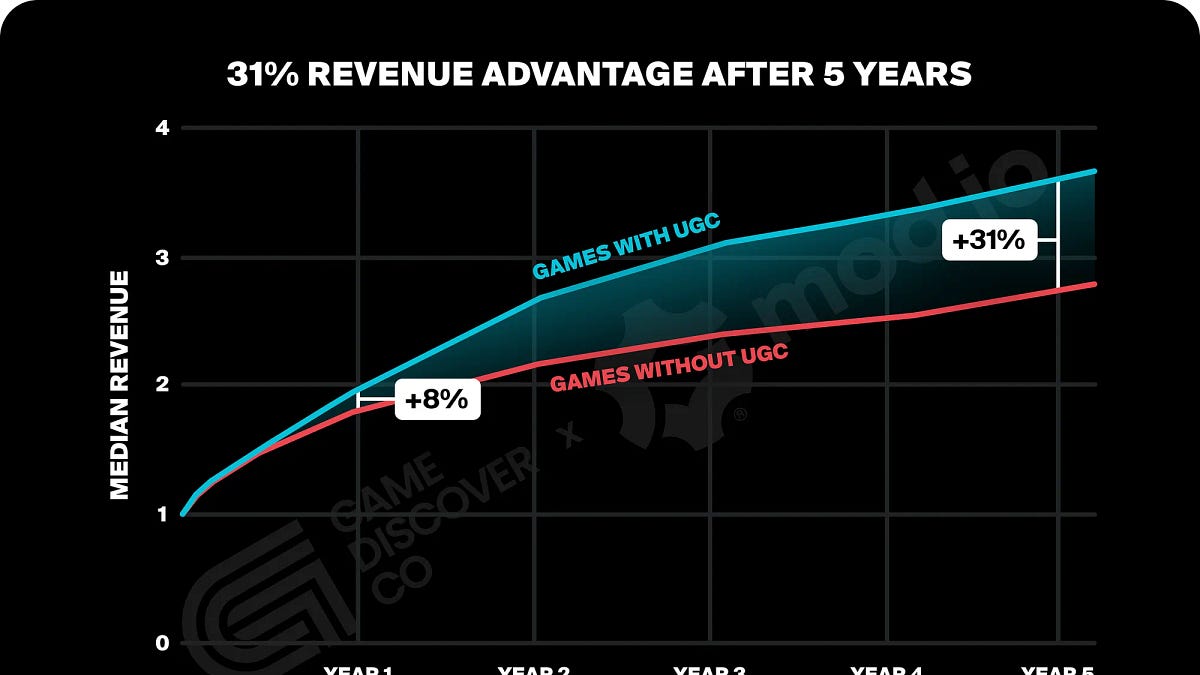
Analysis: UGC Powers Sales & Retention
GameDiscoverCo's September 2025 newsletter presents updated research, produced with mod infrastructure provider Mod.io, on whether user-generated content and mod support improve game sales and retention.
- Games supporting official UGC or modding realize an 8% revenue advantage in year one, which grows to a 31% advantage by year five.
- UGC-enabled titles maintain significantly higher long-term engagement, with concurrent user counts 75% higher after two years and 115% higher after five years.
- Integrating UGC does not cannibalize paid DLC, as games with mod support generate 105% higher total revenue per DLC item.
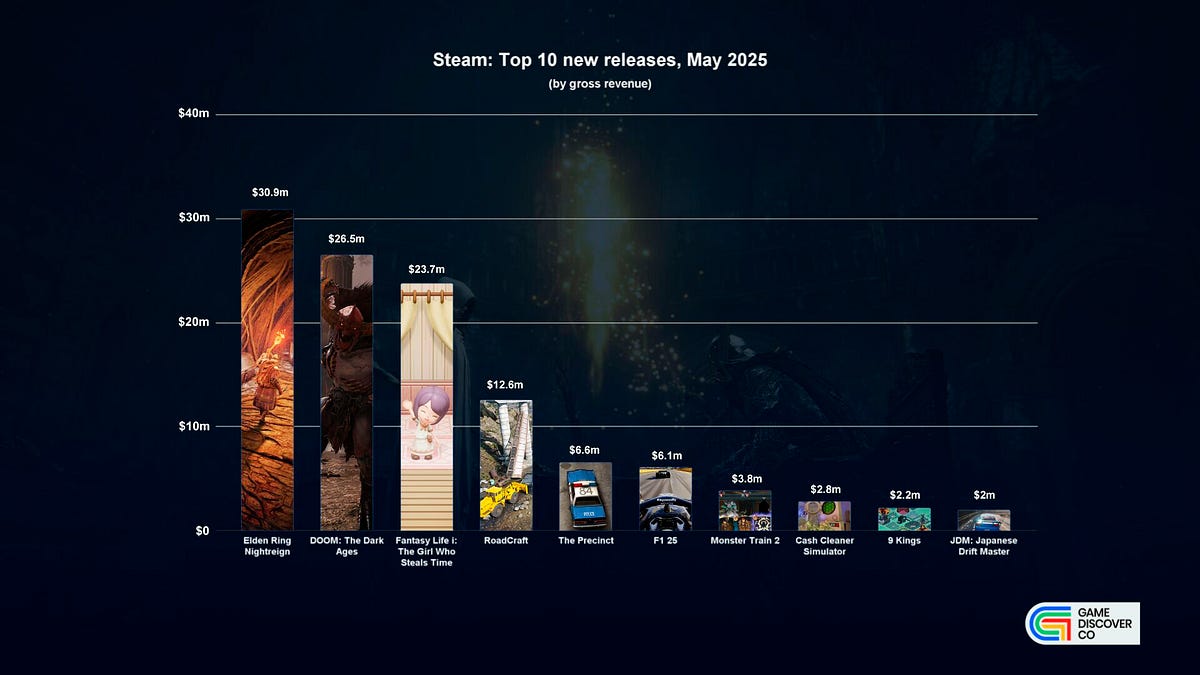
What Were May 2025's Top New Steam Releases?
This analysis evaluates the performance of new Steam releases during May 2025, providing a breakdown of top-earning titles and broader industry trends.
- Counter-Strike 2 maintained its position as the top-performing title on Steam in May 2025, generating $198 million in gross monthly revenue.
- Elden Ring Nightreign led new releases with $31 million in gross Steam revenue during its first three days on the market.
- Helldivers 2 reached a cumulative lifetime gross revenue of $555 million across Steam and PlayStation platforms.
GDC 2021 Monday Wrap-up
The GDC 2021 Monday wrap-up provides a synthesis of key marketing and development insights shared during the virtual conference, focusing on community management, post-launch support, and strategic planning for independent game studios.
- Successful post-launch momentum for 'Monster Train' was maintained through a series of free updates over the first 10 months, followed by paid DLC that increased the effective price floor via bundles.
- Community engagement campaigns, such as those used by Schell Games for 'Until You Fall', should prioritize low-friction, self-reported player challenges over complex API-integrated systems to save engineering resources.
- Marketing activities should be tailored to the team's capacity; developers are advised to select a few high-impact strategies rather than attempting to execute every available marketing channel.
Do Betas & Demos Right: The Monster Train Way
Effective game development strategies prioritize using betas and demos as iterative tools for community engagement and product improvement rather than viewing them solely as marketing vehicles.
- Integrate in-game feedback tools that automatically capture screenshots, log files, and save data to address bugs and balance issues in real time.
- Adopt a multi-phase testing strategy that moves beyond marketing-focused demos to prioritize iterative product improvement and gameplay refinement.
- Use a structured testing pipeline, such as the Monster Train model, which utilized a long-term private beta, a six-week public beta, and a final short-term public demo.
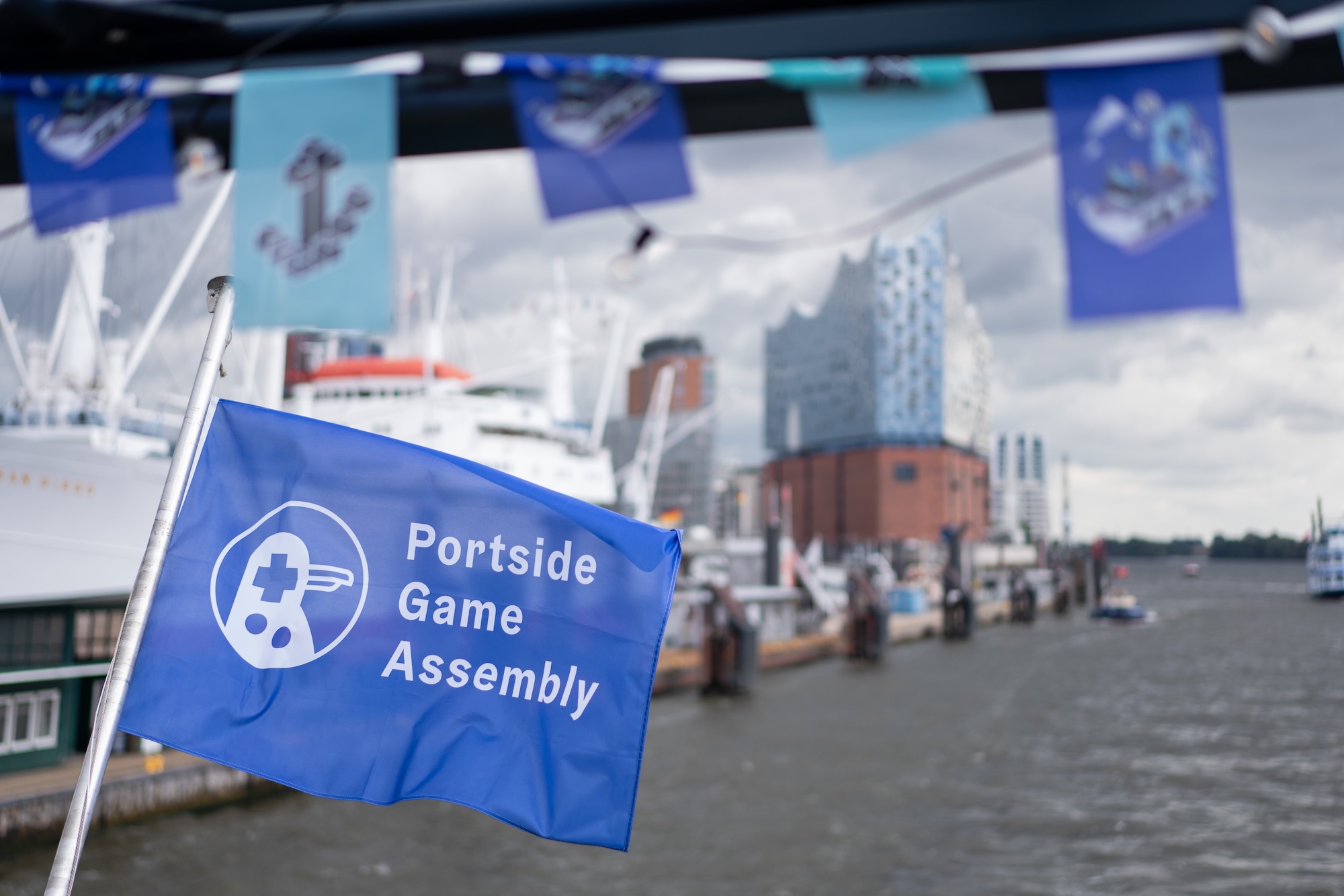
Portside Game Assembly 2026: Program and Speakers
The announcement details the second edition of Portside Game Assembly, scheduled for June 25–26, 2026 aboard the MS Princess in Hamburg.
- Portside Game Assembly 2026 will take place June 25–26 in Hamburg, targeting established indie studio founders and CEOs for peer-to-peer knowledge exchange.
- The event has confirmed participation from over 60 studios across 13 countries, including notable developers such as Amanita Design, Shiny Shoe, Landfall, and Digital Sun.
- Core programming focuses on operational indie challenges, specifically balancing rapid development with long-term projects, community engagement, and sequel strategy.