Half-Life
Documents about Half-Life

WFH Orders, Magic Leap Selling, Naughty Dog Crunches, Gamestop | Game Dev Unchained Episode 219
The global pandemic served as a catalyst for a forced, rapid transition to remote work, exposing significant infrastructure vulnerabilities within major AAA studios.
- The gaming industry is transitioning toward a service-oriented model, yet remains hindered by traditional development habits that prioritize short-term output over long-term workforce sustainability.
- Systemic crunch culture at high-profile studios like Naughty Dog persists because commercial success and critical acclaim are used to justify unsustainable labor practices.
- The rapid shift to remote work during the pandemic exposed significant infrastructure vulnerabilities in AAA studios, specifically regarding VPN security and hardware shortages.
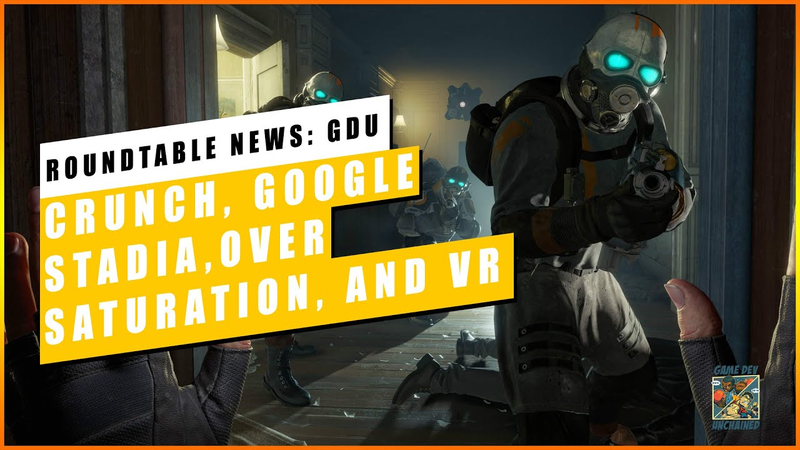
Crunch Culture, Google Stadia, Over Saturation of Games, and Virtual Reality | Roundtable News
The game industry currently faces a complex intersection of labor challenges, shifting distribution models, and evolving hardware paradigms.
- Crunch culture remains a systemic industry issue driven by poor management and scope creep, despite reports of marginal reductions in excessive work hours.
- Cloud gaming services that leverage existing user libraries, such as Nvidia GeForce Now, are better positioned for success than platforms like Google Stadia, which struggle due to restrictive pricing and a lack of exclusive content.
- Market saturation on digital storefronts like Steam requires independent studios to prioritize distinct brand identities and high-quality experiences over direct competition with AAA titles to remain viable.

Why 2020 Could Be a Year Long Remembered in Video Games
The video game industry entered 2020 positioned for a transformative year, driven by a convergence of hardware transitions, evolving distribution models, and high-profile software releases.
- The 2020 release of the PlayStation 5 and Xbox Series X is expected to be a major industry driver, supported by backward compatibility that allows players to carry over existing digital and physical game libraries.
- Streaming services are entering a critical phase in 2020 with the launch of Microsoft’s Project xCloud and EA’s Project Atlas, positioning them as alternatives for casual gamers who prefer not to own dedicated hardware.
- Subscription models are expanding beyond Microsoft’s Game Pass Ultimate, with Ubisoft, Square Enix, Apple (Apple Arcade), and Antstream Arcade signaling a shift toward bundled, recurring-revenue gaming services.

In the Valley of Gods Canceled?! | Games ReCAP
The development of In the Valley of Gods, the highly anticipated project from the former Campo Santo team, has been officially placed on indefinite hold following the studio's acquisition by Valve.
- The development of Campo Santo’s 'In the Valley of Gods' has been placed on indefinite hold following the studio's acquisition by Valve.
- Former Campo Santo staff have been reassigned to internal Valve projects, including 'Half-Life: Alyx', 'Dota Underlords', and Steam platform development.
- The project's original creative momentum has been dismantled due to the departure of key personnel, including contract writers who held significant institutional knowledge.

The Fate of Virtual Reality Hangs in the Balance
The virtual reality (VR) gaming sector faces a critical juncture as it struggles to transition from a niche enthusiast product to a mainstream consumer technology.
- The future of VR gaming is currently dependent on Sony and Valve, as Microsoft and Nintendo have effectively signaled their exit from the space.
- Valve’s upcoming release of 'Half-Life: Alyx' in March 2020 is positioned as a potential 'killer-app' to drive VR adoption, despite high hardware costs exceeding €1,000 for the Valve Index.
- Microsoft has officially pivoted away from VR, with Executive Vice President Phil Spencer stating that there is no consumer demand for the technology in their ecosystem.

Half Life: Alyx VR's Killer App? | Games ReCAP
The announcement of Half-Life: Alyx marks a significant strategic pivot for Valve, signaling a return to high-budget, flagship game development.
- Valve is utilizing Half-Life: Alyx as a strategic flagship title to drive hardware adoption and establish VR as a viable platform for serious, core gaming experiences.
- The project serves as a major investment to revitalize the VR medium, which has historically struggled to maintain engagement beyond casual rhythm-based software.
- Valve’s dominant control over the Steam storefront provides the financial stability and creative autonomy required to absorb the high risks associated with premium VR development.

2D Character Design Tutorial (if Half-Life was 2D!)
This tutorial outlines the process of translating a complex 3D character design into a functional 2D format suitable for game development in Unity.
- Effective 2D character design prioritizes simplicity and abstract readability, ensuring characters remain recognizable at small scales or low resolutions.
- Designers should construct characters using basic geometric shapes, such as rectangles with rounded corners, to maintain visual consistency.
- The 'abstract testing' method—zooming out or squinting at the design—is essential to confirm that the character's silhouette remains distinct without relying on excessive detail.

Playing YOUR Indie Games (Bug's N Boo Hags RETRO ARCADE GAME!)
The game Bugs N Boo Hags is an indie title currently seeking funding through a Kickstarter campaign.
- Bugs N Boo Hags is an 8-bit arcade-style indie game currently seeking development funding via a Kickstarter campaign.
- The game’s core mechanics are rooted in Gullah Geechee folklore, requiring players to defend homes from supernatural 'boo hags' using traditional items like salt, brooms, and haint blue paint.
- The title is designed as a high-stakes, punishing experience that mimics the difficulty and aesthetic of classic Nintendo-era console games.
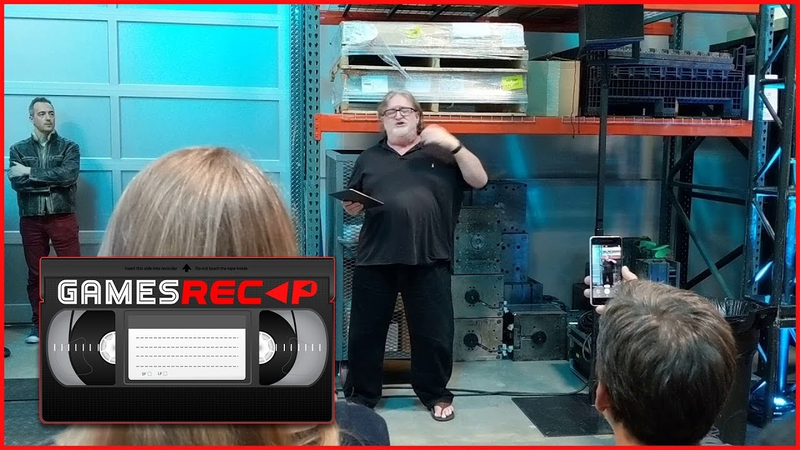
Valve Index is a Critial Milestone | Games ReCAP Episode 014
The release of the Valve Index marks a definitive entry into the high-end virtual reality market, positioning the hardware as a premium, enthusiast-grade device.
- Valve has entered the high-end, enthusiast-grade VR market with the $1,000 Valve Index, which saw immediate commercial success despite industry trends favoring cheaper, cordless alternatives.
- The Index launch signifies a strategic shift for Valve toward serious hardware manufacturing, moving beyond previous experimental projects and software-focused business models.
- The long-term viability of the Valve Index platform depends on the release of high-fidelity, immersive software capable of justifying the hardware's premium price point.

Games You Might Not Have Tried - ep 20 - April 1st Edition! - Extra Credits
This presentation serves as a satirical April Fools' Day commentary on the gaming industry, framing well-known, mainstream titles as obscure "hidden gems."
- Modern game design frequently prioritizes player retention, microtransactions, and repetitive loops over traditional innovation.
- Mainstream titles like Madden NFL, World of Warcraft, Fortnite, and Apex Legends are often structured around cynical monetization strategies rather than novel gameplay experiences.
- The 'hidden gem' genre of gaming journalism is often used to recontextualize ubiquitous, commercially successful titles, highlighting the industry's reliance on established tropes.
This is a Talk About Tutorials, Press A to Skip
The primary objective of this analysis is to define effective tutorial design in video games, arguing that the most successful instructional phases are those that are seamlessly integrated into the gameplay experience.
- Effective tutorial design prioritizes seamless integration into gameplay, replacing intrusive elements like pop-up windows and walls of text with organic, experience-based learning.
- Developers should leverage universal game literacy, such as color-coding for danger and established control schemes, to guide players intuitively without explicit instruction.
- Games like Half-Life 2 and the Super Mario series serve as benchmarks for success by introducing mechanics within safe, experimental environments that encourage organic discovery.
The Design in Narrative Design
The core thesis of this analysis is that game design consists of two inseparable, interdependent dimensions: the mechanical (rules) and the fictional (the world and its justification).
- Game design is defined by the inseparable interdependence of mechanical rules and fictional context, where every game element—even in non-narrative titles—possesses a fictional dimension that requires design attention.
- Achieving diegesis requires that game mechanics are justified within the internal logic of the world, such as Half-Life’s diegetic UI or Ico’s use of environmental cues instead of traditional hit points.
- The design process should function as an iterative dialogue where mechanical requirements inspire fictional justifications, which in turn unlock new mechanical possibilities.