
Fantasy Westward Journey
GameBy NetEase · Released Dec 18, 2003
Documents about Fantasy Westward Journey

Report10 pages
Take Rates in China
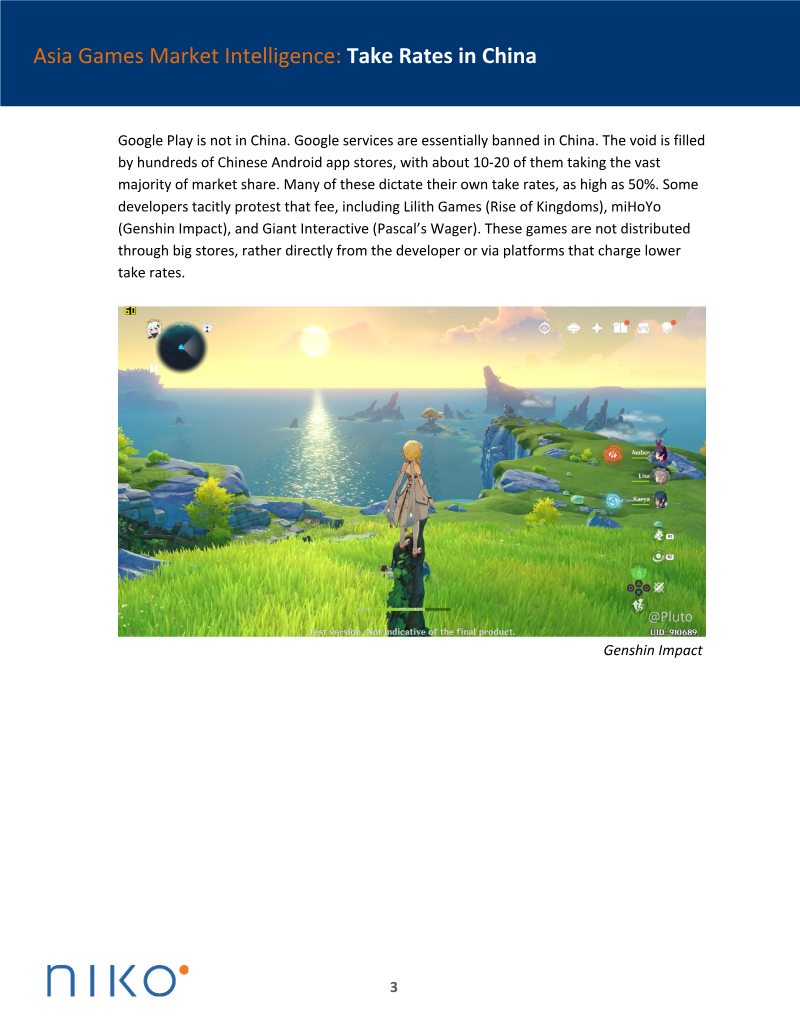
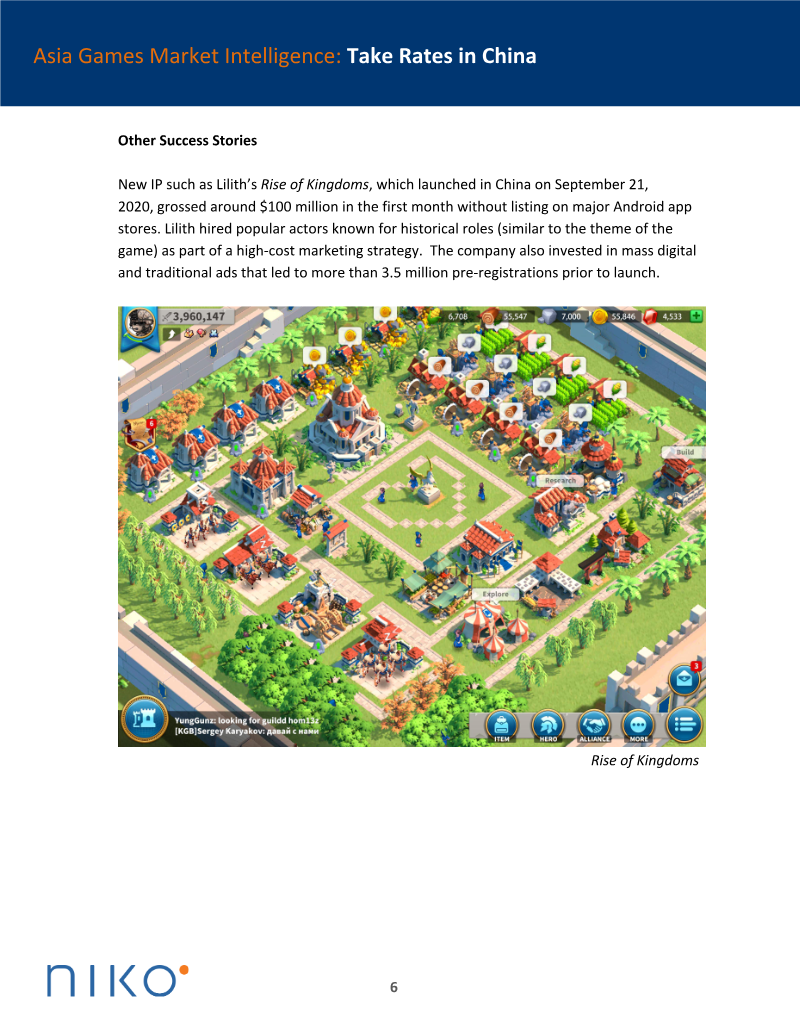
Chinese game developers are increasingly pushing back against high app store take rates, and the pressure is coming from domestic Android stores rather than Apple.
- Chinese Android app stores, dominated by manufacturers like Huawei, Oppo, and Vivo, typically charge a 50% commission on in-app purchases, significantly higher than Apple’s 30% rate.
- Hardware manufacturers rely heavily on these high take rates for profitability; for example, Xiaomi reports a 64.7% gross profit margin on services compared to only 7.2% on hardware sales.
- While iOS users account for only 25% of the Chinese gaming population, they generate approximately 40% of total mobile game revenue.
Niko PartnersFeb 2026


Report20 pages
Games Industry Region Report China
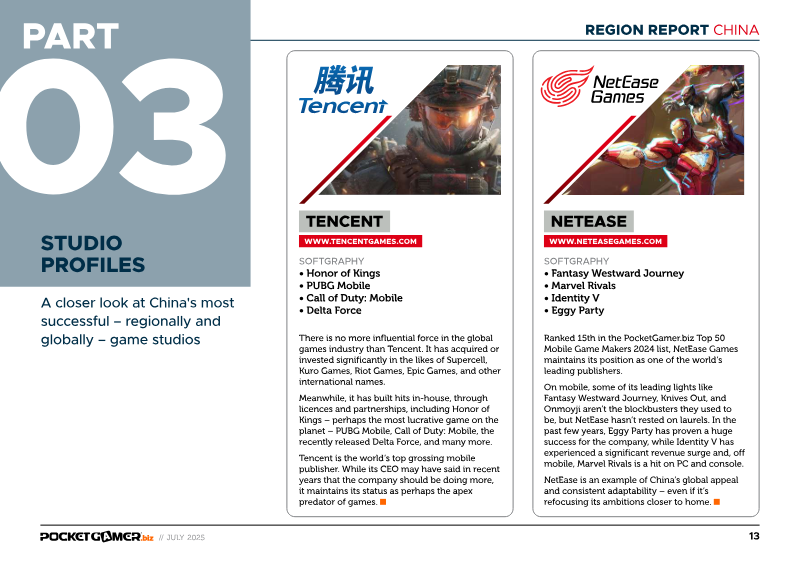
China is the world's largest games market and its most difficult to enter, generating $48.7bn in 2024 according to Newzoo (¥325.8bn, or $44.8bn, per the China Audio-Video and Digital Publishing Association), ahead of the United States at $47.6bn.
- The Chinese games market generated $48.7 billion in 2024, accounting for approximately 30% of total global industry revenue.
- Chinese entities now dominate the global landscape, owning or developing 14 of the top 30 highest-grossing games worldwide as of early 2025.
- The market supports a massive player base of over 701 million, with a significant shift occurring as domestic firms expand from mobile dominance into premium triple-A PC and console development.
PocketGamer.bizJul 2025
Whitepaper1 page
Towards a Socio-Cultural Cartography of In-Game Protests
This paper by Dean Chan proposes an interpretive framework for mapping the socio-cultural dimensions of in-game protests, arguing that these acts of activism within virtual worlds merit analysis on their own terms rather than as mere extensions of offline political movements.
- The paper argues in-game protests should be analysed on their own terms rather than treated as simple extensions of offline political movements.
- Its central thesis is that participatory online culture stays rooted in locality and place-specificity despite its global reach, with political, social, and gaming practices revealing the contexts that provoke and enable protest.
- Two extended case studies anchor the analysis: Joseph DeLappe's U.S. online war memorial and protest project dead-in-iraq, and a mass protest in China triggered by a Japanese military flag appearing in the online game Fantasy Westward Journey.
DiGRAJan 2009
Companies behind it


As the documents state it.