Dreams
Game
Documents about Dreams

The 2021 Independent Games Festival and Game Developers Choice Awards
The 2021 Independent Games Festival and Game Developers Choice Awards served as a comprehensive celebration of creative innovation, community-driven development, and the evolving professional standards within the global gaming industry.
- Supergiant Games’ Hades dominated the 2021 Game Developers Choice Awards, winning Game of the Year, Best Narrative, Best Audio, and Best Design.
- The success of Hades validated the efficacy of long-term early access development models and the integration of iterative player feedback into the production cycle.
- The 2021 Independent Games Festival (IGF) awarded the Grand Prize to Spiritfarer, while Teardown received recognition for design and Genshin Impact was honored for mobile excellence.
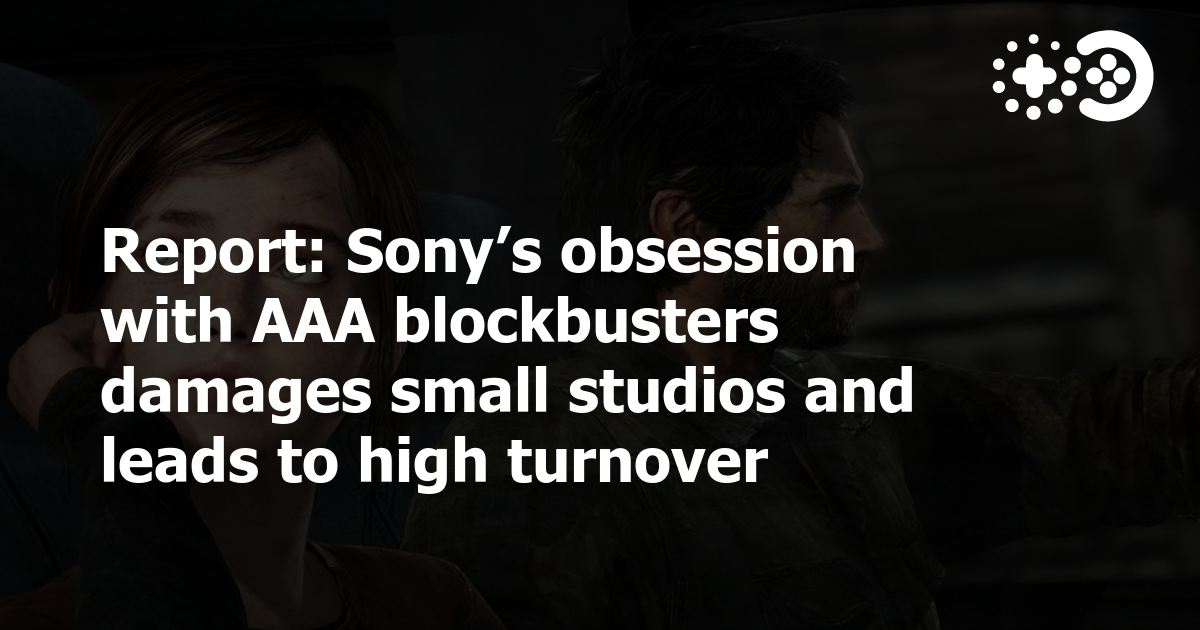
Sony's Obsession with AAA Blockbusters Damages Small Studios and Leads to High Turnover
Sony’s strategic pivot toward high-budget AAA blockbusters has created significant internal friction and operational challenges within its PlayStation division.
- Sony has shifted its internal strategy to prioritize high-budget AAA blockbusters, effectively abandoning support for smaller games and niche markets like Japan.
- The reorganization of Japan Studio, known for titles like Gravity Rush and Knack, resulted in mass staff departures as Sony moved away from smaller-scale development.
- Sony rejected a pitch for Days Gone 2 from developer Bend Studio in 2019, despite the first game's commercial success, citing lengthy development times and mixed reviews.

David & Goliath: How a Newbie Solo Developer Landed on Xbox Game Pass
The journey of a solo developer securing a spot on Xbox Game Pass for the title She Dreams Elsewhere highlights the critical intersection of creative development, strategic networking, and business pragmatism.
- Securing a spot on Xbox Game Pass requires a unique, polished game identity that justifies its existence to platform holders like Microsoft.
- Active participation in industry events such as GDEX, DreamHack Atlanta, and GDC is essential for building the direct relationships with platform representatives necessary to secure publishing or distribution deals.
- The Xbox Game Pass deal provided the financial stability required to complete the four-year development of She Dreams Elsewhere without the need for a traditional third-party publisher.
Great Talks at GDC Summer 2020
The GDC Summer 2020 conference provided critical insights into game marketing, focusing on strategies for Steam visibility, independent developer networking, and pre-production market analysis.
- Aim for a minimum of 12,000 Steam wishlists before launch to trigger visibility on the 'Popular and Upcoming' list, which can generate 1,000–3,000 additional wishlists per day.
- Project your first-week sales by multiplying your pre-launch wishlist count by 20–30%, as this represents the expected conversion rate plus organic discovery.
- Avoid using pre-orders for Steam releases unless you are a AAA studio, as pre-orders do not contribute to the platform's sales ranking algorithms.
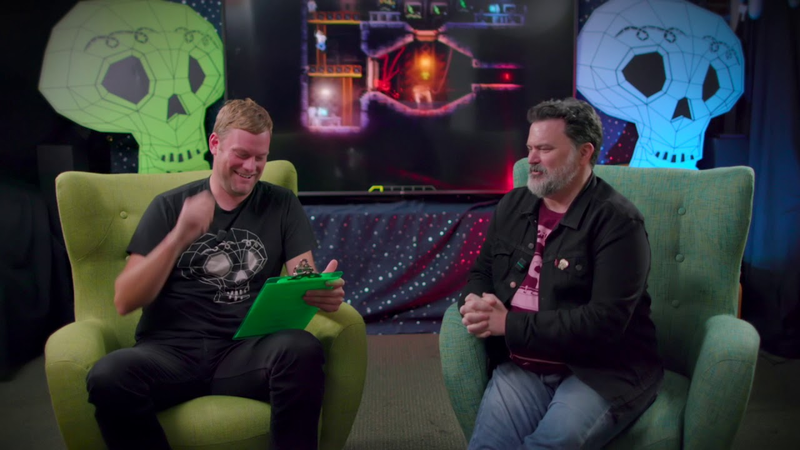
Day of the Devs: GDC Edition Direct
The independent gaming sector maintains its momentum through curated digital showcases that provide essential visibility for developers in the absence of traditional industry gatherings.
- Digital showcases like Day of the Devs have become the primary mechanism for independent developers to gain market visibility and bridge the gap between creative vision and audience reach.
- The indie sector is successfully sustaining its ecosystem by prioritizing creative autonomy and niche storytelling, as evidenced by the broad range of titles featured in recent showcases.
- Featured gameplay experiences span a diverse spectrum, including high-difficulty reflex games like Disc Room, physics-based co-op titles like Heavenly Bodies, and meditative VR adventures like Paper Beast.
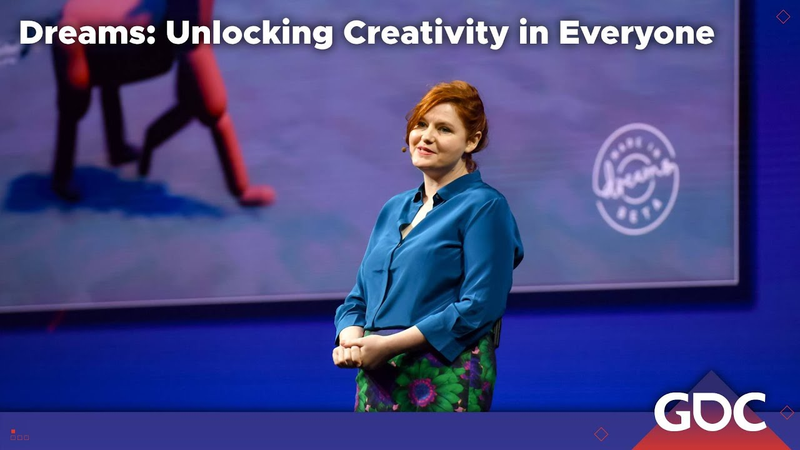
Dreams: Unlocking Creativity in Everyone
Media Molecule’s development of Dreams represents a long-term effort to democratize game creation by transforming it into an accessible, living-room hobby.
- Media Molecule developed Dreams as a unified, real-time game engine designed to eliminate the friction of fragmented development tools by allowing seamless transitions between sculpting, music, and level design.
- A six-week beta test involving 20,000 self-identified creators validated the platform's potential, with users producing complex projects ranging from music players to full games.
- The studio prioritized a fluid, experimental workflow that treats game creation as an accessible hobby, similar to learning a musical instrument.


Bandai Namco Group Integrated Report 2018
The 2018 integrated report presents Bandai Namco’s strategic and financial narrative, emphasizing a record-high fiscal performance and a forward-looking “CHANGE for the NEXT” mid-term plan (FY 2018-2021).
- Bandai Namco achieved record fiscal performance in 2018 with consolidated net sales of ¥678.3 billion (up 9.4%) and an operating profit of ¥75.0 billion (up 18.6%).
- The company launched a ¥25 billion strategic-investment fund dedicated to the IP-Creation Unit, aiming to increase the value of core franchises like Gundam and PAC-MAN by 100 to 1,000 times.
- The 'IP-axis' strategy focuses on cross-media expansion, resulting in the production of 309 copyrighted titles totaling 2,560 hours of content across games, toys, animation, and live-action.

Small Teams, Big Dreams: How to Build a Small Team to Do Great Things
Building a high-performance game development studio requires a strategic balance between a stable core team and a flexible network of specialized contractors.
- Build a high-performance studio by combining a stable core team with a flexible network of specialized contractors to maintain agility.
- Implement a T-shaped personnel model to balance deep individual expertise with the cross-disciplinary empathy required for effective collaboration.
- Prioritize early prototyping and iterative user testing to identify design flaws before committing resources to full-scale production.


Annual Report 2014
The 2014 annual report presents Bandai Namco Group’s financial performance, strategic direction, and corporate governance for the fiscal year ended 31 March 2014.
- Bandai Namco Group achieved net sales of ¥507.7 billion for the fiscal year ending 31 March 2014, marking a 4.2% increase and the first post-integration figure to exceed the ¥500 billion milestone.
- Operating income declined 8.2% to ¥44.7 billion, primarily due to a ¥5 billion forward-looking investment and a ¥1 billion increase in related-party sales to affiliate Happinet.
- Net income grew by 22.6% to ¥25.1 billion, resulting in a 4.2% return on equity and an 8.8% operating margin.
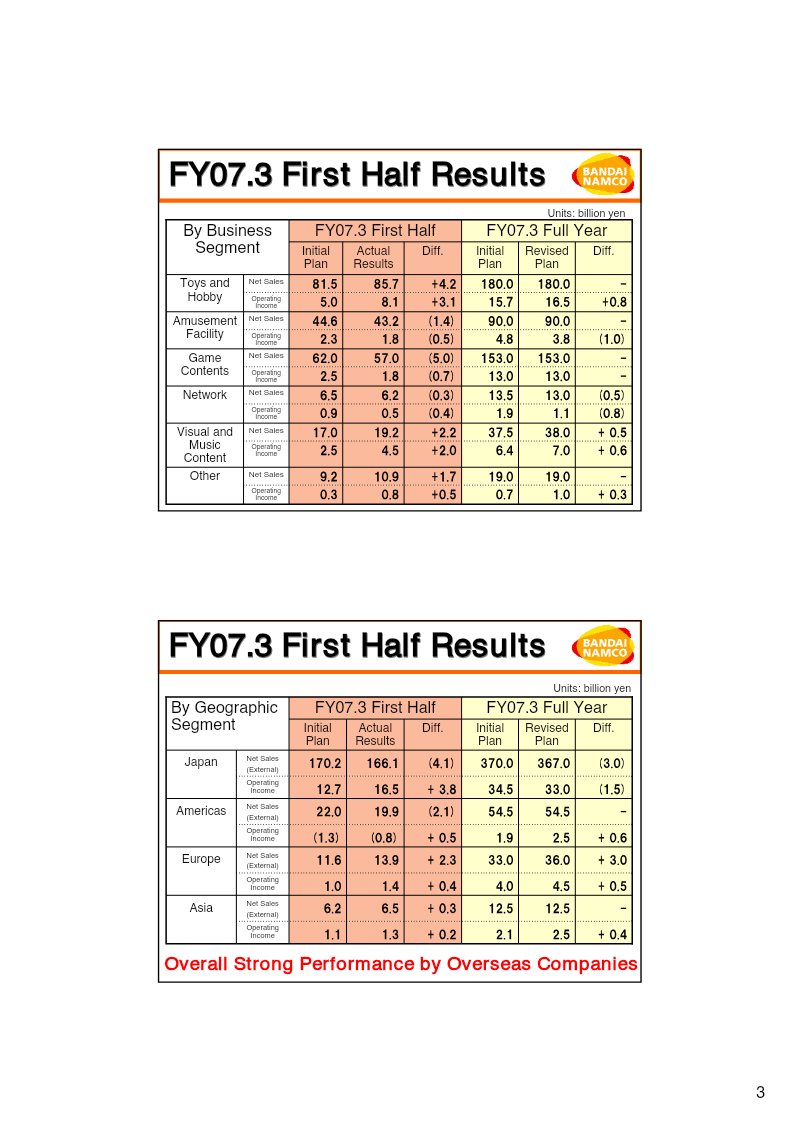

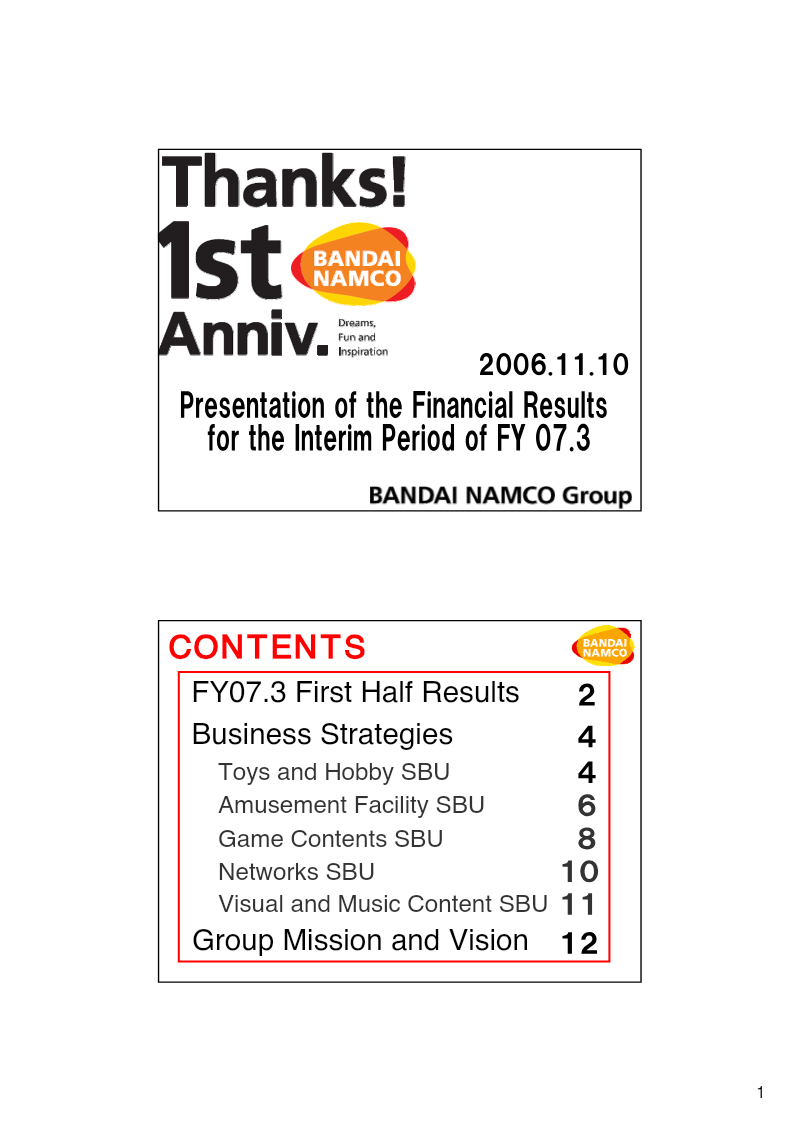
Bandai Namco Group Presentation of Financial Results for the Interim Period of FY 07.3
The Bandai Namco Group’s interim financial results for the fiscal year ending March 2007 outline a period of strategic consolidation and operational adjustment.
- Bandai Namco Group reported interim net sales of 206.6 billion yen and operating income of 17.2 billion yen for the fiscal year ending March 2007.
- The Toys and Hobby segment outperformed expectations, bolstered by strong sales of the Mobile Suit Gundam series and Tamagotchi products.
- The Game Contents segment underperformed during the period due to the postponement of key product releases.
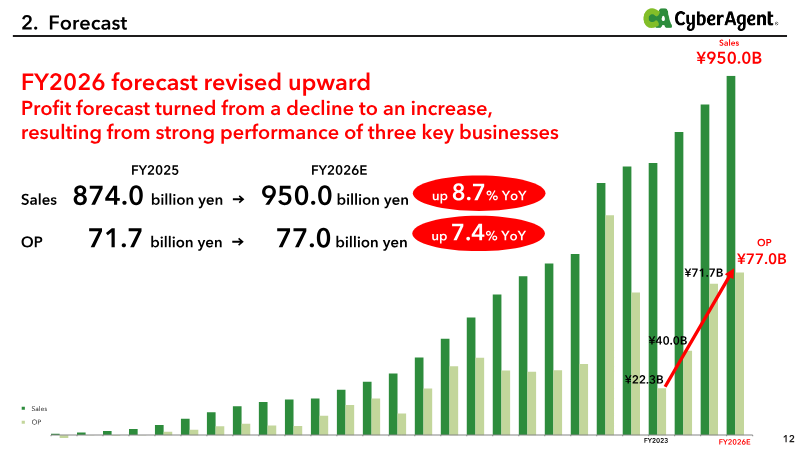

3Q FY2026 Presentation Material
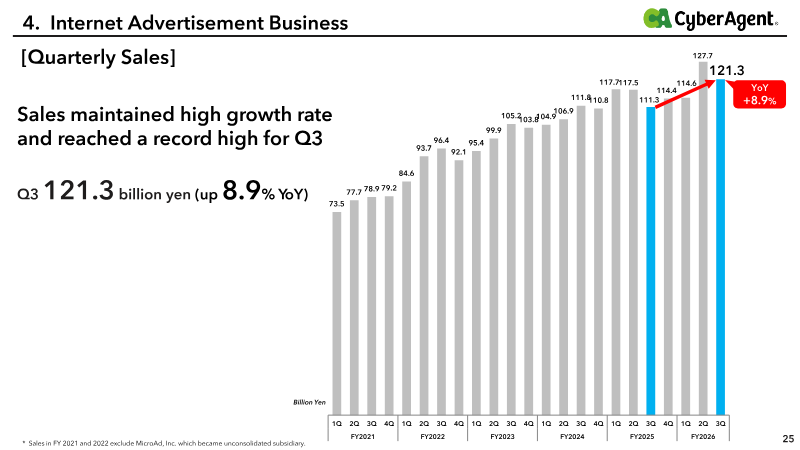
CyberAgent achieved record-high quarterly sales of 230.6 billion yen during the third quarter of fiscal year 2026, representing a 9.4 percent year-over-year increase.
- CyberAgent achieved record-high 3Q FY2026 sales of 230.6 billion yen, a 9.4% year-over-year increase, leading to an upward revision of full-year forecasts to 950 billion yen in sales and 77 billion yen in operating profit.
- The company increased its dividend projection to 20 yen per share, reflecting strong confidence in its financial trajectory and long-term value creation.
- Growth was driven by a 20.8% revenue surge in the gaming segment and the expansion of the ABEMA streaming platform, which reached 31.37 million weekly active users.


Playtika Holding Corp. Third Quarter 2024 Results
Playtika Holding Corp. reported third-quarter 2024 results for the period ended September 30, 2024, showing a revenue of $620.8 million, down 1.0% sequentially and 1.5% year-over-year.
- Playtika agreed to acquire SuperPlay for an upfront $700 million, with up to $1.25 billion in contingent payments tied to performance targets over the next three years.
- Q3 2024 revenue reached $620.8 million, representing a 1.5% year-over-year decline, while net income fell 54.6% sequentially to $39.3 million.
- Direct-to-consumer platforms grew 8.3% year-over-year to $469.1 million, contrasting with a 4.8% decline in third-party platform revenue.