Battlefield 6
Game
Documents about Battlefield 6

TWIG #405: Gears of War E-Day Flops, EU Comes for Virtual Currency and Turkey Wins the Puzzle Race
The global gaming industry is currently navigating a period of structural stagnation characterized by shifting regional power dynamics and a fundamental disconnect between hardware performance and consumer demand.
- The U.S. console market is experiencing record-low hardware sales as rising prices create a disconnect between hardware performance and consumer demand.
- The European Union is increasing regulatory pressure on major publishers, specifically targeting opaque virtual currency bundles and deceptive design patterns as predatory practices.
- Turkey has emerged as a high-growth hub for puzzle games, driven by aggressive government subsidies and an efficiency-focused work culture.

As a Battlefield studio, is Criterion Games really still Criterion?
Criterion Games has evolved from its origins as an independent developer of high-octane racing titles like Burnout and Need for Speed into a foundational pillar of the Battlefield franchise.
- Criterion Games has transitioned from an independent racing developer into a core support studio for the Battlefield franchise, working alongside DICE, Ripple Effect, and Motive.
- The studio maintains its creative identity by applying its historical expertise in high-octane, responsive gameplay mechanics to the Battlefield live-service model.
- Nearly 25% of the studio's workforce has over a decade of tenure, providing the institutional knowledge necessary to preserve the studio's design culture during its integration into a larger ecosystem.

EA's Laura Miele on Command & Conquer mistakes, resurrecting Skate and Dead Space, and Battlefield 6
Electronic Arts is currently prioritizing a fan-centric development strategy that focuses on reviving legacy intellectual properties and fostering deep social engagement.
- EA is prioritizing a fan-centric strategy that revives dormant intellectual properties like Skate, Dead Space, and EA College Football to meet demand from Gen Z and millennial demographics.
- Development for Battlefield 6 utilized 92 million hours of gameplay and 30 distinct builds through 'Battlefield Labs' to ensure iterative, community-driven refinement before launch.
- EA is shifting toward a platform-based model for major titles, integrating single-player, multiplayer, and free-to-play modes to accommodate diverse player motivations.
State of Gaming 2026: What’s Really Winning Now
The global gaming landscape in 2026 is defined by a distinct bifurcation between the saturation of free-to-play mobile titles and the renewed dominance of premium, high-quality experiences.
- Chinese developers are currently the primary drivers of global industry growth, utilizing large-scale teams, proprietary AI tools, and aggressive user acquisition to dominate genres from strategy to interactive storytelling.
- The global gaming market is bifurcating, with free-to-play mobile titles experiencing stagnant revenue and declining downloads while premium, high-quality experiences see renewed dominance.
- Successful premium titles like Battlefield 6 are shifting marketing strategies by prioritizing traditional media channels over viral social media campaigns.
Game Awards 2025: Major Releases Missing From the Nominee List
The 2025 Game Awards nominations have sparked industry debate regarding the selection process and the exclusion of several high-impact titles.
- The 2025 Game Awards nominations are facing industry criticism for omitting high-impact titles like Battlefield 6 and Arc Raiders while favoring specific developers and niche titles.
- The mobile game category is under scrutiny for a lack of Western market representation, prioritizing East Asian-monetized titles like Wuthering Waves and Uma Musume over market-shaping Western successes like KingShot and Royal Kingdom.
- Analysts have identified a disconnect between the awards' criteria and commercial performance, noting that several nominees have either experienced financial failure or remain in limited release.
Shooter Monthly #2: Call of Duty Flops, Battlefield Hops, and Arc Raiders Pops
The shooter genre is currently undergoing a significant structural shift as established franchises face declining engagement while newer, innovative titles capture market share.
- Call of Duty: Black Ops 7 is underperforming significantly, with European sales dropping 63% compared to Battlefield 6 and falling over 50% below its predecessor.
- Arc Raiders has emerged as a market leader in the extraction shooter genre, generating over $300 million in gross revenue from 7.7 million units sold.
- Player fatigue with futuristic settings, ineffective marketing, and the lack of cosmetic carry-overs are identified as the primary drivers for the decline of established shooter franchises.
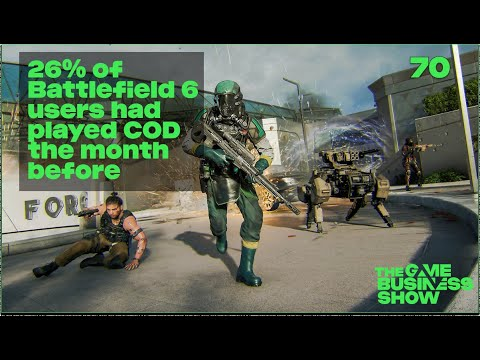
Call of Duty under attack, but who is winning (and losing) in the battle of the shooters?
The gaming industry is currently undergoing a period of intense volatility and structural realignment, characterized by shifting player loyalties and evolving development strategies.
- Call of Duty: Black Ops 7 is experiencing a softening in performance as competitors like Battlefield 6 and Arc Raiders successfully capture segments of its shooter audience.
- Established franchises like Destiny 2 are facing declining engagement and resource constraints, forcing studios to pivot toward new genres like extraction shooters such as Marathon.
- Major publishers are shifting away from traditional annual release models, exemplified by EA’s decision to move the F1 series toward a long-term DLC expansion strategy.
Battlefield 6 Goes Free-to-Play
Battlefield 6 is undergoing a strategic pivot by adopting a free-to-play model for its new RedSec mode, a move designed to compete directly with Call of Duty’s Warzone.
- Battlefield 6 is adopting a free-to-play model for its new 'RedSec' mode, featuring a 100-player battle royale format to compete directly with Call of Duty: Warzone.
- Monetization for the new mode will center on a 'Battlefield Pro' pass and a weapon blueprint system, both designed to increase average revenue per user (ARPU) and improve long-term player retention.
- Modern shooter success is increasingly dependent on rapid content pipelines, with studios turning to machine learning and AI to meet the high production demands of live-service models.
Shooter Monthly #1: Battlefield Revolution, Arc Raiders Evolution, and the ABI Mystery
The tactical shooter market is currently undergoing a significant evolution, characterized by a widening strategic divide between Western premium models and Eastern free-to-play approaches.
- The extraction shooter genre is shifting away from hardcore, punishing mechanics toward accessible, PvE-focused gameplay and forgiving progression systems to attract a broader audience.
- Eastern free-to-play models, exemplified by Arena Breakout: Infinite, are successfully challenging Western premium shooters by offering more accessible entry points.
- Arc Raiders demonstrated significant market demand for extraction-adventure hybrids by attracting over 115,000 concurrent players during its initial testing phase.

TWIG #354 Google's New Payment-Link Era and Rovio's End of an Era
The gaming industry is currently undergoing a structural shift characterized by a move toward direct-to-consumer payment models and a consolidation of development resources.
- Regulatory shifts forcing Google to allow third-party payment links are not increasing developer profit margins, as savings are being redirected into rising user acquisition costs.
- Cross-platform commerce is emerging as a critical strategic battleground for firms like Unity and Epic Games, who are leveraging payment solutions to aggregate user data for ad-tech applications.
- The industry is shifting toward a 'fewer, bigger, better' production philosophy, exemplified by Rovio's recent restructuring following the underperformance of key titles.
About that EA deal…
The acquisition of Electronic Arts by an investor group led by the Public Investment Fund and Silver Lake represents a significant shift toward geopolitical influence in the gaming sector.
- The acquisition of Electronic Arts by an investor group led by the Public Investment Fund and Silver Lake for $55 billion shifts the company to private ownership to prioritize long-term flexibility over quarterly earnings pressures.
- The EA acquisition strategy may involve decoupling the sports division from other franchises to optimize performance and manage corporate debt, though this risks organizational restructuring and potential layoffs.
- Xbox Game Pass is restructuring its Ultimate tier to $29.99 and integrating Ubisoft Plus to correct historical imbalances where low-intensity users subsidized heavy players.

Can Battlefield 6 Fix Everything Fans Want?
The upcoming release of Battlefield 6 has generated significant industry buzz, positioning the title as a formidable challenger to the long-standing market dominance of Call of Duty.
- Battlefield 6 has generated significant commercial momentum, securing 2.7 million wishlists and approximately $35 million in pre-order revenue on Steam.
- Industry projections estimate total sales for the title will reach 10 to 15 million units, with some analysts suggesting it could potentially outperform Call of Duty for the year.
- Development oversight has been centralized in Los Angeles under industry veterans to improve production focus, moving away from the previous reliance solely on the DICE studio in Sweden.
Companies behind it
As the documents state it.