1 free read left. Create a free account for unlimited reading + AI research.
Create free accountArticle Game Studio Unlocked
1 free read left. Create a free account for unlimited reading + AI research.
Create free accountArticleGame Studio Unlocked
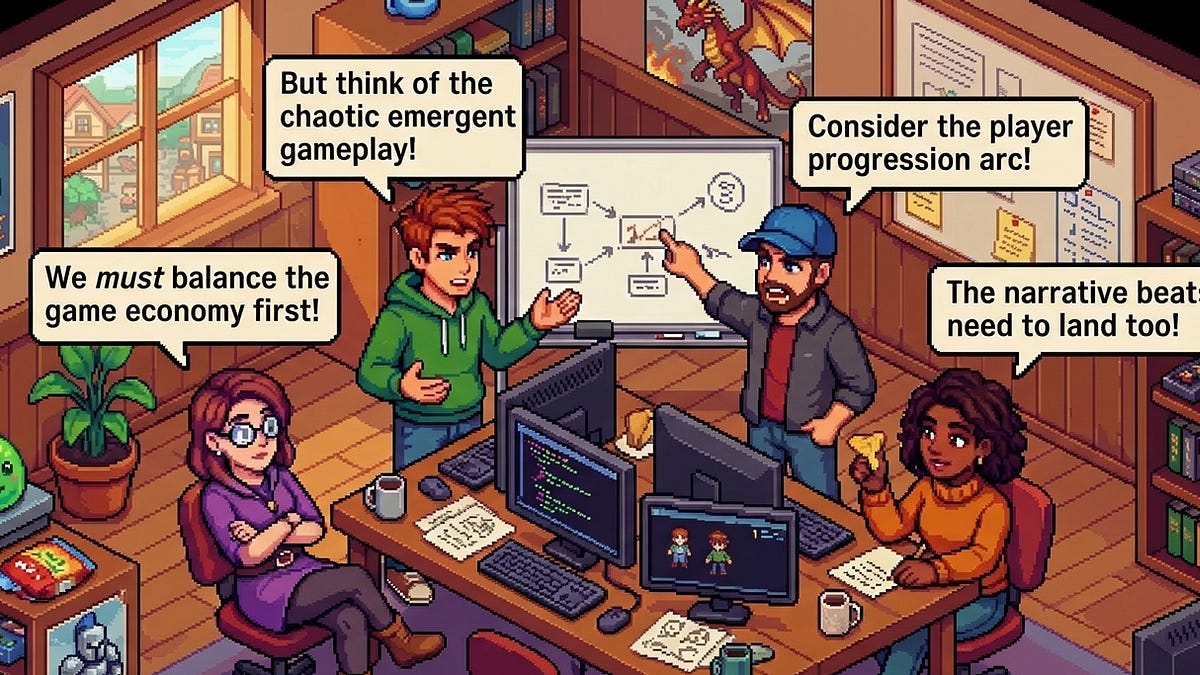
Underlying misalignments surface under high-stakes pressure.
The primary purpose of this analysis is to emphasize the critical importance of identifying intrinsic motivations when founding an independent game studio. The central thesis posits that while a shared passion for games is a common starting point, it is insufficient for long-term success. Founders who fail to articulate their specific, underlying reasons for starting a studio often encounter significant friction, leading to misaligned decision-making, internal conflict, and eventual resentment when high-stakes challenges arise.
The analysis highlights that early-stage studios frequently make foundational decisions—such as selecting partners, determining financial risk tolerance, and choosing between creative freedom or stability—without sufficient data. When a founder’s "why" remains unexamined, these choices become inconsistent and reactive to external pressures. This lack of clarity often results in studios accepting incompatible funding or pursuing projects that do not align with the founders' true goals, ultimately creating operational friction that is far more costly to rectify later in the development cycle.
To mitigate these risks, the author proposes a structured, three-step methodology for founders. First, individuals should independently document their personal motivations, including what they hope to gain from the studio and what outcomes would lead to regret. Second, co-founders must share these findings to ensure their individual definitions of success are compatible. Finally, the team should synthesize these insights into a concise, internal tool that serves as a guide for high-level decision-making. By prioritizing this introspective work early, studios can establish a more resilient foundation, ensuring that strategic choices remain consistent even under the pressures of game development.

Game Studio Unlocked · 2026
Game Studio Unlocked · 2026
Game Studio Unlocked · 2026
Game Studio Unlocked · 2026
Game Studio Unlocked · 2026
Game Studio Unlocked · 2026
Game Studio Unlocked · 2026
Game Studio Unlocked · 2026
Game Studio Unlocked · 2026
Game Studio Unlocked · 2026
Game Studio Unlocked · 2026
Game Studio Unlocked · 2026
Jason Schreier · 2026