1 free read left. Create a free account for unlimited reading + AI research.
Create free accountReport DiGRA
1 free read left. Create a free account for unlimited reading + AI research.
Create free accountReportDiGRA
The study proposes that these games can generate discomfort with gender stereotypes and heterosexual norms. That discomfort can gradually evolve into collective feminist action.
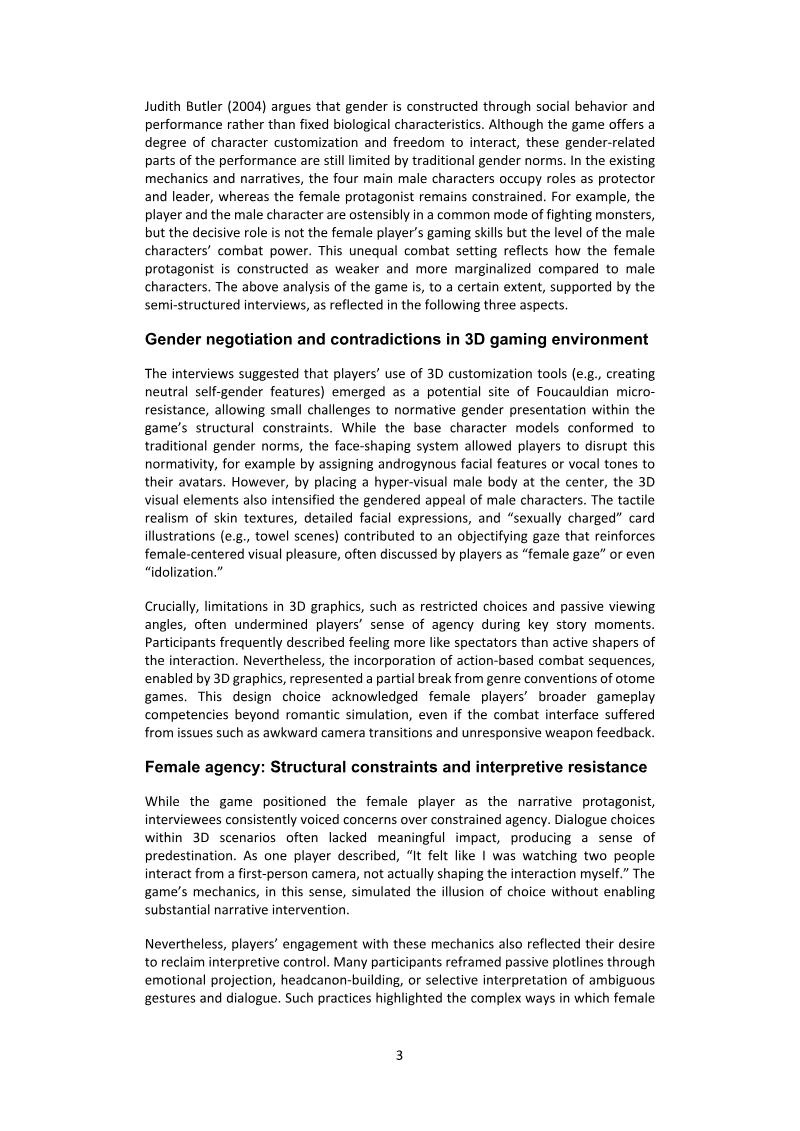
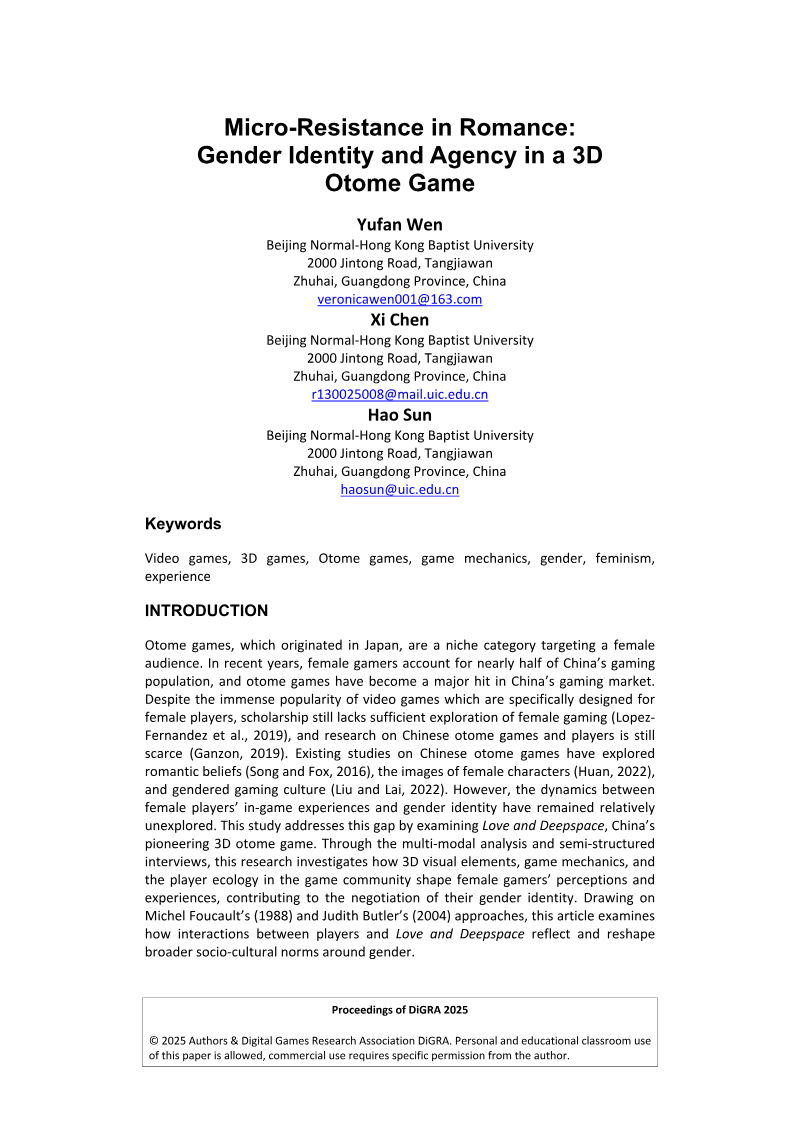
This study examines how young female otome game players in China develop feminist consciousness through their gaming experiences. Drawing on Clare Hemmings' theory of affective shift from dissonance to solidarity, the author argues that otome games, which are designed for women but treat them primarily as consumers and reinforce gender stereotypes and heterosexual norms, can generate discomfort that gradually transforms into collective feminist action. The research is guided by three questions concerning whether players experience discomfort with in-game relationship dynamics, how they cultivate feminist consciousness and affective solidarity, and how they convert that consciousness into action aimed at discursive power and self-identification.
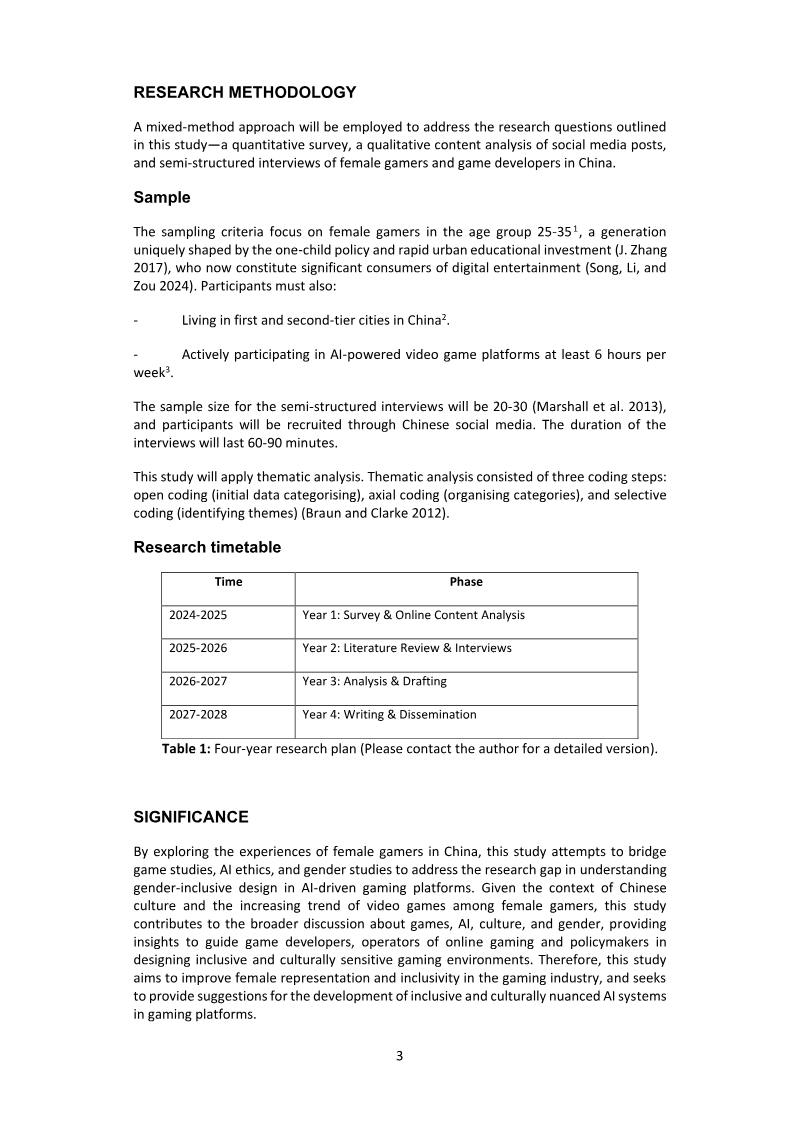
The methodology relies on semi-structured interviews with 17 participants aged 18 to 32, recruited through Chinese social media platforms including Xiaohongshu, Douban, and Weibo, with snowball sampling used to expand the pool. All participants had played otome games for at least six months, and the interviews averaged about 65 minutes and were analyzed through thematic analysis. The study is framed as preliminary, and its findings are drawn from this single-country sample.
The preliminary analysis identifies an affective trajectory with three phases: discomfort, empathy, and solidarity. Discomfort arises when female players are cast as the "protected side" in romance narratives and when this mirrors real-world experiences of being perceived as weak. Online otome communities then provide a safe space for players to articulate feelings they struggle to express, functioning as informal feminist education. In the solidarity phase, a notable subset of participants (n = 9) voiced opposition to critics of excessive male nudity in these games, pressing for official responses that respect female sexual rights, through actions such as boycotting in-game purchases and joining offline protests. Participants nonetheless describe these efforts as continually approaching an unrealized utopia, since emotional attachment to characters makes abandoning the games difficult.

DiGRA · 2026

DiGRA · 2026



DiGRA · 2026



DiGRA · 2026



DiGRA · 2026



DiGRA · 2026



DiGRA · 2026



DiGRA · 2026

DiGRA · 2026



DiGRA · 2026



DiGRA · 2026

DiGRA · 2026
DiGRA · 2025