1 free read left. Create a free account for unlimited reading + AI research.
Create free accountWhitepaper DiGRA
1 free read left. Create a free account for unlimited reading + AI research.
Create free accountWhitepaperDiGRA
Players hire performers to portray game characters in scripted offline encounters.
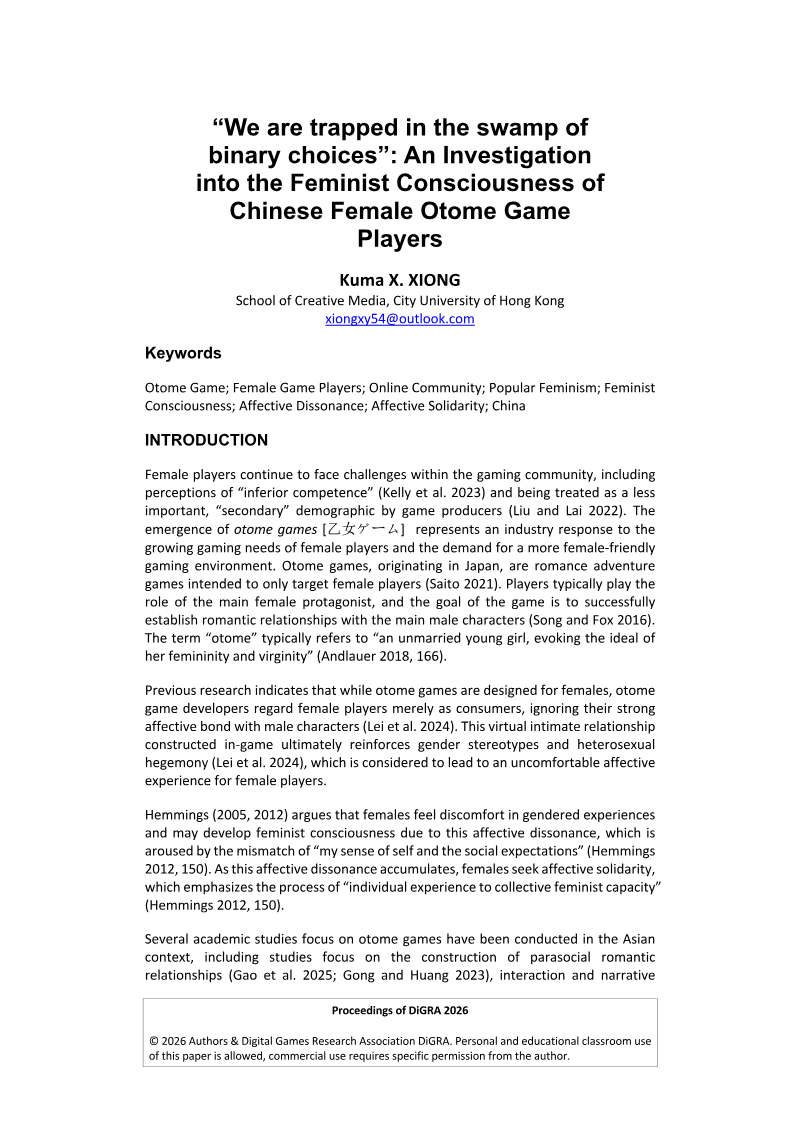
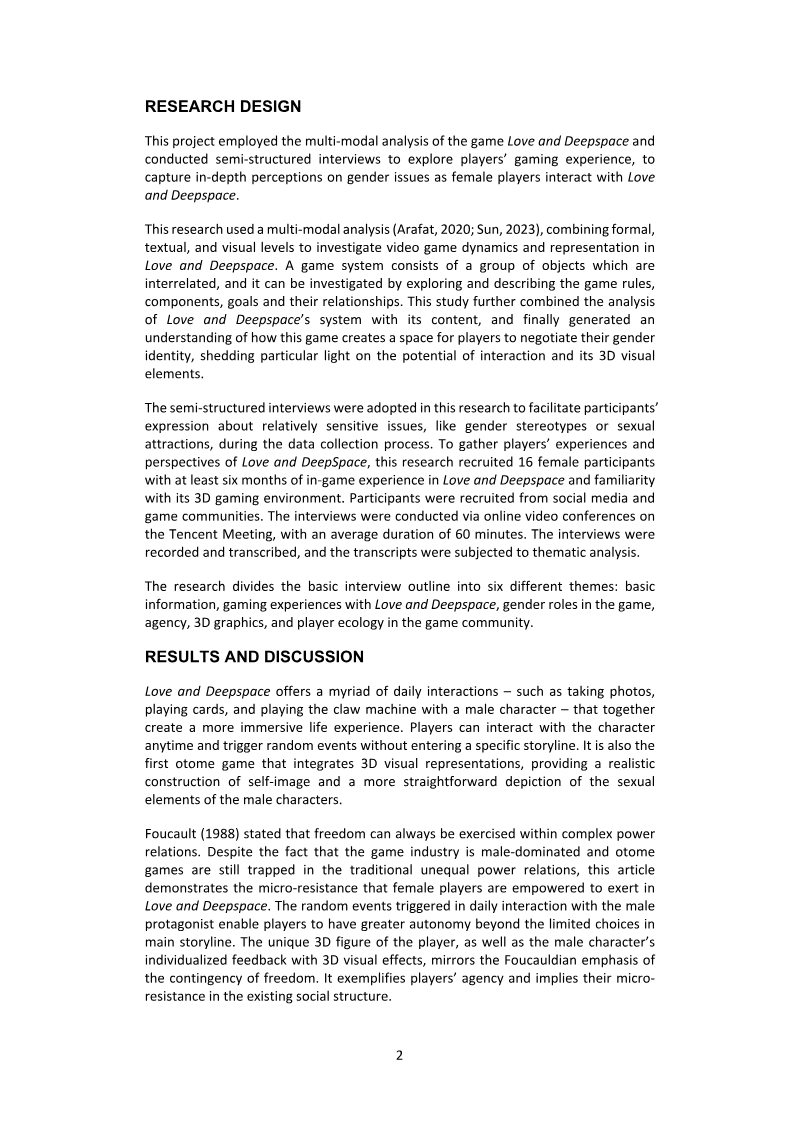
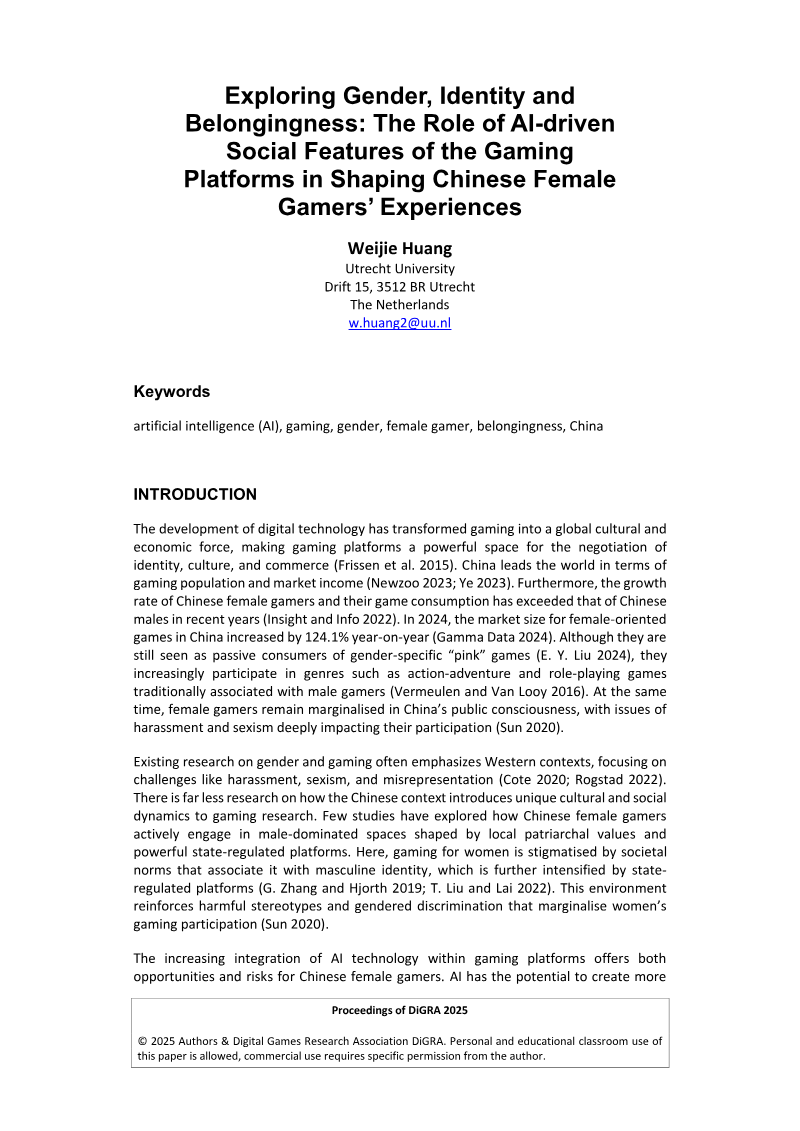
This study examines how Chinese otome game players and the cosplayers they hire construct intimacy through paid cosplay commissions, in which players commission performers to portray game characters in scripted offline encounters. Its central argument is that these commissions reshape the traditional one-directional model of paid intimacy, turning emotional labor into a jointly produced and continuously negotiated process rather than a standardized service delivered by one party.
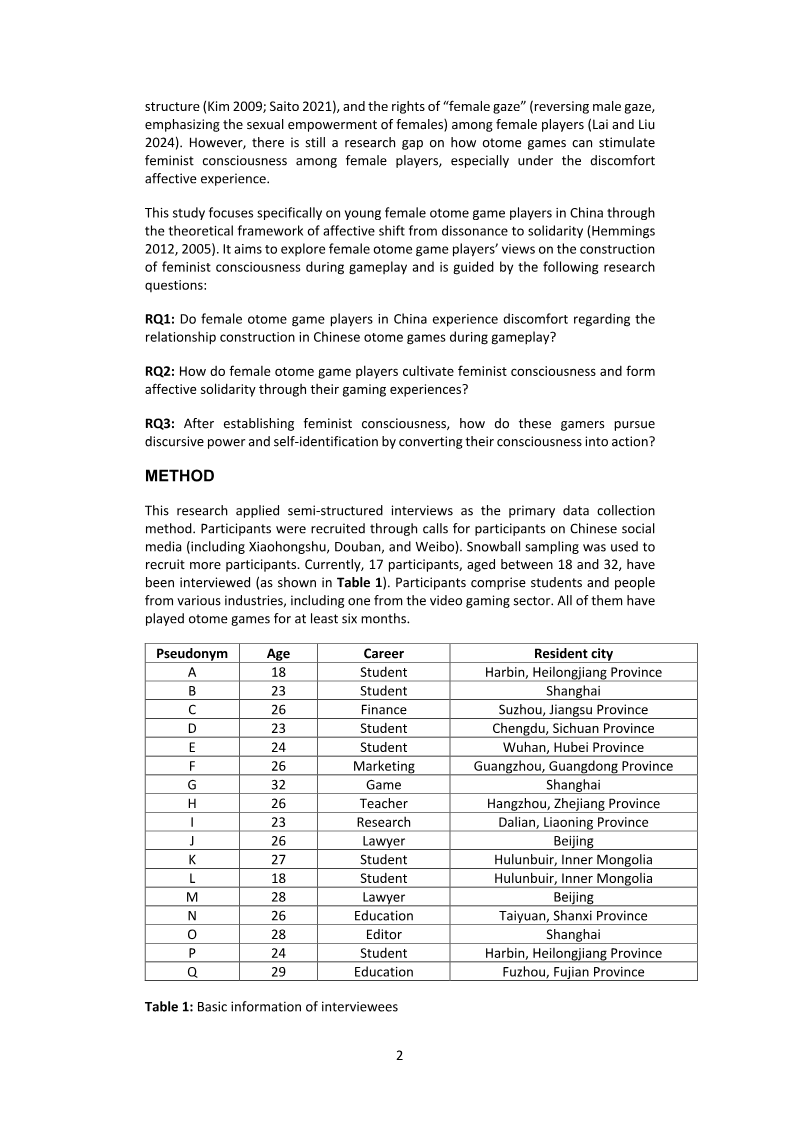
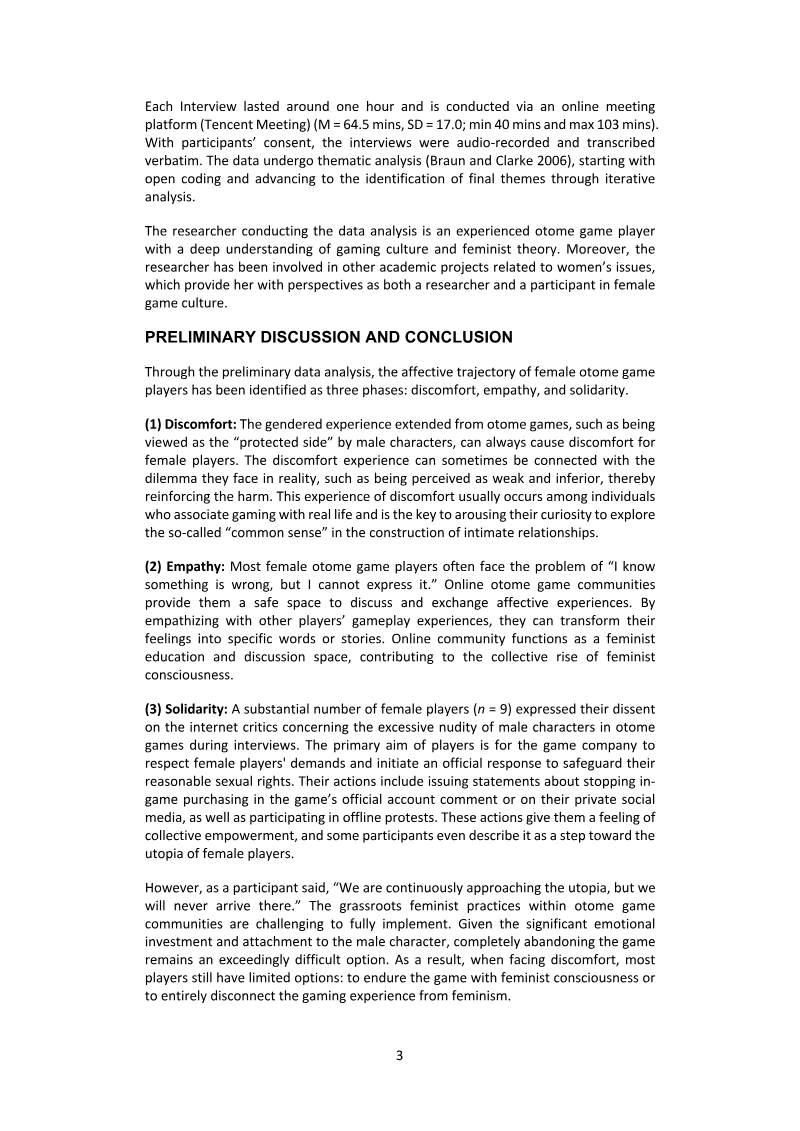
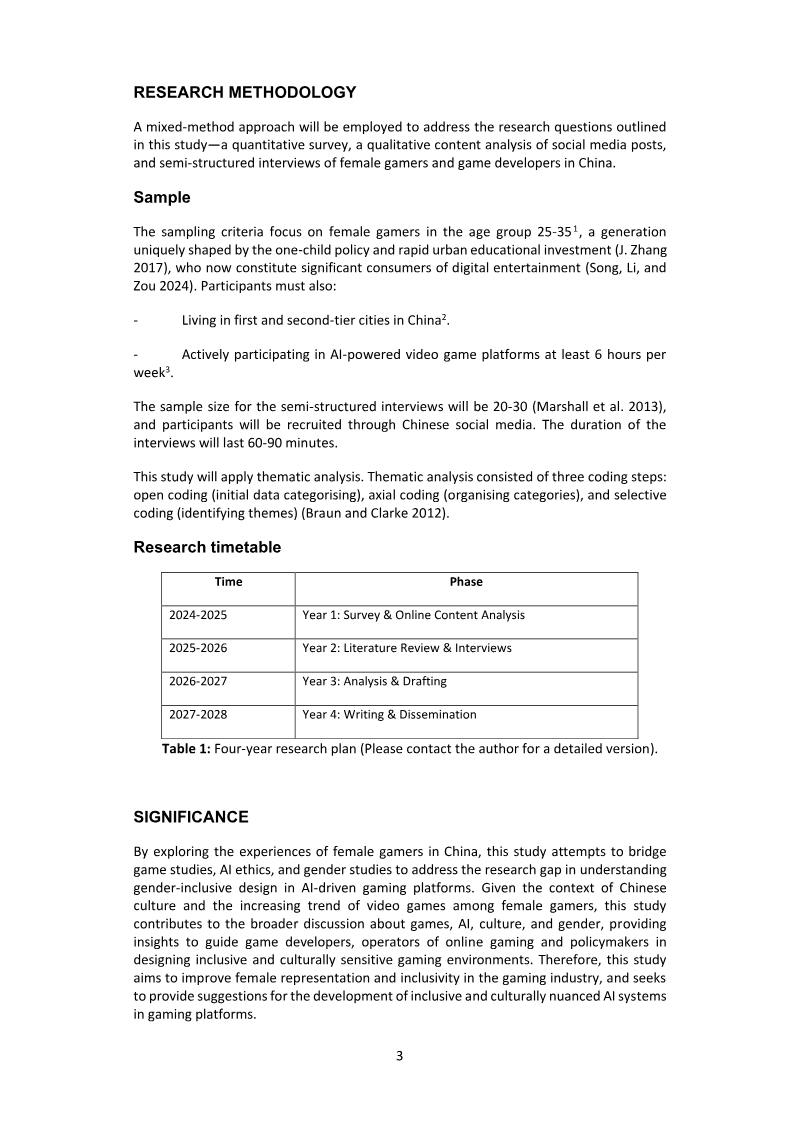
The research adopts a qualitative design, drawing on purposive and snowball sampling through the Xiaohongshu platform to recruit approximately 15 to 20 participants who had more than six months of experience in gaming and paid cosplay commissions. Interview data covered three stages: pre-commission communication, offline date experiences, and post-commission reflection, supplemented by materials such as scripts, chat logs, and scenario descriptions. Three research questions guide the analysis, addressing how participants define paid commissions as close interaction, how they co-construct and negotiate emotional boundaries, and how the practice shapes their perceptions of intimacy, authenticity, and self-expression.
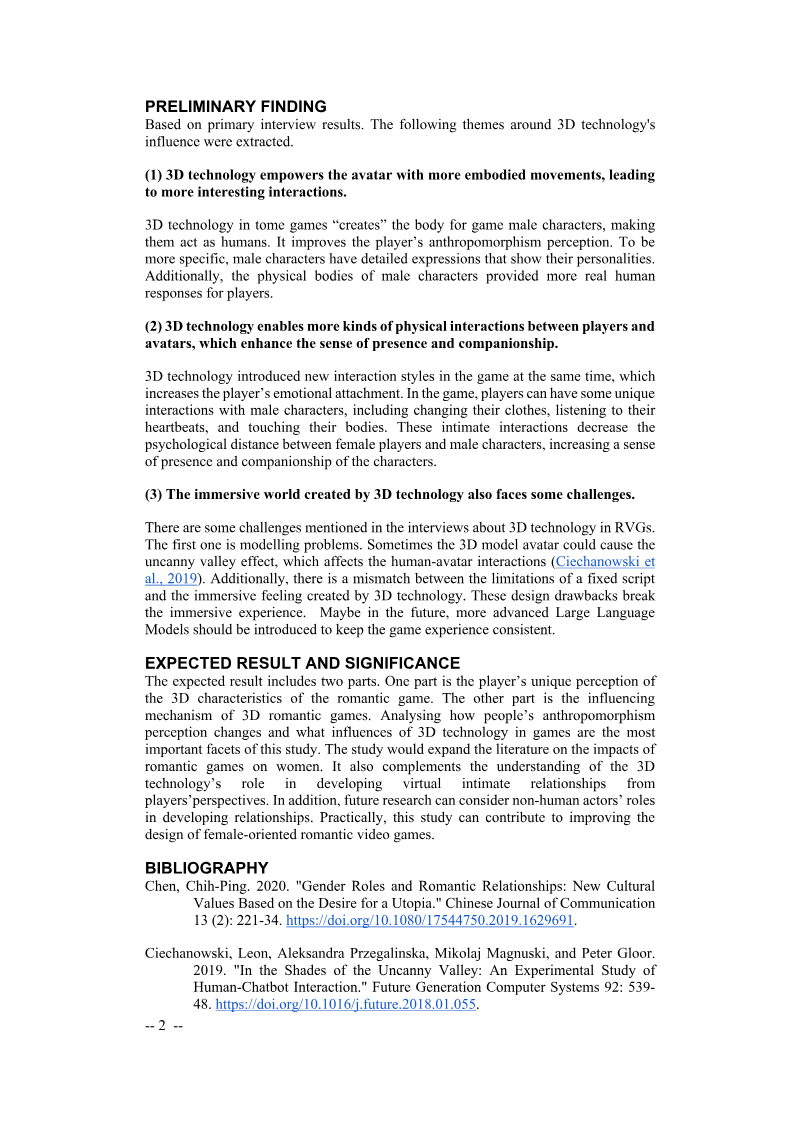
Preliminary findings indicate that intimacy develops across the entire commission process, beginning with questionnaires and scheduling that function as early relational investment. Players seek emotional responses that in-game characters cannot provide, and they tend to understand authenticity as emerging from emotional resonance rather than strict role accuracy. Cosplayers, in turn, are motivated not only by financial needs but also by the affective satisfaction of being appreciated, and they adjust the depth and tone of their performances in response to player feedback. The popularity of "boyfriend mode," which blends a character's traits with genuine warmth, illustrates how parasocial attachment from otome games is translated into embodied interaction.
The authors conclude that cosplay commissions form a shared emotional economy in which both parties contribute effort and receive emotional value, producing an interactional structure distinct from conventional paid intimacy. The study's sample is small and drawn from a single platform and national context, and its findings are described as preliminary, so the conclusions are best read as an initial framework for understanding relational labor in this emerging practice.

DiGRA · 2026

DiGRA · 2026



DiGRA · 2026



DiGRA · 2026



DiGRA · 2026



DiGRA · 2026



DiGRA · 2026



DiGRA · 2026

DiGRA · 2026



DiGRA · 2026



DiGRA · 2026

DiGRA · 2026
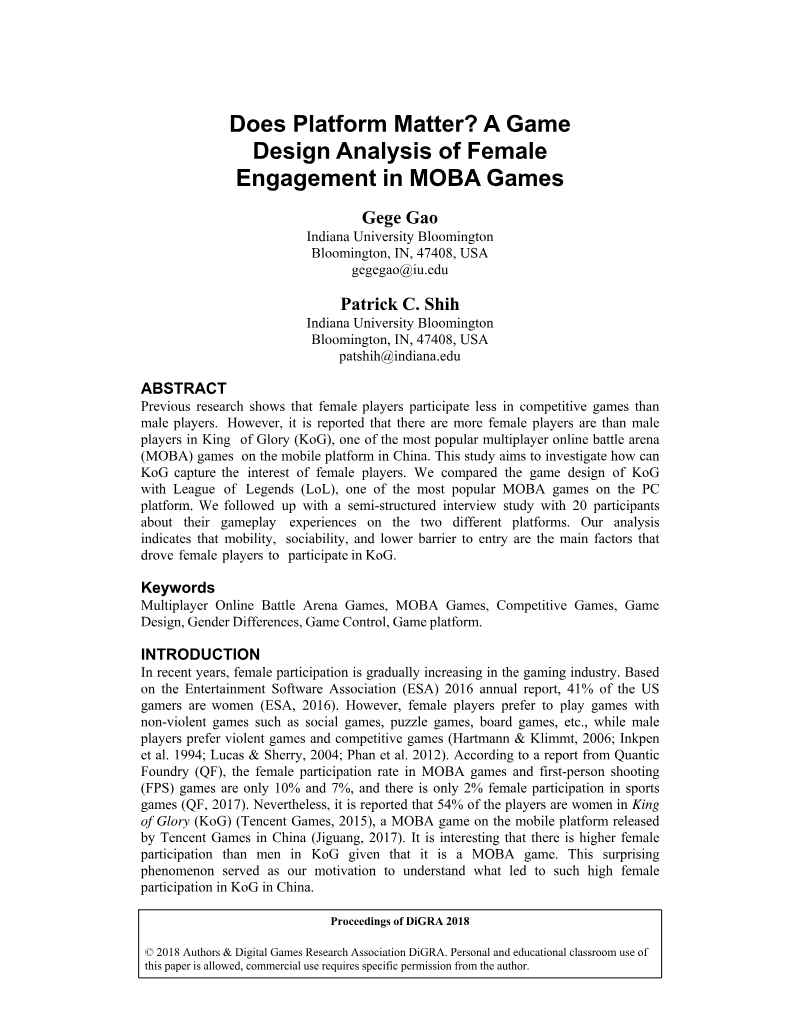
DiGRA · 2018