1 free read left. Create a free account for unlimited reading + AI research.
Create free accountWhitepaper DiGRA
1 free read left. Create a free account for unlimited reading + AI research.
Create free accountWhitepaperDiGRA
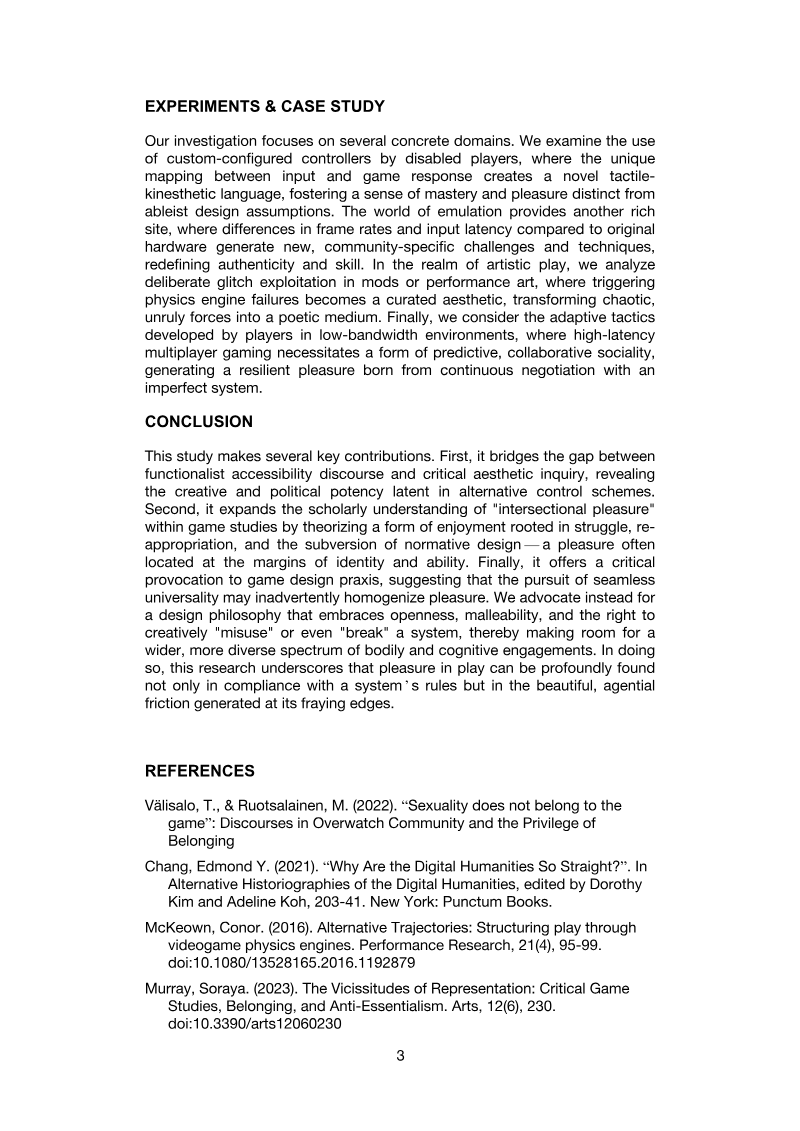
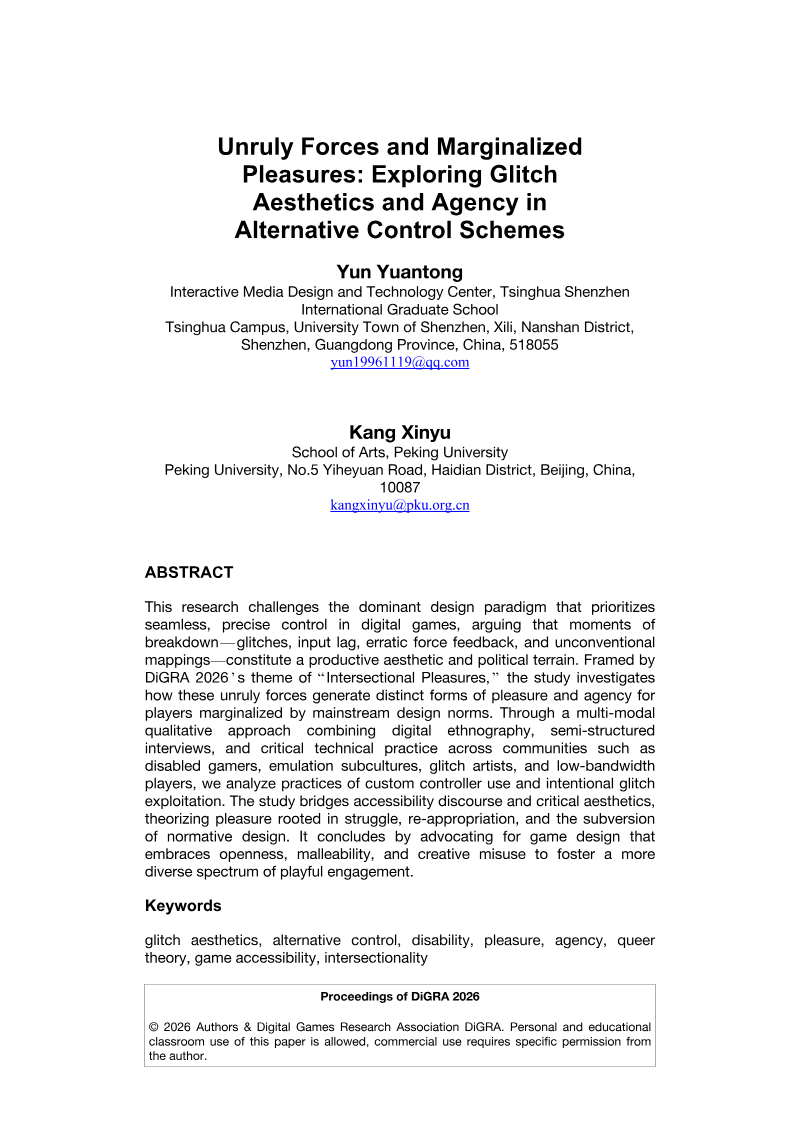
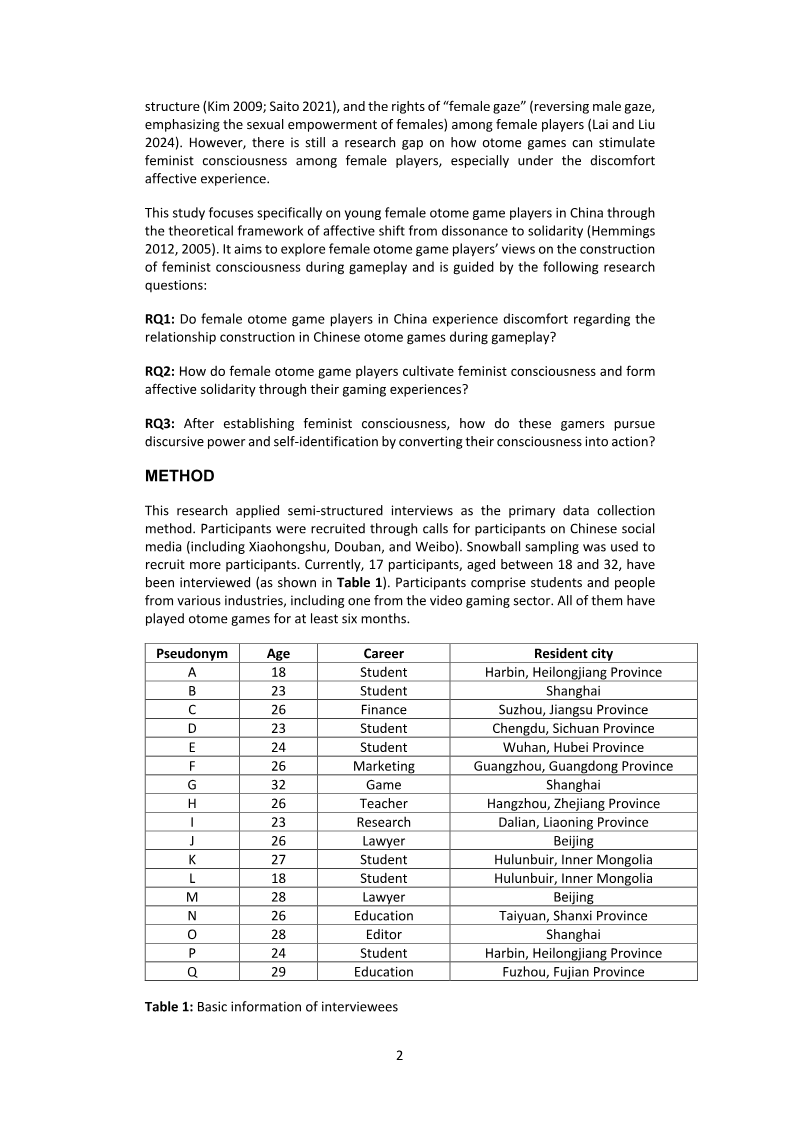
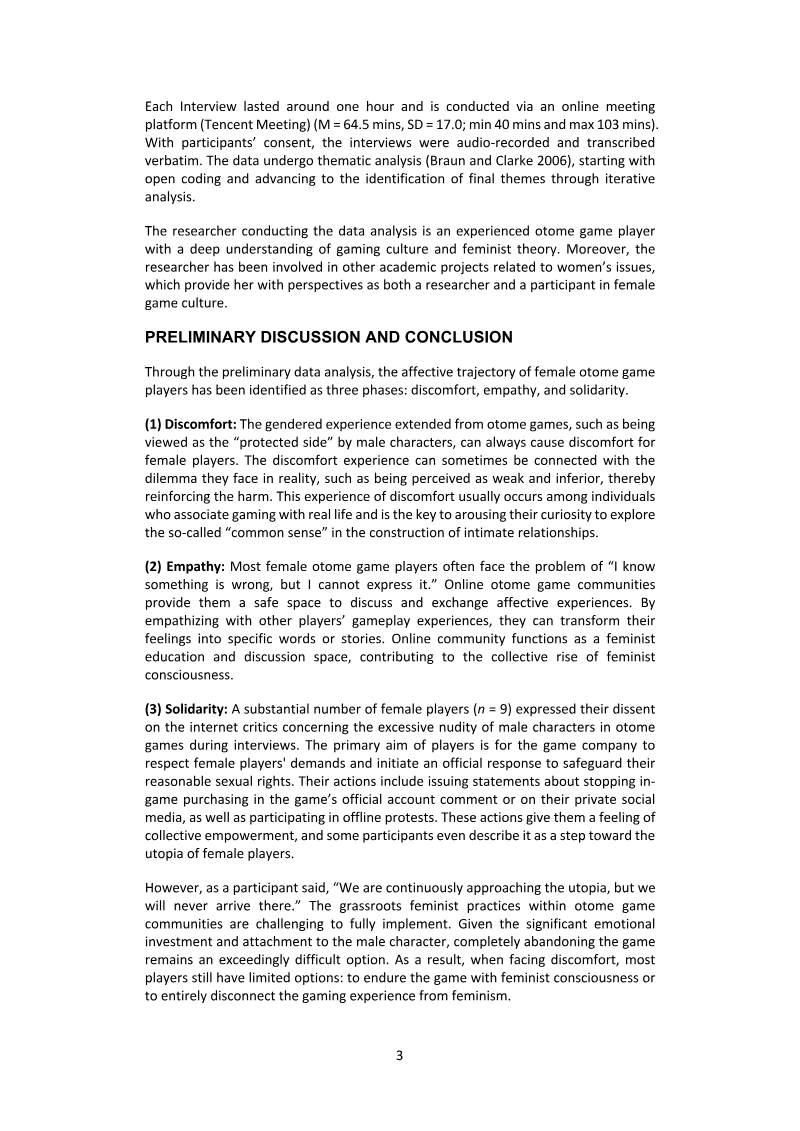
The study examines this game to understand how its design and community shape female players' gender identity and sense of agency.
This study examines Love and Deepspace, China's pioneering 3D otome game, to understand how its visual design, mechanics, and player community shape female players' gender identity and sense of agency. Motivated by a scarcity of scholarship on Chinese otome games and the particular dynamics between in-game experience and gender identity, the authors argue that the game creates spaces for "micro-resistance" to traditional gender norms even as it remains bound by them. Drawing on the theoretical frameworks of Michel Foucault and Judith Butler, the work situates player interactions within broader socio-cultural negotiations of gender.
The research combines a multi-modal analysis of the game's formal, textual, and visual systems with semi-structured interviews conducted with 16 female players who had at least six months of experience with the game. Interviews, averaging 60 minutes and conducted online, were recorded, transcribed, and analyzed thematically across six areas: basic information, gaming experience, gender roles, agency, 3D graphics, and community. The sample was recruited through social media and game communities, a design that prioritized sensitive, in-depth discussion of gender stereotypes and attraction.
Findings indicate that the game's everyday interactions and random events grant players greater autonomy than its scripted main storyline, and that face-shaping tools allow players to disrupt normative gender presentation. However, the hyper-visual male body and realistic 3D rendering intensify an objectifying, female-centered gaze, while the decisive role of male combat power in gameplay reinforces the female protagonist's marginal position. Interviewees frequently described feeling like spectators with illusory choices, yet reclaimed interpretive control through headcanon-building and emotional projection. The fan community, which shifted from fictional romance toward celebrity-style "idol-chasing," further illustrates the tension between innovation and enduring genre conventions.
Each row is a game or company this document names, each column a document, oldest first. A mark means that document names it. Select a row to see those documents.

DiGRA · 2026

DiGRA · 2026



DiGRA · 2026



DiGRA · 2026



DiGRA · 2026



DiGRA · 2026



DiGRA · 2026



DiGRA · 2026

DiGRA · 2026



DiGRA · 2026



DiGRA · 2026

DiGRA · 2026
DiGRA · 2026