VideoThe Game Business
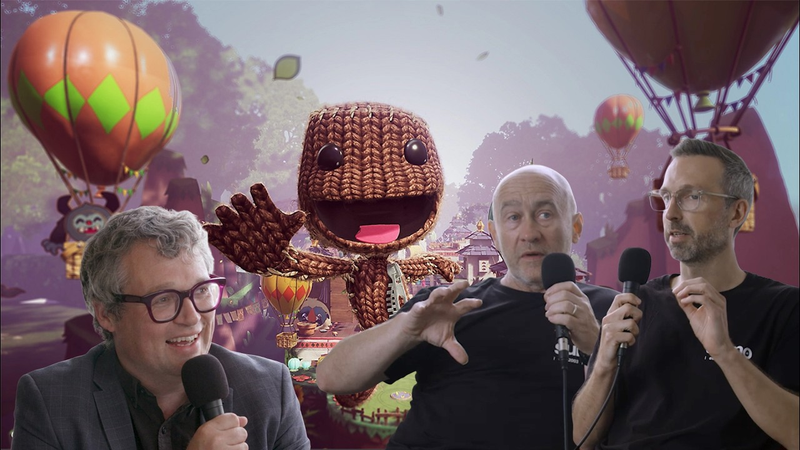
The survival of Sackboy and Crackdown developer Sumo Digital
11 Aug 202637 min video
Transcript
the appetite for risk and investment for large big budget AAA games. The sorts of games that we were doing five, six, seven years ago, those 50 million budget games. [clears throat] We [music] haven't seen one of those come through the door for for a long time.
We've downsized a lot in the UK. Our Pune operations, I don't think we've lost any heads in Pune in the last 2 years, have we? Maybe some attrition, but we've not made any redundancies. I see in India because they're so valuable. a lot more of the work that we do no longer qualifies for the tax reliefs in the UK. [music]
Hello and welcome to the Game Business Show. This week's edition is sponsored by Exola. Now, one of the big topics we've had on the Game Business Show has been this rise in developers and publishers selling their games, DLC, and add-ons directly to fans. In fact, the most successful PC game studios are no longer relying solely on traditional storefronts. They're building direct to consumer channels to own the relationship with their players and create an additional revenue stream with
better margins. This approach already works at scale. Over a thousand PC games sell direct through Exola, generating more than a billion dollars in transactions in 2025 alone. That sounds pretty good, doesn't it? With Exola Publishing Suite, studios can launch their own direct sales channel in days, not months, using their existing team. Ultimately, the students that thrive in the future will be the ones that build their own storefronts and establish a direct relationship with their communities. You can find out more on the Exoda website. They even have an ebook explaining how a hybrid sales model works and what is and isn't allowed. You can find a link to that on the game business newsletter, which went out alongside this episode. Now, back to our show. Our interview this week is with Sumo Digital's new CEOs, Gary Dunn and Andy Stewart. Now, Sumo, it's a work for higherend and codev studio, but they were perhaps better known than most because it developed three Sonic racing games. It made Crackdown 3. It took over the Satboy and Little Big Panic franchise and made the BAFTA winning PS5 launch game Satboy a big adventure. They
made big AAA games for big companies. It's been quite the power in the UK scene. In 2018, the company went public and began a spending spree, picking up numerous teams, including the Chinese Room, Red Kite Games, and Lab 42. It also opened numerous offices. It even set up its own publishing label, Secret Mode, which is part of a bigger push into creating wholly owned original IP. In 2021, it was acquired by Tencent. All designed to accelerate this. But the industry struggles were beginning and that impacted Sumo. It abandoned plans to develop its own IP, sold off its publishing label, sold off the Chinese room, and cut back its team size. Meanwhile, company founders KL Cavers and Paul Porter exited the business with Gary and Andes taking over. Sumo was once one of the UK's most influential video game studios, but it's been 6 years since that BAFTA winning Satboy game. Sega made its last Sonic racing game itself. So, where are they now? I, alongside a producer, Richard went over to Sumo HQ in Sheffield to find out exactly that. And you might be surprised
by what they're thinking and how they've adapted to the modern video game industry. Check it out. Hello Gary. Hello Andy. Welcome to the show.
Hi. Love the offices you've got here. How you set up now? Do people work from home? Is this a remote studio?
Um it's a bit of a blend. I mean obviously it's one of a number of studios we have. Sheffield's
is more remote. Red car in Leads is completely in the office.
Our Lmington Studios and Nottingham studios are also blended. So we measure output not input is is one of our sort of mantras. So the workflows are very much focused on what works for the teams and what works for the customers.
Last time I spoke to Sumo quite a lot, you just picked up BAFTAs for for Sack Boy. You were making your own games, publishing third party games, uh part of a 1.2 1.3 billion acquisition from 10 cent like heady times, not just for Teumo, but for the whole industry. Obviously, you had to cut back. You've reduced the team. You refocused your business. I say lots of companies have
had to do this. But what specifically what led you to having to do that?
It was a great question. I think if I go back to when I joined at Sumo um which was nine years ago now I think around 80% of our our revenue was you know three two or three clients you know the Microsofts of the world Sony's
and obviously
after the Tencent acquisition when we were bought it's no secret that a lot of large publishers started raining in on on what they were spending money on. So, we had to think differently. Um, where we are today is, you know, we've got a much more diverse portfolio of clients. You we've we've probably got 30 projects on the go. Um, you know, dozens of of clients, you know, really really huge names. You we've had to rethink, you know, how we go about business development and and and and our partnerships. we've had to react to, you know, changing player demands, you know, so more players are are still playing video games, but they're playing fewer AAA titles. Uh, you know, there's a more more concentration there. So, you know,
we focused our strategy now on on supporting those evergreen titles from a co-dev capacity. M
um the appetite for risk and investment for large big budget AAA games, the sorts of games that we were doing uh you know 5 6 7 years ago, those 50 million budget games that we haven't seen one of those come through the door for for a long time. Um but what we are seeing is is you know a bit of appetite for that kind of double A space sort of you know video games you with a sort of 15 million budget. So, you know, we've rethink how we how we're making full games as well. And we've got, you know, several clients and projects on the go, you know, in that kind of ballpark. So, yeah, we've we've had to kind of rethink a lot about the business model and how how we go about it and and we've had to shake the business along the way. As you rightly point out, we're not doing publishing anymore, but it doesn't mean we've lost all of that publishing experience and no and and skills that that we developed during that journey. Um, so we always try and bring a publisher mindset to to the projects
we're working on as well. So,
you know, we've been our mastery, if you like, has been working on
topflight IP
and our mantra has been we always want to maximize people's IP and I think, you know, we're just we're using that to our our best effect now cuz I think in today's investment landscape um people are rolling back to the IPs that they know and trust and have brought them revenue in and and that fits with our expertise. you know, we worked well. I mean, last week, I think last last night, I don't know when it was shot, but you're speaking to Sheldon Carter at Digital Extremes. We, you know, we've got a long relationship working with them on Warframe now that's going really well. And, you know, it's that long-term partnership that we're used to and we're building on to lean into more. Whereas, Andy said 5 years ago it was $50 million games. You just don't see an RFP for for anything like that anymore. It doesn't literally does not exist in what we can see. But uh it's about making great games at a lower price point. And if that also fits into
our mantra of let's get something great the second to second game play great and let's get it into the players hands quickly and then let's build from there. So that's where we want to take our sort of full game development journey with our clients.
My plan for that question lineup was to go hey what happened and be who would you say you are now? You you've skipped me to the second question so thank you for that. So you were these primary developer on these sort of big franchise games like like Satboy, like Crackdown. I like like Sonic Racing going further back.
Yeah.
Then I see Sega's taking Sonic Racing in house. Is that not Sumo anymore? That's not really what you're you're about.
Um I think we've got broader. I don't think we've stopped doing that. We are still making
a number of full game experience for partners
including 10 cent.
Yeah. So it's not something we've stopped doing. We've just seen uh you know the appetite for giving large contracts to third parties diminish over
the last 3 to four years.
Why is that? Is it just because companies are scaling back and focusing in? Are they protecting their own talent and their own teams? I
I think that's that's part of that. I think it's all part of you know people are risk averse and when you're in a tough market people are just trying to control things more I think. But uh you know we're always there to provide a wraparound service to make sure you know we maximize
the client's IP you know so and it's what we've done so many times. I mean when you look at what the work we did with Sonic that was all about taking the brand but and doing games you know we did Sega Superstars tennis we did Sega Superstars racing none of it was the little blue fella running
but you know they were all incremental revenue streams and that's that's where we work really well you know very brand authentic very creative and different and doing different things with the brand and that's the space we feel strong and we you know we want to grow again in that area
I loved I helped that my brother was on
the team, but I I loved the Sat Boy game. I thought it was amazing and I I would love to see that team do another game of that type, whether it's a Satboy game or another title. It would be nice to see some of that, right?
Absolutely. And we we'd love to see that team,
you know, they've been doing a lot of work, you know, and most of it sadly we can't talk about. Um some of it you'll see soon.
No, of course. But, you know, they are there and available to do work on great IPs and that's where we're leaning into right now. I'm sure you'll see something exciting soon.
I think I was it might have been you, Andy, that said it. Um, I read the games in short biz interview you did. You talked about possibly even co-unding some of that stuff. Is that something that's something that you were talking about that GDC? Is that something still in the foot?
Yeah, absolutely. As as Gary says, you know, we're we're looking at any opportunity to maximize our partners' IP. That's what we do. Yeah. We can do that from a codev capacity. We can do that from a full game capacity. You know, what we're trying to do is break down barriers to, you know, um to to investing in new games. So, first things
we've looked at is how we make games. Um can we make a really compelling experience for cheaper? Sometimes that isn't enough. So, actually, can Sumo provide some of the funding from a co-unding perspective, you know, to to make those investment decisions easier with for a partner, make sure we're sharing risk and reward. We're also, you know, using our the conversations we're having with our partners that there's more appetite for that. Um, you know, they want a partner, a development partner with Skin in the Game. So, it's certainly conversations we're having at the moment. You know, we we we have some exciting projects, you know, underway. And yeah, as Gary says, it's frustrating. We can't always tell you about them right now, but
No.
Yeah. I don't think you're going to have to wait too long um at all to to see something good out of out of the team you've just mentioned and and and Sumo. Yeah. How much of these changes that you've gone through this sort of shift has come from Tencent? This strategic focus that you're now making, how much that's come from Tencent, how much of that came from SEMO?
Yeah, I mean, we're we're definitely very much mass destiny. Um, you know, if you've spoken to other 10-centent portfolio companies, which I know you
have, you know, you know, the 10 cents model is very much, you know, hands off. They let businesses run their own way. So uh and that that still stands you know obviously when we made the decision to move away from publishing that was done with 10 cent and and you know we were all aligned on that and um you know we weren't able to give secret mode the the care and investment that it needed.
Wow.
And and you see what's happening over you know at secret mode now and that's great. So you we're delighted to see what's happening over there and yeah it wasn't right for us at that time but that was you that was a decision that we were very much behind and you know and obviously 10 cent helped us with that as well. I wasn't going to ask about secret mode. What a journey they've been on. Like when they came out of Sumo, I was genuinely I don't know independent publishing is difficult and you need to find a hit and then what they're working on Star Wars, they're opening a studio like it's they've sort of
it's great,
you know, and we have a great partnership with Secret.
Yeah.
We do a lot of work for them. We're very close. You we'll always be friends and and yeah, it's it is fantastic to see what's happening with them and and we'd we'd have loved to have have done the
same thing with them now, but it wasn't what we it wasn't Sumo's business.
Yeah. we're comfortable focusing what we what we're best at, which is, you know, supporting the best AAA, you know, IPs out there. Um, making new games with our best teams, like the the Sack Boy team, as you say, and yeah, that that's what Sumo's core is and that's what we're best at and that's what what we'll keep doing.
Well, focus is the thing. I know every company's going through this that's gone through this sort of journey of the industry when things were very good. everyone's looking to expand and now everyone's looking to focus in on what what they do very well and sumo have historically this is what Sumo is about. Um, so it makes sense, but at the same time, having your own IP, being able to work on your own, something that's yours, and not only is it an exciting thing to do from a creative point of view, I I know working on other big brands also exciting, but also there's an element of that's got value to it from a business perspective, right? If you've got your own brands and your own games and when you're always sort of reliant on other companies, you're kind of being buffeted a bit by the winds of the industry, which
lately has been maybe not necess not as badly this year in previous years, but lately has been been pretty tough. Well, it's a good point. Um, but it's it's a bit of a misconception that we're not doing our own IP still and that we're not, you know, um, doing full games. So, Suma is this definitely still very much in the full game, you know, business and we're also you we are also doing our own IP again projects that we can't necessarily talk about. What we're not doing is fully funding our own IP and that that's the key sort of nuance and that's where co-unding comes in. if we can create something whether it's with a partner IP because that's what we're best at maximizing a partner IP or whether it's an original idea that we've got um you know we we will be having those conversations with our partners and if if co-unding allows to unlock that you know it's allows that as you say that that sense of um you know ownership but also that riskreward you know is shared on both sides so you know we're still very much open to those those conversations and we've got some projects you along that way
10-centent have
hugely supportive of our new IP um aspirations and you know we've you know a number of projects that we've done with them and and are underway. We're hoping to be able to tell you more soon.
Yeah.
As Andy say the focus and it's amazing cuz a lot of people still come up to us at shows and go but you're not doing your own IP. And it's like we are we're just not we're just not the principal financer of it.
No.
You know because that's not the model we've got anymore. We we we partner finance. We work for high and we can create your IP for you from our creativity from scratch.
We know we can do it. It's the nuance of the funding is not what we're going to lead.
Obviously, you're one of the big UK development uh developments teams. Um and it's been a big year for UK made video games. Um we've got some, you know, Forza and we've had um 007 First Light a little bit and Lego Batman and GTA and Star Wars and um Hell Let Loose. How is the UK scene for you? Obviously, there's been a lot of investment into this scene. How's it going for you? Um, well, I I still think the UK is a jewel
in the crown of of global gaming. Personally, we have so much talent here. Uh, you know, we have so much pedigree. Um, we need to do what we can to protect that. Um, one of the things actually we're seeing at the moment is, uh, a lot more of the work that we do no longer qualifies for the tax reliefs in the UK. um you know as we as Sumo you know part of our strategy as well as doing full games is to support these evergreen titles from a codev capacity that doesn't always qualify uh you know an existing title u with a nonUKbased publisher um and and we're trying to pitch for work on those projects and and you know it's not always qualifying for for the tax relief. So I think around 60% of the work we did last year didn't qualify for VJ.
Oh wow. that puts us at a huge disadvantage globally. So, um, reform to VJ is definitely something that, you know, with through our industry bodies, you know, we need we need to tackle with the government because as more and more players play fewer and fewer titles, it's only going in that in that
direction, arguably. And what we need to recognize is, you know, the the video games tax relief should support the whole spectrum of video games. You know, right down to those indie developers. It needs, you know, it's it's right that it's more, you know, it's it's a bigger incentive for them. that that's something we're very supportive of. But also the the larger companies that drive employment in video gaming in the UK and the work they're doing, you know, needs the same level of support that they get in Canada where, you know, in Canada it's completely different. You just put in some states, you can just put your payroll through and get the tax relief. In the UK, you've got to
jump through so many more hoops and and you often find that what you're doing doesn't qualify.
I guess as as industry becomes more globalized and get game development is more globalized, that's going to become more of an issue. Uh it's definitely something that you know we we we are speaking to government with and and that I know the industry bodies are and we speak to them regularly. So that would be the single biggest you way to to continue to support UK gaming.
Is it true that you've got like a um a team or you have a way of sort of
identifying dormant IPs that you can pitch to people?
Yeah. So we've been looking in the last few months at a whole lot we get so much data through our tools that that we've had cuz remember we're a publisher. So we have a lot of market data and we've used that
to start analyzing which IPs we should actively go and proactively pitch for.
So there's a whole package of work that we're doing now. So where we're looking for what we're actually looking for is to be able to analyze an IP say right this is this is an IP that's that that's done these unit sales over the past there's no there's no there's no known development for it yet it interfaces with our excellence. So, you know, horror, family, platforming, adventure, and where we can see that intersection, we're happy to co-und, you know, we're happy to do the hard work to create that commercially viable win-win proposal for the for the publisher that we'll do. We'll take that to them and say, we
believe we can both make this much money from through this dormant IP. Um, we're prepared to put this much skin in the game if you join us. We we're both aligned. We're and we believe we can make a great commercial outcome for both of us.
How has the departure of like Carl and some of the other leaders of Sumo changed things? Has it changed things?
Has it changed things? That's a really good question, isn't it? Um I don't know. I suppose is Andy and I are two different individuals to call them Paul. You know, we've both known them 10 years. I've known them 20. The friends as well as
as colleagues and bosses. I don't think the ethos in Sumo has changed a lot.
We've evolved. We haven't had a revolution, but we have evolved to meet the changing needs of the marketplace, I think, is the best way to say it.
Yeah. I mean, I look back on the last year and I think, you know, as you say, the way that we treat our people hasn't changed. That, you know, our our fundamentals of our culture and identity hasn't changed, but um the way we go
about business, I think we we we have changed quite a lot. you know, we've had to react to to what the market is. The market is not the same place as it was 3 years ago. Um, so I think a lot of a lot of what we do, you know, under the hood has has improved. As Gary said, it's not changed. It's not fundamentally a change course, but it's it's certainly improved and we're we're you know, the last year has been, you know, a real journey. But certainly in the last 6 months, we've seen real fruits of of the changes that Gary and I have put in place and the conversations we're having, you know, with our partners now and and some of the projects that we've, you know, recently on boarded. Again, we're we're desperate to tell you about them and in the next few years, we will tell you about them, I'm sure.
Yeah. But we have new partners that are genre in what they do and Sumo is now supporting their games for them and they're partners that we we've never worked with before. So
you say 30, you see we've got about 30 projects on the go.
Wow.
And we've got you we we used to have well Sheffield as a studio used to have two or three you know other studios more you know depending on the model but yeah so I'd say around 30 projects on the go at the moment you of all different sizes. We also have our business in in Gates Head at Hawk which obviously has smaller projects as well. So they've got their own set of 20 30 projects as well but um that's a slightly different model that they're a fantastic creative art house.
Um but yeah in terms of game development you know um and it could be a small you know engineering project um or it could be a full game project that spans two or three years. We we do we do it all. We have genre specialist pods across the business as well, but we also work across platform. And you know, I know you've had on your show some of the cloud platforms.
Yeah, lately. Yeah.
And yeah, we've got amazing projects going on with with some of them. Again, won't name them, but there's only a few of them, so you probably figure out who some of them are, but you know, you know, we're working AC across all all platforms as well. And that's that's what Sumo is good at. We do the difficult really well. Um and you know our clients come to us when they've got
a challenging um project and they want help with someone like you from someone like Sumo
I guess cuz you have all these different clients you have to be on the quite on the cutting edge. You have to sort of imagine sometimes they go to you can you make a streaming game and you go yeah I'm sure we can. [laughter]
Yeah. I mean I mean great example of this is when ARM about a year and a half ago ARM came to us and said we've got this great neural AI graphics chip that we're going to launch at the back end of 26. Um, we've never done it before, but we want to launch with a with a game. Um, we we we don't even know where, you know, we've not we're not game makers. We need to help us. This technology doesn't really exist. We're making it over the next 18 months. It's on a road map,
but you know, we're Unreal Gold Partners. We're experts. And it was tough. You know, we're making a game for a phone that's that we started making this game in the beginning of 2025. The phone's not out yet. And you I think it's launched in Shanghai in next month. You know, it's public now. We can we can talk about it. And you know, Neural Dawn is it's groundbreaking. You know, you
know, Megalytes on mobile, it wasn't supposed to be a you wasn't supposed to be possible. the the sort of graphical fidelity that that we're seeing and the the technology we've employed is is great and it's been great to partner with them. But that's and use the phrase we do the difficult but that's one of the things we're known for cuz that's not new because we're we're there you know we did going back further we did connect sports on connect for for Microsoft and that was sort of can you try and do something with this camera that's entertaining please. Um well the the story you were telling me before before you even here when it was working with was it Sumo on the on the football game when and Xbox Live.
Yes. Of the code masters and that was that was a similar story where
you were saying we can't do it and then it was Xbox that was saying to you but these folks might be able to and they did
and we've done that. We've got a history of doing that and
it's we love a challenge. We love you know we've done numerous launch titles. Obviously Sack Boy was a was a launch title on PlayStation 5 which we
delivered on time in co you know a lot of time at that point things were falling out of that launch slate you know very quickly and you know we weren't you know we were working from home and we were determined to deliver and we did something we're really proud of under pretty exceptional circumstances. Yeah,
that and I think that's what one of our strengths is that high quality reliability that I think now plays into where a lot of publishers need to be. They need somewhere someone that can deliver that quality and know they're going to get it cuz it's all right going there's there's a bit of a race to the bottom in the development industry at the moment but
okay so that's people undercutting it. You know, we see a lot of stories where people have gone for the cheaper option, but actually it it's either been really late or or it's never seen the light of day. We've had people come back to us and go, you know, that thing that you were too expensive, but could you please now rebid?
I was going to ask about this because obviously it's cheaper to outsource to
Eastern Europe, I guess, and and certain Asian territories and things like that. And obviously you're doing this. I mean, she's not the most expensive place in the world, but it's it's you are it's obviously it's not it's not California, but it's um it's it's perfectly pricier to make games here than it is in other markets. Yeah,
you may have just answered my question, but how are you reacting to that?
Um well, don't forget Sumo's second oldest stu studio is a Pune studio.
It's 20 years old next year. It's 2007 we launch Pune. So, our relationship with them, they're literally part of our fabric. M
they're not a second thought. They're not an outsourcer. They're integrated into our teams and and and our developers in Pune sit alongside our UK based developers as absolute equals and do the and work the same workflows, the same production methodologies. So that's our model, you know, and we find it useful and we've downsized a lot in the UK. Our Pune operation, I don't think we've lost any heads in Pune in the last
two years, have we? and maybe some attrition but not you know we've not made any redundancies
I see
in India because they're so valuable and yeah and you know lowcost geo is part of staying competitive.
Yeah I mean I was just going to add also about how we make games you know we are we approach games in a different way than we used to. So um keeping the development team lean until you find found the fun you know not scaling up too big too quickly. Um, that's another, you know, thing that I know a lot of people are talking about and and we've we've been doing that as well. What we're not seeing at the moment is is um, you know, go back 18 months ago, we were we were being asked to compete and race to the bottom on price and, you know, we we tried to hold our nerve with that and and and we were largely successful with it, but nowadays we're seeing a lot less of that. I think uh a because I guess we've become cheaper and more agile and done what we need to do. But also I think as Gary says we've had you know clients come back to us and gone yeah
okay that project that we went cheap with didn't work out. So we're now I think we always try and as Sumo hold our value. You know we can do things others can't do and yeah you come to Sumo you know you get you get a job well done. You G Gary always tells me we've got 99.9% milestones delivered on time you know to scope. We offer that level of certainty. We offer you know we call it the sumo guarantee and I know everyone has a guarantee in their contracts. We promise we'll do what we say we do, but we mean it and we actually do it, you know, whereas not everybody. Yeah.
Yeah. Who's responsible for the 0.1% then?
Actually, do you know what? We've got a board pack um that we go through and it's one of the 10-centent metrics that we that KPIs is that metric. And actually this this month we looked at the board pack and um 62 milestones delivered and 62 milestones accepted and on time and and delivered on time. So it was actually 100% this I got out this month for the first time. It normally goes to about 98, but yeah, it was 100%
this time. So no one So the point is we're super proud of the people we've got working for us and and the talent that they bring to the industry and um
we're super excited what we got to do going forward.
Well, it's what we were talking about Andy before we we we were chatting was if you want an incredible platform game for instance, there aren't that many. You could you could probably outsource it to somewhere else, but they're here, right? And so it's
in an artistic talent based industry if you you can go cheap in the compet how competitive the marketplace is, you really want to go with the the best that you can afford, right? And so there's that element to it, I guess. Well, I keep hearing that people are leaning on outsource more. But is that actually true? I'm trying to work this out for some of the answers you've been giving me. Or are they shrinking external development? Seems to me like there's a bit of both going on. Is that right? Is that fair? I think what we are seeing is our partners are now being held to smaller teams in house.
So that is an opportunity for you know an an outsourcer like sumo because we
can provide the you know the scale that they need if a project takes off. So there definitely is um an opportunity for outsourcers. It's not to say that you know the outsourcing world is easier or growing particularly in the west because obviously we are competing with with lower cost areas now more than we ever have been
but there is definitely you know an appetite from our key partners to you know where where they're saying you know we've got to keep our team to 50 people but we want you to come on this journey with us and you know maybe we'll take 10 people to start with but we might grow to 200 if the game takes off but all that growth will come from Sumo because we want to you know keep that a agile lean model and that's what sumo can do. You know, we are we're small enough that we can provide that kind of boutique white glove service, but we're big enough that we can scale with your project as well. So, that that's kind of where where we see Sumo and sitting in the world. Definitely.
Is AI a threat to you in the sense that, you know, maybe they don't some developers need to do quite so much outsourcing because they've got tools
and tech that can do some of it for them. I think at the moment we're seeing AI as very much an opportunity for us, you know, in terms of the the projects that we've got as well. You know, we'll always be um you know, partner led in terms of how we approach AI.
Yeah.
So, we have some partners that that tell us, you know, no AI in this project at all. And that's fine. We we do that. Um we have some partners that will say, look, you know, we want you to explore AI with us and tell us what's possible. So they're almost looking at external development and saying, you know, we don't have all the answers on AI. I guess nobody does right now, but we want you to to tell us what you think. So, um, you know, we we have some projects where we're going through some really, you know, vanguard kind of explorations with their partners on their projects to try and get get a project to deliver that compelling gaming experience for players.
You must have a unique perspective on that kind of thing because you work we're working on 30 different projects.
Yeah. Yeah.
I don't know if there's very different clients. I tend to ask this is my final question, but we'll see if it if something spins out of it, but where would you like to be in five years?
I'd like to see the fruits of our own
IP, you know, bear bearing that fruit. So, having some evergreen games of our own. I would like to fuse that experience. We see it's a catalog of of the premium partners throughout the world. And what we want to do is have this virtuous circle whereby we're folding that experience back into what we do and we we're then pushing that experience back out to our partners. And I just want to see it grow, you know, and I would like to see us being still at the bleeding edge of development. I think we've done, you know, we want to continue our our create, you know, our strap line is create, innovate, support, and I want to be pushing forward or we want to be pushing forward on all of those areas. But in innovation, I'm excited by what we're doing in AI. It's a great enabler. We want to be humanentric AI enabled game developers and we're starting to see some real fruits of that. We showed a great presentation from we have a we formed a technology leadership group in Sumo earlier this year. We didn't want to
have a single person responsible for it. We want obviously we're multi-sight, we're multi- studio. We wanted to have a collective of people sharing the knowledge and sharing the focus of of technology of which AI forms a core part at the moment. And we're starting to see some really exciting things. You know, the example I was going to give was, you know, on a well game team, you know, you've always got tools engineers, but there's always a whole bunch of people waiting for that tool to be built that unleashes a bit unleashes the game team. Mhm.
You know, we built tools in an afternoon with with AI assistance would take a week. It's still a tools engineer setting up and getting it, but he's managed to do it quickly and unblock the rest of the dev team. So, what you getting, you're getting more bang for your buck.
You're [clears throat] getting your developers to do more development if you, you know, because they're you're unleashing their creativity by by unblocking some things that used to take a lot further. And you know, I'm excited
by be able to do that because, you know, we talked earlier about wanting to get great game experiences into players hands quickly and and grow them. And I think that's how we do it. So, is it a speed thing rather than a quality thing? I know some people I talked about AI, the question is, is it going to speed up the making of games or are you just going to be able to do more?
I think it depends what sort of segment of the marketplace. I think if you're making friend slop games and try and turn loads of them out quick, then you're probably going to want to do it more quicker. But um you know certainly for us it's about enabling us to do more iterations. On one of our projects, we used it in the early part of the process to do some testing in concepts and it just allowed us, we didn't use AI art, but we used AI to sort of turbocharge the process to give more iteration. It closed our iteration loop so we had more opportunity to test and get a and get a
better product out at the end. So,
yeah. Yeah. So, it's a quality thing.
It's both.
Yeah. Okay.
I don't want to pigeon hole it. I think it's wrong to pigeon hole it and say it's quality. It's about reducing costs.
It's about making better games. I think is is, you know, because that's what we want. We want to we want the player experience to improve, don't we?
Yeah.
And if that can be unlocked by AI, then I'm all for it.
Interesting. I wasn't actually asking about AI, but no, [laughter] but it's a but it's interesting. And you
uh five years. I mean, I'm I'm I'm going to actually say cuz I don't want to wait 5 years for this stuff. So let's say 2 years from now um some of the partnerships we've recently on boarded you know real evergreen genre leading titles I want to I want to see Sumo's involvement you know we want to be able to tell the world about those things in the same way we can talk about you know our partnership with digital extremes um on Warframe. So you know I'd like to see two or three of those grow to that sort of level of success that's on the codev
side. Um, you know, in terms of full games over the next 2 years, there's there's I can think of four or five, you know, full games across different platforms that you're going to see coming out where Sumo is the developer. And I also like a lot of people are desperate to see what the Texas Chainsaw Master team are going to do next. And you're not going to have to wait too long for that and what the Sack Boy team is going to have to do next. And and again, you're not going to have to wait 5 years for that. So, wow. two to three years time, you know, we're going to that that that's where I want the business to be.
Maybe a few more BAFTAs.
Yeah, maybe a few more BAFTAs.
Yeah, absolutely.
I was ask one final question which is how ambitious are you being with with your own IP? I mean, how is this what we talking about sort of double A level? Can you tell me? Can you hint?
Um, it's we it's probably double A, you know. It's it's you know, it's not the 10020 million dollar game.
I think those I think those are dying out.
Yeah, exactly. It's, you know, we have to be cheaper. Ultimately, we're trying to make games for under under 15
million. Now, I'm not saying that every game in our NIP will be that that level, but that that's what we're targeting, you know. So, and as Gary says, it's that it's that virtuous loop. So, you know, if we make the next game, you know, and it might cost us 5 million, let's let's expand for 10 million. It's it's a it's a stepping stone process as well. And it does depend on the team, you know. Um, so there is a bigger there's a bigger game out there as well that that, you know, we're going to get in people's hands. It's it's all of the above really.
It's what we talk I've talked if you listen to the show you know I've talked about it a few times. I did wonder if the sort of drive to these Clare obscure style 30 40 50 million games.
Yeah.
Some of them will stay at that level that studio go I want to stay a small studio. I want to stay making games of that size but some of them might go oh we've got a hit we've got an IP now we can go we can go a bit bigger. And I think that's an okay journey to go on in this industry.
Completely agree and Sumo can help you with it. [laughter]
Nice. Well thank you Gary. Thank you Andy for joining us. Thank you. Thank you. Thank you.
That's it for today's episode of the Game Business Show. Thank you to Andy and Gary for inviting us up to
Sheffield. We will be back, of course, with more news, analysis, insight, and interviews in the days and weeks ahead. If you want to make sure you don't miss any of it, just go to the gamebus.com, put in your email address, and you'll get an alert every time we put out an episode. We do put episodes on Monday for paid subscribers. They're they're sort of a micro roundup of the big news stories with a bit of analysis. You can get those too if you pay to subscribe, but most of what we do is completely free. So do sign up if you haven't already. But that's it from me today. Until next time, thank you for tuning in.
Auto-generated captions from YouTube — names and numbers may be misheard.



















Comments