1 free read left. Create a free account for unlimited reading + AI research.
Create free accountArticle Journal of Games Criticism
1 free read left. Create a free account for unlimited reading + AI research.
Create free accountArticleJournal of Games Criticism
Distilling the key insights…
Procedural embodiedness serves as the primary framework for understanding how third-person action games transform digital avatars into entities that possess weight, presence, and vulnerability. By integrating specific audiovisual, procedural, and production aesthetics, developers bridge the gap between immaterial pixels and the human experience. These design tropes, ranging from nuanced stun animations and blood-based injury indicators to the simulation of athletic effort, function as a form of procedural rhetoric that compels players to empathize with the digital body as a living, corporeal subject.
The research focuses on the mechanics of third-person character representation, analyzing how motion capture, customizable character creation, and biological grounding—such as the inclusion of genetics and heritage—reinforce the illusion of life. By allowing players to define an avatar’s physical identity while simultaneously simulating the visceral reality of injury and movement, games establish a phenomenological connection. The third-person avatar acts as a unique subject-object, serving as both a lens for the player’s perspective and a visible entity within the game world, which fundamentally shapes the player’s lived experience during gameplay.
Ultimately, the synthesis of these aesthetic and procedural choices creates a sense of corporeal presence that is essential for player identification. By grounding digital models in the physical realities of human performance and biological vulnerability, developers successfully translate abstract code into a relatable, empathetic entity. This analytical approach highlights the critical role of character design in modern gaming, demonstrating that the perceived reality of a digital body is not merely a visual achievement but a complex interaction of movement, customization, and systemic feedback that anchors the player within the game’s virtual environment.
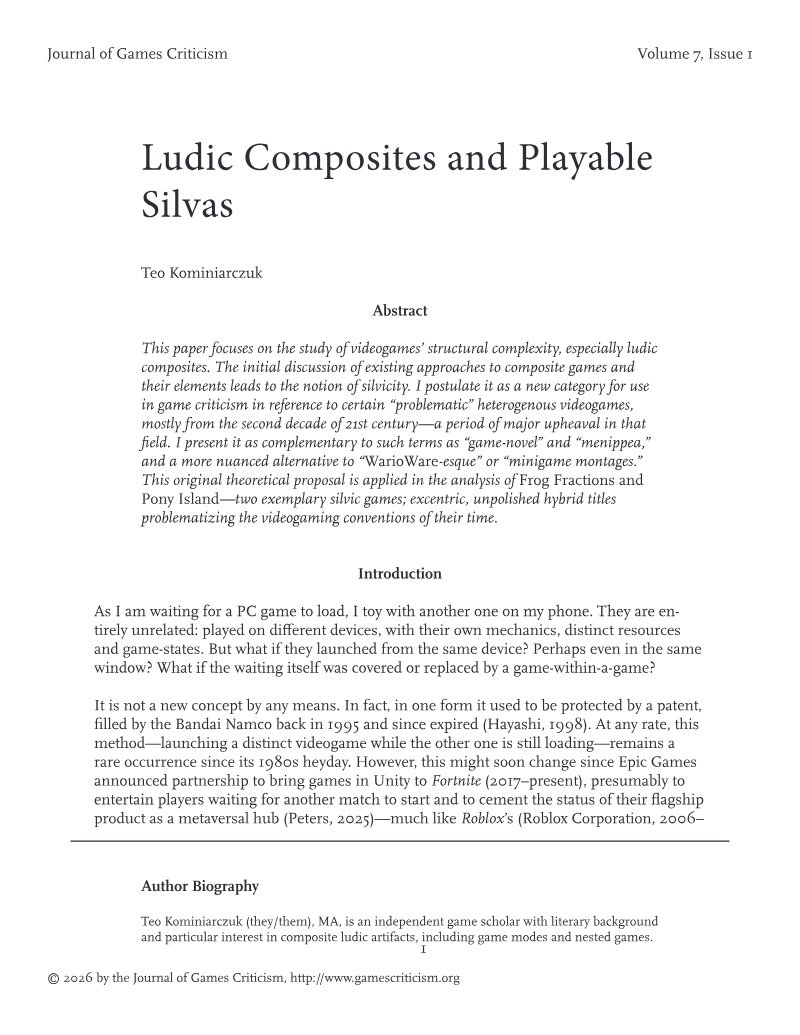
Journal of Games Criticism · 2026
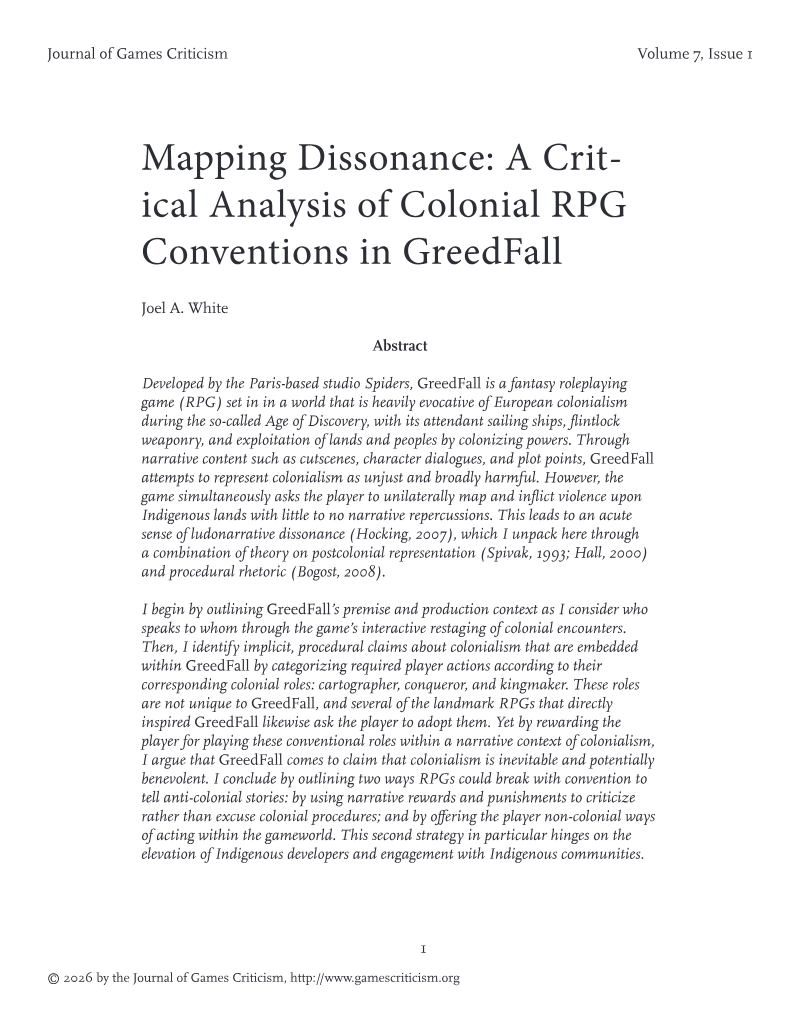
Journal of Games Criticism · 2026
Journal of Games Criticism · 2025



Journal of Games Criticism · 2025
Journal of Games Criticism · 2025
Journal of Games Criticism · 2025

Journal of Games Criticism · 2024
Journal of Games Criticism · 2024
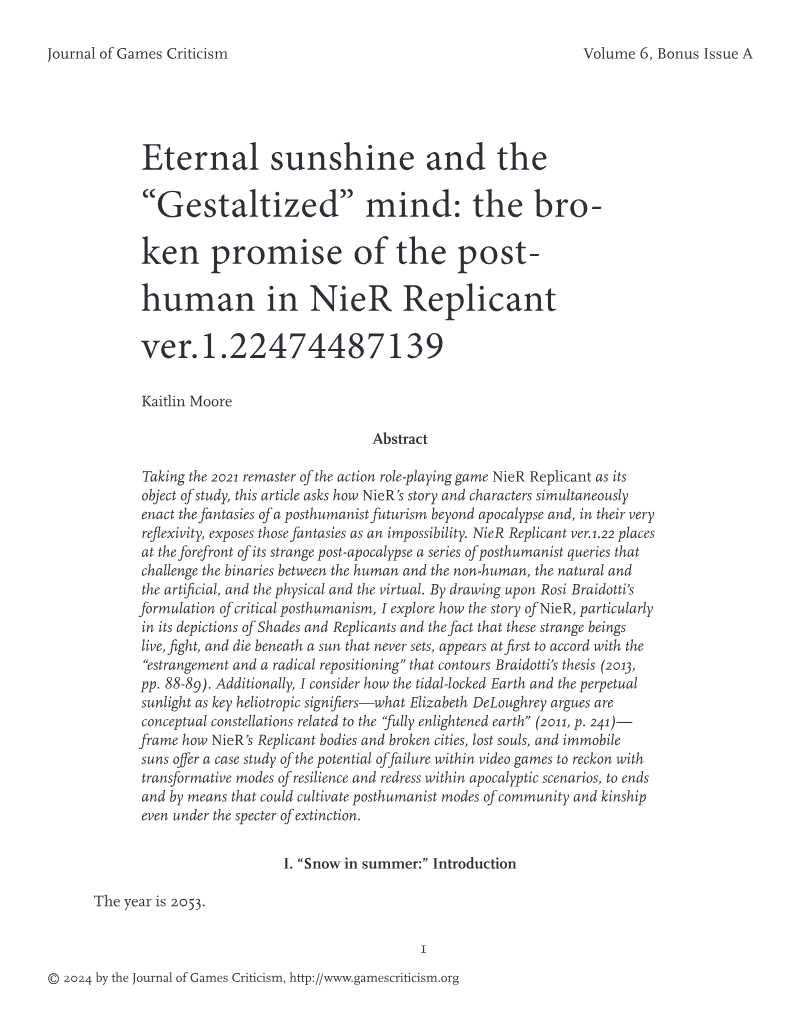
Journal of Games Criticism · 2024
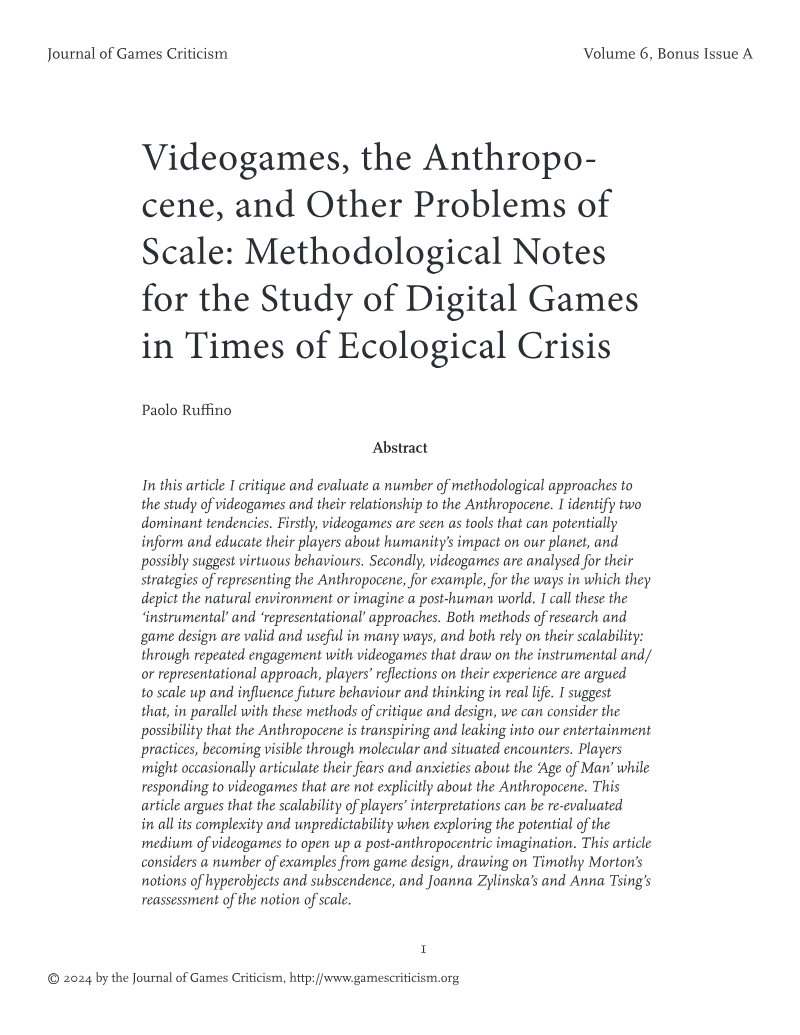
Journal of Games Criticism · 2024
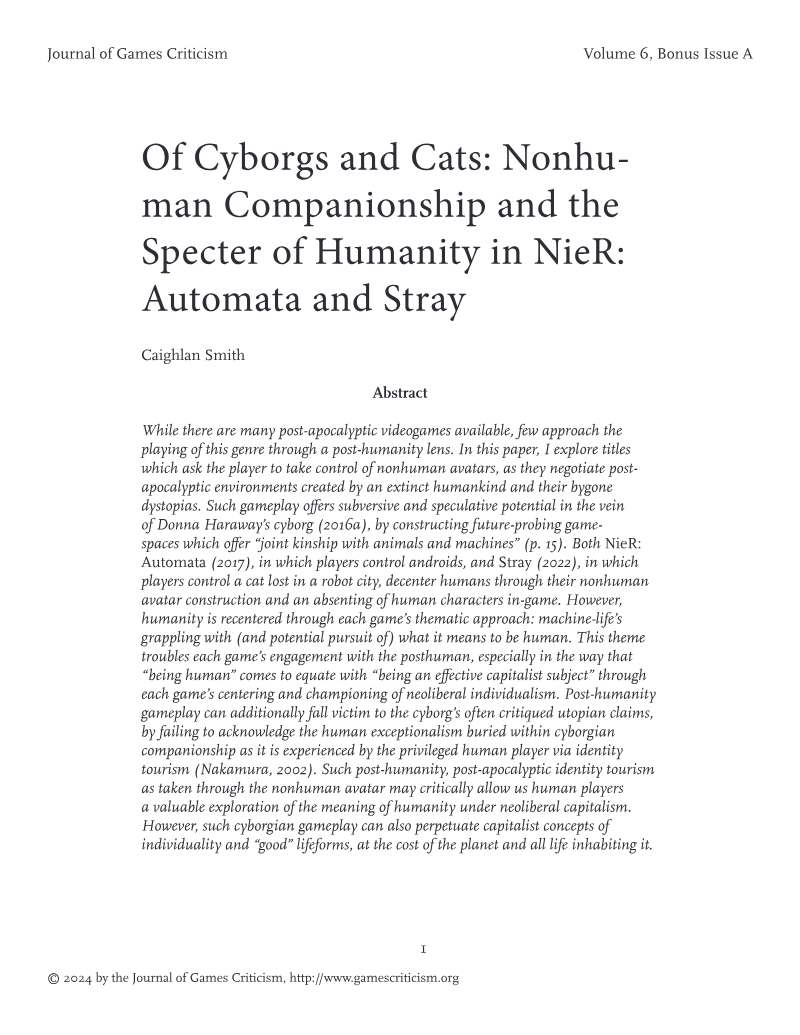
Journal of Games Criticism · 2024
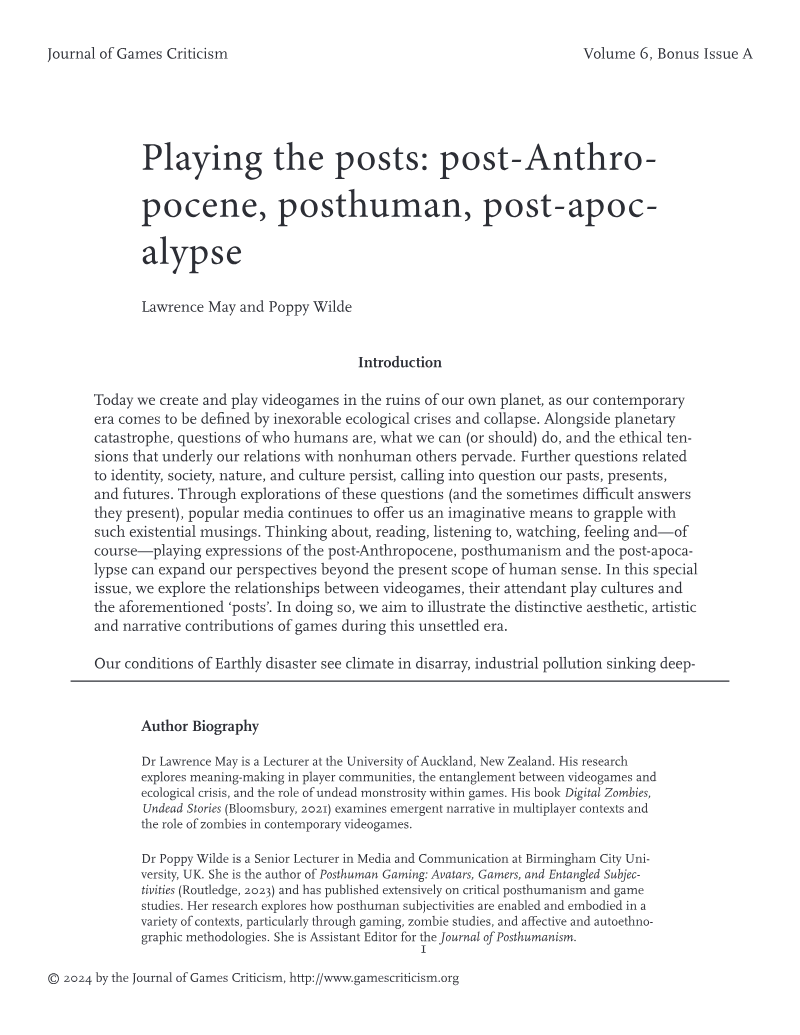
Journal of Games Criticism · 2024
DiGRA · 2026