1 free read left. Create a free account for unlimited reading + AI research.
Create free accountWhitepaper game
1 free read left. Create a free account for unlimited reading + AI research.
Create free accountWhitepapergame
Players are temporarily severed from ordinary progression and exposed to risk in boss arenas, while the wider session is a voluntary, market-based liminoid experience.
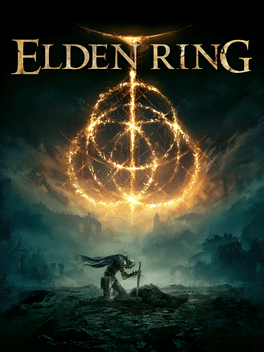
Elden Ring and the broader Souls series are examined here as hybrid spaces that combine the transformative qualities of ritual with the structures of commercial play. Drawing on Arnold van Gennep and Victor Turner, the analysis frames the games' boss arenas as liminal thresholds, where players are temporarily severed from ordinary progression and exposed to risk, while the wider play session operates as a voluntary, market-based liminoid experience. The central thesis is that these games function as a "ritual machine," producing rite-like transformation within an entertainment product. Theoretical grounding draws on Huizinga, Schechner, and Lévi-Strauss, with the core tension being that games tend toward disjunction and differentiation while rituals tend toward synthesis, a tension the Souls games uniquely sustain.
The analysis identifies several ritual mechanisms that sustain this effect. Repeated combat cycles, flow states, gestures, and the ghostly presence of other players, understood through Schechner's notion of restored behavior, are shown to generate a recurring sense of shared ordeal. Co-operative summoning and collaborative lore interpretation are presented as the primary sites where communitas emerges, fostering shared vulnerability, a sense of equality among players, and collective identity that cuts across ordinary social divisions.
The study also documents the countervailing forces that keep these games from being purely liminal. Structured progression, the competitive "git gud" culture, and market-driven design generate hierarchy and differentiation, consistent with Lévi-Strauss's account of games as sources of social distinction. Prior scholarship on difficulty-driven motivation and the subversion of heroic fantasy is folded into this framing, situating the games' communal and competitive dimensions as mutually constitutive. The overall conclusion is that Souls games integrate these opposing forces, offering communitas and transformative potential while remaining embedded in commercial and competitive structures.
International Journal of Role-Playing · 2026