1 free read left. Create a free account for unlimited reading + AI research.
Create free accountWhitepaper DiGRA
1 free read left. Create a free account for unlimited reading + AI research.
Create free accountWhitepaperDiGRA
The paper reads Baby Steps through phenomenological, post-phenomenological, and ontological perspectives.
Method. The paper is a theoretical close reading rather than an empirical study, and it reports no survey data or sample sizes.
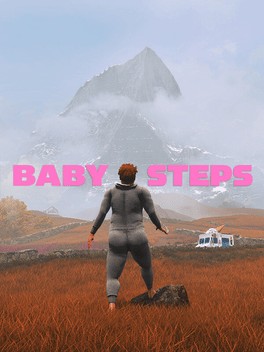
This paper examines Baby Steps (2025), the Bennett Foddy, Cuzzilo, and Boch game, through a combined phenomenological, post-phenomenological, and ontological lens, arguing that the game's minimalist, extremely difficult design makes visible a reciprocal relationship between the human body and the mountain. Its central thesis is that the game's mechanics of foot-by-foot movement generate a "(Im)balancing" of both difficulty and ontology, in which the player feels both themselves and the stony terrain as active, mutually constitutive agents rather than as neutral backdrops.
The analysis draws on autoethnographic, phenomenological, and new materialist scholarship, including work by Merleau-Ponty, Straus, Marder, and Cohen, to read the game's micro-loop of gripping, leaning, and planting as a source of somatic knowledge about momentum, friction, and restraint. The author suggests that the game's awkward protagonist, a "failson" stripped of conventional gaming assistance, and its deliberately plain, store-bought environment confront the assumed able-bodied, male player with the banality and uncertainty of movement, while its responsive analogue trigger input makes the rock's resistance felt.
Situated within existing scholarship on failure, walking simulators, and the "thereness" of video game mountains, the paper argues that Baby Steps extends prior accounts by focusing on the moment-to-moment embodied experience of walking rather than on narrative or formal categorization. The work is presented as a theoretical close reading rather than an empirical study, and it does not report survey data or sample sizes.
Each row is a game or company this document names, each column a document, oldest first. A mark means that document names it. Select a row to see those documents.

DiGRA · 2026

DiGRA · 2026



DiGRA · 2026



DiGRA · 2026



DiGRA · 2026



DiGRA · 2026



DiGRA · 2026



DiGRA · 2026



DiGRA · 2026

DiGRA · 2026



DiGRA · 2026



DiGRA · 2026
Zurich University of Applied Sciences · 2026