1 free read left. Create a free account for unlimited reading + AI research.
Create free accountWhitepaper DiGRA
1 free read left. Create a free account for unlimited reading + AI research.
Create free accountWhitepaperDiGRA
In the late 2010s the term migrated from gaming communities into online political discourse. It was used to ridicule perceived conformity and to reinforce racialised and gendered hierarchies.
This paper examines how contemporary video artists are using the figure of the non-player character (NPC) to explore questions of agency, labour, race, and subjectivity. It situates the NPC within a broader cultural shift, noting how the term migrated from gaming communities into online political discourse in the late 2010s, where it was deployed both to ridicule perceived conformity and to reinforce racialised and gendered hierarchies, before being reclaimed by creators to describe the constraints of economic and sociotechnical systems. The study's stated scope is "game art," defined as artworks that reference videogames or appropriate game content, and it proceeds through close textual analysis rather than quantitative measurement.
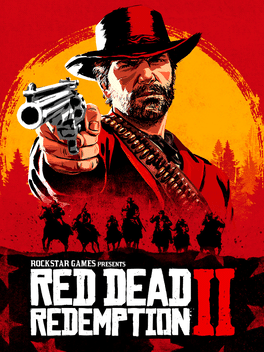
The analysis centres on two recent video works. Larry Achiampong and David Blandy's _GOD MODE_ (2023), shown at the Wellcome Collection, uses game-engine imagery and gaming vocabulary to reflect on scientific racism, eugenics, and the role of popular media in shaping ideas about heredity and race. Its contrast between the free player and the labouring, pre-ordained NPC is read against scholarship linking game mechanics to racial thinking. Total Refusal's _Hardly Working_ (2022) uses footage from Red Dead Redemption 2 to show NPCs performing looping, inconsequential labour, a "Potemkin productivity" that the work interprets as a metaphor for capitalist accumulation without end. The video's critique is reinforced by the real-world crunch culture associated with the game's development.
The paper concludes that games often reproduce regressive and dehumanising ideas about work and identity at the level of both narrative and system, yet this same quality makes the medium a productive resource for critical art. The works analysed show artists repurposing gaming concepts, metaphors, and technologies to make sense of contemporary culture, reflecting a broader exchange between the art world and game culture.
Each row is a game or company this document names, each column a document, oldest first. A mark means that document names it. Select a row to see those documents.

DiGRA · 2026

DiGRA · 2026



DiGRA · 2026



DiGRA · 2026



DiGRA · 2026



DiGRA · 2026



DiGRA · 2026



DiGRA · 2026



DiGRA · 2026

DiGRA · 2026



DiGRA · 2026



DiGRA · 2026
DiGRA · 2026