1 free read left. Create a free account for unlimited reading + AI research.
Create free accountArticle Journal of Games Criticism
1 free read left. Create a free account for unlimited reading + AI research.
Create free accountArticleJournal of Games Criticism
Distilling the key insights…
NieR Replicant functions as a profound critique of anthropocentrism, utilizing its narrative and ludic structures to dismantle traditional human-centric binaries. By framing the game through the lens of critical posthumanism, the analysis reveals that the central conflict—Project Gestalt—serves as a failed, eugenicist attempt to preserve a rigid definition of humanity. The collapse of this project is not merely a tragic narrative beat but a subversive act that clears the path for more fluid, queer, and non-hierarchical modes of existence. Through this lens, the game challenges the player to move beyond conventional biological and ontological categories, ultimately advocating for a definition of personhood rooted in kinship rather than exclusionary human status.
The game’s environment, characterized by a tidally locked, perpetually sunlit world, acts as a tool of estrangement that forces a reevaluation of the player’s role. Initially presented as mindless monsters, the Shades are revealed to be complex assemblages of consciousness, blurring the lines between human and nonhuman. This realization exposes the inherent violence in the player’s combat-driven objectives, as the systematic destruction of these beings inadvertently accelerates the extinction of the Replicants themselves. This cyclical, tragic structure highlights the futility of clinging to a singular, privileged human identity.
Ultimately, the game’s most radical posthumanist potential resides in its mechanics, particularly the multi-ending save-deletion system. By subverting individual agency and forcing the player to confront the consequences of their actions, the experience fosters a sense of collective responsibility and interconnectedness. The brokenness of the world is not a failure of design but a necessary condition for the emergence of alternative kin-making. By rejecting the discriminatory hierarchies of the past, the narrative champions a posthumanist future where identity is defined by fluid, defiant, and inclusive relationships rather than the preservation of a flawed, anthropocentric legacy.
Each row is a game or company this document names, each column a document, oldest first. A mark means that document names it. Select a row to see those documents.
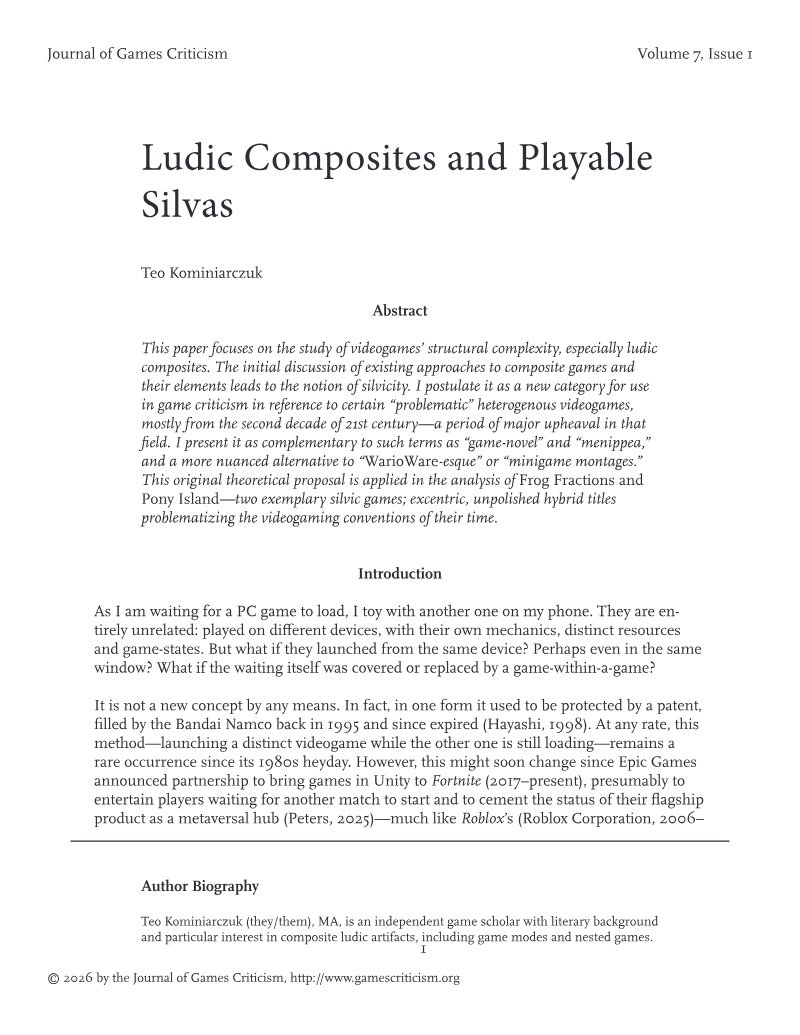
Journal of Games Criticism · 2026
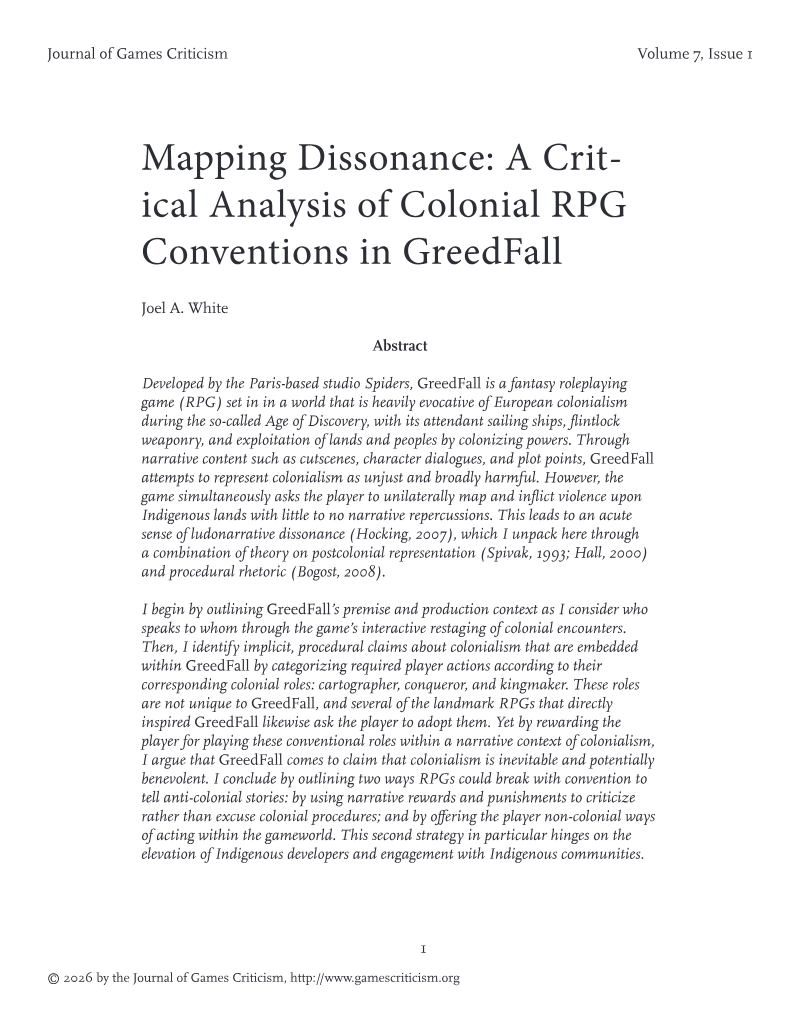
Journal of Games Criticism · 2026
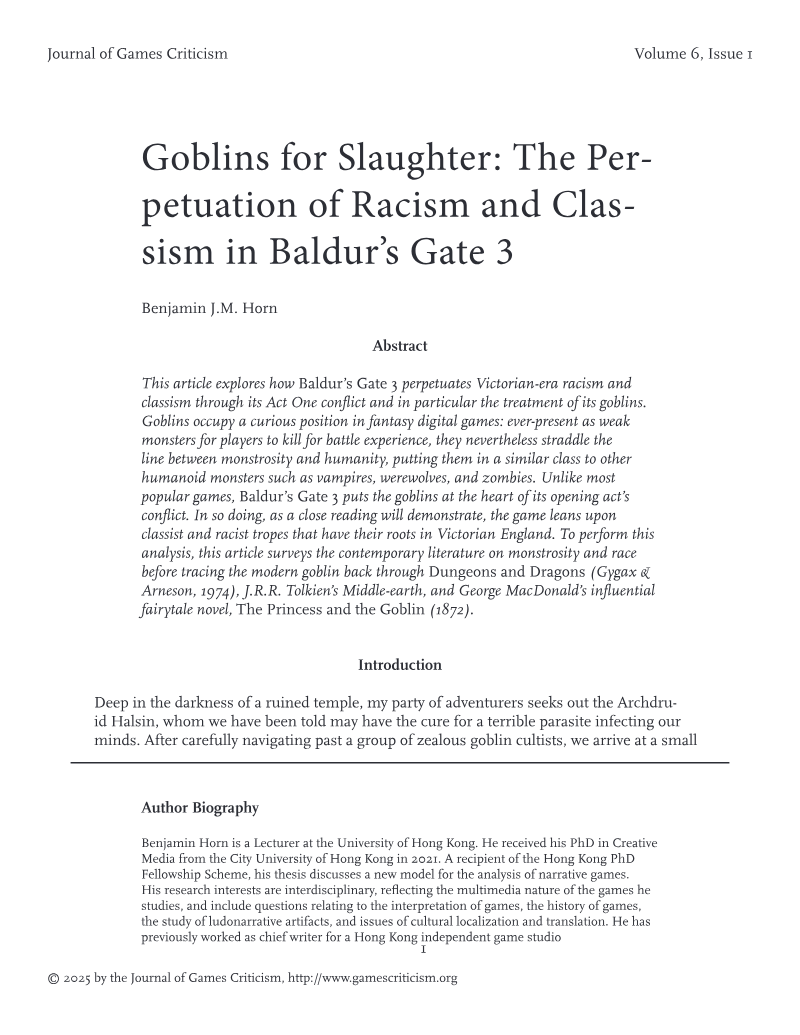
Journal of Games Criticism · 2025



Journal of Games Criticism · 2025
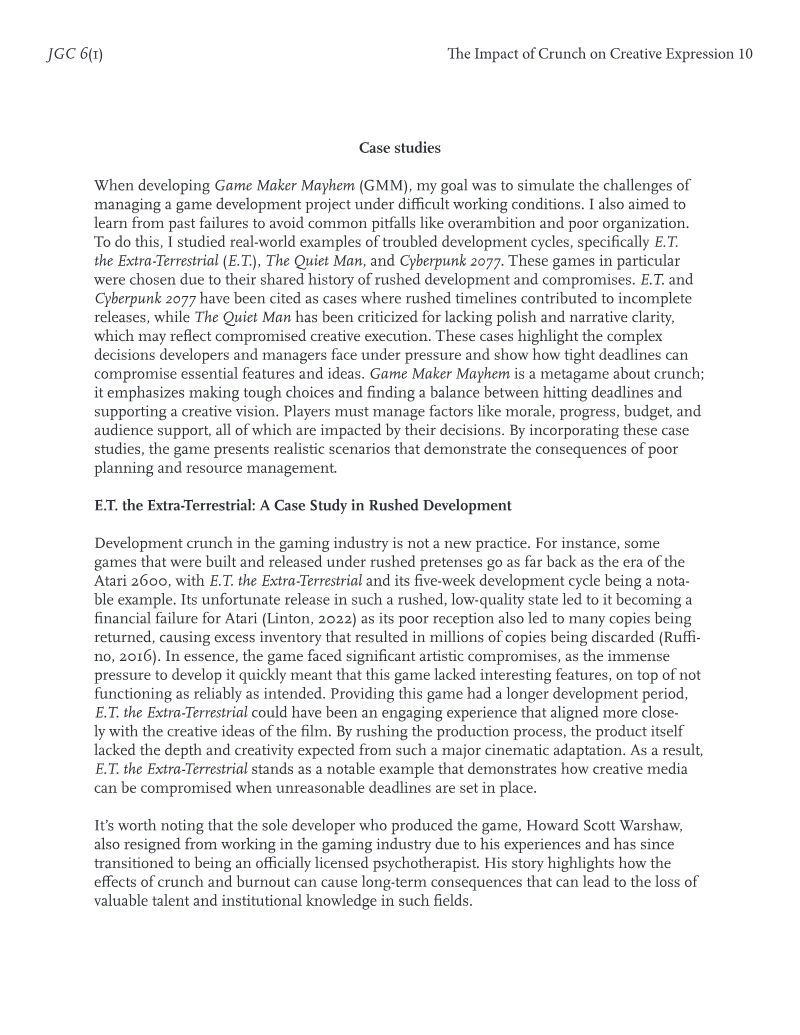
Journal of Games Criticism · 2025
Journal of Games Criticism · 2025
Journal of Games Criticism · 2024
Journal of Games Criticism · 2024
Journal of Games Criticism · 2024
Journal of Games Criticism · 2024
Journal of Games Criticism · 2024
Journal of Games Criticism · 2024
Adam Mickiewicz University · 2024