1 free read left. Create a free account for unlimited reading + AI research.
Create free accountArticle Journal of Games Criticism
1 free read left. Create a free account for unlimited reading + AI research.
Create free accountArticleJournal of Games Criticism
Distilling the key insights…
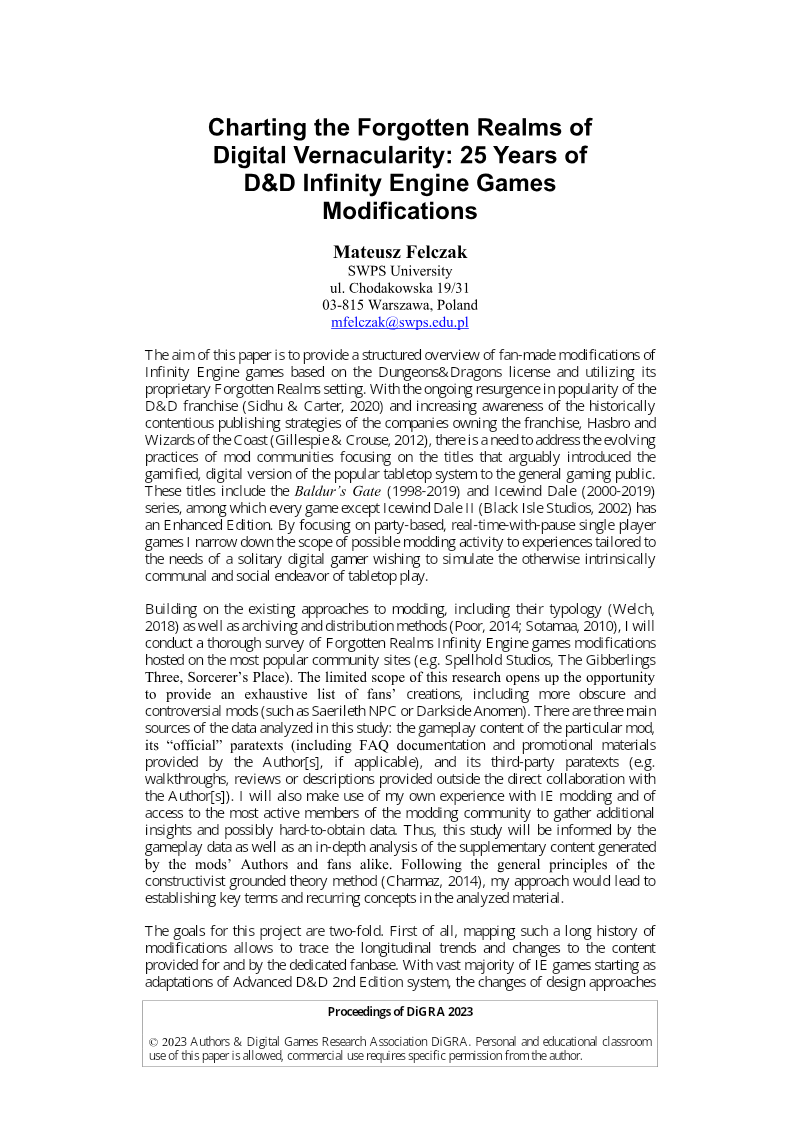
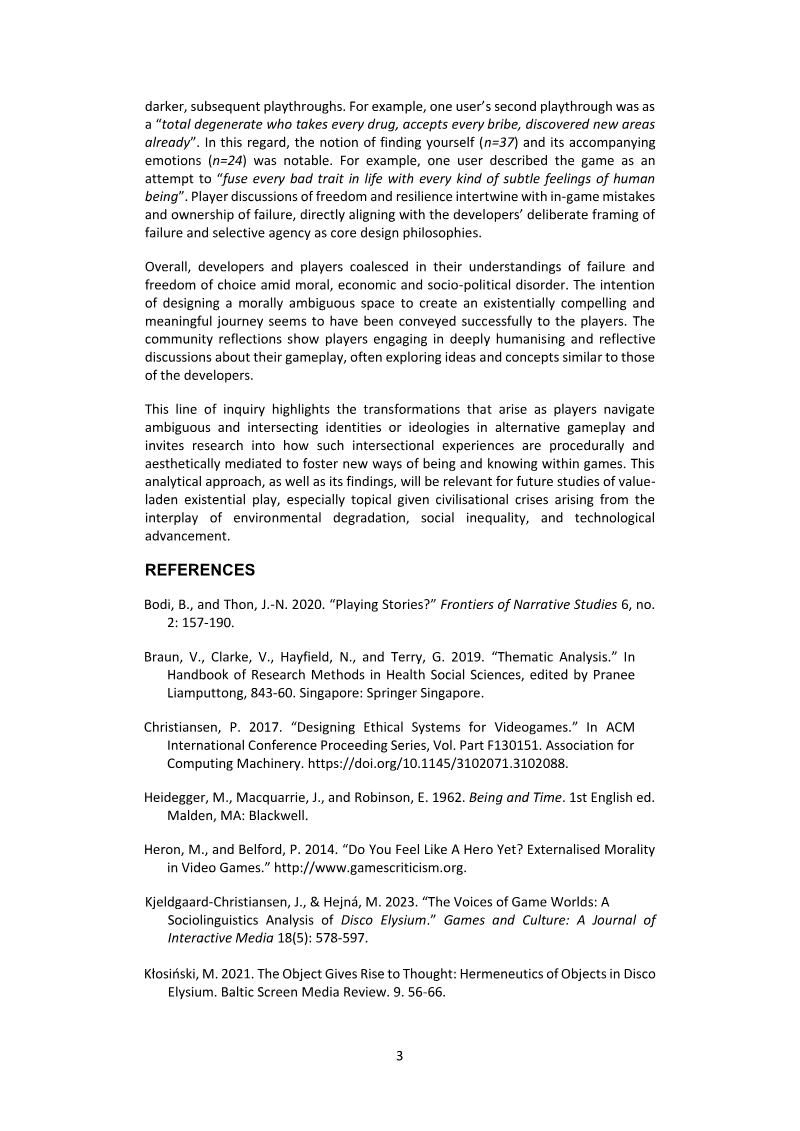
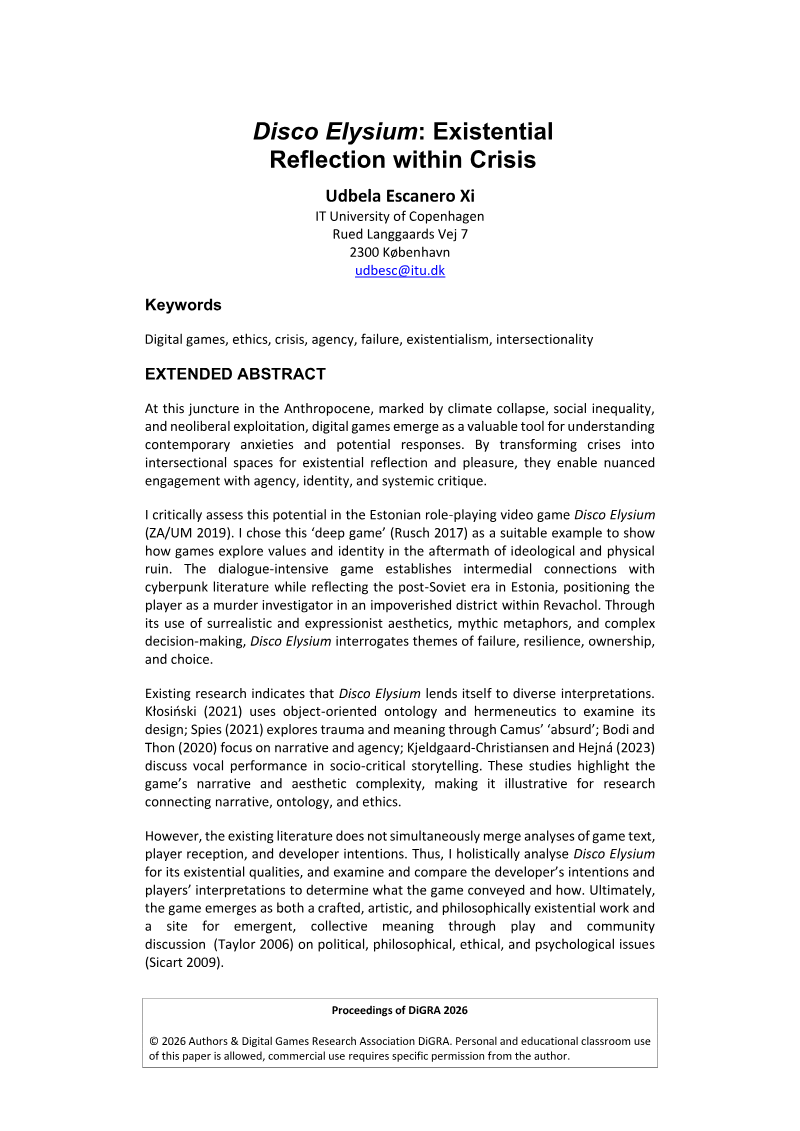
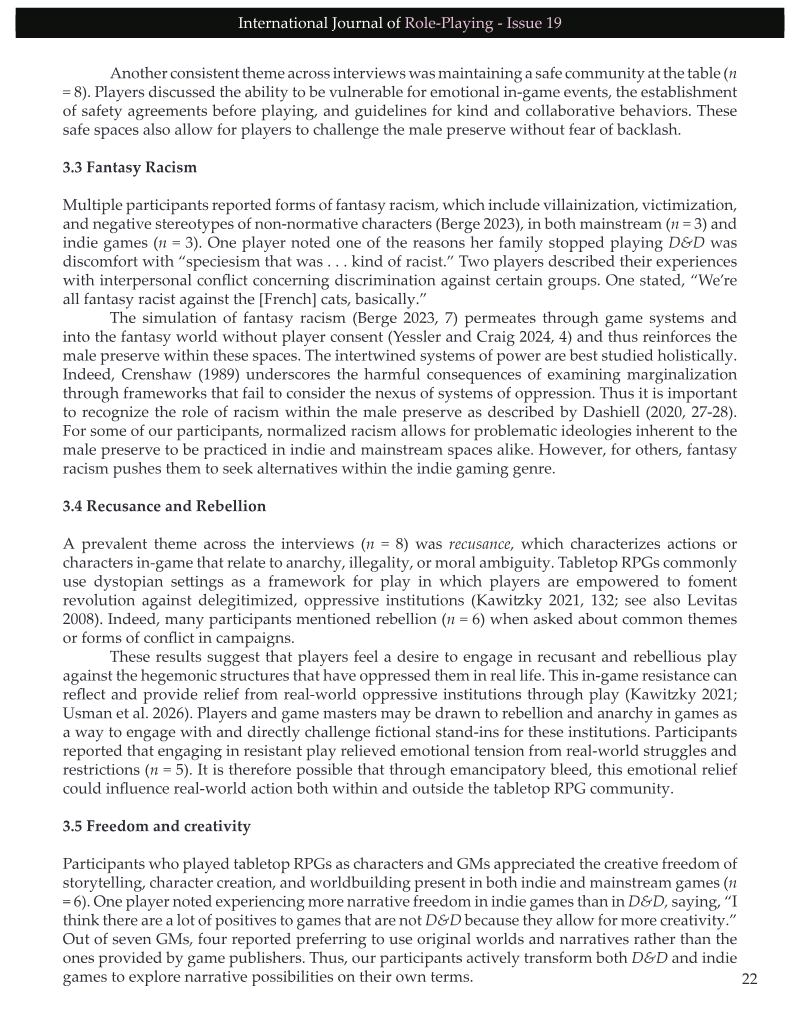
Baldur’s Gate 3 functions as a modern vessel for antiquated, discriminatory paradigms by framing the systematic eradication of goblins as a morally righteous endeavor. The core thesis posits that the game relies on essentialist racial hierarchies and dehumanizing mechanics inherited from the Dungeons and Dragons tradition, which historically categorize specific species as inherently evil. By forcing players into a binary narrative choice that necessitates the erasure of the goblin population, the game reinforces a legacy of prejudice that equates these creatures with societal "others" who lack individual agency or moral complexity.
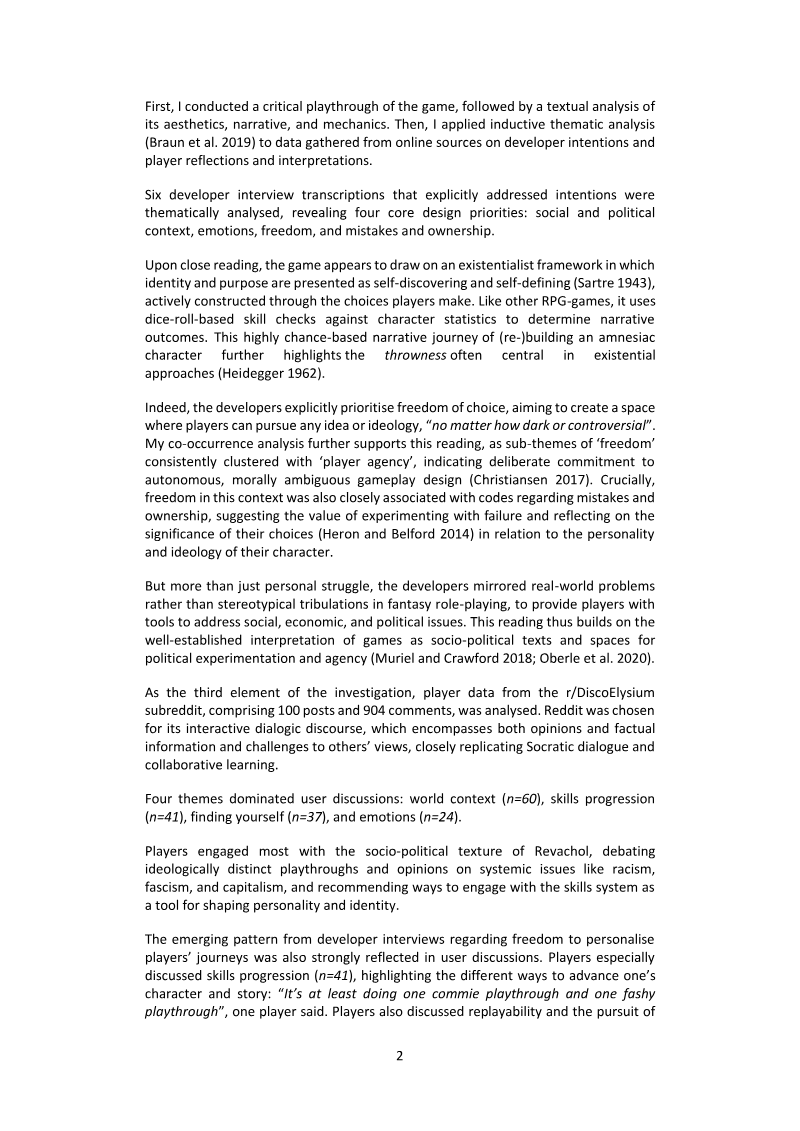
This analysis traces the evolution of the goblin archetype from ambiguous folklore to a racialized and class-coded monster, rooted in Victorian-era anxieties regarding eugenics and the urban working class. These historical tropes are manifested in the game through the use of specific linguistic markers, such as Cockney accents, and physical design choices that evoke harmful anti-Semitic stereotypes. By presenting goblins as disposable enemies and denying them the narrative depth afforded to other species, the game perpetuates a framework where certain groups are deemed unworthy of empathy or survival.
The scope of this critique encompasses the broader fantasy genre, specifically examining how digital media continues to recycle problematic tropes established by foundational literature and tabletop gaming. Ultimately, the findings suggest that the industry must move away from these discriminatory archetypes to foster more inclusive and nuanced storytelling. By interrogating the persistence of these colonial and classist structures, it becomes clear that modern game design often relies on outdated, exclusionary frameworks that require critical re-evaluation to ensure that digital spaces do not continue to normalize systemic bias.
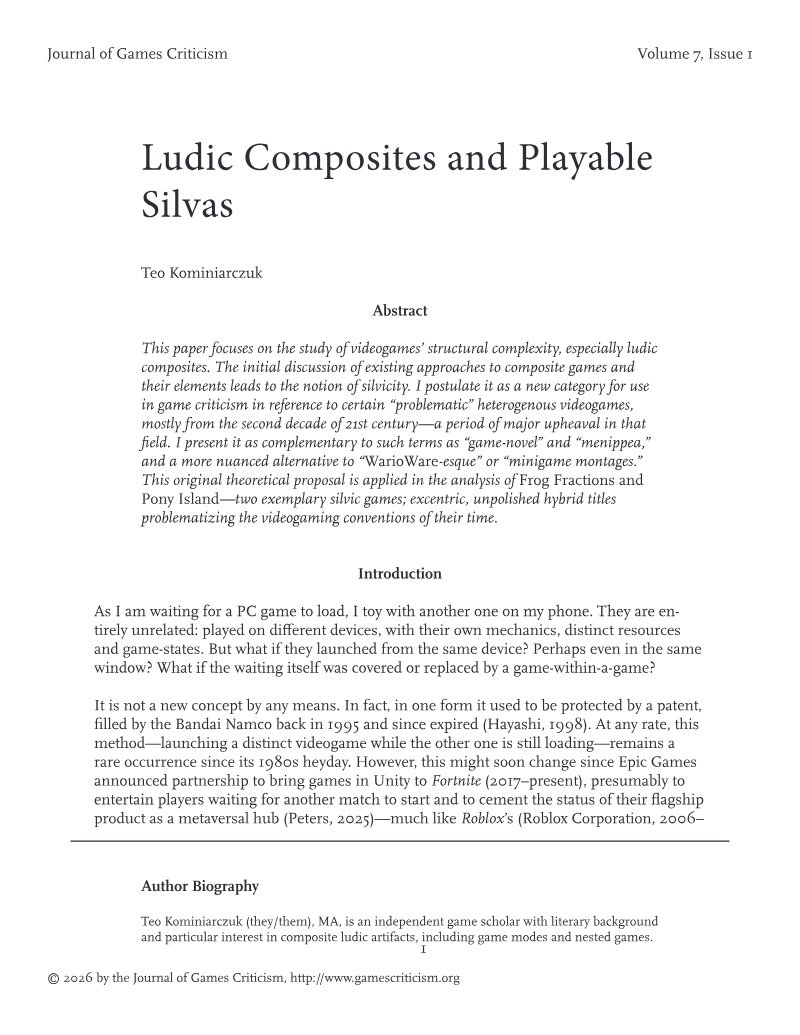
Each row is a game or company this document names, each column a document, oldest first. A mark means that document names it. Select a row to see those documents.
Journal of Games Criticism · 2026
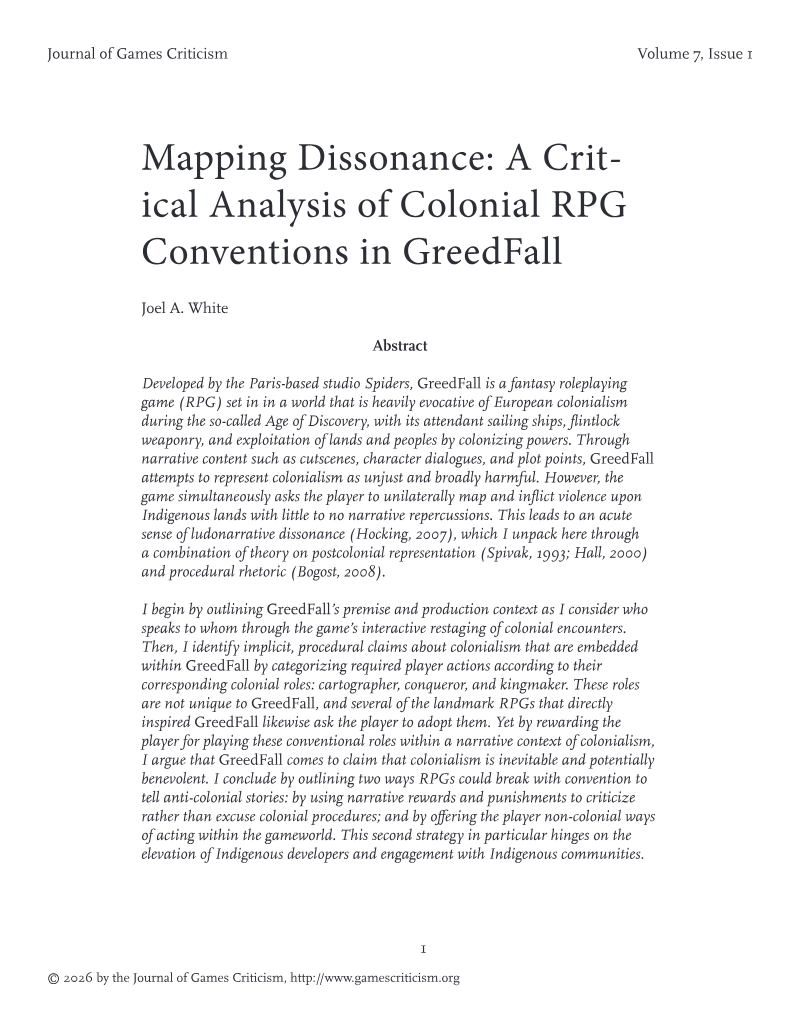
Journal of Games Criticism · 2026



Journal of Games Criticism · 2025
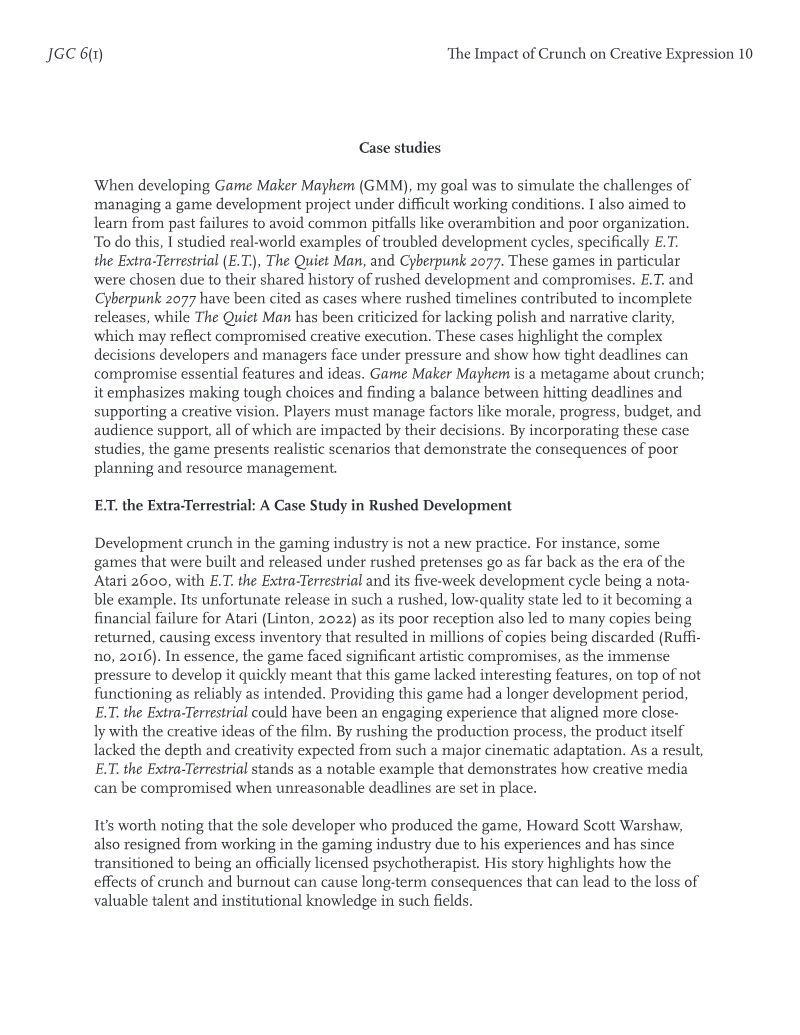
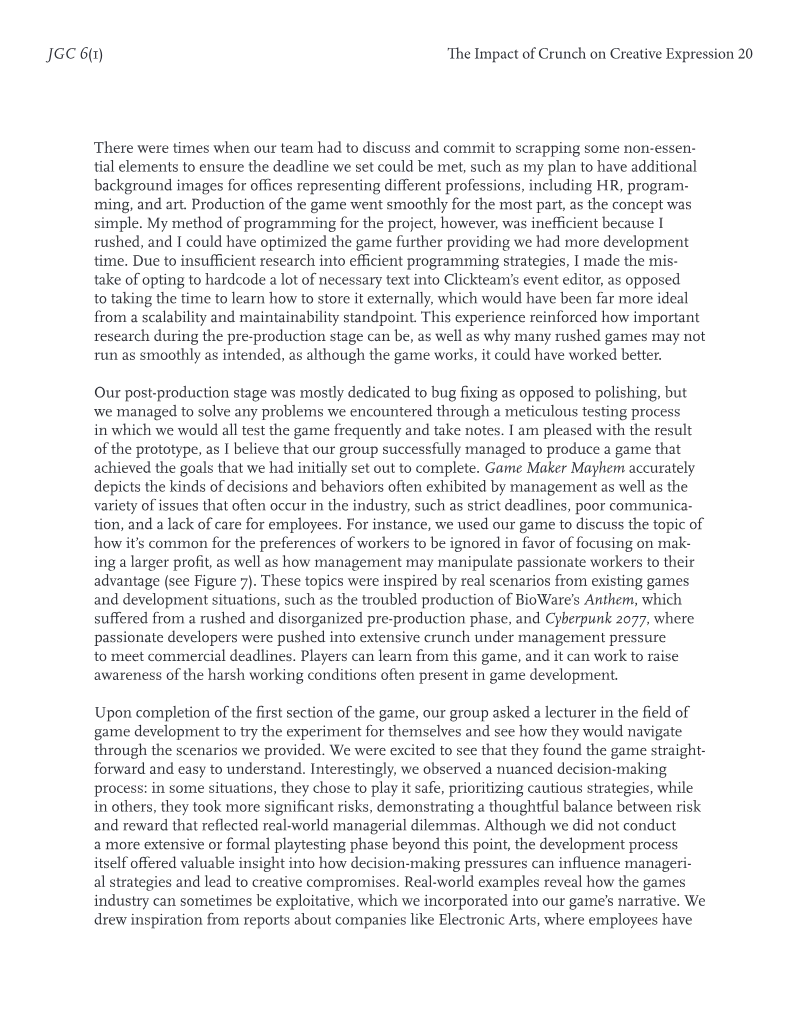
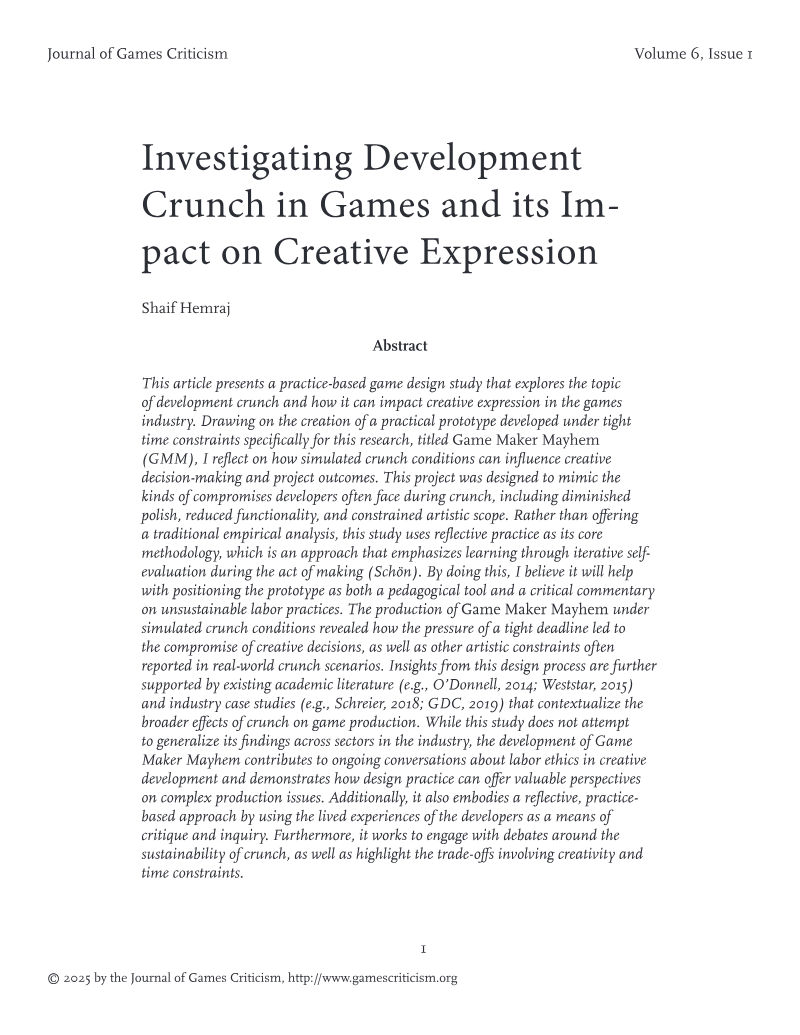
Journal of Games Criticism · 2025
Journal of Games Criticism · 2025
Journal of Games Criticism · 2024
Journal of Games Criticism · 2024
Journal of Games Criticism · 2024
Journal of Games Criticism · 2024
Journal of Games Criticism · 2024
Journal of Games Criticism · 2024
Journal of Games Criticism · 2024
DiGRA · 2019