1 free read left. Create a free account for unlimited reading + AI research.
Create free accountWhitepaper Journal of Games Criticism
1 free read left. Create a free account for unlimited reading + AI research.
Create free accountWhitepaperJournal of Games Criticism
Video game agency functions as a distributed, post-human phenomenon rather than a static property inherent to software mechanics or individual human intention. By rejecting essentialist definitions that center solely on ludic rules, this framework posits that agency emerges from the complex entanglement of human players, hardware, code, and social discourses. This shift in perspective moves the analytical focus away from fixed mechanical mastery toward an understanding of agency as a fluid, contingent process that is constantly negotiated through material and discursive interactions.
The infrastructure of agency framework suggests that games act as systems that direct, rather than dictate, the determination of action. By synthesizing Deleuzian and Baradian philosophies, the analysis reveals that agency is an unstable modality, shifting based on the specific social practices and historical contingencies surrounding the play experience. This approach highlights how the boundaries between the player and the game are perpetually destabilized, as both human and non-human actors transform one another during the act of play.
Case studies, such as the analysis of Rhythm Doctor, demonstrate that player performance is not merely a result of internal decision-making but an emergent outcome of bodily, social, and material conditions. By viewing games as infrastructure, researchers can better account for the volatile and indeterminate nature of play. Ultimately, this perspective concludes that the perceived stability of game entities often obscures a deeper, more complex layer of agential potential, necessitating a move toward post-humanist methodologies to fully capture the multifaceted nature of contemporary digital interaction.
Journal of Games Criticism · 2026
Journal of Games Criticism · 2026
Journal of Games Criticism · 2025



Journal of Games Criticism · 2025
Journal of Games Criticism · 2025
Journal of Games Criticism · 2025
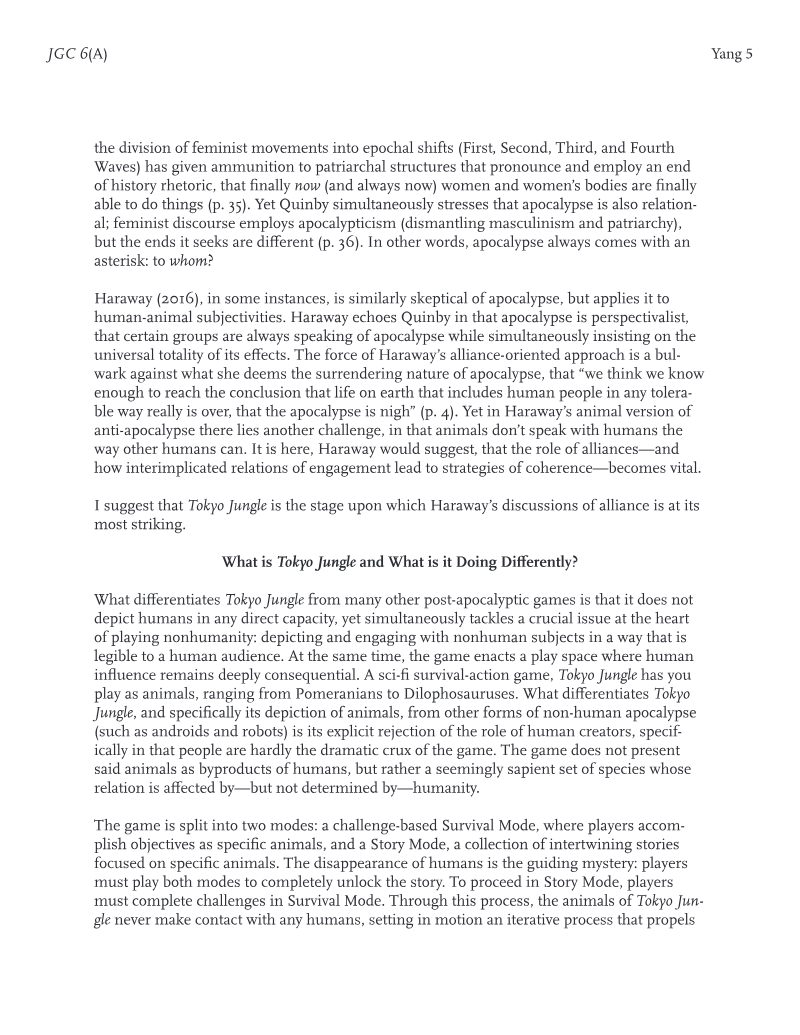
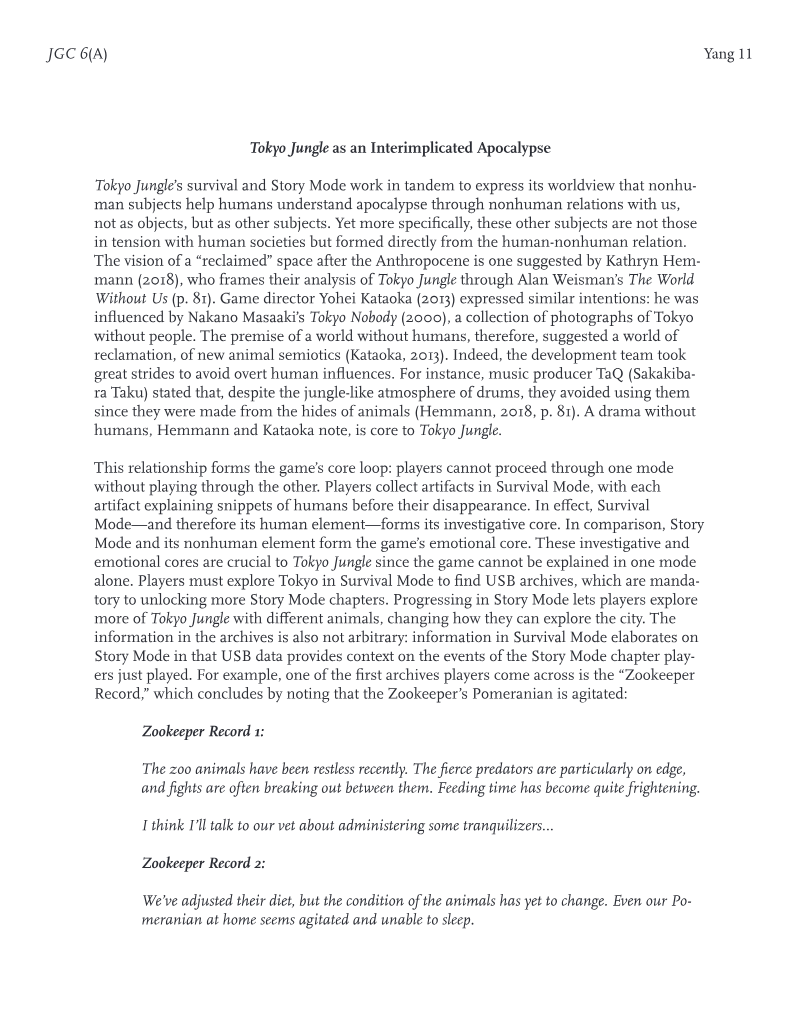
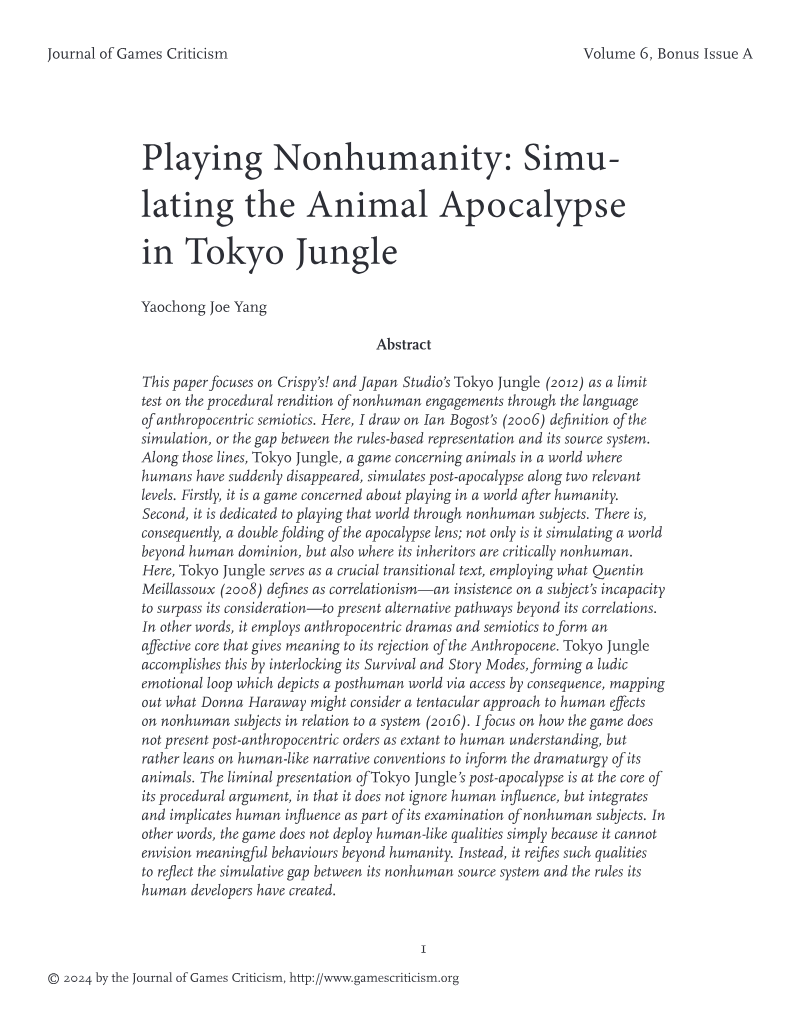
Journal of Games Criticism · 2024
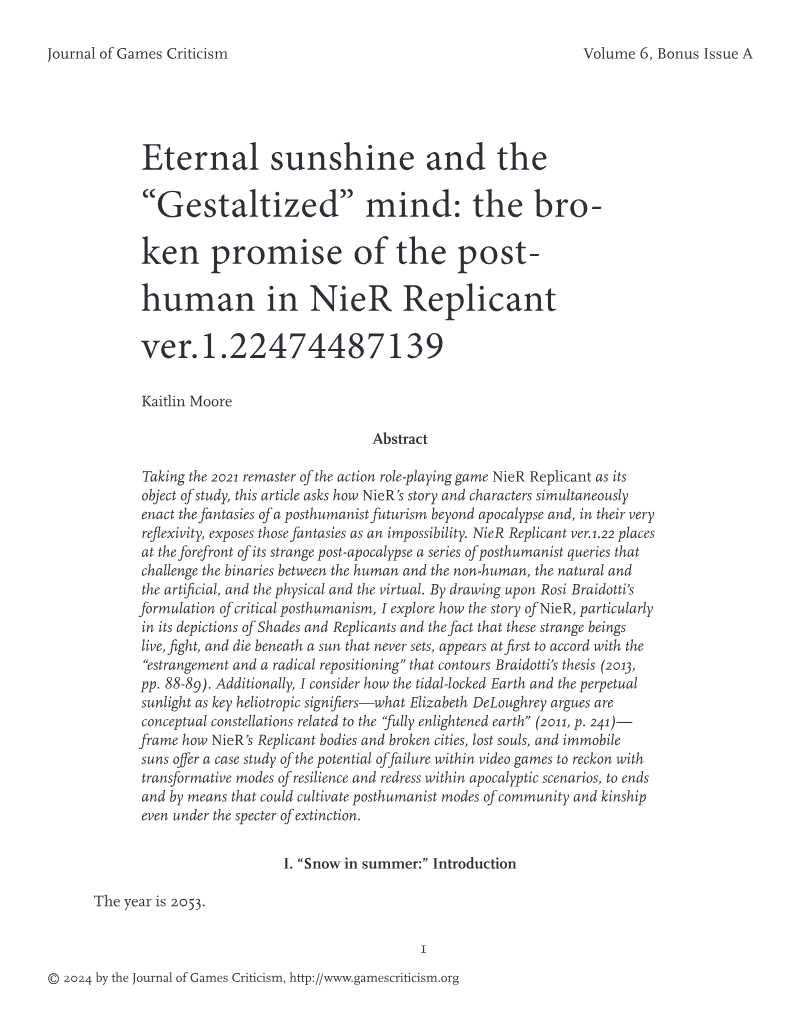
Journal of Games Criticism · 2024
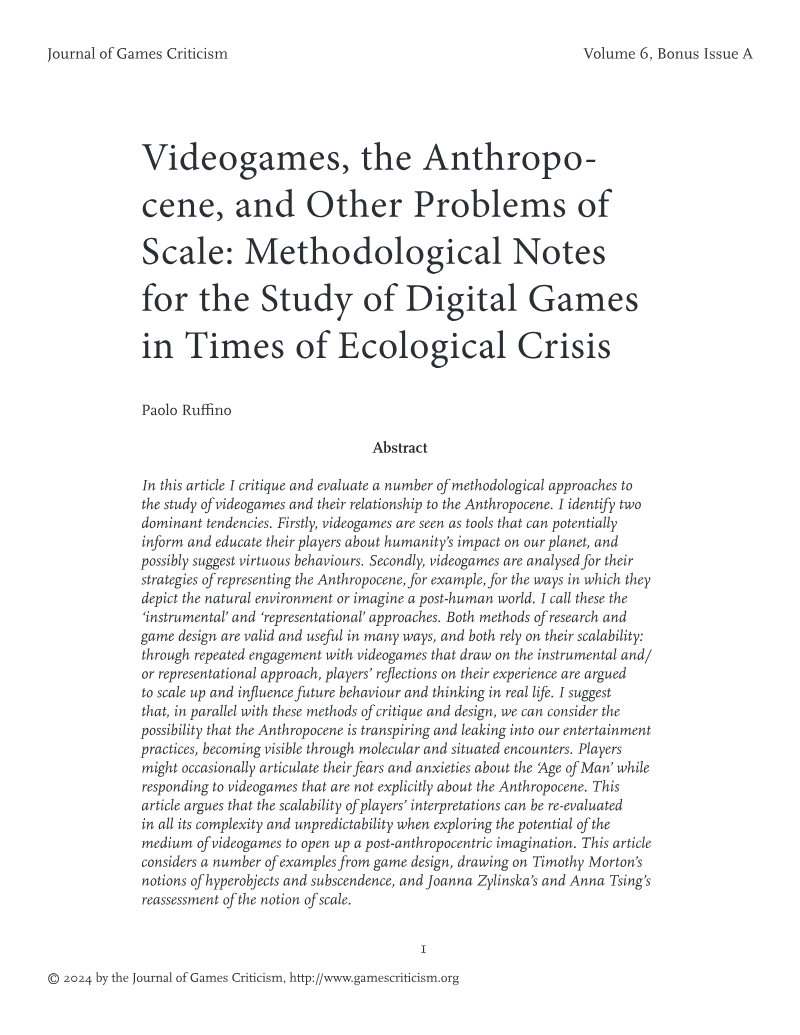
Journal of Games Criticism · 2024
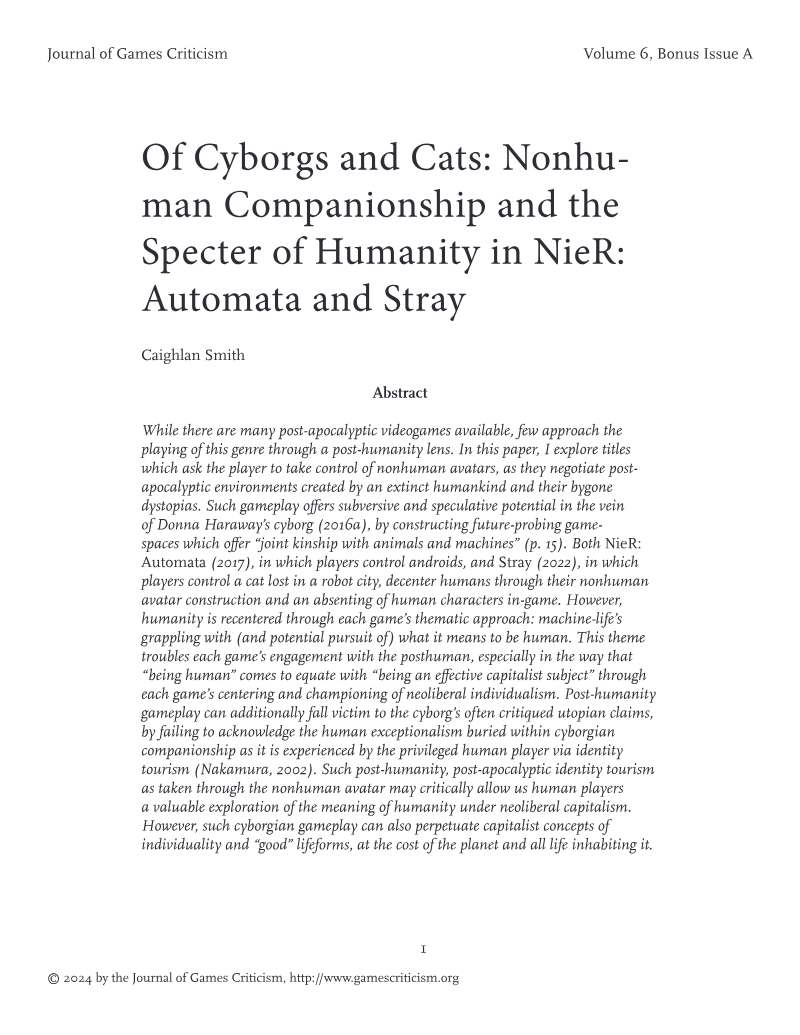
Journal of Games Criticism · 2024
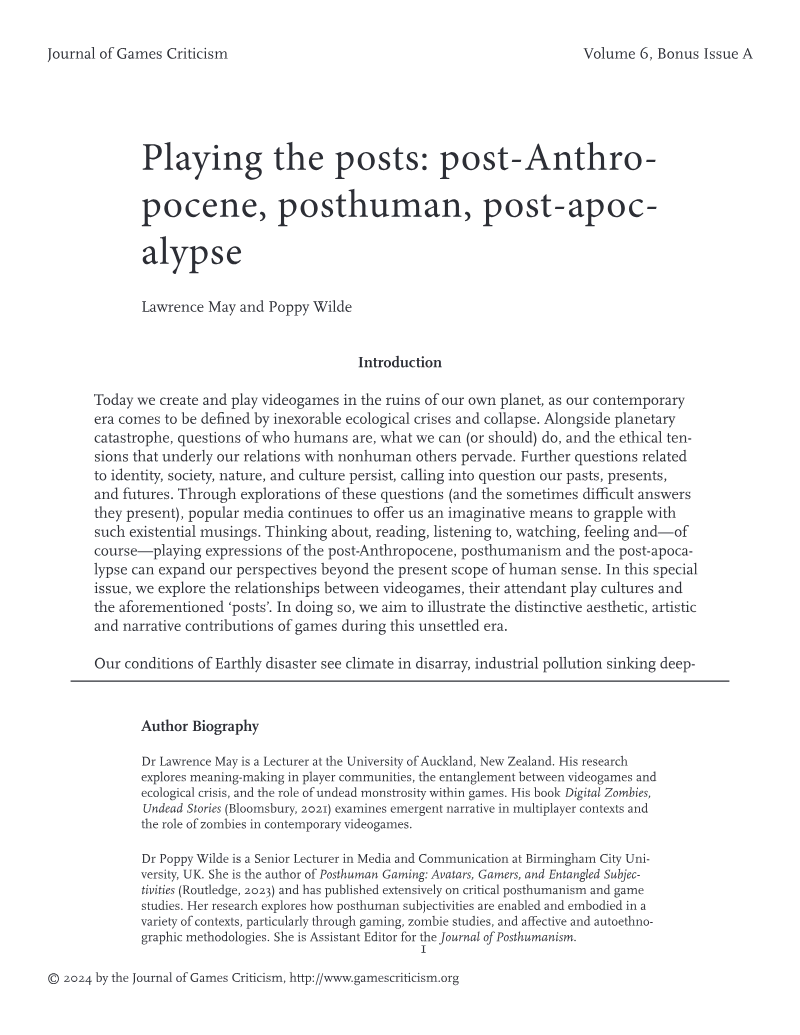
Journal of Games Criticism · 2024
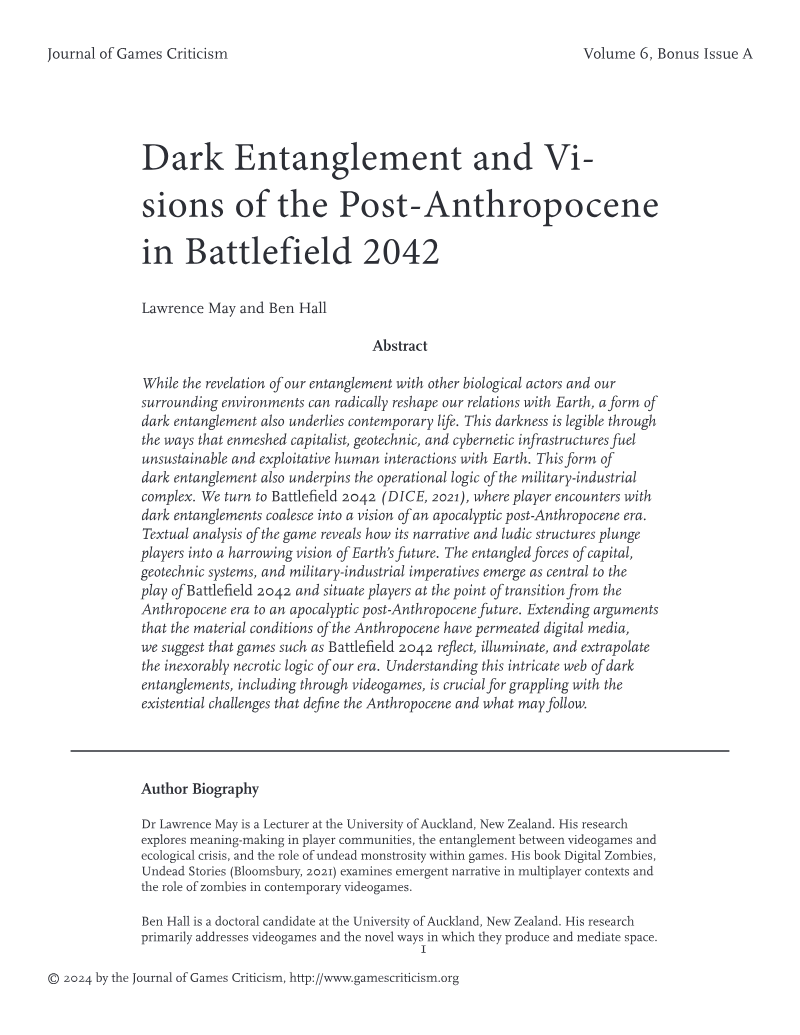
Journal of Games Criticism · 2024
DiGRA · 2026