1 free read left. Create a free account for unlimited reading + AI research.
Create free accountArticle Journal of Games Criticism
1 free read left. Create a free account for unlimited reading + AI research.
Create free accountArticleJournal of Games Criticism
Distilling the key insights…
Silvicity functions as a critical framework for analyzing heterogeneous videogames that resist traditional classification as simple minigame collections. These playable silvas, exemplified by titles such as Frog Fractions and Pony Island, operate as complex, eccentric composites that reject linear structures and consistent rule sets in favor of fragmented, anti-mimetic, and self-conscious design. By synthesizing two decades of research on nested ludic structures, this analysis posits that these games serve as transgressive artifacts that intentionally problematize established gaming conventions and the relationship between the player and the designer.
The emergence of these titles, particularly between 2012 and 2016, represents a distinct creative response to the industry’s shifting landscape during the rise of independent development and the casual gaming revolution. These games utilize rough aesthetics, nested interfaces, and meta-commentary to dismantle the illusion of coherence, ultimately guiding the player toward a final state described as the death of play. By prioritizing process-oriented experiences over polished, singular narratives, these works challenge the prevailing industry shift toward games-as-a-service models.
Ultimately, silvicity provides a necessary vocabulary for understanding digital artifacts that defy standard genre boundaries. These games function as finished, unsupported, and intentionally impure entities that prioritize subversion over accessibility. By positioning these hybrid structures as a deliberate reaction against mainstream industry trends, the analysis highlights how independent developers leverage ludic fragmentation to critique the medium itself, offering a nuanced perspective on the evolution of game design and the limits of traditional ludic theory.
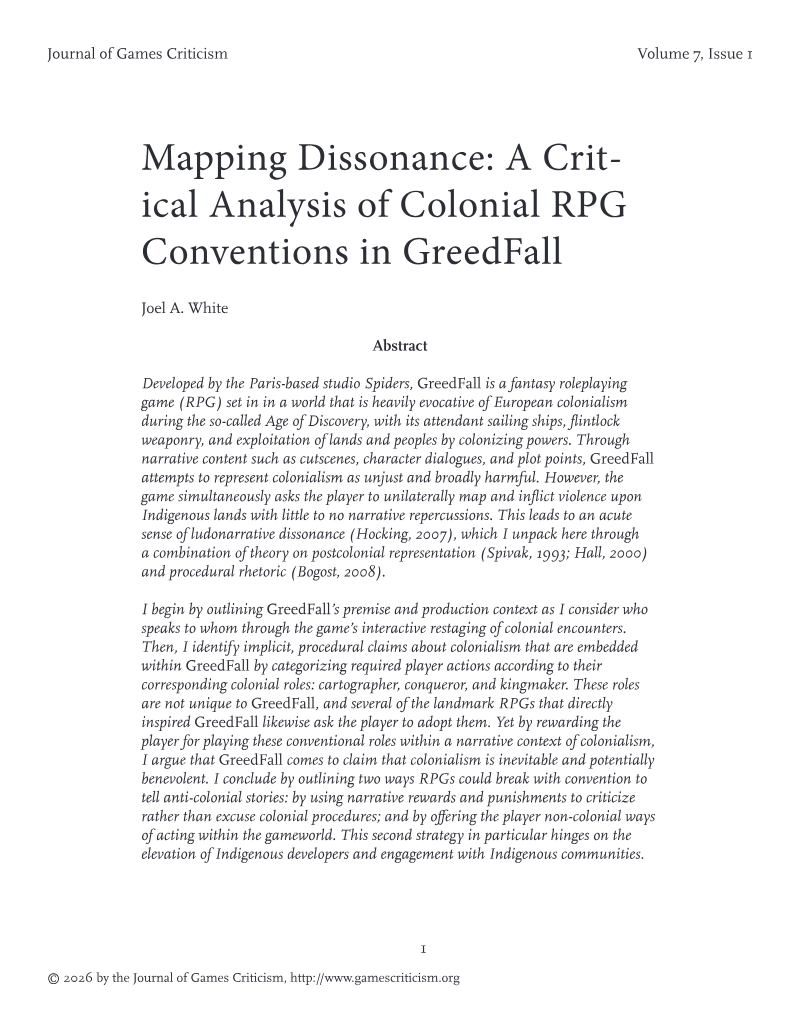
Each row is a game or company this document names, each column a document, oldest first. A mark means that document names it. Select a row to see those documents.
Journal of Games Criticism · 2026
Journal of Games Criticism · 2025
Journal of Games Criticism · 2025
Journal of Games Criticism · 2025
Journal of Games Criticism · 2025
Journal of Games Criticism · 2024
Journal of Games Criticism · 2024
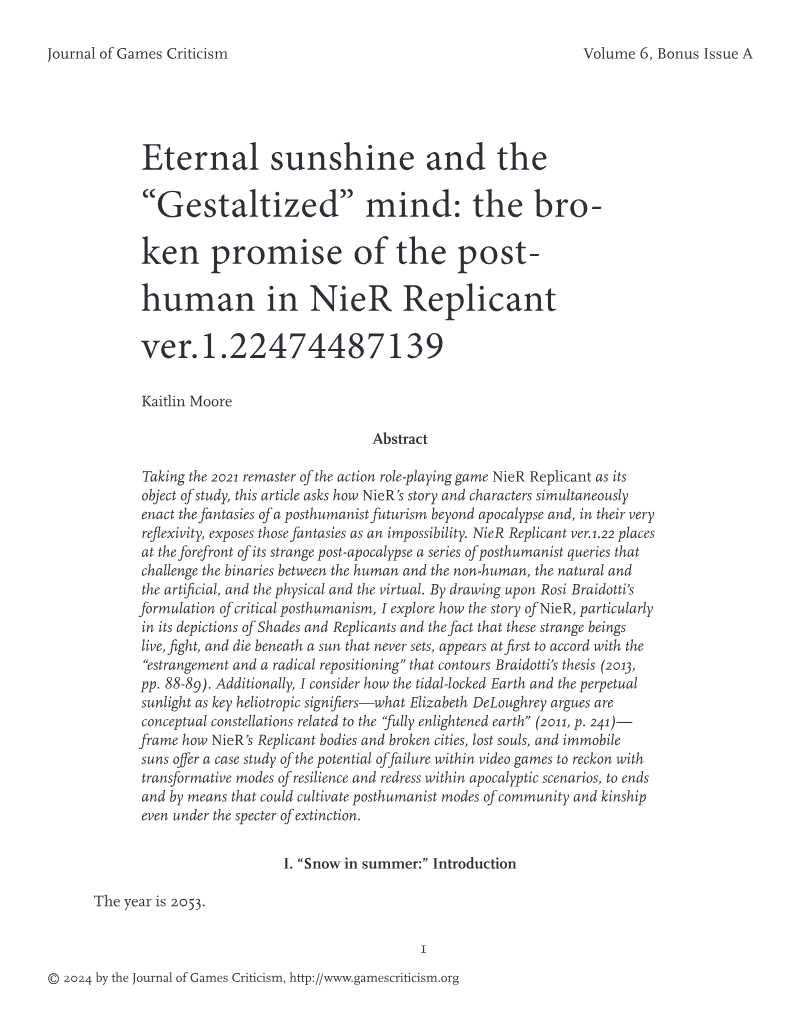
Journal of Games Criticism · 2024
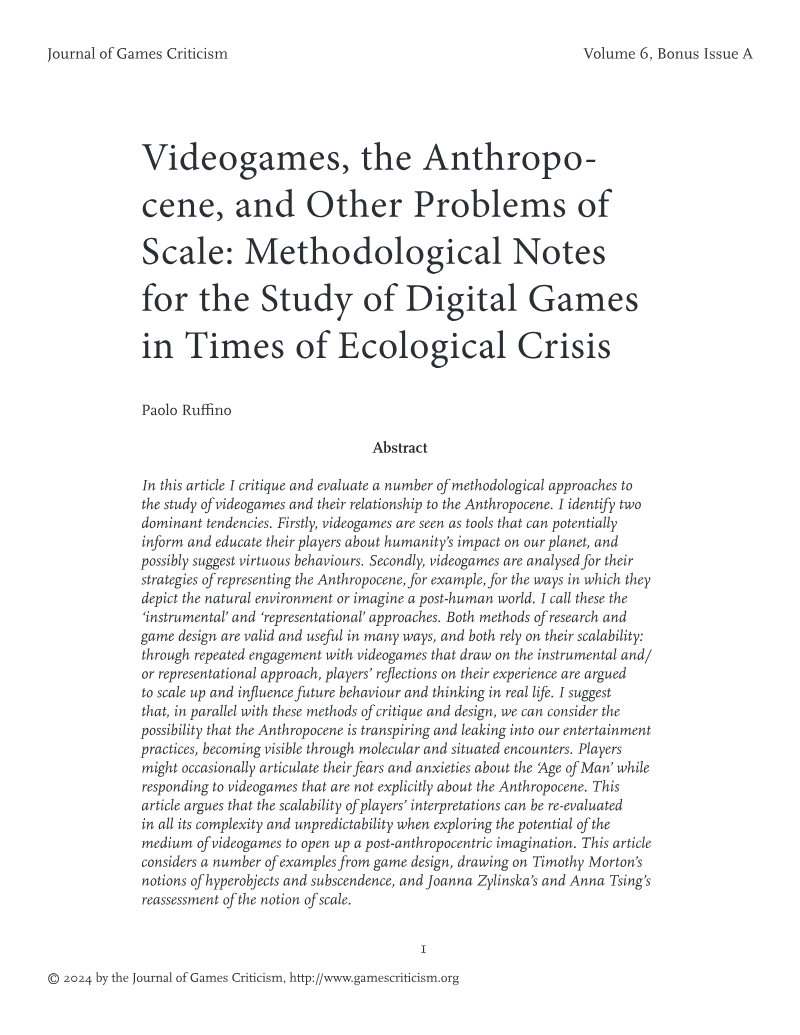
Journal of Games Criticism · 2024
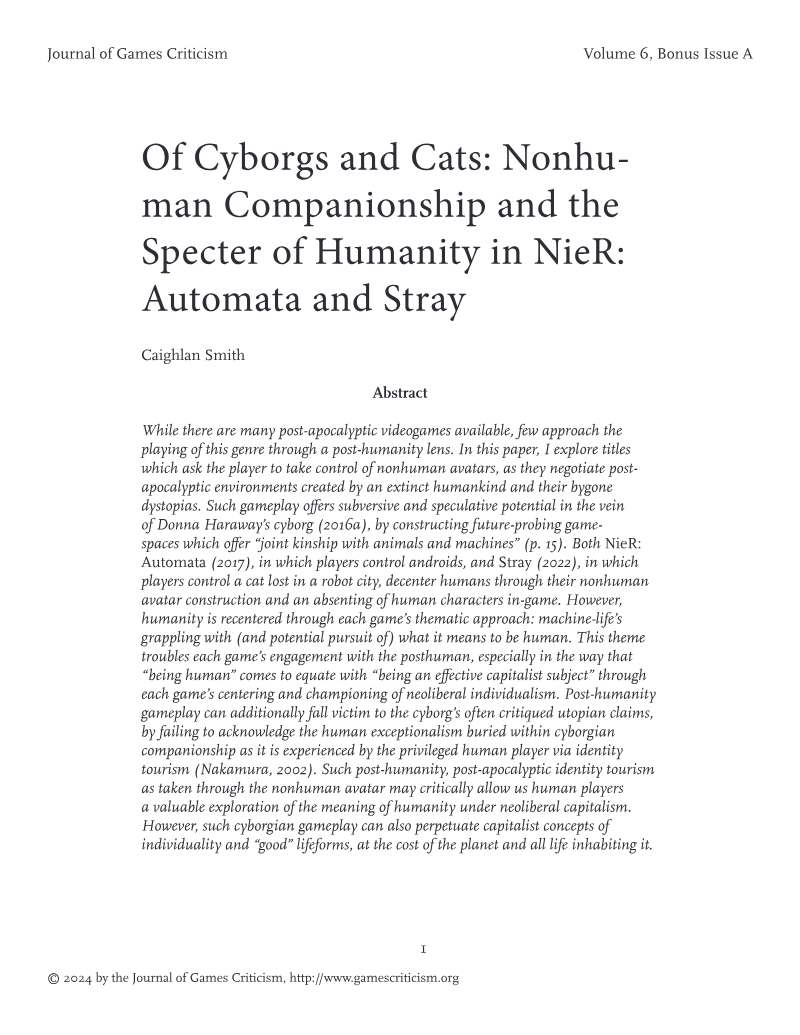
Journal of Games Criticism · 2024
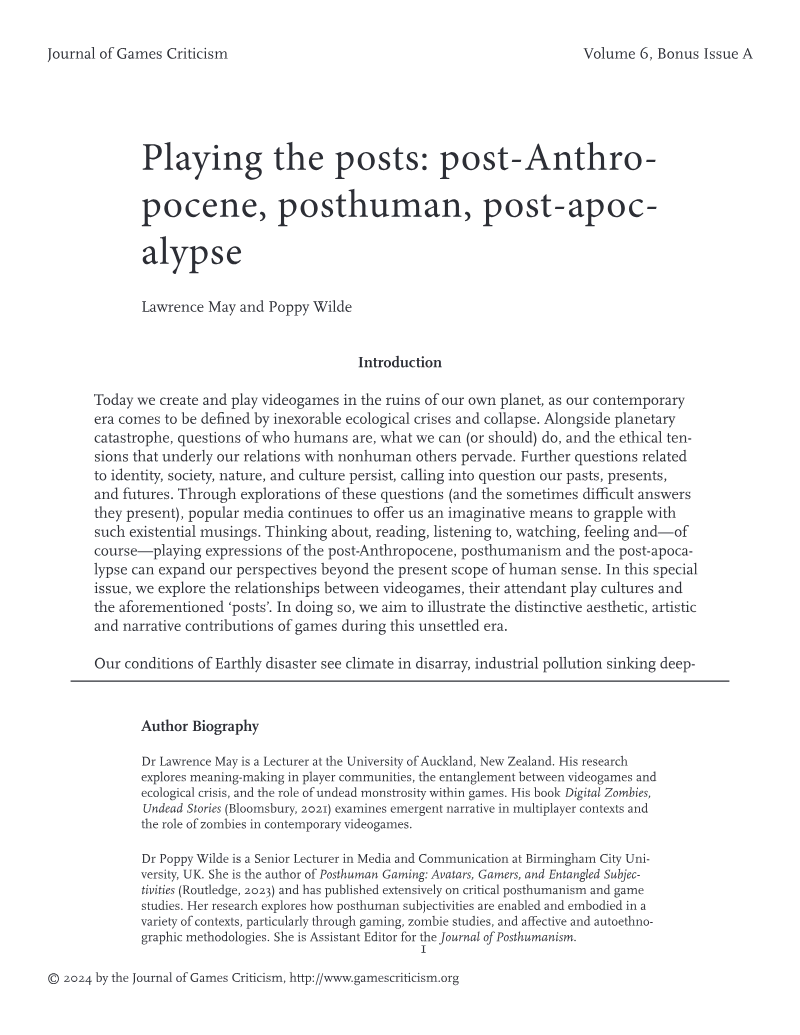
Journal of Games Criticism · 2024
Journal of Games Criticism · 2024
DiGRA · 2026