1 free read left. Create a free account for unlimited reading + AI research.
Create free accountWhitepaper Journal of Games Criticism
1 free read left. Create a free account for unlimited reading + AI research.
Create free accountWhitepaperJournal of Games Criticism
Distilling the key insights…
Alice: Madness Returns serves as a critical exploration of the intersection between neo-Victorian aesthetics and the historical realities of nineteenth-century psychiatric institutions. By reimagining the asylum as a site of systemic abuse, the game critiques the gendered medical practices and power imbalances that defined Victorian-era mental healthcare. The central thesis posits that while the narrative relies on established cultural tropes of the sinister asylum, it simultaneously functions as a platform for examining institutional violence and the subversion of patriarchal authority.
The narrative centers on the protagonist’s traumatic experiences within Rutledge Asylum, where archaic medical procedures such as bloodletting and trepanning are depicted as instruments of humiliation rather than healing. Through the antagonistic roles of Dr. Heironymous Q. Wilson and his staff, the game illustrates the oppressive control exerted over the female body. These depictions, while often surreal and horror-infused, effectively mirror the psychological fragmentation of the protagonist and underscore the failure of historical institutional care. The gameplay mechanics and cut-scenes further reinforce this by restricting player agency, thereby fostering a deeper sense of empathy for the character’s plight.
Although the game overlooks the nuance of genuine psychiatric reforms and benevolent practices of the period, it succeeds in fostering a critical dialogue regarding historical trauma. By positioning the protagonist as a transgressive figure who resists institutional authority, the work provides a voice to marginalized individuals within a neo-Victorian framework. Ultimately, the game serves as a complex cultural artifact that balances the perpetuation of popular asylum stereotypes with a meaningful critique of the power dynamics inherent in historical psychiatric systems.
Each row is a game or company this document names, each column a document, oldest first. A mark means that document names it. Select a row to see those documents.
Journal of Games Criticism · 2026
Journal of Games Criticism · 2026
Journal of Games Criticism · 2025
Journal of Games Criticism · 2025
Journal of Games Criticism · 2025
Journal of Games Criticism · 2024
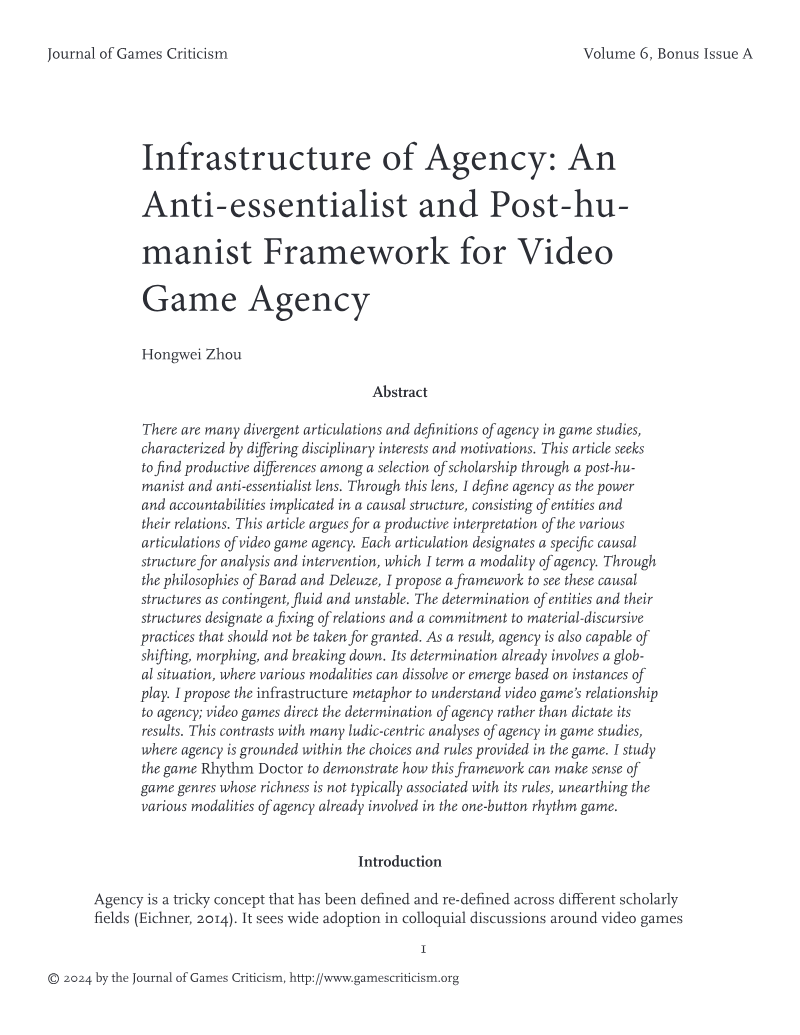
Journal of Games Criticism · 2024
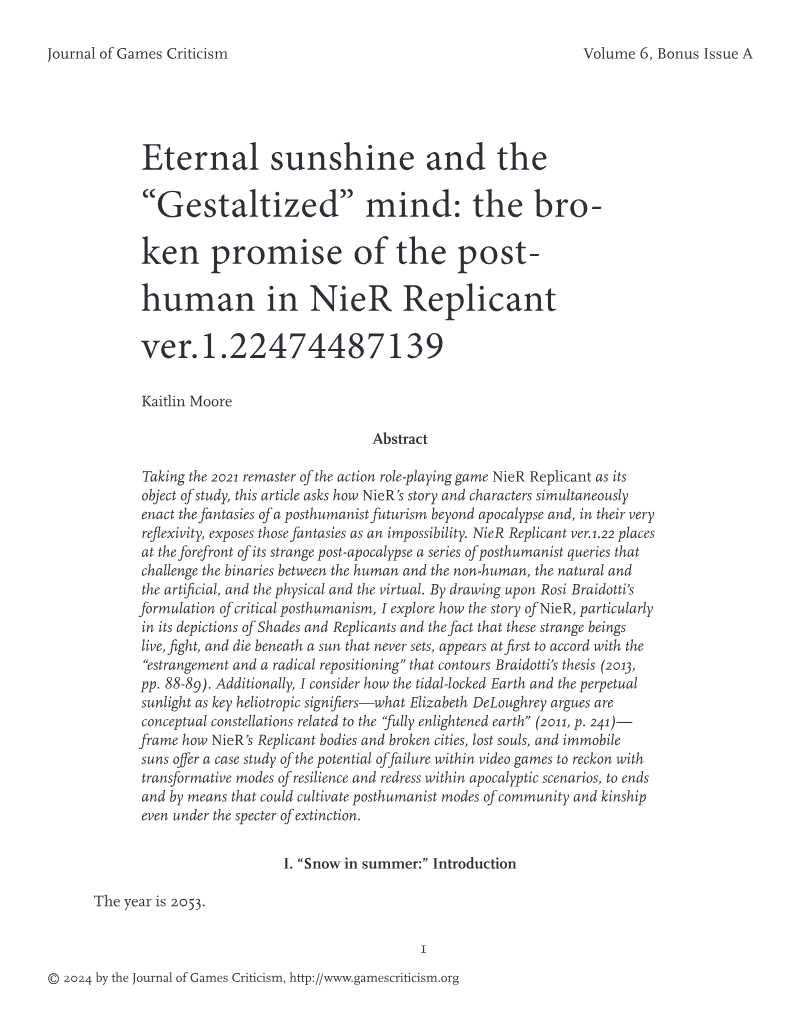
Journal of Games Criticism · 2024
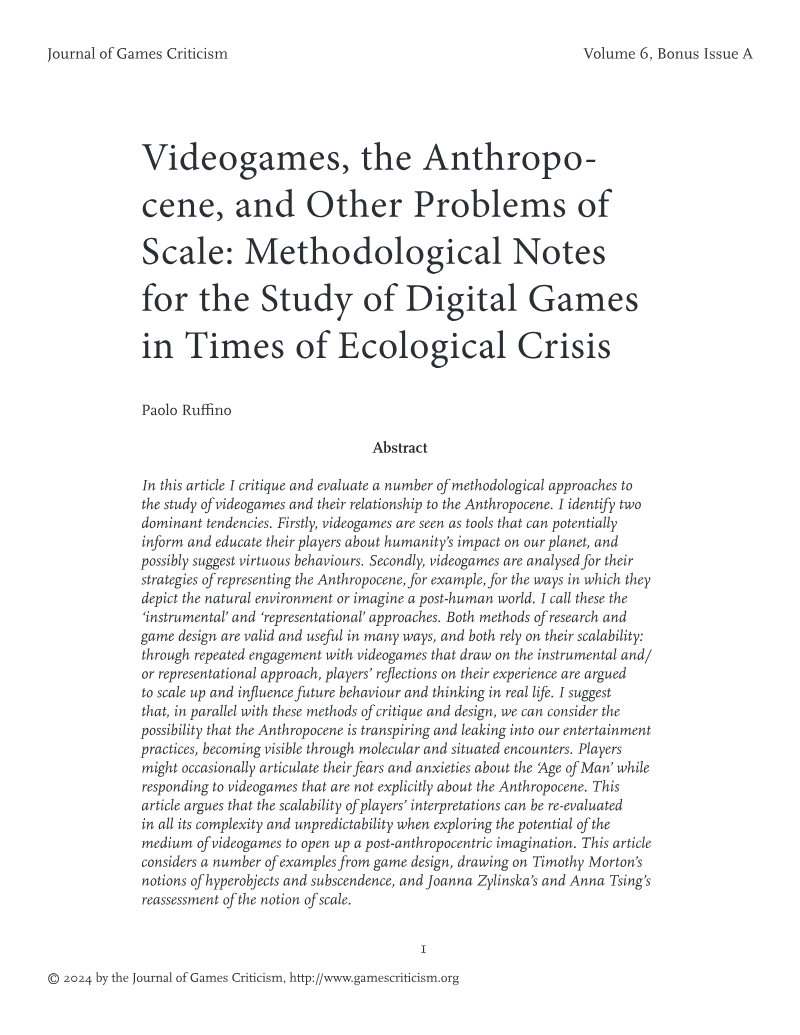
Journal of Games Criticism · 2024
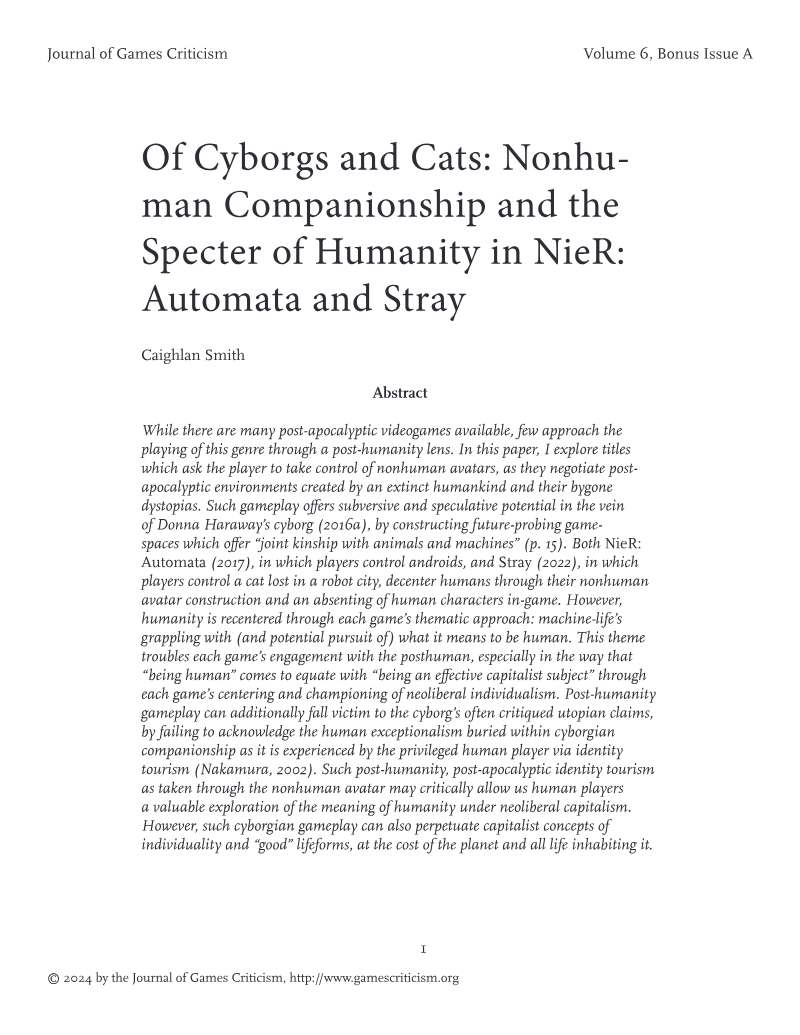
Journal of Games Criticism · 2024
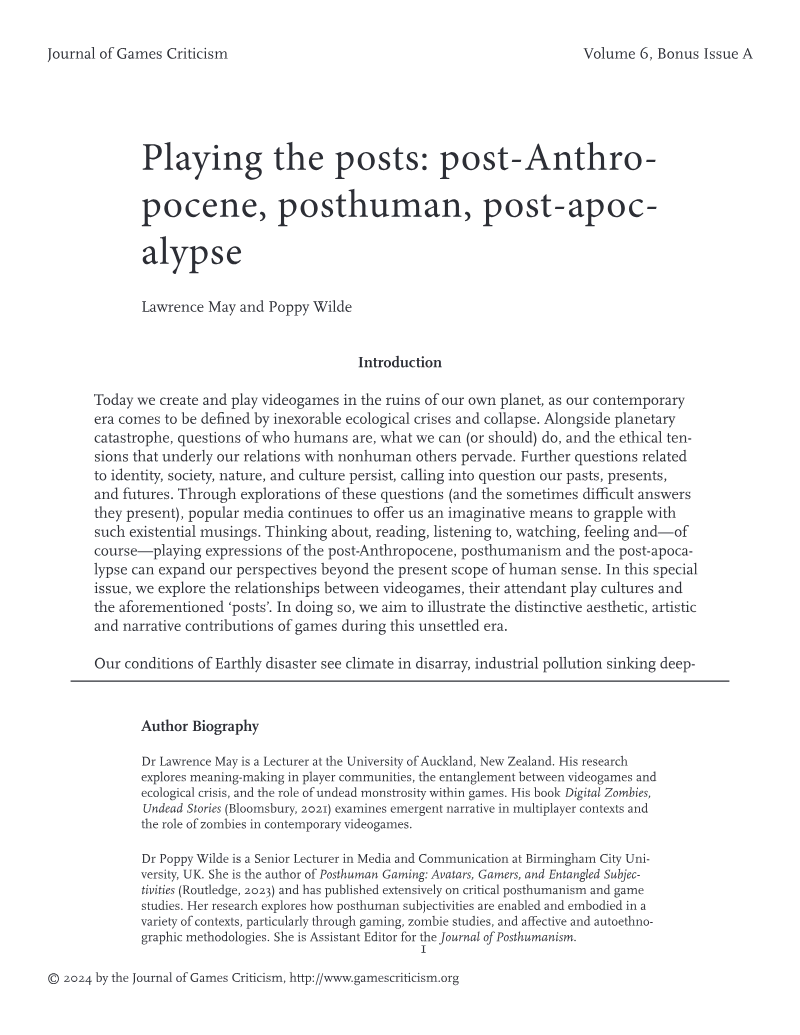
Journal of Games Criticism · 2024
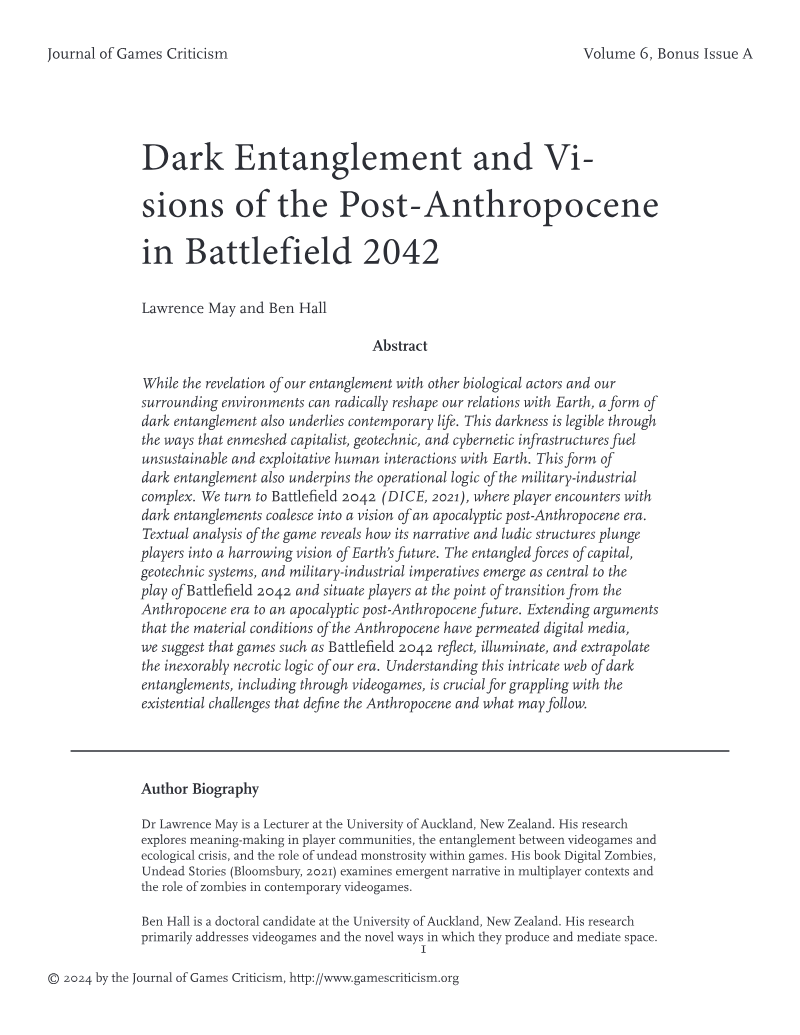
Journal of Games Criticism · 2024
DiGRA · 2003