1 free read left. Create a free account for unlimited reading + AI research.
Create free accountWhitepaper DiGRA
1 free read left. Create a free account for unlimited reading + AI research.
Create free accountWhitepaperDiGRA
In 2025, Final Fantasy XIV director Naoki Yoshida suggested that the genre's demand for hundreds of hours of investment no longer fits contemporary play habits.
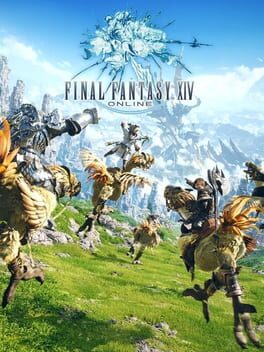
This paper, by Benjamin Horn of the University of Hong Kong, examines how Final Fantasy XIV has evolved over more than a decade and what that evolution reveals about the enduring appeal of massively multiplayer online role-playing games. It opens with a 2025 remark by game director Naoki Yoshida, who suggested that the genre's demand for hundreds of hours of investment no longer fits contemporary play habits, and it challenges that claim by pointing to the game's sustained global community, which a February 2026 community census estimated at 934,000 active players. The central aim is to trace the game's incremental changes across eras and to assess whether MMOs are genuinely declining as a genre.
The study adopts a dual methodology combining paratextual analysis, drawing on patch notes, forum discussions, and in-game elements, with an in-game "archaeology" approach borrowed from archaeogaming. The latter is used to identify "evolutionary outliers," such as the standardization of Magic Power to a fixed value of 10,000 across all classes and levels, which is inconsistent with the rest of the game's scaling and can only be explained by reference to earlier versions. The author acknowledges the methodological risk that paratexts can be lost to history and that analysts must account for what may be missing from the record.
The paper situates itself within a body of existing scholarship that has examined FFXIV through sociological, psychological, queer, and allegorical lenses, but has largely left its developmental trajectory unexplored. The work is framed as early-stage research, and the author explicitly invites feedback. Its scope is a single title and its longitudinal history from the original 2010 release through the 2013 relaunch to the present, with the expectation that sustained play and accumulated history are central to understanding the genre's continued relevance.
Each row is a game or company this document names, each column a document, oldest first. A mark means that document names it. Select a row to see those documents.

DiGRA · 2026

DiGRA · 2026



DiGRA · 2026



DiGRA · 2026



DiGRA · 2026



DiGRA · 2026



DiGRA · 2026



DiGRA · 2026



DiGRA · 2026

DiGRA · 2026



DiGRA · 2026



DiGRA · 2026
DiGRA · 2026