1 free read left. Create a free account for unlimited reading + AI research.
Create free accountArticle Journal of Games Criticism
1 free read left. Create a free account for unlimited reading + AI research.
Create free accountArticleJournal of Games Criticism
Distilling the key insights…
The fourth wall in video games serves as a dynamic site of interaction rather than a static barrier, necessitating a refined typology to distinguish between characters who merely acknowledge their fictionality and those who engage in genuine metareferential dialogue. By moving beyond the traditional, often contested application of theatrical terminology, the analysis establishes that interactive media utilize these breaches to foster emotional intimacy and critical reflection. This framework clarifies how developers employ meta-narrative strategies to manipulate the player’s sense of presence, ultimately enhancing engagement through sophisticated, self-aware storytelling.
Central to this evolution is the concept of twofold play, a state in which the player simultaneously occupies the roles of the avatar and their own external self. This dual identity challenges the stability of the magic circle, transforming the player from a passive observer into a god-like, active agent within the game world. Through the use of physical hardware mediation and direct address, titles such as Tearaway Unfolded, Moss, and OneShot force players to negotiate a complex, collaborative relationship with the narrative. This interaction often evokes profound emotional responses, including responsibility and guilt, which transcend the standard mechanics of identification found in traditional gaming.
This phenomenon is particularly prevalent in a subgenre featuring naive, often child-like protagonists who are guided by meta-aware entities. These games rely on a structural foundation where the player acts as an external authority, facilitating a two-directional communication loop that fundamentally alters the player-avatar dynamic. By synthesizing these findings, it becomes clear that twofold play represents a significant shift in game design, moving away from simple immersion toward a more complex, reflexive experience. This classification provides a robust basis for future academic inquiry into how meta-narrative games redefine the boundaries between the player, the digital environment, and the fictional experience.
Journal of Games Criticism · 2026
Journal of Games Criticism · 2026
Journal of Games Criticism · 2025
Journal of Games Criticism · 2025
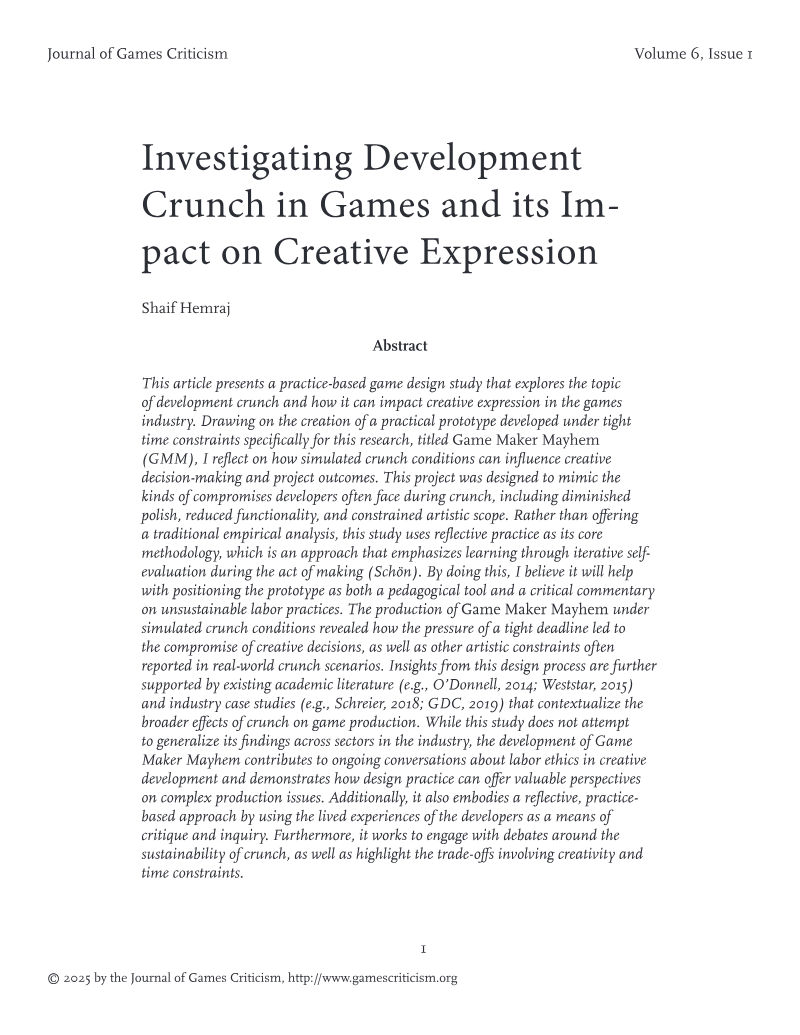
Journal of Games Criticism · 2025
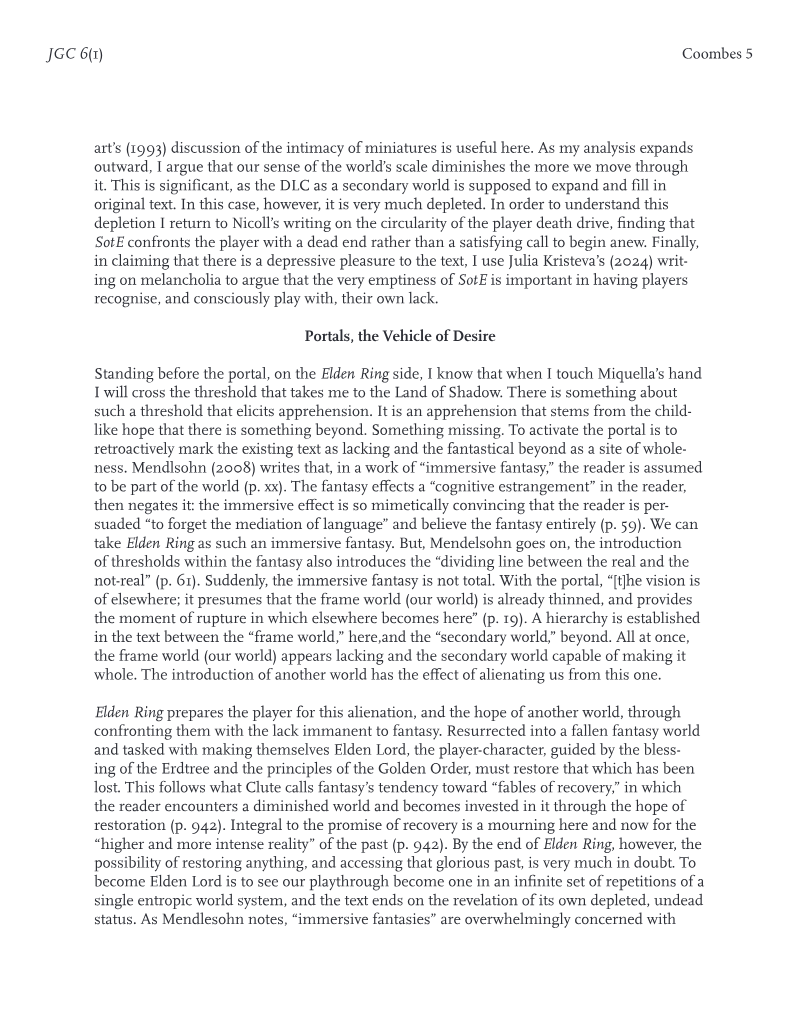
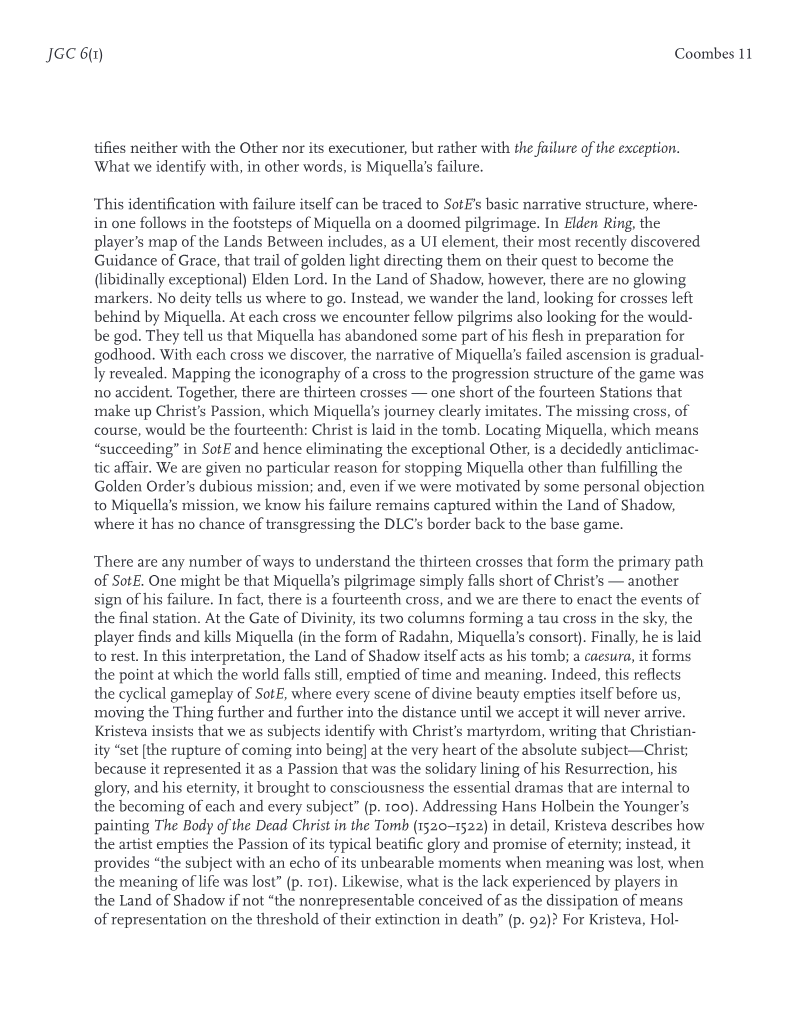
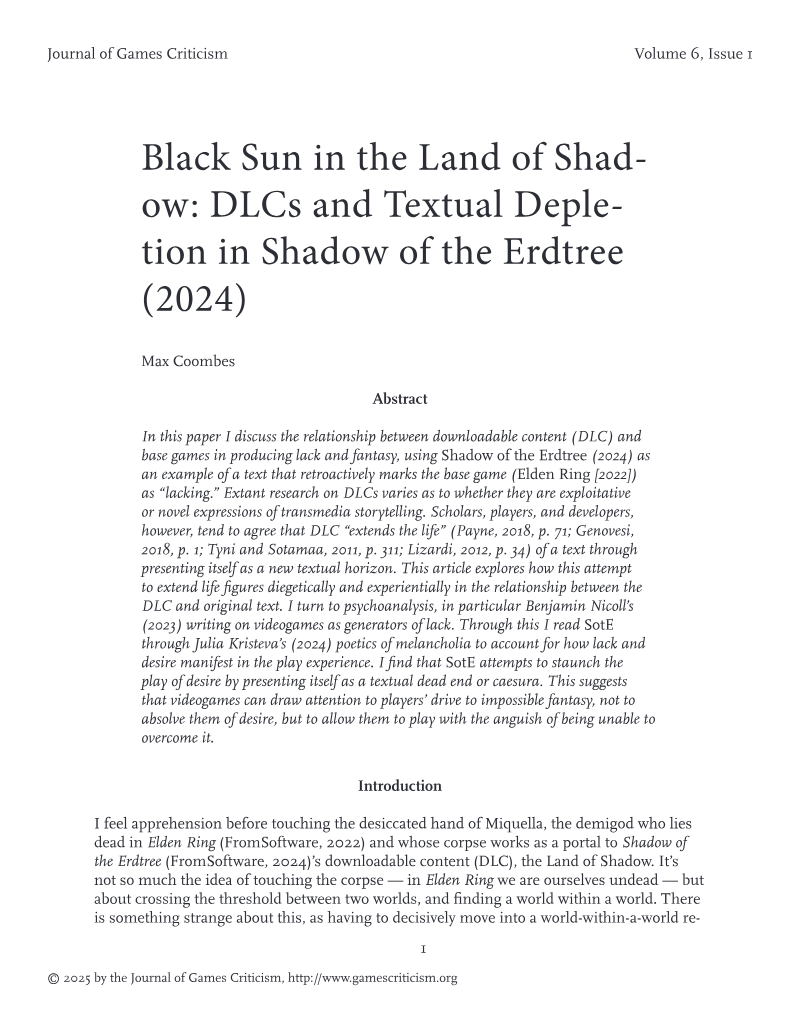
Journal of Games Criticism · 2025

Journal of Games Criticism · 2024
Journal of Games Criticism · 2024
Journal of Games Criticism · 2024
Journal of Games Criticism · 2024
Journal of Games Criticism · 2024
Journal of Games Criticism · 2024
DiGRA · 2026