Key insights
6 slides
Identity in flux
Geralt's identity is a fragile performance of alienation, not a stable heroic ideal.
The Witcher 3: Wild Hunt deconstructs traditional masculinity. Geralt of Rivia's identity is framed by failure rather than heroic dominance.
1 / 6
- 01The Witcher 3: Wild Hunt deconstructs traditional masculinity by framing Geralt of Rivia’s identity as a fragile performance of alienation rather than a stable heroic ideal.See it on page 1
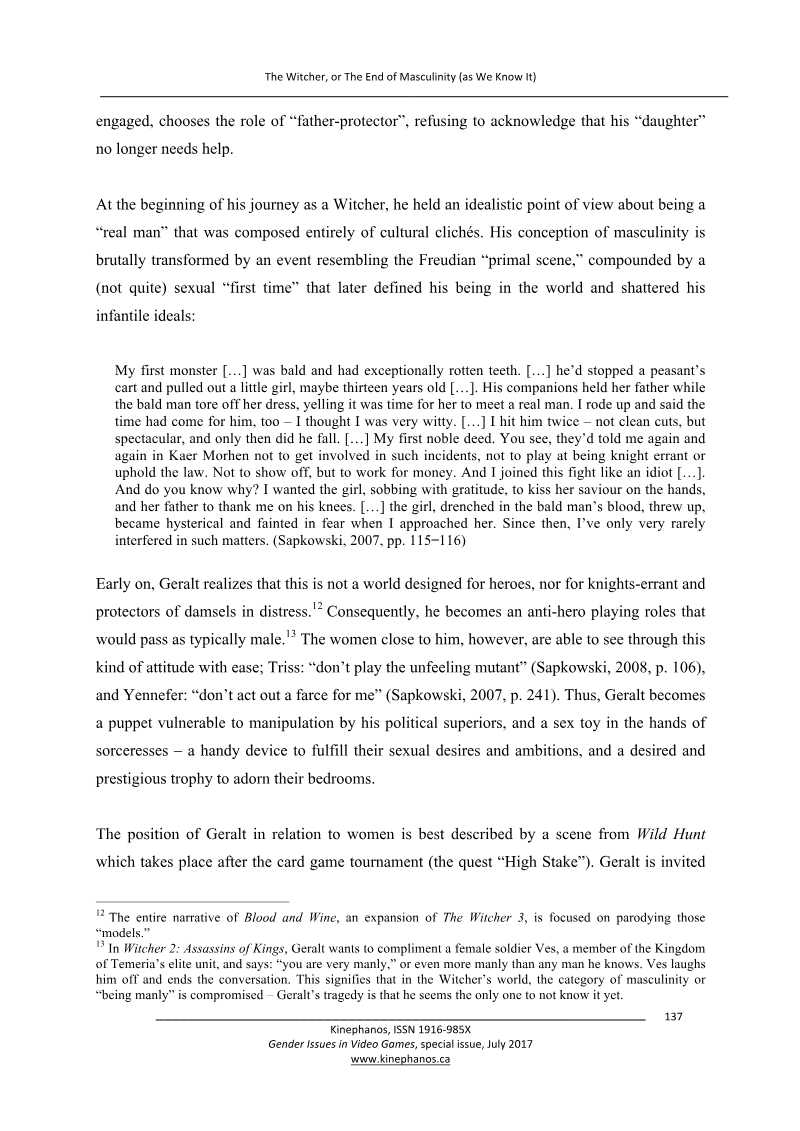
- 02The game’s narrative shifts the player’s role from one of patriarchal control to that of a reflective witness, highlighting the limitations of the hero’s agency.See it on page 5
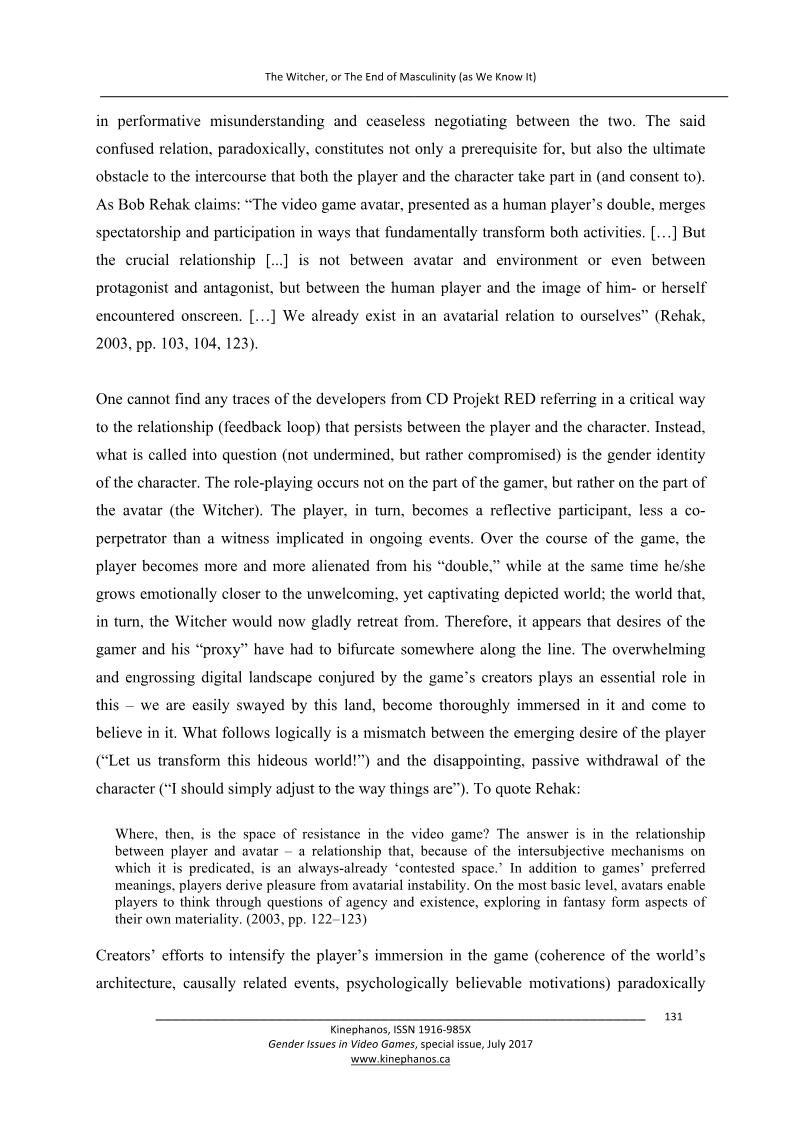
- 03Geralt’s attempts to act as a traditional father figure are consistently undermined by female characters who possess superior political agency and insight.See it on page 11
- 04The narrative trajectory prioritizes Ciri’s emergence as an autonomous figure, rendering Geralt’s struggle for a traditional masculine identity secondary and futile.See it on page 2
- 05Geralt is portrayed as a nomadic hybrid trapped in a deadlock between his performative professional detachment and a desire for a socialized existence.See it on page 7
- 06The 2015 title serves as a critique of the traditional hero’s journey, suggesting that such archetypes are no longer viable frameworks for modern storytelling due to internal contradictions.See it on page 2
Ask AI about this article
Summary
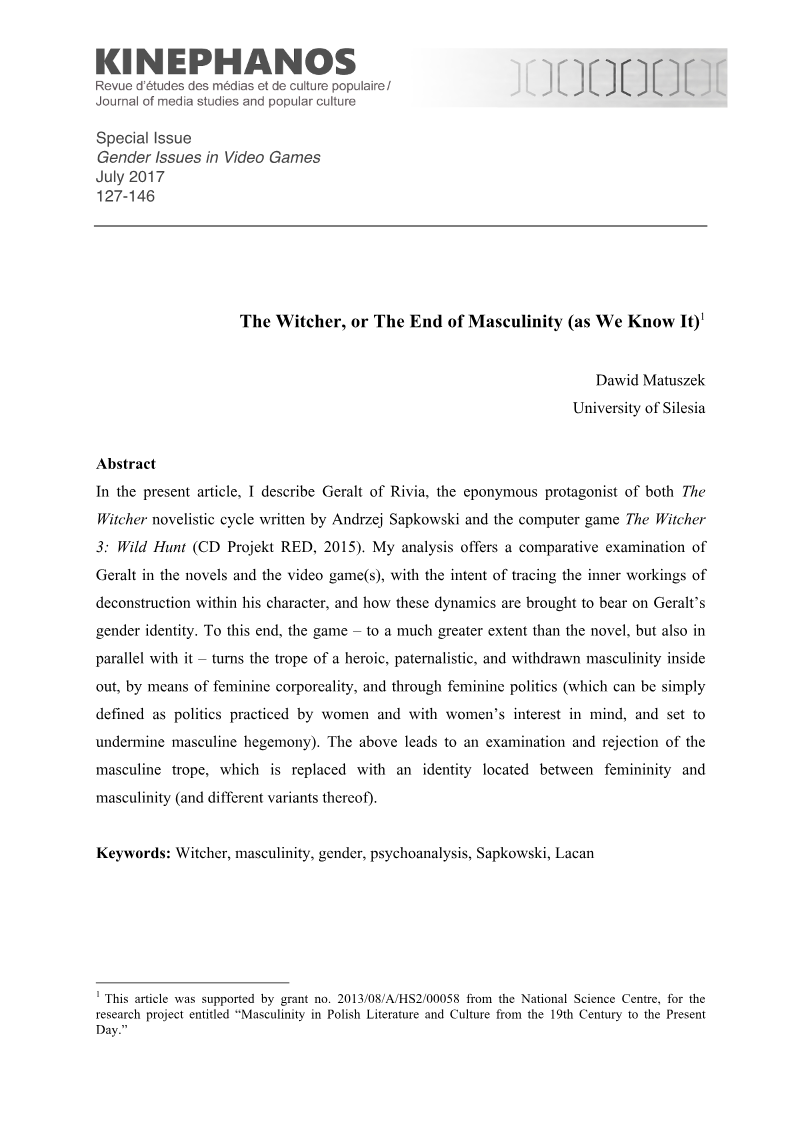
The Witcher 3: Wild Hunt functions as a critical deconstruction of traditional, paternalistic masculinity, positioning the protagonist, Geralt of Rivia, as a figure whose identity is defined by failure rather than heroic dominance. By analyzing the narrative arc through both literary and psychoanalytic lenses, the work argues that Geralt’s hyper-masculine facade—characterized by professional detachment and violence—is a fragile performance that masks deep alienation. Rather than embodying a stable masculine ideal, Geralt exists as a nomadic hybrid, caught in a perpetual deadlock between his desire for social integration and his inability to escape the role of a manipulated, anti-heroic puppet within an unjust political landscape.
The narrative structure of the game reinforces this subversion by shifting the player’s role from one of active, patriarchal control to that of a reflective witness. This transition highlights the inherent limitations of the hero’s agency, suggesting that the traditional masculine project is obsolete. While Geralt attempts to navigate the world through the lens of a father figure, his efforts are consistently undermined by the women in his life, who possess greater political agency and insight. Consequently, the game intentionally dismantles masculine hegemony, favoring a narrative trajectory where Ciri’s emergence as a powerful, autonomous figure renders the protagonist’s struggle for traditional identity both futile and secondary.
Ultimately, the analysis posits that Geralt’s identity is defined by an unresolved tension between his performative social mask and his internal desire for symbolic castration, which he equates with a normal, socialized existence. By contrasting his reliance on patriarchal tropes with the evolving agency of female characters, the game serves as a critique of the very archetypes it initially presents. This exploration of gender dynamics within the immersive, high-fantasy setting of the 2015 title suggests that the traditional hero’s journey is no longer a viable framework for modern storytelling, as it inevitably collapses under the weight of its own internal contradictions.