1 free read left. Create a free account for unlimited reading + AI research.
Create free accountWhitepaper DiGRA
1 free read left. Create a free account for unlimited reading + AI research.
Create free accountWhitepaperDiGRA
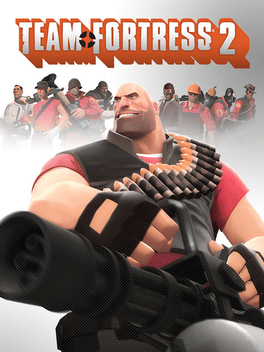
The paper compares World of Warcraft Classic with Team Fortress 2 Classified. One recreates a 2006 version of a game, the other re-imagines a 2008–2009 era.
This paper examines how nostalgic game recreations construct authenticity, using a comparative case study of two projects that attempt to restore earlier versions of online games: World of Warcraft Classic, a recreation of the 2006 "Vanilla" version of World of Warcraft, and Team Fortress 2 Classified, a community-developed mod that re-imagines Team Fortress 2's 2008–2009 era. The author frames these cases through modernities of authenticity, drawing on postmodern and post-postmodern perspectives to move beyond asking whether restorations are accurate and instead asking how different philosophies of authenticity shape nostalgic design and play.
The analysis argues that World of Warcraft Classic operates through postmodern hyperreality, presenting itself as a "genuine fake" that delivers a feeling of the past built on players' subjective memories and sentimental myth rather than strict fidelity. It includes quality-of-life updates and even reimplements historical bugs, idealising the original experience for contemporary nostalgic sensibilities. Team Fortress 2 Classified, by contrast, is described as a "fake genuine" operating under an alterreality logic. It makes no claim to faithfully recreate the past and instead draws on cut content, developer commentary, concept art, and fan theories to present a hypothetical version of what the game might have become had it kept its original design philosophy.
The paper concludes that as live-service games accumulate update histories spanning decades, these modernities of authenticity offer a useful framework for understanding how players' desires to revisit experiences that eroded over time are met through a plurality of approaches that look backward, forward, and parallel to the past.
Each row is a game or company this document names, each column a document, oldest first. A mark means that document names it. Select a row to see those documents.

DiGRA · 2026

DiGRA · 2026



DiGRA · 2026



DiGRA · 2026



DiGRA · 2026



DiGRA · 2026



DiGRA · 2026



DiGRA · 2026



DiGRA · 2026

DiGRA · 2026



DiGRA · 2026



DiGRA · 2026
DiGRA · 2026