Key insights
4 slides
Engagement strategy
Platforms use network effects and data to drive perpetual engagement.
These platforms leverage powerful network effects and sophisticated data collection. This converts user engagement into ongoing, high-retention economic activity.
Like a social network, the more people use it, the more valuable it becomes for everyone.


1 / 4
- 01Roblox, Fortnite, and Minecraft have transitioned from traditional product models to digital platforms that function as continuous, long-term economic ecosystems.See it on page 4
- 02These platforms utilize network effects and data-driven design to convert user engagement into perpetual, high-retention economic activity.See it on page 5
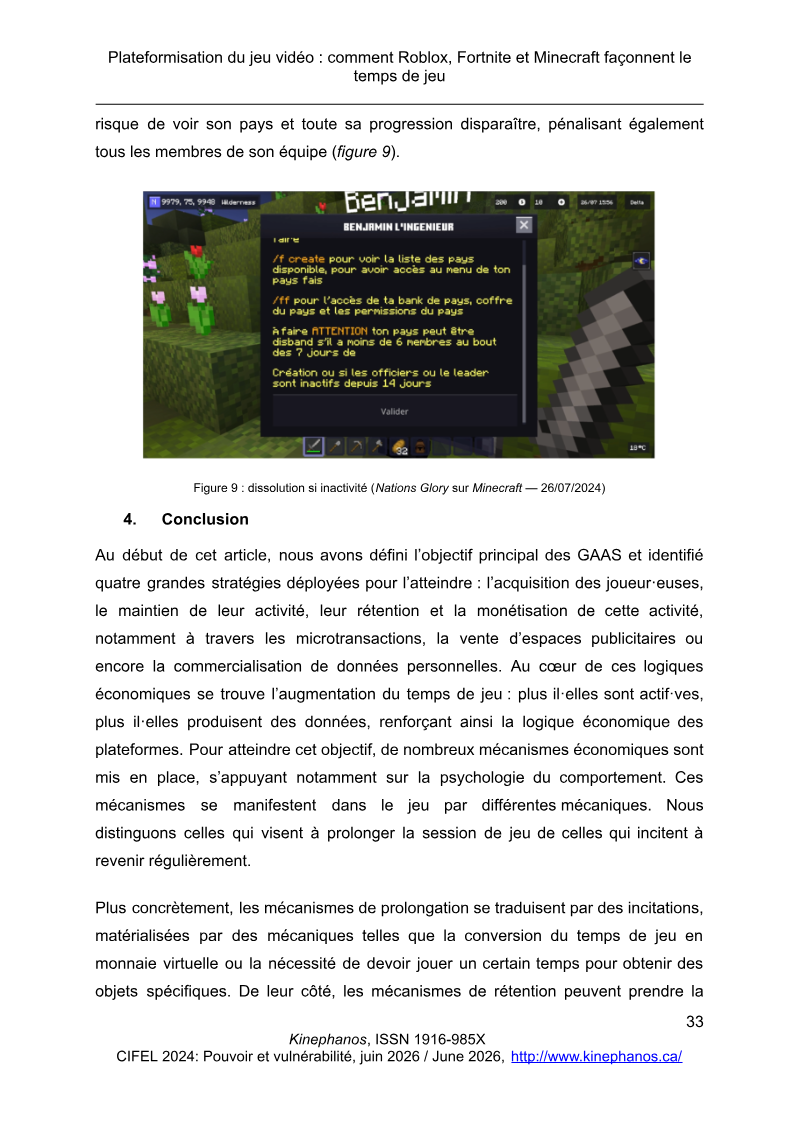
- 03Developers employ behavioral psychology tactics, such as time-limited events and inactivity penalties, to foster habitual usage patterns and prolong gaming sessions.See it on page 16
- 04The integration of virtual currencies directly into gameplay loops effectively blurs the distinction between entertainment and commercial engagement.See it on page 7
- 05Modern platform strategy relies on sophisticated data collection to optimize design, ensuring that player time is consistently captured and monetized.See it on page 16
- 06The primary objective of these platforms is to maintain a perpetual state of engagement, specifically targeting the habits of a global, youth-oriented demographic.See it on page 1
Ask AI about this report
Summary
The platformization of the video game industry marks a fundamental transition from traditional, static product models to dynamic Games-as-a-Service frameworks. By analyzing major titles such as Roblox, Fortnite, and Minecraft, it becomes clear that these ecosystems function less as discrete games and more as expansive digital platforms. These environments leverage powerful network effects and sophisticated data collection practices to transform user engagement into a continuous, long-term economic activity. The primary thesis posits that these platforms are engineered to maximize player retention and monetization through the integration of behavioral psychology and digital infrastructure.
To sustain high levels of user activity, particularly among younger demographics, these platforms employ a variety of strategic mechanisms designed to prolong gaming sessions. Key tactics include the conversion of time into virtual currency, the implementation of time-limited events that create a sense of urgency, and the use of penalties for inactivity. These design choices are not merely aesthetic but are calculated to foster habitual usage patterns. By embedding economic objectives directly into the gameplay loop, these platforms effectively blur the lines between entertainment and commercial engagement, ensuring that player time is consistently captured and monetized.
The scope of this analysis encompasses the global digital gaming landscape, with a specific focus on the intersection of platform strategy and user behavior. By examining the evolution of these three dominant titles, the research highlights how modern gaming has shifted toward a model where data-driven insights dictate design. Ultimately, the findings suggest that the success of these platforms relies on their ability to maintain a perpetual state of engagement, turning the act of play into a highly optimized, data-rich experience that serves both the economic interests of the developers and the evolving habits of a global, youth-oriented audience.