Key insights
4 slides
New methodology
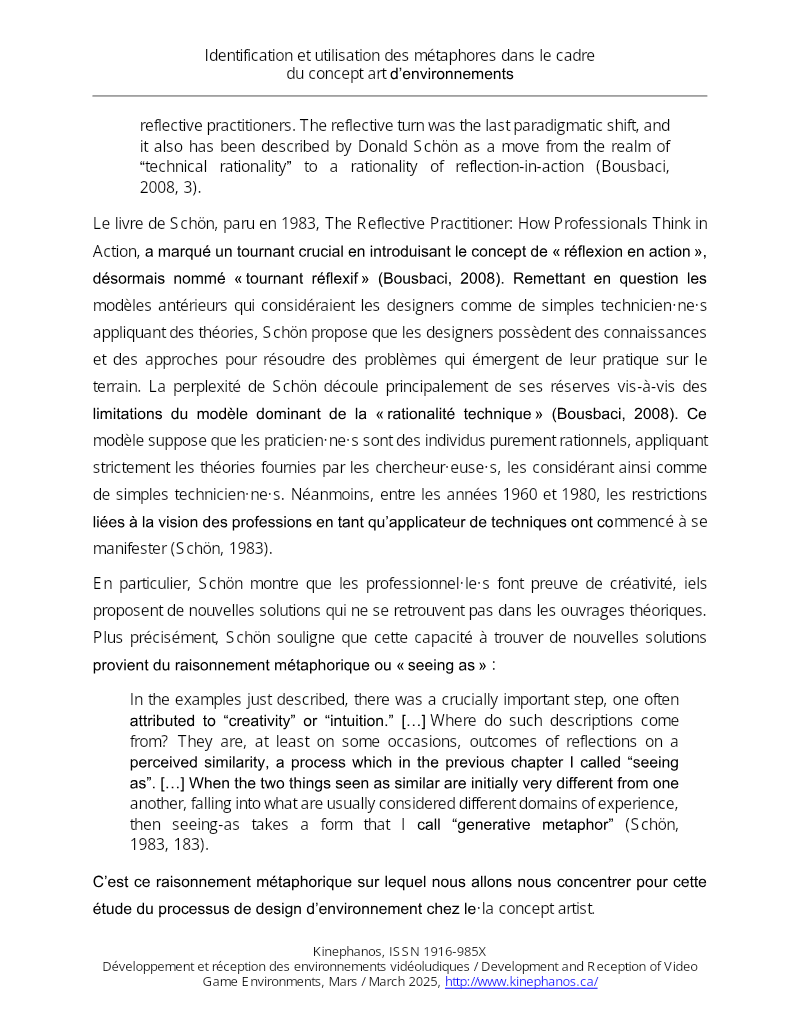
Environment artists should adopt Donald Schön’s theory of the reflective practitioner.
This approach transforms the design process from purely intuitive creation into a structured, iterative dialogue with the work.
Like a sculptor continually assessing and refining their clay, artists engage in an ongoing conversation with their evolving designs.
1 / 4
- 01Environment artists should adopt Donald Schön’s theory of the reflective practitioner to transform the design process from purely intuitive creation into a structured, iterative dialogue.See it on page 9
- 02Using generative metaphors acts as a cognitive framework that allows artists to solve complex design problems by bridging the gap between abstract concepts and visual execution.See it on page 4
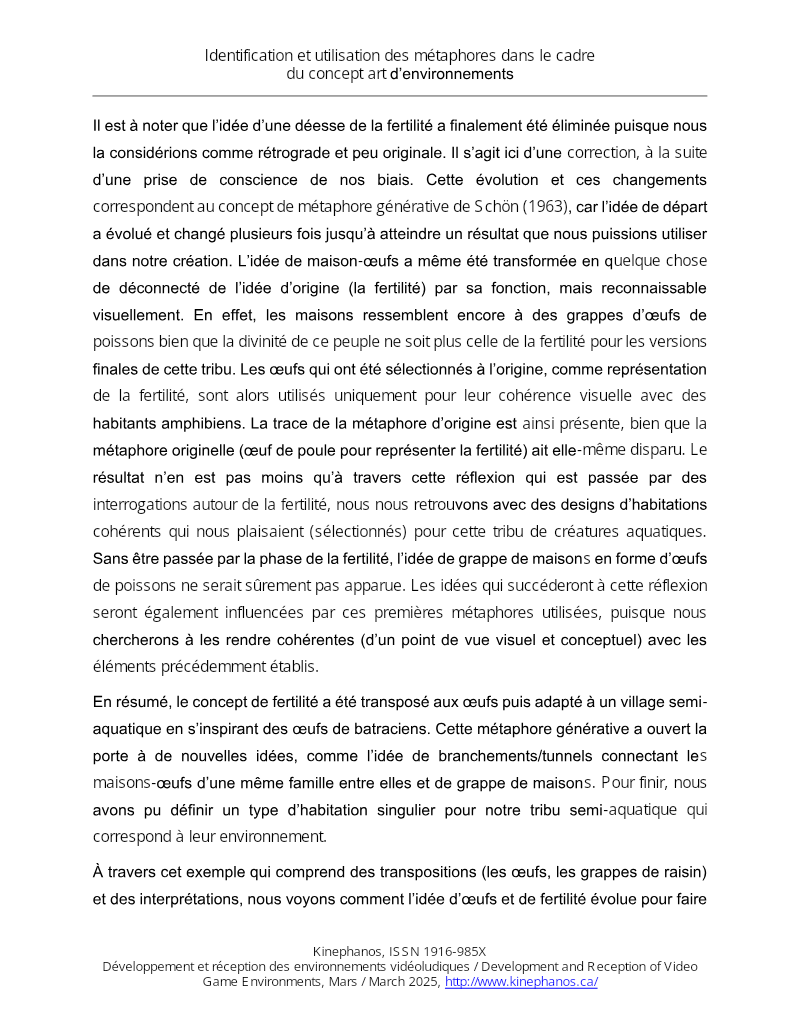
- 03Applying metaphors—such as biological structures like fish eggs—enables designers to bypass conventional tropes and cultural biases to create more original, functional architectures.See it on page 20
- 04The design process requires a continuous cycle of conceptualization and critical correction to ensure that chosen metaphors remain visually relevant and evolve alongside the game environment's specific needs.See it on page 24
- 05Analyzing the metaphors guiding creative choices provides a rigorous, intentional methodology that improves the cohesion and imaginative quality of fictional world-building.See it on page 27
- 06Integrating reflective practice into the concept art workflow fosters professional growth by providing artists with a repeatable framework for innovation in open-ended design challenges.See it on page 25
Ask AI about this report
Summary
The design of immersive video game environments relies heavily on the strategic application of generative metaphors, which serve as cognitive frameworks for solving complex creative problems. By applying Donald Schön’s theory of the reflective practitioner to the concept art process, it becomes clear that artists do not merely execute technical tasks but engage in an iterative dialogue with their work. This process involves drawing from a personal repertoire of experiences to transform abstract concepts into coherent visual structures, effectively bridging the gap between theoretical reflection and practical artistic execution.
The utility of this approach is best illustrated through the development of fictional world-building, such as the design of an aquatic village. By utilizing metaphors—such as the structural properties of fish eggs—designers can move beyond conventional tropes and cultural biases to create original, functional architectures. This methodology requires a constant back-and-forth between initial conceptualization and critical correction, ensuring that the chosen metaphor remains visually relevant while evolving to meet the specific needs of the game environment.
Ultimately, the integration of reflective practice into concept art allows for a more rigorous and intentional approach to world-building. By identifying and analyzing the metaphors that guide their creative choices, environment artists can navigate open-ended design challenges with greater clarity. This shift from purely intuitive creation to a conscious, reflective methodology not only fosters the development of more cohesive and imaginative game worlds but also enhances the professional growth of artists by providing a structured framework for innovation within the industry.